
Orchestrer les insights d’IA pour les transformer en actions

Tendances
Categories
Pratt & Whitney Secures Multi-Billion-Dollar Contract for F-35 Engines
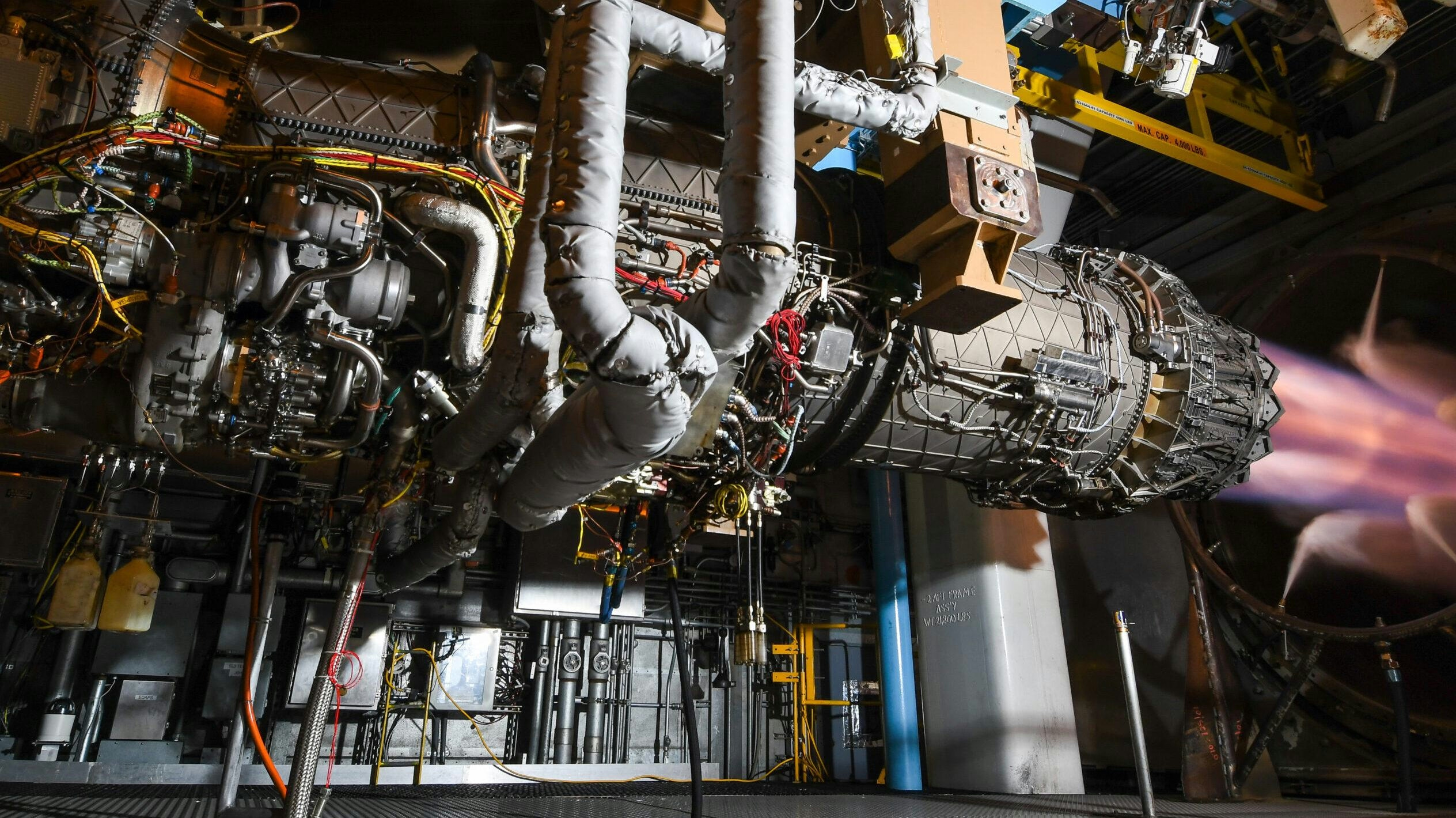
Pratt & Whitney Secures Multi-Billion-Dollar Contract for F-35 Engines
Pratt & Whitney, a subsidiary of RTX, has been awarded a $6.6 billion contract to produce multiple lots of the F135 propulsion systems for the F-35 Lightning II aircraft. This comprehensive agreement encompasses the manufacture of engines, spare parts, modules, and additional engineering components at full production rates for both the United States military and international customers.
The Significance of the F135 Engine
The F135 engine is a vital element powering all variants of the F-35, a fifth-generation, multi-role fighter developed by Lockheed Martin. The F-35A Lightning II, operational in Australia since 2021, is renowned for its supersonic capabilities and advanced internal communications systems, establishing it as a critical stealth asset for the Royal Australian Air Force (RAAF). Australia’s commitment to acquiring 72 F-35A aircraft under the $17 billion AIR 6000 Phase 2A/B program highlights its prominent role within the global F-35 initiative.
Jill Albertelli, President of Military Engines at Pratt & Whitney, underscored the company’s dedication to meeting increasing global demand. She stated, “Pratt & Whitney is investing heavily across our global production base and supply chain to increase production and accelerate engine delivery and sustainment to meet growing global demand for the F-35 program. The F135 is the most advanced military engine in the world, delivering unmatched thrust, reliability, and mission readiness for the United States and its allies.”
Production Expansion and Industry Challenges
In recent years, Pratt & Whitney has invested over $1 billion to expand its production capabilities, resulting in a 20 percent increase in F135 engine output and the creation of more than 66,000 jobs across 47 U.S. states. By April 2026, the company had delivered over 1,400 F135 engines to more than 20 allied nations.
Despite this success, the new contract arrives amid intensifying competition and industry challenges. Rival engine manufacturer CFM International, which also supplies engines for the F-35 program, may respond by increasing production or introducing new technologies to capture a larger market share. Additionally, industry observers are closely monitoring Pratt & Whitney’s capacity to manage its production and supply chain effectively, particularly as Airbus pursues damages related to recent engine delays.
The broader aerospace sector, including Pratt & Whitney, is also facing the prospect of a multi-billion-dollar tariff cliff. If not addressed, these tariffs could adversely affect profitability and the company’s ability to fulfill large-scale defense contracts.
As global demand for the F-35 continues to rise, Pratt & Whitney’s latest contract highlights both the significant opportunities and the competitive pressures confronting the defense aerospace industry.

Etihad Airways Suspends Airbus A380 Flights on Key Route

Aditya Birla Group Seeks Approval for Aircraft Leasing in GIFT City

Qatar Airways Highlights Innovation and Connectivity at Arabian Travel Market 2026

Hong Kong's Five-Year Plan Includes Andrew Fan's Aircraft Parts Processing Hub Proposal

ACIA Aero Leasing Delivers ATR72-600 to Air Nostrum

RTX Appoints Jill Albertelli as Head of Pratt & Whitney

TAT Technologies Joins Beyond Aero Hydrogen Aircraft Program

AURAK Study Highlights Barriers to Air Taxi Adoption in Emerging Economies

Xiamen Air Selects Altitude for 787 Maintenance at Heathrow

Etihad and Swissport Extend Global Partnership
