Image

Orchestrer les insights d’IA pour les transformer en actions

Inscrivez-vous dès aujourd’hui sur la liste d’attente d’AeroGenie !

Tendances

Categories

Projected Salaries for Boeing 777 Pilots in 2026
May 15, 2026By ePlane AI
Projected Salaries for Boeing 777 Pilots in 2026
0
0
Boeing 777
Pilot Salaries
Major US Airlines

Projected Salaries for Boeing 777 Pilots in 2026

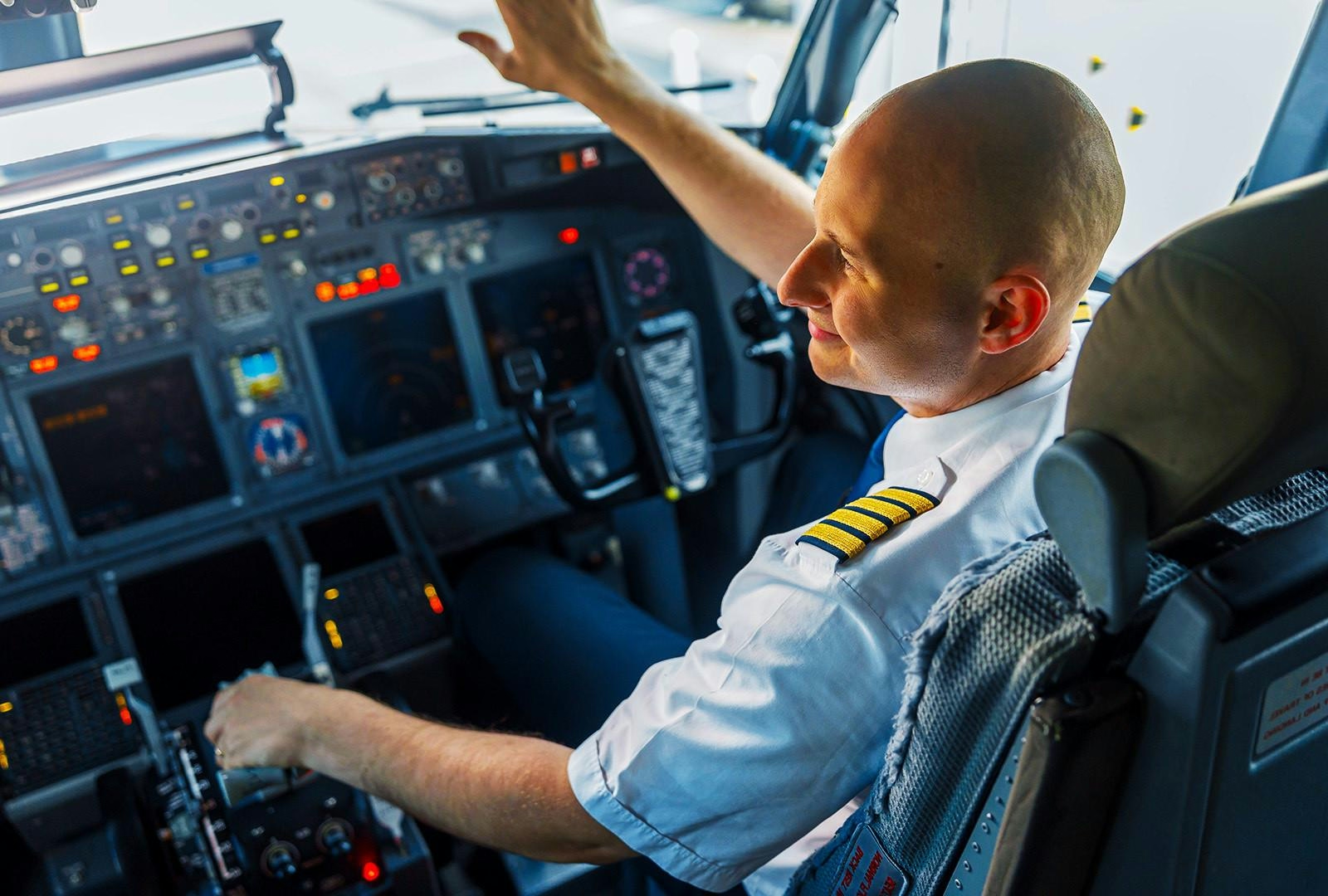
Few aircraft in commercial aviation carry the prestige and operational significance of the Boeing 777. As a vital component of long-haul international travel, the 777 is typically piloted by some of the most seasoned aviators in the industry. In 2026, pilot salaries in the United States are anticipated to reach unprecedented levels, with Boeing 777 pilots positioned at the upper end of the pay scale, particularly at major carriers such as American Airlines, Delta Air Lines, and United Airlines.

Pilot Compensation Structure and Current Trends

Recent collective bargaining agreements at these leading airlines have resulted in substantial increases in hourly pay rates, enhanced benefits, improved retirement contributions, and strengthened job security for pilots. However, pilot compensation in the U.S. differs from many other professions in that it is not based on a fixed annual salary. Instead, earnings are calculated from hourly rates negotiated between airlines and pilot unions, with pay scales that increase in accordance with seniority and experience.

Most major airlines guarantee pilots between 70 and 85 flight hours per month, with 75 hours serving as a common benchmark. This equates to approximately 900 flight hours annually, though federal regulations cap pilots at 1,000 flight hours per year, effectively limiting total earnings. A pilot’s annual pay is estimated by multiplying their hourly rate by the number of hours flown. It is important to note that pilots are compensated only for the time from pushback to arrival at the destination gate; pre-flight preparations, boarding, and post-flight duties are generally unpaid, though hourly rates are structured to account for these responsibilities.

Salary Ranges and Experience Levels

In 2025, typical U.S. pilot salaries vary significantly depending on position and experience. First officers at regional airlines earn between $55,000 and $80,000 annually with 1,500 to 2,500 flight hours and 12 to 24 months of experience. Regional captains earn between $85,000 and $120,000 with 2,500 to 3,500 hours and two to four years of service. First officers at major airlines typically make between $120,000 and $160,000 with 3,500 to 4,500 hours and four to six years of experience. Airline captains, particularly those operating long-haul flights, can earn upwards of $200,000 to $239,000 or more, with over 5,000 flight hours and six or more years of experience.

The transition from first officer to captain marks a significant increase in earnings, often ranging from 50% to 200% more, depending on the airline and aircraft type. This disparity is even more pronounced for pilots flying widebody aircraft such as the Boeing 777.

Outlook for 2026 and Industry Influences

Looking ahead to 2026, several factors are expected to influence the salary trajectory for Boeing 777 pilots. Boeing’s ongoing initiatives to expand its workforce and increase production capacity may intensify competition for pilot positions, potentially affecting salary negotiations. The company’s robust market position and growth prospects, as indicated by its GF Score™ of 75, could support sustained high compensation levels while simultaneously attracting a larger pool of candidates to the profession.

At the same time, competition from manufacturers like Airbus, which is developing new freighter models, may impact pilot demand and influence industry-wide pay scales. Additionally, Boeing’s elevated price-to-earnings (P/E) ratio of 111.41x reflects investor caution regarding the company’s stock valuation. This financial backdrop could indirectly shape how aggressively airlines and manufacturers approach pilot compensation strategies in the coming years.

While Boeing 777 pilots are expected to remain among the highest earners in commercial aviation in 2026, their salaries will continue to be shaped by evolving industry dynamics, workforce expansion efforts, and broader market forces.

More news
China Airlines Introduces AI-Powered Cargo Customer Service

China Airlines Introduces AI-Powered Cargo Customer Service

China Airlines Launches AI-Powered Cargo Customer Service Platform China Airlines has introduced an advanced AI-driven customer service platform designed to enhance its cargo operations. The new system aims to streamline shipment tracking, provide detailed flight information, and offer regulatory guidance to clients across the globe. By integrating real-time shipment tracking with operational systems, the platform delivers comprehensive flight status updates and scheduling details. Additionally, it consolidates cargo regulations from official government and regulatory sources, ensuring users receive accurate and up-to-date professional advice. A notable feature of the platform is its capacity to comprehend complex, multilingual spoken queries, thereby expanding accessibility for the airline’s international clientele. The system operates on a cloud-based smart load-balancing architecture, which optimizes computing resources by reducing demand during off-peak hours and maintaining stable performance during periods of high traffic. China Airlines emphasizes that these technical innovations contribute to energy efficiency and a reduction in carbon emissions. Technical Considerations and Industry Implications The integration of a generative conversational AI layer with live scheduling and tracking systems presents considerable engineering challenges. Experts highlight the necessity of robust data validation and provenance mechanisms to guarantee that the AI’s responses—particularly those related to schedules and regulatory information—are both accurate and auditable. Developing such platforms typically involves creating streaming connectors, establishing canonical event models for shipment states, and implementing rigorous test harnesses to simulate high-concurrency query scenarios. These measures are essential to ensure the system’s correctness and maintain quality of service under heavy load. Despite the anticipated benefits in cost reduction and operational efficiency, industry observers caution that significant challenges remain. The ability of AI to manage complex, high-stakes decisions without human oversight is still limited. Furthermore, transitioning from traditional customer service tools to AI-driven systems may introduce operational and training difficulties for the airline’s workforce. Market responses are expected to focus on the potential efficiency gains, though skepticism persists regarding AI’s capacity to fully replace human agents in customer service roles. Recent incidents, such as Air Canada’s chatbot delivering incorrect information and governance issues at Samsung, underscore the risks associated with exclusive reliance on AI for customer interactions. Competitors may respond by accelerating their own AI adoption or by emphasizing the continued importance of human oversight in customer service. As China Airlines implements its AI-powered cargo customer service platform, it faces the challenge of balancing technological innovation with reliability and customer trust. The airline must carefully navigate the opportunities and risks inherent in deploying advanced AI within critical operational functions.
British Airways Crew May Soon Rest in First Class Cabins

British Airways Crew May Soon Rest in First Class Cabins

British Airways Considers Allowing Crew to Rest in First Class Cabins Cabin crew on long-haul flights endure demanding schedules, often working overnight shifts and spending extended periods away from home. While their foremost responsibility remains passenger safety, ensuring that crew members are adequately rested is critical to maintaining operational standards. Many international airlines equip their widebody aircraft with dedicated crew rest areas; however, British Airways has historically diverged from this practice. Due to considerations related to cost and aircraft weight, the UK flag carrier’s Boeing 787-10s and certain 777-200ERs lack dedicated crew bunks, compelling flight attendants to take breaks in curtained-off jumpseats located in the galley. Proposed Changes to Crew Rest Policy This longstanding arrangement may soon be revised. According to a recent discussion on the Flyer Talk forum, highlighted by One Mile At A Time, British Airways is reportedly preparing to update its crew rest policy for long-haul flights on aircraft without dedicated rest facilities. The anticipated change would permit cabin crew to use vacant seats in first and business class cabins during their rest periods. This adjustment would represent a significant departure from current practices and could provide much-needed comfort and relief for crew members operating on these routes. The use of premium cabin seats for crew rest will be subject to specific protocols. Forum sources indicate that crew members will be required to remove or cover uniform items and utilize the bedding provided for premium cabins. Additionally, British Airways may implement ‘soft blocking’ of certain seats in the World Traveller (economy) cabin—typically the center section of the rearmost row—to reserve these for crew rest on affected aircraft. Industry Context and Implications This potential policy shift emerges amid heightened competition and escalating operational costs within the airline industry. British Airways’ move to enhance crew rest options can be interpreted as an effort to improve crew morale and uphold service quality under challenging conditions. Competitors may respond by adopting similar measures to retain staff satisfaction or by exploring alternative cost-saving strategies. Market reactions are expected to be mixed; while some stakeholders may view the initiative as a positive advancement for crew welfare, others might question the allocation of first-class amenities for non-revenue purposes. The broader industry landscape, characterized by consolidation and an increasing focus on sustainability, may also influence perceptions of this decision. As airlines strive to balance cost efficiency with employee well-being and customer experience, British Airways’ approach could set a precedent or ignite debate regarding optimal strategies for crew rest and resource allocation. British Airways has yet to issue an official statement regarding these rumored changes. The airline has been contacted for comment, and further updates will be provided as more information becomes available.
Ink Innovation Implements CUPPS Platform at Suriname Airport

Ink Innovation Implements CUPPS Platform at Suriname Airport

Ink Innovation Implements CUPPS Platform at Suriname Airport Modernizing Passenger Processing at Johan Adolf Pengel International Airport Ink Innovation has introduced its Common Use Passenger Processing System (CUPPS) at Johan Adolf Pengel International Airport (JAPIA) in Para, Suriname, representing a pivotal advancement in the airport’s ongoing modernization. This deployment, executed in collaboration with Wintel N.V., Ink’s exclusive local partner, establishes a shared infrastructure that seamlessly integrates with airline Departure Control Systems (DCS) across the recently renovated terminal. As the sole operator of JAPIA, Airport Management Ltd. has emphasized aligning the airport’s operations with international standards while preparing for anticipated passenger growth. The implementation of Ink CUPPS is central to this digital transformation, streamlining check-in and boarding procedures and providing a scalable platform to support future passenger services. Enhancing Efficiency and Flexibility Through Technology Delivered via a subscription-based model, Ink CUPPS minimizes upfront capital expenditure and reduces ongoing operational costs for both the airport and its airline partners. By consolidating check-in and boarding functions onto a unified platform, JAPIA can optimize resource allocation and offer airlines a simplified certification process. The system’s compatibility with both modern and legacy DCS environments ensures broad accessibility for all carriers operating at the airport. The platform also supports mobile passenger processing through the Ink Touch app on Apple iPhone devices, enabling airlines to extend check-in and boarding services beyond fixed counters. This capability enhances operational flexibility, allowing the airport to better manage demand surges and maintain continuity during outages or system disruptions. Challenges and Market Response Despite the clear benefits, Ink Innovation faces several challenges in the CUPPS implementation at JAPIA. These include navigating regulatory compliance, ensuring seamless integration with existing airport systems, and addressing potential resistance from stakeholders accustomed to traditional processes. Market reactions have been mixed; while some investors express optimism about the innovative approach and its potential to improve operational efficiency, others remain cautious regarding initial costs and the timeline for realizing long-term returns. Competitors may respond by adopting similar technologies or developing alternative strategies to maintain their market positions. Progress and Industry Impact The rollout is already in progress, with Sky High Dominicana having migrated to the CUPPS platform and FlyAllWays completing certification and becoming fully operational. Additional carriers, including GOL, Copa Airlines, Caribbean Airlines, KLM, and Surinam Airways, are currently undergoing certification. Once certified, these airlines will benefit from full interoperability with all CUPPS-compliant software at JAPIA, as well as access to supplementary services such as Ancillary Payments. Natasha Abdulhak, Chief Commercial Officer of FlyAllWays, remarked on the transition: “Integrating with the Ink CUPPS platform was straightforward and well-supported. Our agents were up and running quickly, and the shared-counter flexibility has made a real difference in our day-to-day operations at Suriname Airport.” This deployment marks a significant milestone in the strategic partnership between Ink Innovation and Wintel N.V., a well-established ICT company with over 25 years of experience in Suriname’s hospitality, banking, and retail sectors. Wintel N.V. is responsible for implementation, on-site support, and ongoing operations as Ink’s exclusive in-country partner.
Aviation Ministry Nears Resolution of AI-171 Crash Compensation Dispute, Secretary Tells House Panel

Aviation Ministry Nears Resolution of AI-171 Crash Compensation Dispute, Secretary Tells House Panel

Aviation Ministry Nears Resolution of AI-171 Crash Compensation Dispute The Union Ministry of Civil Aviation is approaching a resolution in the protracted dispute over compensation for the families of victims of the AI-171 crash, the ministry’s secretary informed a parliamentary committee last week. This assurance came amid growing concerns from the victims’ families, who have expressed unease about being compelled to relinquish their right to pursue legal action in exchange for accepting Air India’s final settlement offer. Anjali Rupani, widow of the late Vijay Rupani, former chief minister of Gujarat and one of the 242 passengers aboard the ill-fated flight, appeared before the Standing Committee on Transport, Tourism, and Culture to seek intervention from Aviation Minister K. Ram Mohan Naidu. Committee members reported that Secretary Samir Kumar Sinha assured them that families “won’t have to face this trouble from Air India,” indicating that the ministry was close to finalizing an agreement with the airline. Background of the Tragedy and Compensation Dispute The crash occurred on 12 June last year when a Boeing 787-8 Dreamliner bound for London crashed seconds after taking off from Ahmedabad, resulting in 260 fatalities. This incident stands as the deadliest accident involving an Indian carrier in four decades. The tragedy was further compounded when the aircraft struck a nearby hostel at B.J. Medical College. Since Air India initiated its final settlement offers in October, the compensation process has been fraught with controversy. Families were initially provided an interim payment of Rs 25 lakh per victim, along with a Rs 1 crore ex-gratia payment from the Tata-run AI-171 Memorial and Welfare Trust. However, the airline required families to sign a receipt, discharge, and indemnity document that effectively waived their rights to present and future claims not only against Air India but also against Boeing, engine manufacturer GE, Honeywell, Safran, the Union of India, and the Ahmedabad airport operator. This clause sparked objections from several families, who argued that accepting compensation under these terms would force them to forgo their right to seek accountability, particularly before the Aircraft Accident Investigation Bureau (AAIB) completes its inquiry. Radhika Mishra, daughter of Vijay Rupani, had previously appealed to Tata Sons chairman N. Chandrasekaran to remove the waiver clause. In response, Air India stated that families were free to await the investigation report before accepting any settlement, with no deadline imposed for acceptance. Investigation Delays and Safety Concerns The resolution process has been further complicated by ongoing investigations into the Boeing 787-8 Dreamliner’s engines in the United States, which have delayed the release of the final crash report beyond the one-year deadline. This delay has attracted scrutiny from market observers concerned about the integrity of the investigation and has raised questions about Boeing’s reputation, particularly regarding the Dreamliner’s safety record. Competing aircraft manufacturers have seized the opportunity to emphasize their own safety standards. The AAIB is expected to submit a status report this week, with a comprehensive final report anticipated within the next three months. Earlier this year, the parliamentary committee recommended the establishment of an independent high-level panel on aviation safety, citing the Ahmedabad crash alongside nearly 100 safety lapses recorded in a single year and recurring technical issues. The committee also advocated for the introduction of a passenger rights charter under the Bharatiya Vayuyan Adhiniyam, 2024, and called for expedited recruitment at the Directorate General of Civil Aviation (DGCA). Under the Montreal Convention, Air India is strictly liable for compensation up to approximately Rs 1.9 crore per victim. However, the ongoing dispute and delays in the investigation have left many families in a state of uncertainty as they await both compensation and definitive answers.
Rolls-Royce Provides Real-Time Engine Data for Bombardier Jets

Rolls-Royce Provides Real-Time Engine Data for Bombardier Jets

Rolls-Royce Introduces Real-Time Engine Data for Bombardier Global Jets Rolls-Royce has launched an advanced aircraft and engine health monitoring program tailored for Bombardier’s Global 5500 and Global 6500 business jets. This initiative integrates Rolls-Royce’s Pearl engine Vibration & Health Monitoring Unit (EVHMU) with Bombardier’s Smart Link Plus system, enabling operators enrolled in Rolls-Royce CorporateCare® Enhanced to receive real-time, automatic transmission of engine performance and health data. The system facilitates predictive maintenance, accelerates troubleshooting processes, and enhances overall aircraft availability. Enhancing Maintenance and Operational Efficiency The monitoring solution tracks up to 10,000 engine health parameters, delivering actionable insights to both operators and Rolls-Royce. These insights support optimized maintenance scheduling and help maximize operational uptime. This development forms part of Rolls-Royce’s broader commitment to digital innovation, emphasizing predictive maintenance and superior customer support within the business aviation sector. Industry Challenges and Competitive Landscape The introduction of real-time engine data solutions occurs amid ongoing industry challenges. Rolls-Royce’s reliance on exclusivity agreements has attracted scrutiny, particularly in light of recent disputes such as those involving United Airlines and concerns over engine shortages. These issues have intensified focus on the company’s supply chain resilience and its ability to meet increasing demand for advanced monitoring technologies. Competitors are also responding to the evolving market. General Electric, which dominates the Boeing 787 engine segment, is expected to capitalize on its scale to offer competitive engine monitoring solutions. Meanwhile, Rolls-Royce’s success in delivering fuel efficiency improvements with its XWB-84 EP engine strengthens its position against rivals. Nevertheless, supply constraints and the imperative to maintain customer confidence remain significant challenges as Rolls-Royce navigates a highly competitive and rapidly changing environment. As Rolls-Royce expands its digital capabilities in business aviation, the industry will closely observe its capacity to provide reliable real-time data and maintain robust customer support.
Vietnam Airlines Plans to Acquire Up to 30 Wide-Body Aircraft

Vietnam Airlines Plans to Acquire Up to 30 Wide-Body Aircraft

Vietnam Airlines Plans Major Fleet Expansion with Up to 30 Wide-Body Aircraft Vietnam Airlines has announced plans to acquire up to 30 new wide-body aircraft as part of a comprehensive fleet modernization and expansion strategy. Chairman Dang Ngoc Hoa revealed that the airline is currently preparing an investment proposal for submission to regulatory authorities and is engaged in discussions with Boeing, Airbus, and international aircraft lessors. The acquisition strategy is expected to involve a combination of purchases and leases to meet future capacity requirements. This planned wide-body expansion complements an existing order for 50 next-generation Boeing narrow-body jets, which are scheduled for delivery between 2030 and 2032. To address more immediate capacity needs, Vietnam Airlines also intends to lease approximately 20 narrow-body aircraft during 2027 and 2028. The airline’s current fleet comprises around 105 aircraft, including 31 wide-body jets. Strategic Rationale and Industry Context Chairman Hoa emphasized that the global aviation industry continues to face aircraft shortages in the aftermath of the COVID-19 pandemic, making early negotiations with manufacturers and lessors essential to securing future capacity. The planned fleet upgrades aim to modernize Vietnam Airlines’ aircraft, improve fuel efficiency, reduce emissions, and strengthen the carrier’s competitiveness on international routes. Despite these ambitions, the expansion faces significant challenges, particularly in securing adequate financing. Recently, Vietnam Airlines obtained a $2.9 billion loan from the Export-Import Bank of the United States to support its Boeing 737 Max 8 orders, highlighting the substantial investment required for fleet renewal. The airline’s expansion plans also come amid intensifying competition, with global carriers such as American Airlines considering wide-body orders to keep pace with rivals like Delta and United. Regionally, competitors including Sun PhuQuoc Airways are expanding their fleets and networks to capitalize on growing leisure travel demand, potentially increasing market pressures. Network Growth and Market Focus Chief Executive Le Hong Ha highlighted the airline’s recent network expansion, noting new or announced routes to Amsterdam, Phuket, and Colombo in the first half of the year. Additionally, Vietnam Airlines has increased frequencies to destinations such as Singapore, Manila, Moscow, Kaohsiung, Melbourne, and Sydney. The airline plans to prioritize long-haul markets in Europe and Australia while continuing to expand services across Northeast Asia, Southeast Asia, India, and China. Ha reported strong demand on European routes, with seat occupancy rates reaching approximately 91 percent, partly due to service suspensions by some Middle Eastern carriers amid regional conflicts. Vietnam Airlines intends to maintain its focus on business travelers, international passengers, and frequent flyers. Meanwhile, its subsidiaries Pacific Airlines and VASCO will continue to serve more price-sensitive market segments. As Vietnam Airlines advances its fleet expansion, the carrier seeks to secure the capacity necessary for sustained growth while navigating financial constraints and heightened competition in a rapidly evolving global aviation environment.
Hospitals Seek Partnerships with Air Ambulance Services to Enhance Emergency Care

Hospitals Seek Partnerships with Air Ambulance Services to Enhance Emergency Care

Hospitals Seek Partnerships with Air Ambulance Services to Enhance Emergency Care Emerging Collaborations in India’s Healthcare and Air Mobility Sectors As India anticipates the commercial introduction of air taxis, the healthcare sector is proactively exploring the integration of this emerging technology to revolutionize emergency medical services. While the Directorate General of Civil Aviation (DGCA) continues to formulate regulatory frameworks governing operations, infrastructure, and manufacturing, hospital chains, healthcare companies, and air ambulance providers are actively engaging with manufacturers of electric vertical takeoff and landing (eVTOL) aircraft. These collaborations aim to expedite medical evacuations and improve emergency response capabilities across the country. Startups such as Chennai-based The ePlane Company and Bengaluru-based Sarla Aviation have confirmed ongoing discussions and formal agreements with prominent hospital groups and air ambulance operators. Sarla Aviation has secured partnerships with Aster DM Healthcare, Kerala-based Blue Dot Air Ambulance, and Delhi-based Aeromed Air Ambulance. Meanwhile, The ePlane Company, incubated at IIT Madras, is in negotiations with three of India’s top five healthcare groups and has established a strategic alliance with the International Critical-care Air Transfer Team (ICATT) to provide 788 air ambulances. Most of these aircraft are projected to enter commercial service after 2029. Although specific hospital names remain confidential, industry insiders indicate that leading healthcare providers such as Apollo Hospitals, Manipal Hospitals, Fortis Healthcare, and Max Healthcare are actively evaluating or advancing partnership discussions with eVTOL manufacturers. Two of these groups are reportedly in advanced stages of negotiation. Satya Chakravarthy, founder of The ePlane Company, noted, “We have actually tied up with air ambulance operators as well as international startup charter plane operators. There is advanced work going on with some marquee hospitals. We expect to make an announcement regarding that at the Farnborough International Airshow in July.” Global Context and Regulatory Challenges On the global stage, China currently leads with operational commercial passenger eVTOL services in cities including Guangzhou, Hainan, and Shenzhen. Dubai is anticipated to follow suit, while the United States remains in the certification phase. India, by contrast, is still navigating the regulatory approval process. Rakesh Gaonkar, co-founder and CTO of Sarla Aviation, stated, “We have already signed an MoU with Aster, and are in talks with a few other hospital chains. We are expected to get a DOA (design organisation approval) certificate within three months.” Despite the promising outlook, hospitals face significant challenges in forging partnerships with air ambulance services. Regulatory complexities, the need to harmonize operational protocols, and financial considerations present substantial hurdles. The competitive landscape is intensifying as air ambulance providers seek to secure market share by forming exclusive partnerships or enhancing existing service offerings. Infrastructure Development and Industry Investment In parallel, eVTOL manufacturers are collaborating with infrastructure providers to support the future of urban air mobility (UAM). This includes partnerships with charging ecosystem players such as Jio-BP. The ePlane Company recently announced the assembly of its full-scale electric aircraft platform, the e200X, designed to serve passenger air taxis, urban cargo transport, and air ambulance operations. The e200X project benefits from backing by industry figures including Vishesh Rajaram of Speciale Invest, Eash Sundaram of JetBlue, and Aditya Ghosh of Homage and Akasa Air. Despite the sector’s high investment threshold, recent data reveals sustained deal activity in health services through 2026, underscoring a strategic emphasis on technological innovation and optimization. As these partnerships between hospitals and air ambulance providers advance, they are set to significantly transform the delivery of emergency care in India.
Wheels Up Becomes Launch Customer for Surf Air’s Palantir-Integrated Charter Broking Software

Wheels Up Becomes Launch Customer for Surf Air’s Palantir-Integrated Charter Broking Software

Wheels Up Becomes Launch Customer for Surf Air’s Palantir-Integrated Charter Broking Software Wheels Up has entered into a landmark agreement to become the launch customer for Surf Air Mobility’s new Enterprise BrokerOS, an AI-powered charter broker platform developed in collaboration with Palantir Technologies. The contract, initially spanning two years with an option to extend for a third, is valued at up to $12 million in subscription fees and includes standard software service guarantees. Modernizing Private Aviation Charter Operations This partnership represents a pivotal moment in Wheels Up’s strategic transformation, as the company seeks to modernize its charter workflow by adopting Surf Air Mobility’s BrokerOS. The platform leverages Palantir’s advanced AI and data integration capabilities to streamline the private aviation charter process. By consolidating critical data sources, BrokerOS enables faster, more informed decision-making, enhancing operational efficiency and customer experience. George Mattson, CEO of Wheels Up, highlighted the strategic significance of the collaboration, stating, “By combining Wheels Up’s scale, brand, and aviation expertise with Surf Air Mobility’s transformative aviation software and Palantir’s leadership in AI, we are setting a new standard for how private aviation is sold, operated, and experienced. This is technology as a competitive advantage in the marketplace, not a back-office function.” BrokerOS is set to replace multiple legacy software platforms currently in use at Wheels Up, thereby freeing engineering and operational resources to focus on higher-value initiatives. The deployment is anticipated to yield both cost savings and productivity gains, while also driving growth in charter operations. Key benefits include streamlined aircraft sourcing, quote generation, booking, and customer relationship management. The platform consolidates supply across Wheels Up’s owned fleet and third-party operator network, automates manual workflows to enable brokers to manage higher transaction volumes, and provides real-time business intelligence for actionable insights. Industry Implications and Future Outlook Liam Fayed, co-founder of Surf Air Mobility, remarked on the platform’s tailored design for private aviation complexities, noting that the success of their own On Demand private charter business has reinforced confidence in BrokerOS’s capabilities. He described Wheels Up as an ideal enterprise launch customer, given its mission to be the most technologically advanced private aviation company and its potential to demonstrate BrokerOS’s impact at scale. Ted Mabrey, Global Head of Commercial at Palantir, emphasized the technical challenge Surf Air has overcome in codifying operator expertise into scalable technology. He affirmed that Wheels Up’s adoption of SurfOS validates Surf Air’s operational insights and that Palantir’s ontology and technological backbone ensure enterprise-grade security, governance, and access to cutting-edge AI. As Wheels Up integrates BrokerOS into its operations, the company may encounter challenges related to merging the new platform with existing systems. This development is expected to attract attention from other business aviation firms, potentially accelerating the adoption of AI-driven charter management solutions across the industry. Competitors may respond by expediting their own technology upgrades to maintain market competitiveness. Additionally, regulatory authorities are likely to scrutinize the software to ensure compliance with aviation standards as the sector adapts to increasingly sophisticated digital tools.
How AI Is Transforming Industries Worldwide

How AI Is Transforming Industries Worldwide

How AI Is Transforming Industries Worldwide Artificial intelligence is rapidly reshaping industries across the globe, generating both optimism and concern. Its growing prevalence is influencing sectors ranging from business aviation and hospitality to finance and technology, prompting companies to rethink strategies and operations in profound ways. The Changing Landscape of Business Aviation and Corporate Travel In the realm of business aviation, AI is streamlining administrative processes, enabling operators to concentrate more on customer service. While manufacturers have long employed AI to enhance aircraft reliability, new AI-driven innovations are emerging, promising further advancements. Despite these technological gains, the value of personal relationships and the discreet nature of business aviation continue to serve as key differentiators. Contrary to earlier predictions that digital tools would reduce the need for in-person meetings, industry leaders now observe the opposite trend. Kerstin Mumenthaler, CEO of Axis Aviation, notes that increased automation is actually driving a greater demand for face-to-face interactions. Shawn Holstein, CEO of Holstein Aviation, adds that as AI blurs the distinction between real and artificial experiences, personal meetings are poised to regain prominence, potentially increasing business travel in a post-pandemic world. AI’s Impact on Finance, Hospitality, and Technology The financial sector is undergoing a significant transformation as retail investors increasingly adopt AI-powered trading bots. These tools offer enhanced efficiency and help mitigate emotional biases in decision-making, thereby amplifying the influence of AI-driven systems in global markets. Meanwhile, the hospitality industry is adapting to a new reality where AI-generated recommendations have become a primary means for travelers to discover hotels. This shift has made visibility in AI responses a critical competitive factor, compelling hotels and travel companies to revise their distribution strategies accordingly. Within the broader technology sector, the AI investment cycle is evolving from infrastructure development to application deployment. This transition is prompting companies to reevaluate their partnerships and platforms. Established software and technology service providers face significant challenges as enterprises seek vendors capable of fully harnessing AI’s transformative potential to improve operations and decision-making processes. Economic and Policy Implications of the AI Revolution The global race to capitalize on AI carries substantial risks. Nations that fail to secure a foothold in the AI supply chain may confront widespread job losses and shrinking tax revenues, potentially giving rise to a permanent economic underclass. Policymakers face the urgent task of ensuring their economies remain competitive and inclusive as AI continues to reshape the global economic order. AI companies themselves are becoming increasingly important consumers of business services. Rapidly growing firms such as Anthropic, which reported $4.8 billion in first-quarter sales and is approaching profitability, are driving demand for services including aviation. Reflecting evolving corporate travel preferences, some of these companies may favor fractional ownership or charter solutions over outright aircraft ownership. As AI continues to transform industries worldwide, success will depend on the ability to adapt swiftly—embracing technological innovation while maintaining the human connections that remain central to business.
WSA Delivers Second B737-400SF to Skyway Airlines

WSA Delivers Second B737-400SF to Skyway Airlines

WSA Delivers Second Boeing 737-400SF to Skyway Airlines World Star Aviation (WSA) has completed the delivery of a second Boeing 737-400SF freighter to Skyway Airlines, a move that significantly bolsters the Philippines-based carrier’s cargo operations throughout the Asia-Pacific region. This latest acquisition follows the successful handover of the first aircraft and is expected to enhance Skyway’s capacity in one of the world’s fastest-growing air freight markets. André Abreu, Vice President of Marketing and Sales at WSA, emphasized the strength of the partnership between the two companies. He noted that the second delivery reflects the solid relationship established since Skyway’s launch as a cargo carrier. Abreu expressed gratitude for Skyway’s continued confidence in WSA’s team and highlighted the company’s commitment to providing cost-effective freighter solutions. He also expressed optimism about further collaboration in the years ahead. José Peralta, Chief Executive Officer of Skyway Airlines Inc., welcomed the fleet expansion with enthusiasm. He described the arrival of the third aircraft—and second from WSA—as a significant milestone that will reinforce the airline’s network across the Asia-Pacific region. Peralta praised WSA for its professionalism and dedication throughout the delivery process, underscoring the importance of this partnership to Skyway’s growth ambitions. Navigating a Shifting Aviation Landscape The delivery of the new freighter occurs amid considerable transformation within the global aviation industry. European carriers are undergoing consolidation in response to persistent challenges, creating a more competitive and evolving market environment. Concurrently, a recent surge in fuel prices in the United States has exacerbated disparities between stronger and weaker airlines, influencing operational costs and strategic decision-making worldwide. In the secondhand aircraft market, industry figures such as Michael O’Leary have observed that the return of jets from carriers like Spirit Airlines is unlikely to significantly ease market pressures. This highlights the complexities airlines face when attempting to expand or modernize their fleets in the current climate. Against this backdrop, Skyway Airlines’ continued investment in its cargo fleet signals both resilience and ambition. As the airline contends with rising costs and intensifying competition, its partnership with WSA and the integration of the Boeing 737-400SF freighter are set to play a pivotal role in advancing its growth strategy across the Asia-Pacific region.
line









