
Orchestrer les insights d’IA pour les transformer en actions

Tendances
Categories
Raytheon Delivers First PhantomStrike System to South Korea
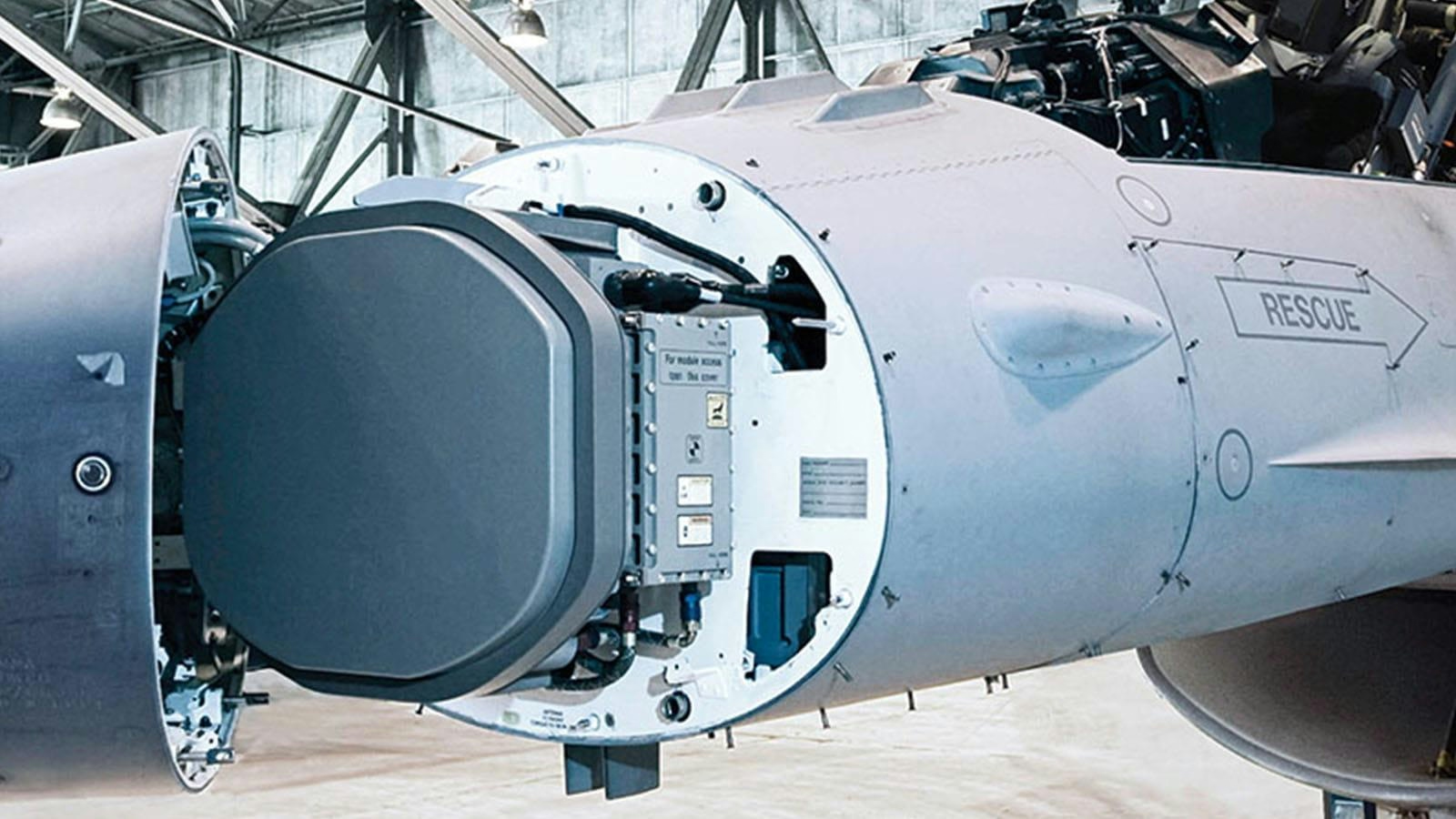
Raytheon Delivers First PhantomStrike Radar System to South Korea
Raytheon has officially delivered its inaugural PhantomStrike radar system to Korea Aerospace Industries (KAI) for integration into South Korea’s FA-50 Light Combat Aircraft fleet. This delivery represents a significant advancement in the country’s ongoing efforts to modernize and enhance its air defense capabilities amid a complex regional security landscape.
Advanced Radar Technology for Modern Combat
The PhantomStrike radar system is distinguished by its air-cooled design and incorporation of high-efficiency Gallium Nitride technology, coupled with sophisticated fire control capabilities. Engineered to meet the stringent power, weight, and size requirements of various platforms—including uncrewed aerial vehicles, light-attack aircraft, fighter jets, and helicopters—the system provides robust detection, tracking, and targeting of long-range threats. Its key attributes include fast and agile digital beam steering, advanced target detection, and strong resistance to electronic jamming.
Dan Theisen, president of Advanced Products and Solutions at Raytheon, emphasized the system’s strategic value, stating, “In an increasingly complex and contested battlespace, aircrew need to make informed, split-second decisions to ensure mission success. Delivering the first PhantomStrike system to KAI marks a pivotal step in equipping our customers with the advanced technology needed to maintain a decisive advantage in combat.”
The radar offers fire control capabilities on par with those found in modern fighter aircraft, yet weighs only half as much as typical active electronically scanned array (AESA) radars. Approved for export under Direct Commercial Sale regulations, PhantomStrike is manufactured across Raytheon’s facilities in Forest, Mississippi; Tucson, Arizona; and Scotland, with additional support from Raytheon UK.
Testing, Integration, and Strategic Implications
Raytheon completed a series of flight tests in 2025 using its Multi-Program Testbed aircraft, successfully demonstrating the radar’s air-to-air and air-to-ground performance. A laboratory unit was also delivered in August to facilitate integration testing with the FA-50 platform, underscoring the company’s commitment to seamless operational deployment.
As the integration process advances, Raytheon faces several challenges, including ensuring full compatibility with South Korea’s existing defense infrastructure and managing logistical complexities associated with deployment. Furthermore, the introduction of such advanced technology may have diplomatic ramifications, particularly given the sensitivity of regional powers to shifts in military capabilities.
The delivery has generated notable market interest, potentially bolstering Raytheon’s stock performance and prompting competitive responses from other defense contractors. South Korean firms may accelerate efforts to enhance their own defense offerings, while global players such as Lockheed Martin and BAE Systems are likely to intensify development of comparable advanced radar and weapons systems.
Raytheon, an RTX business, continues to assert its leadership in defense technology innovation. The successful delivery of the PhantomStrike system to South Korea highlights the increasing demand for next-generation military capabilities in a rapidly evolving global security environment.

Etihad Airways Suspends Airbus A380 Flights on Key Route

Aditya Birla Group Seeks Approval for Aircraft Leasing in GIFT City

Qatar Airways Highlights Innovation and Connectivity at Arabian Travel Market 2026

Hong Kong's Five-Year Plan Includes Andrew Fan's Aircraft Parts Processing Hub Proposal

ACIA Aero Leasing Delivers ATR72-600 to Air Nostrum

RTX Appoints Jill Albertelli as Head of Pratt & Whitney

TAT Technologies Joins Beyond Aero Hydrogen Aircraft Program

AURAK Study Highlights Barriers to Air Taxi Adoption in Emerging Economies

Xiamen Air Selects Altitude for 787 Maintenance at Heathrow

Etihad and Swissport Extend Global Partnership
