
Orchestrer les insights d’IA pour les transformer en actions

Tendances
Categories
Report Identifies Fuel Cut-Off as Cause of China Eastern Crash
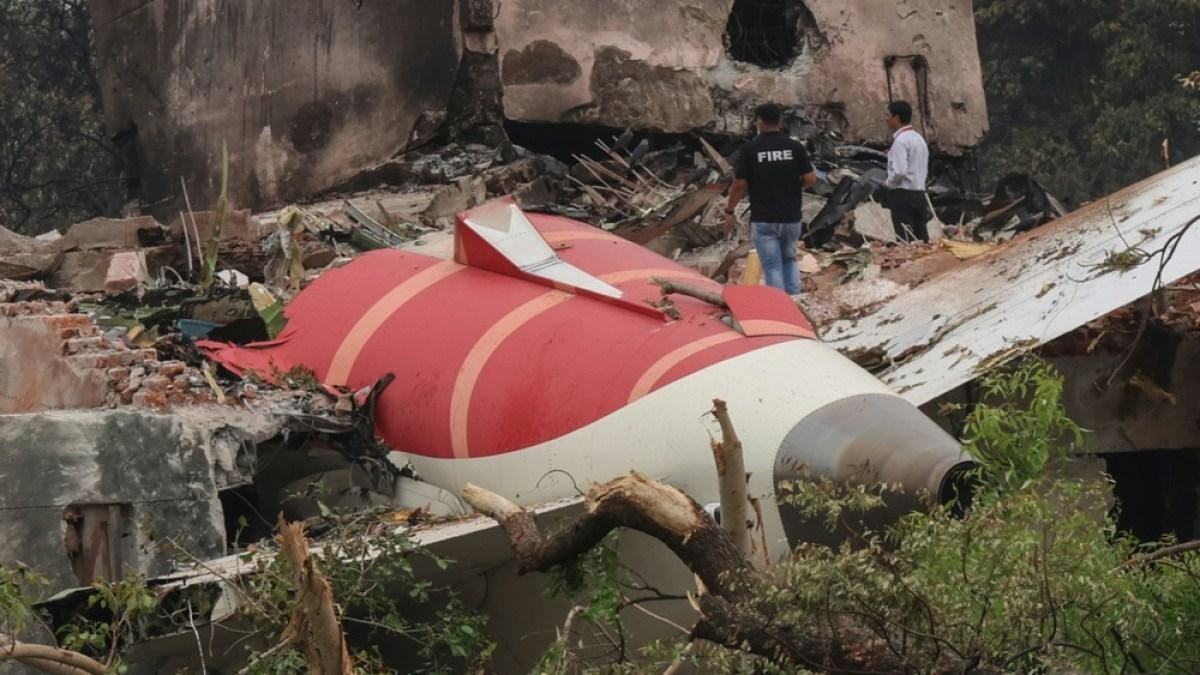
Report Identifies Fuel Cut-Off as Cause of China Eastern Crash
Details of the Incident and Initial Investigation
In March 2022, a China Eastern Airlines flight experienced a sudden and rapid descent from its cruising altitude of 29,100 feet (9,000 meters). Flight tracking data from FlightRadar24 revealed that within just over two minutes, the aircraft plummeted to 9,075 feet, with its final recorded position at 14:22 local time showing an altitude of 3,225 feet before the crash. The Civil Aviation Administration of China (CAA) led the investigation into the accident, with technical support from the United States National Transportation Safety Board (NTSB), given the Boeing 737’s American design and manufacture.
At the outset, investigators explored various potential causes, including mechanical failure, pilot error, or deliberate interference. During the descent, air traffic controllers attempted multiple times to establish contact with the flight crew but received no response. The CAA confirmed that the pilots held valid licenses, were adequately rested, and had passed health checks on the day of the flight, ruling out fatigue or medical incapacitation as immediate factors.
Emerging Theories and Official Responses
Following the crash, media speculation suggested that the incident might have resulted from intentional actions by someone in the cockpit. The CAA publicly refuted these claims, emphasizing that such rumors were misleading and detrimental to the integrity of the ongoing investigation. Wu Shijie, a CAA official, stated at an April 2022 press conference that these unfounded allegations had seriously misled the public and interfered with investigative efforts.
New Findings from the NTSB
Recent disclosures from the NTSB, made available through a Freedom of Information Act request, have shed new light on the cause of the crash. The report indicates that the fuel supply to both engines was deliberately cut off while the aircraft was still at cruising altitude. Specifically, the fuel switches for both engines were moved to the “cut-off” position, resulting in the shutdown of both engines and triggering the rapid descent. The NTSB report suggests this action likely occurred amid a struggle between the pilots, pointing to an intentional act that may have constituted a murder-suicide. The aircraft descended thousands of meters in under three minutes before impact.
Ongoing Controversy and Lack of Transparency
Despite these revelations, the Chinese authorities have yet to release a final report on the incident. The CAA has cited concerns that disclosing further details could “endanger national security and social stability.” This stance has drawn criticism from the NTSB, which has expressed frustration over the lack of transparency, noting that the absence of a comprehensive final report has hindered international understanding of the crash.
While aviation accidents remain rare in China, where safety standards have markedly improved over recent decades, the China Eastern crash has attracted significant international attention. The incident has reignited calls for greater openness and transparency in the investigation of aviation accidents.

Etihad Airways Suspends Airbus A380 Flights on Key Route

Aditya Birla Group Seeks Approval for Aircraft Leasing in GIFT City

Qatar Airways Highlights Innovation and Connectivity at Arabian Travel Market 2026

Hong Kong's Five-Year Plan Includes Andrew Fan's Aircraft Parts Processing Hub Proposal

ACIA Aero Leasing Delivers ATR72-600 to Air Nostrum

RTX Appoints Jill Albertelli as Head of Pratt & Whitney

TAT Technologies Joins Beyond Aero Hydrogen Aircraft Program

AURAK Study Highlights Barriers to Air Taxi Adoption in Emerging Economies

Xiamen Air Selects Altitude for 787 Maintenance at Heathrow

Etihad and Swissport Extend Global Partnership
