
Orchestrer les insights d’IA pour les transformer en actions

Tendances
Categories
Rest and Sleep Facilities for Cabin Crew on the Airbus A350-1000
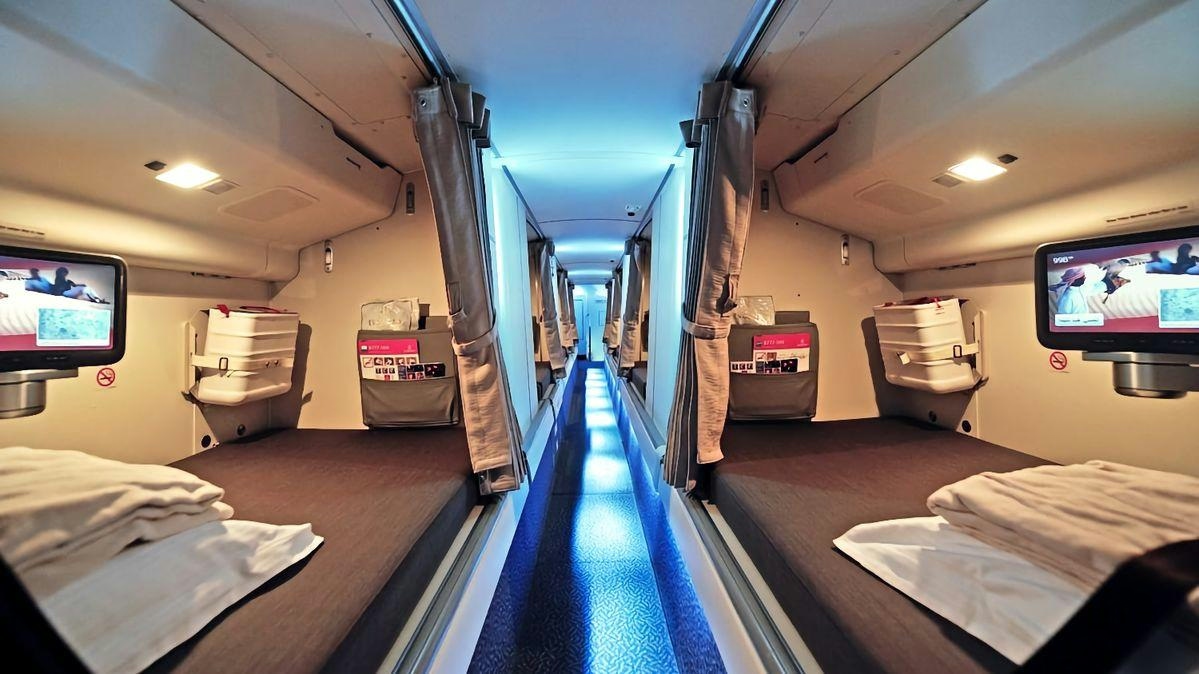
Rest and Sleep Facilities for Cabin Crew on the Airbus A350-1000
Dedicated Crew Rest Areas on Ultra-Long-Haul Flights
On ultra-long-haul flights, the rest arrangements for cabin crew extend far beyond simply occupying an empty passenger seat. Modern widebody aircraft such as the Airbus A350-1000 are specifically designed with dedicated rest compartments for crew members. These facilities enable staff to rotate through scheduled breaks, ensuring they remain alert and effective in both service delivery and emergency response during flights that can exceed 18 hours in duration.
These rest areas are deliberately concealed from passengers. On the A350-1000, crew rest compartments are typically accessed through unmarked doors located near or within the rear galley. Rather than entering at aisle level, crew members ascend a compact staircase into a compartment situated above the passenger cabin, commonly known as the “crown area.” This vertical separation provides a quiet and private environment without compromising valuable cabin space.
Design and Functionality of Crew Rest Compartments
Inside the rest area, the environment is functional and subdued, featuring a series of bunks separated by curtains, basic lighting, climate controls, and essential safety equipment such as seatbelts and oxygen masks. The design adheres to stringent safety regulations that govern everything from bunk dimensions to emergency access protocols. Notably, these compartments contain no avionics and serve no flight control functions.
The proximity of these rest areas to the galley is strategically chosen for operational efficiency. Crew members can seamlessly hand over their duties, take their scheduled rest, and return to service discreetly, without passengers becoming aware of their absence. The doors to these compartments are intentionally plain, preserving the illusion that no additional space lies behind them. Passengers passing by are unlikely to suspect the presence of a hidden sleep area just steps away.
Variations and Operational Challenges
The configuration of crew rest facilities on the A350-1000 varies among airlines. Some place bunks above the main cabin, while others locate them below deck, accessible via ladders or stairs. This flexibility allows airlines to customize the layout according to their operational requirements and service models.
The integration of advanced crew rest facilities presents certain challenges. The A350-1000’s luxury-focused cabins, which include first-class suites with private bathrooms, underscore the increasing emphasis on passenger comfort but also raise questions about balancing space allocation for crew welfare. Airlines such as Emirates have expressed interest in incorporating similar amenities for their crews; however, operational difficulties persist. Emirates, for example, is currently contending with engine durability issues on the A350-1000, which have delayed both the aircraft’s adoption and the introduction of new crew rest features.
Similarly, Qantas’s Project Sunrise, an ambitious initiative to launch nonstop ultra-long-haul flights, has encountered repeated delays due to supply chain disruptions affecting the delivery of specially modified A350-1000 aircraft. These setbacks directly impact the rollout of enhanced crew rest areas, highlighting the complexities involved in integrating such amenities while maintaining aircraft reliability and adhering to delivery schedules.
The concealed rest facilities on the Airbus A350-1000 exemplify the delicate balance between operational efficiency, crew welfare, and passenger experience—a dynamic challenge as airlines continue to expand the frontiers of ultra-long-haul travel.
Embraer Delivers 2,000th E-Jet as Airbus A220 Seeks Market Share
iniBuilds Releases Second In-Depth A380 Video
Ryanair and Alaska Airlines Apply AI to Operational Decision-Making

Digital Payments, AI, and Aviation Strengthen Philippines-India Relations
PlaneSense Suspends PC-12 Jet Card Sales
How AI Could Transform Bird-Strike Prevention for Business Aviation
American Airlines and Boeing Complete First 737 MAX Landing Gear Swap

Vietjet and Thales sign major MRO and AI deals in Paris
Etihad CEO Cites Aircraft Capacity as Limiting Factor Amid Growth in China and Africa
Artificial Intelligence Enters the Cockpit
