
Orchestrer les insights d’IA pour les transformer en actions

Tendances
Categories
Rising Jet Engine Demand Boosts Aerospace Supply Chain Stocks
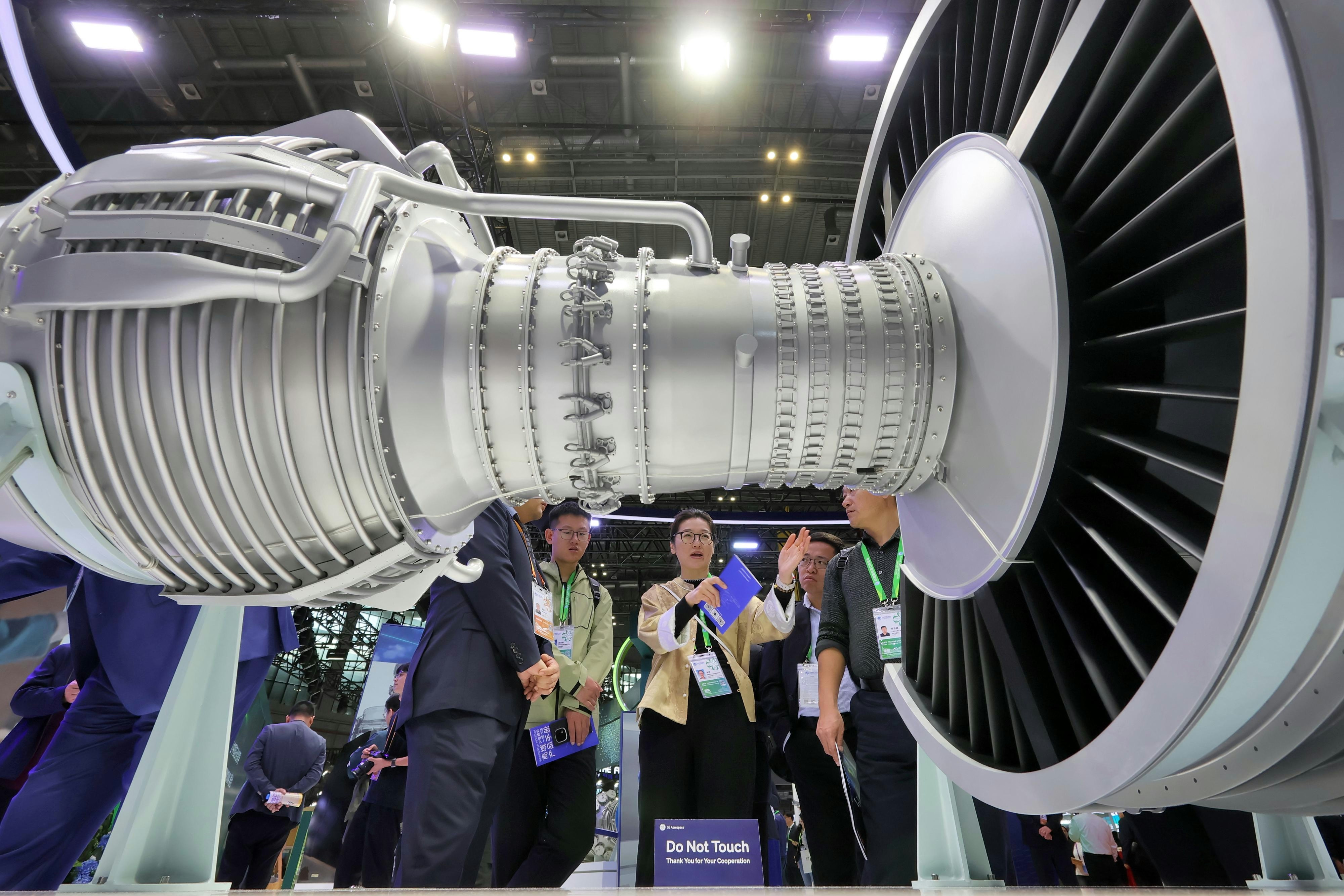
Rising Jet Engine Demand Boosts Aerospace Supply Chain Stocks
Aerospace supply chain stocks have emerged as a prominent segment within the industrial market, driven by a surge in jet engine demand, persistent aircraft delivery delays, and increased maintenance requirements across global fleets. This momentum is not solely linked to new aircraft production; ongoing bottlenecks have extended the operational lifespan of older planes, thereby elevating the need for critical components and maintenance services.
Investor Focus Shifts Toward Engine Suppliers
Investor interest has increasingly concentrated on aerospace suppliers with significant exposure to jet engines, certified parts, and recurring maintenance, repair, and overhaul (MRO) revenues. The investment narrative has evolved from a broad airline recovery to a more targeted theme emphasizing suppliers benefiting from robust engine demand, extended production backlogs, and constrained component supply.
Recent financial results underscore this trend. Howmet Aerospace reported a 19% increase in first-quarter 2026 revenue, reaching $2.31 billion, alongside a 42% rise in adjusted earnings per share to $1.22. Its Engine Products segment notably experienced a 29% revenue increase, highlighting the concentration of demand in this area. The global aviation MRO market surpassed $136 billion in 2025 and is projected to approach $193 billion by the end of the decade, reflecting a strong sector outlook. However, following significant share price gains, valuation risks are becoming more pronounced.
Industry Dynamics and Supply Chain Challenges
The post-pandemic recovery in commercial aviation has unfolded in two distinct phases. The initial rebound during 2022 and 2023 was fueled by unexpectedly strong passenger demand. The current phase, defining 2025 and 2026, is characterized by production constraints at Boeing and Airbus, which have struggled to meet airlines’ delivery schedules. Boeing’s well-documented production challenges and Airbus’s engine supply issues—exacerbated by Pratt & Whitney GTF inspections—have resulted in hundreds of aircraft being grounded. Consequently, the global fleet is aging and accumulating more flight hours per airframe, increasing the frequency of required maintenance.
For suppliers of engine parts and components, these constraints serve as a significant advantage. Jet engines, which demand high-value materials and precision manufacturing, generate recurring demand for certified replacement parts and aftermarket services. Once a supplier is integrated into an engine platform, it can secure long-term revenue streams from both original equipment manufacturing and ongoing maintenance contracts.
Broader Market Pressures and Risks
Despite the sector’s positive outlook, supply chain disruptions remain a persistent challenge. Companies such as Bombardier and Gulfstream have encountered delivery delays due to widespread industry supply chain issues. Geopolitical tensions, particularly those impacting Boeing’s delivery schedule and order book, introduce additional uncertainty. The ongoing Iran-U.S. conflict has disrupted the supply of raw materials, especially oil-based products and metals, complicating procurement efforts for aerospace manufacturers.
Further exacerbating these challenges, the 2026 global fuel crisis has caused jet fuel prices to double, intensifying pressure on airline operating costs and raising concerns about potential supply shortages, particularly in Europe and Asia. These factors may temper the otherwise strong momentum for aerospace supply chain stocks, even as demand for jet engines and maintenance remains elevated.
Outlook
Boeing’s first-quarter 2026 results highlight the scale of ongoing backlogs, with 143 commercial aircraft delivered and more than 6,100 still awaiting production. As airlines contend with delivery delays and rising operational costs, value is increasingly shifting from airlines and aircraft manufacturers toward suppliers possessing scarce capacity and critical expertise. While the sector faces notable risks, the sustained demand for jet engines and maintenance positions aerospace supply chain stocks as a focused industrial theme for investors navigating a complex global environment.

Etihad Airways Suspends Airbus A380 Flights on Key Route

Aditya Birla Group Seeks Approval for Aircraft Leasing in GIFT City

Qatar Airways Highlights Innovation and Connectivity at Arabian Travel Market 2026

Hong Kong's Five-Year Plan Includes Andrew Fan's Aircraft Parts Processing Hub Proposal

ACIA Aero Leasing Delivers ATR72-600 to Air Nostrum

RTX Appoints Jill Albertelli as Head of Pratt & Whitney

TAT Technologies Joins Beyond Aero Hydrogen Aircraft Program

AURAK Study Highlights Barriers to Air Taxi Adoption in Emerging Economies

Xiamen Air Selects Altitude for 787 Maintenance at Heathrow

Etihad and Swissport Extend Global Partnership
