Image

Orchestrer les insights d’IA pour les transformer en actions

Inscrivez-vous dès aujourd’hui sur la liste d’attente d’AeroGenie !

Tendances

Categories

Rolls-Royce, Pratt & Whitney, and General Electric: Leaders in the Aircraft Engine Market
October 29, 2025By ePlane AI
Rolls-Royce, Pratt & Whitney, and General Electric: Leaders in the Aircraft Engine Market
0
0
Aircraft Engine Market
Rolls-Royce
Pratt & Whitney
General Electric

Rolls-Royce, Pratt & Whitney, and General Electric: Leaders in the Aircraft Engine Market

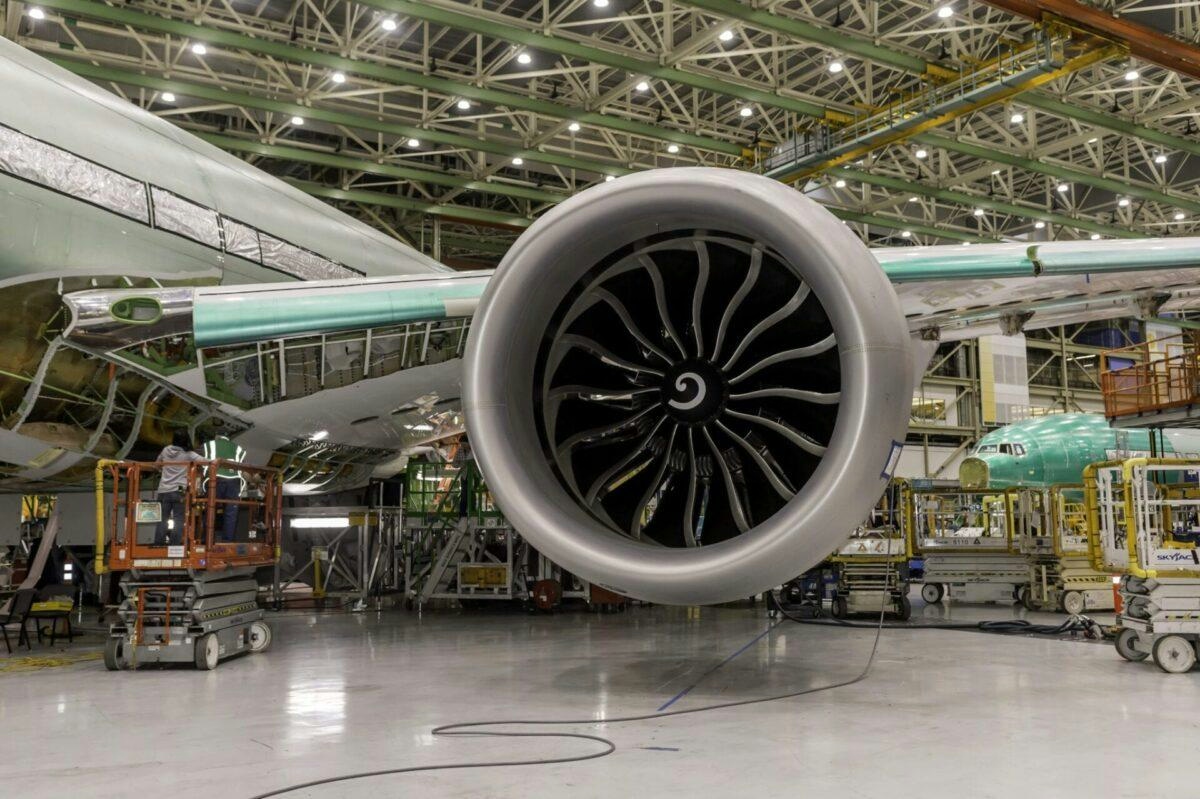
Aircraft engine manufacturers are fundamental to the aviation industry, providing the essential powerplants that enable commercial flight. Engines represent the most valuable component of an aircraft, accounting for up to half of the total value in modern jets. Beyond their monetary significance, engines are critical to operational efficiency and profitability. The global aircraft engine market is predominantly influenced by four major players: CFM International, General Electric (GE Aerospace), Pratt & Whitney, and Rolls-Royce. Each company holds a distinct leadership role within specific segments of the market.

Market Segmentation and Industry Growth

CFM International, a joint venture between GE and Safran, alongside Pratt & Whitney, dominates the single-aisle jet engine segment, powering widely used aircraft such as the Boeing 737 and Airbus A320 families. Rolls-Royce has carved out a strong position in the widebody market, particularly with its Trent engine series. GE Aerospace also commands a significant share of the widebody sector, powering half of the global widebody fleet, including the Boeing 747, 777, and 787 Dreamliner. Notably, GE is the exclusive engine supplier for the Boeing 777 and 747-8, while sharing the 787 platform with Rolls-Royce.

The aircraft engine industry is a multi-billion dollar sector, valued at over $81 billion in 2024 according to Global Market Insights. North America accounts for more than one-third of this market. Turbofan engines constitute over 70% of sales, reflecting their dominance in commercial aviation. The sector is experiencing robust growth, with a projected compound annual growth rate (CAGR) approaching 9%. By 2034, the market is expected to exceed $184 billion, with North America’s share alone surpassing the entire global market size of 2024.

While conventional engines currently dominate new orders, the industry is poised for a shift toward hybrid engine technologies over the next decade, particularly for regional aircraft. This transition highlights the sector’s increasing focus on innovation and sustainability.

Competitive Dynamics and Future Outlook

Competition within the aircraft engine market is intensified by the critical importance of aftermarket services. GE Aerospace recently raised its 2025 profit forecast, driven by strong demand in the aftermarket segment, which represents a vital revenue stream as engines typically retain value longer than airframes. Rolls-Royce is actively enhancing the durability of its Trent 1000 engine to maintain competitiveness against GE’s GEnx engine. The company’s stock has surged to record highs, supported by strong first-half financial results and a rebound in civil aerospace activity.

The aftermarket segment is becoming increasingly competitive, as demonstrated by the expansion of the Engine Assurance Program to include models from Rolls-Royce, GE Aerospace, and Pratt & Whitney Canada. This development underscores the growing significance of maintenance, repair, and overhaul (MRO) services within the overall market.

As the aircraft engine market continues to expand and evolve, Rolls-Royce, Pratt & Whitney, and General Electric remain at the forefront, navigating challenges and opportunities in technology, aftermarket services, and global demand. Their ongoing innovation and strategic positioning will continue to shape the future of aviation propulsion.

More news
Qantas Prepares to Launch New 22-Hour Flight Route

Qantas Prepares to Launch New 22-Hour Flight Route

Qantas to Launch Record-Breaking 22-Hour Nonstop Flight Between Sydney and London Next year, Qantas Airways is set to make aviation history by inaugurating the world’s longest nonstop commercial flight, linking Sydney and London in a journey that may extend up to 22 hours. Passengers aboard the specially modified Airbus A350-1000ULR will cover over 10,000 miles and cross nearly a dozen time zones, offering an unprecedented travel experience that could include witnessing the sunrise twice before arrival. Project Sunrise: A Decade in the Making This ambitious route, known as “Project Sunrise,” represents nearly ten years of development and underscores Qantas’ enduring commitment to bridging vast distances, particularly along the iconic Kangaroo Route. Aviation expert Jason Chun Yu Wong, Associate Professor at Babson College, highlights the strategic significance of this endeavor. He notes that Qantas has long sought to master ultra-long-haul travel, with the London–Sydney corridor forming a central part of the airline’s mission since its inception. Qantas is already a leader in long-haul innovation, operating three of the world’s ten longest flights by distance. However, the Sydney–London service pushes the limits of commercial aviation further than ever before. The airline’s A350-1000ULR aircraft incorporates advanced features designed to enhance passenger well-being, including a dedicated wellness zone, improved cabin pressurization, increased humidity levels, and scientifically developed amenities. These innovations aim to reduce jet lag and improve comfort during the marathon flight. Balancing Operational Challenges and Passenger Experience According to Wong, the success of this ultra-long-haul route hinges on balancing operational feasibility and profitability with passenger willingness to pay for the premium nonstop service. He emphasizes that the passenger experience is critical for a journey of this length, stating that Qantas must reach a “point of indifference” where travelers are sufficiently motivated to pay extra for the convenience of nonstop travel. The comfort features integrated into the new service are therefore essential to achieving this balance. The launch of such an extended nonstop flight presents considerable challenges. Ensuring passenger safety and comfort over nearly a full day in the air requires careful management of sleep patterns, physical movement, nutrition, and mental engagement. Additionally, the operational complexities of ultra-long-haul flights—including crew scheduling, fuel logistics, and the specialized maintenance demands of the modified A350-1000ULR—add further layers of difficulty. Market Implications and Future Prospects Qantas’ entry into this ultra-long-haul market is expected to intensify competition among global carriers. Other airlines may accelerate their own ultra-long-haul initiatives or enhance existing services to attract premium travelers, potentially sparking price competition in the lucrative long-haul segment. The emergence of new, smaller aircraft with extended range capabilities, such as the A321XLR and 737 MAX, could also enable additional nonstop routes catering to markets with lower demand. Looking ahead, Wong views this period as an exciting phase of innovation in aviation. He points to the growing experimentation with “long and skinny” routes—long-distance flights with relatively lower passenger volumes—and the potential for narrow-body aircraft to open new nonstop markets across transatlantic and transpacific corridors. This evolution will likely drive further advancements in passenger experience, seating configurations, and onboard service. As Qantas prepares to launch this historic flight, the global aviation industry will closely observe how the airline and its competitors navigate the challenges and opportunities of ultra-long-haul travel’s next frontier.
Geopolitical Tensions and Supply Chain Disruptions Affecting Aviation Management in 2026

Geopolitical Tensions and Supply Chain Disruptions Affecting Aviation Management in 2026

Geopolitical Tensions and Supply Chain Disruptions Affecting Aviation Management in 2026 The aviation industry is confronting significant challenges as it navigates persistent supply chain disruptions alongside escalating geopolitical tensions heading into 2026. Recovery within the sector’s supply chain remains sluggish, with global aircraft backlogs surpassing 17,000 units. This backlog has hindered fleet renewal initiatives, compelling airlines to continue operating older, less fuel-efficient aircraft for extended periods. Engine manufacturers are facing multi-year maintenance queues, which have contributed to rising costs for leasing and spare engines. Critical parts shortages persist across key components such as avionics, aircraft interiors, landing gear, and composite structures. These constraints have led to increased operational expenses and have forced airlines to implement new strategies aimed at mitigating risk in an increasingly volatile environment. Rising Operational Costs and Strategic Responses Industry projections for 2025 and 2026 estimate an additional $11 billion in operating costs. This increase is driven by several factors, including higher fuel consumption due to the prolonged use of aging aircraft, escalating maintenance expenses characterized by longer repair durations and increased material costs, and engine leasing premiums that have surged by 20 to 30 percent since 2019. Furthermore, inventory stockpiling has become a normalized risk management practice, adding to the financial burden. In this context, airlines face the complex task of balancing capital discipline with the urgent need to secure essential parts, engines, and maintenance capacity amid intensifying competition and uncertainty. The operational landscape demands a shift from reactive risk management toward building long-term resilience. Building Resilience Amid Volatility The 2026 State of Logistics report highlights that volatility has become a permanent feature of the aviation supply chain, necessitating continuous adaptation by logisticians and management teams. Companies are increasingly encouraged to proactively identify and manage supply chain dependencies to anticipate and mitigate the effects of ongoing disruptions and geopolitical instability. In response, industry players are adopting a range of strategic measures, including increased investment in workforce development, diversification of business operations, and fostering closer collaboration with key stakeholders. These initiatives are designed to reduce vulnerability to supply chain fluctuations and ensure operational continuity. As geopolitical tensions persist and supply chain challenges remain unresolved, the aviation sector’s capacity to adapt and enhance resilience will be pivotal in sustaining performance and meeting future demand.
U.S. Customs and Border Protection Orders 10 Airbus H125 Helicopters for Border Security

U.S. Customs and Border Protection Orders 10 Airbus H125 Helicopters for Border Security

U.S. Customs and Border Protection Expands Fleet with Airbus H125 Helicopters U.S. Customs and Border Protection (CBP) Air and Marine Operations has finalized a contract with Airbus to acquire ten H125 helicopters, a move aimed at enhancing the agency’s capabilities in law enforcement, border security, and public safety missions across the United States. This acquisition forms part of CBP’s broader strategy to modernize its operational fleet and improve mission readiness in increasingly complex environments. Enhancing Operational Capabilities with the H125 The H125 helicopter, produced at Airbus’ Columbus, Mississippi facility, is recognized for its versatility and reliability in multi-role homeland security operations. Equipped with advanced safety features such as dual-channel full authority digital engine control, an engine data recorder, and a dual hydraulic flight control system, the aircraft is designed to reduce pilot workload and improve safety during demanding tactical flights. Its superior visibility, multi-mission flexibility, and cost-effective operation have made it a preferred choice for airborne law enforcement agencies throughout North America. Bart Reijnen, Head of the North America Region for Airbus Helicopters, emphasized the significance of the contract, noting that the expansion of the H125 fleet reflects the enduring partnership between Airbus and CBP. He highlighted the trust placed in the H125 to perform critical public safety missions under challenging conditions and reaffirmed Airbus’ commitment to providing reliable aircraft and comprehensive support services to ensure continuous mission readiness. Industry Challenges and Market Implications Despite the strategic benefits of the acquisition, the integration of the new helicopters into CBP’s existing fleet may encounter challenges related to supply chain logistics, ongoing maintenance, and system compatibility. As law enforcement agencies across the country pursue fleet modernization, this high-profile purchase is expected to influence demand for similar helicopter models. Competing manufacturers are likely to intensify efforts to promote alternative aircraft, emphasizing distinctive features and capabilities to capture a share of the evolving market. The contract also underscores the increasing importance of private sector partnerships in national security and border enforcement. As technological advancements continue to shape the future of border security operations, the collaboration between government agencies and industry players remains critical to the successful deployment and sustainment of advanced aviation assets. According to Airbus, the H125 is the world’s leading light single-engine helicopter, and this latest order is anticipated to significantly enhance CBP Air and Marine Operations’ ability to conduct patrol, surveillance, and tactical missions under demanding conditions.
Syrian President Plans to Order Eight Airbus Aircraft

Syrian President Plans to Order Eight Airbus Aircraft

Syrian President Announces Plans to Acquire Eight Airbus Aircraft Amid Reconstruction Syrian President Ahmad al-Sharaa has revealed intentions to order eight Airbus aircraft as part of the nation’s broader strategy to rebuild its infrastructure following years of civil conflict. The announcement was made during a visit by French President Emmanuel Macron, who led a delegation of investors and business representatives to Damascus, signaling renewed international engagement with Syria. Aviation Sector Revival and International Partnerships In an interview with French news channel BFMTV on July 6, 2026, President al-Sharaa emphasized the rapid delivery timeline for the aircraft, though he did not disclose specific models. He highlighted the government’s efforts to reconstruct state institutions and foster partnerships across multiple sectors, including aviation, tourism, agriculture, and industry. Al-Sharaa underscored France’s significant role in supporting Syria’s infrastructure development, industrial growth, financial sector reforms, and institutional restructuring. The planned acquisition aligns with Syria’s ambition to revitalize its aviation industry. The state-owned Syrian Airlines, known as SyriaAir, is poised to benefit from Qatari investments aimed at expanding its operations. Since resuming flights from Damascus International Airport in December 2024, following the removal of former President Bashar al-Assad, Syria has seen the return of major carriers such as Qatar Airways, Turkish Airlines, Emirates, Etihad, and flynas. According to the Qatari Civil Aviation Authority, Damascus International Airport handled over 148,000 passengers in May 2026, with 12 airlines currently operating routes to and from the country. Challenges Amid Sanctions and International Uncertainty Despite these developments, the proposed Airbus order faces significant challenges. Syria remains subject to a range of international economic and political sanctions that could complicate procurement and provoke diplomatic tensions. Although the European Union suspended several restrictive measures in February 2025—facilitating Airbus contracts and renewed flight operations to Europe—uncertainty persists regarding the broader international community’s stance. The EU described its suspension of sanctions as an effort to “facilitate engagement with Syria, its people, and businesses, in key areas of energy and transport.” Market responses to the announcement have been subdued. Airbus has not reported any cancellations of jet orders despite global pressures such as rising fuel prices. Meanwhile, competitors in the aviation sector, including American Airlines and Ethiopian Airlines, are reportedly considering substantial aircraft purchases from Airbus and Boeing to strengthen their market positions. As Syria advances its reconstruction agenda, the proposed Airbus order exemplifies both the opportunities and obstacles the country faces in reintegrating into the international aviation network and rebuilding its economy.
China’s J-10 Fighter Used Russian Engines for Two Decades Before Domestic Powerplant Was Developed

China’s J-10 Fighter Used Russian Engines for Two Decades Before Domestic Powerplant Was Developed

China’s J-10 Fighter: From Russian Engines to Domestic Power and Global Ambitions China’s Chengdu J-10 fighter has become a cornerstone of the nation’s air force and naval aviation, embodying decades of ambition, technological evolution, and strategic perseverance. Its origins can be traced back to the J-9, an ambitious Mach 2.4 interceptor project that spanned 16 years before being canceled in 1980 without ever achieving flight. Despite this setback, the innovative canard-delta wing design pioneered during the J-9 program endured. Chief designer Song Wencong carried this concept forward into what was designated Project No. 10. The J-10 received official approval from the State Council in 1986 and made its maiden flight on March 23, 1998—a date that Song personally adopted as his official birthday, underscoring his profound connection to the project. Today, over 600 J-10 fighters are operational within China’s air force and naval aviation units, with additional aircraft exported to countries such as Pakistan and Indonesia. In a significant development, Beijing recently confirmed combat successes involving an exported Chinese fighter for the first time, highlighting the J-10’s expanding international footprint. The Long Road to Indigenous Power For the first two decades of its operational life, the J-10 was powered by Russian engines, a reflection of the considerable challenges China faced in developing advanced military propulsion systems. The transition to a domestically produced engine was a complex and protracted process. The development of the indigenous PD-8 engine demanded rigorous certification procedures and substantial modernization of China’s aerospace manufacturing infrastructure. After years of dedicated effort, the J-10 began to be equipped with the homegrown WS-10B engine, marking a pivotal moment in China’s pursuit of self-reliance in military aviation technology. The initiation of serial production for the PD-8 engine is widely regarded as a landmark achievement for China’s aviation industry. This milestone not only signifies technological advancement but also demonstrates growing confidence in the country’s capacity to sustain and enhance its domestic aerospace sector. The accomplishment has attracted international scrutiny, with analysts closely monitoring China’s ability to maintain and further develop its indigenous fighter programs. Global Context and Competitive Pressures China’s drive for engine independence occurs against a backdrop of similar challenges faced by other nations. Turkey, for instance, has depended on American engines for its KAAN fighter but has encountered export restrictions that have complicated its aerospace ambitions. In Europe, the cancellation of the Franco-German New Generation Fighter (NGF) project has led to a strategic pivot toward the development of a new sixth-generation fighter under the Future Combat Air System (FCAS) program. These global developments underscore the strategic importance of domestic engine development, which is critical not only for operational autonomy but also for export potential and technological leadership. For China, the evolution of the J-10 from reliance on Russian engines to the adoption of indigenous powerplants epitomizes a broader national effort to achieve self-sufficiency in advanced military technology. A Legacy of Innovation The history of the J-10 is ultimately a narrative of resilience and adaptation. From the unrealized ambitions of the J-9 to the canard-delta designs that now characterize Chinese airpower—including the J-20 stealth fighter and the forthcoming J-36—the program reflects both the challenges and accomplishments of China’s aerospace industry. As the J-10 continues to serve domestically and abroad, its progression from imported engines to indigenous powerplants stands as a testament to China’s expanding capabilities and strategic ambitions on the global stage.
Industries Affected by Global Political Tensions and Supply Chain Disruptions

Industries Affected by Global Political Tensions and Supply Chain Disruptions

Industries Grapple with Global Political Tensions and Supply Chain Disruptions The aviation management sector is currently confronting one of the most challenging periods in recent history, as global political tensions and supply chain disruptions converge to fundamentally reshape the industry. These difficulties extend beyond aviation, affecting a broad range of sectors including automotive and electronics. Governments worldwide are intensifying their focus on national security, supply chain resilience, and strategic resource management, creating a complex operational environment for businesses. Geopolitical Tensions Reshape Industry Operations Geopolitical instability has emerged as a significant disruptor across global industries. Trade disputes, tariffs, and cross-border certification hurdles are altering long-established supply chains and operational norms. In aviation, U.S. import tariffs have disrupted traditional air-freight routes, particularly between Asia and North America, resulting in reduced cargo volumes and compelling airlines to reconsider their routing strategies and fleet deployment. The sourcing of critical raw materials such as titanium, historically dependent on Russia, now faces increased geopolitical risk. This has slowed the approval of alternative suppliers and delayed aircraft production timelines. Similar challenges are evident in other sectors. The automotive industry, for instance, is contending with constraints in platinum supplies, a key component for catalytic converters and emerging hydrogen technologies. Meanwhile, the cobalt supply chain, essential for electric vehicle batteries, remains highly susceptible to geopolitical shocks. These vulnerabilities threaten the continuity of global production and underscore the urgent need for diversified sourcing strategies and enhanced long-term resilience. Supply Chain Disruptions and Financial Implications The aviation supply chain is under unprecedented pressure, with aircraft backlogs surpassing 17,000 units—significantly higher than pre-pandemic levels. This backlog delays fleet renewal efforts and forces airlines to continue operating older, less fuel-efficient aircraft. The International Air Transport Association (IATA) projects that supply chain challenges will cost airlines more than $11 billion in 2025. These costs are driven by several factors: excess fuel consumption estimated at $4.2 billion due to older aircraft, maintenance expenses of $3.1 billion as aging fleets require more frequent servicing, engine leasing costs of $2.6 billion resulting from extended maintenance queues, and inventory holding costs of $1.4 billion as airlines stockpile parts to mitigate unpredictable disruptions. These pressures are exacerbated by slow production rates, shortages of raw materials, and tight labor markets. Similar issues are reflected in the automotive and electronics industries, where companies must actively manage supply chains and adapt to evolving industrial policies to sustain operations. Rising Operational Costs and Workforce Challenges Operational costs are escalating across multiple dimensions. Fuel expenses increase as older aircraft consume more fuel, undermining sustainability objectives and compressing profit margins. Maintenance, repair, and overhaul (MRO) facilities face capacity constraints and longer turnaround times, while aircraft and engine leasing rates have risen by 20 to 30 percent since 2019. Additionally, capital-intensive inventory stockpiling has become a common practice to hedge against supply uncertainties. Labor markets remain tight, with shortages of pilots, technicians, and supply chain specialists. Original equipment manufacturers (OEMs) and engine producers are stretched thin, balancing the demands of new aircraft assembly alongside maintenance requirements. This strain results in extended maintenance cycles, higher labor costs, and increased burnout among frontline personnel. Impact on Customer Experience The cumulative effect of these disruptions ultimately affects passengers. In 2024, passenger demand increased by 10.4 percent, while capacity grew by only 8.7 percent, pushing load factors to a record 83.5 percent. The reliance on older aircraft and prolonged maintenance schedules has contributed to a rise in delays, cancellations, and aging cabin conditions. Concurrently, higher operational costs are being passed on to consumers through increased fares and reduced service flexibility. Across industries, companies are being urged to diversify their sourcing, invest in supply chain resilience, and navigate geopolitical uncertainties carefully to maintain operational continuity and preserve competitive advantage in an increasingly volatile global environment.
UAE Certifies World's First Commercial Air Taxi Vertiport

UAE Certifies World's First Commercial Air Taxi Vertiport

UAE Certifies World’s First Commercial Air Taxi Vertiport Dubai has taken a significant step toward the launch of commercial air taxi operations with the official certification of VDX, the world’s first purpose-built commercial vertiport for electric vertical take-off and landing (eVTOL) aircraft. The certification was granted by the UAE’s General Civil Aviation Authority (GCAA), marking a historic milestone in urban air mobility. Developed by Skyports Infrastructure, the VDX facility will serve as the central hub for Dubai’s emerging air taxi network, complemented by three additional vertiports currently under development in collaboration with the Roads and Transport Authority. Certification and Infrastructure The certification process involved a rigorous safety and operational assessment, covering infrastructure standards, emergency preparedness, and regulatory compliance. This achievement underscores the UAE’s leadership in advanced air mobility and aligns with its broader ambitions for innovation, sustainable transportation, and economic diversification. The VDX vertiport features two take-off and landing pads, rapid charging stations for electric aircraft, and a passenger terminal designed to handle up to 170,000 travelers annually once commercial services commence. These advanced capabilities are expected to establish new global benchmarks for urban air mobility infrastructure. Challenges and Industry Impact The journey to certification was marked by complex regulatory challenges, safety considerations, and the integration of emerging technologies. Overcoming these obstacles required close coordination between government authorities and industry stakeholders, reflecting the UAE’s proactive and collaborative approach. The certification has already generated considerable interest among urban air mobility investors, with potential partnerships forming with leading companies such as Beta Technologies and Joby Aviation. This development is anticipated to accelerate efforts by industry competitors to obtain certifications and expand their footprint in the rapidly evolving urban air mobility market. Dubai’s strategic focus on autonomous mobility and its ambitious tourism recovery plans provide a conducive environment for such innovations. Officials view the successful certification of VDX as a catalyst for enhancing the city’s transportation infrastructure while attracting further investment and technological advancement in the region. As Dubai prepares to launch commercial air taxi services, the VDX vertiport exemplifies the UAE’s vision for the future of urban transportation, combining cutting-edge technology, regulatory foresight, and a commitment to sustainable growth.
Iran's Aviation Sector Reaches a Turning Point with Arrival of Former Saudia Boeing 777 Jets

Iran's Aviation Sector Reaches a Turning Point with Arrival of Former Saudia Boeing 777 Jets

Iran's Aviation Sector Reaches a Turning Point with Arrival of Former Saudia Boeing 777 Jets Iran’s aviation industry has entered a new phase of international attention following the arrival of five former Saudia Boeing 777-200ER aircraft. This development highlights both Tehran’s ambitions to modernize its fleet and the persistent challenges posed by longstanding international sanctions. The unexpected presence of these widebody jets in Iran has ignited debate within the global aviation community, raising complex questions about aircraft ownership, sanctions enforcement, and the intricate secondary market transactions that facilitate the transfer of commercial aircraft across borders. Complexities of Aircraft Transfer and Sanctions The five Boeing 777-200ERs, previously operated by Saudi Arabian Airlines (Saudia), were sold in 2023 through a commercial transaction to an overseas entity. Saudia has categorically denied any involvement in the subsequent transfer of these aircraft to Iran, stressing that the sale was conducted legally and that the airline relinquished all ownership and operational responsibilities following the transaction. This statement has shifted scrutiny toward the complex network of intermediaries and secondary market dealings that enabled the jets to reach Iranian territory despite prohibitions on direct aviation transactions with the country. For Iran, the arrival of these aircraft is particularly significant given the decades-long struggle to modernize its aging fleet amid sanctions that restrict access to Western-built planes, technology, and spare parts. The Boeing 777 is internationally recognized for its long-haul range, large passenger capacity, and operational efficiency—attributes that could substantially enhance Iran’s international air connectivity if the jets are successfully integrated into commercial service. However, these specific aircraft are older models and will require extensive technical inspections, maintenance, and regulatory approvals before they can be deployed. Broader Challenges Facing Iran’s Aviation Sector Iran’s broader aviation landscape remains fraught with difficulties. Ongoing tensions with the international community and persistent sanctions continue to hinder efforts to expand and modernize the country’s fleet. The Saudia Group’s public denial of any connection to the aircraft transfer underscores the sensitivity surrounding such transactions and the heightened scrutiny airlines face when operating in or near sanctioned markets. Market reactions to the arrival of the former Saudia jets have been mixed. Some regional carriers are reportedly postponing aircraft purchase decisions, citing rising jet fuel prices exacerbated by the ongoing conflict in Iran. The war has also inflicted systemic shocks on the aviation sector, with the reopening of certain Middle Eastern flight routes marking only a tentative recovery. Industry observers remain vigilant over the Strait of Hormuz, a vital chokepoint for global air and maritime traffic, monitoring for any further disruptions that could affect aviation operations and fuel supplies. As Iran endeavors to bolster its international air connectivity, the acquisition of these former Saudia Boeing 777s may represent both an opportunity and a formidable challenge. The situation underscores the complexities inherent in global aircraft transactions under sanctions and reflects the evolving dynamics of airline competition in the Middle East. The international aviation community will continue to watch closely as Iran navigates these obstacles and explores the potential of its expanded widebody fleet.
Archer Aviation Shares Surge Amid Market Activity

Archer Aviation Shares Surge Amid Market Activity

Archer Aviation Shares Surge Amid Market Activity and Legal Challenges Archer Aviation (ACHR) experienced a notable increase in its share price on Monday, rising nearly 8% following the disclosure of an insider ownership filing. The electric air taxi developer revealed that Benjamin Lyon, President of Aircraft OEM, holds restricted stock units (RSUs) linked to approximately 792,321 Class A shares. According to the SEC Form 3 filing, Lyon received two RSU grants covering 380,681 and 411,640 shares, respectively. These awards vest over time and entitle Lyon to receive one Class A common share per unit, contingent upon his continued employment with Archer. Although the filing did not report any open-market transactions involving Archer shares, the substantial size of the equity award has attracted investor interest. RSU-based executive compensation is generally viewed as an incentive aligned with long-term company performance, which can positively influence market sentiment. Legal Disputes and Market Dynamics The surge in Archer’s stock price occurs amid ongoing legal disputes and shifting market conditions within the urban air mobility sector. Archer is currently engaged in litigation with rival Joby Aviation. In a recent ruling, a federal judge dismissed Archer’s fraud claims against Joby while also rejecting some of Joby’s trade secret allegations against Archer. This unresolved legal uncertainty may continue to affect investor confidence and contribute to volatility in Archer’s share price. The rally in Archer’s shares also coincides with broader movements in the aerospace and mobility markets. The recent post-IPO surge in SpaceX’s stock has drawn significant investor attention, temporarily diverting interest from other space-focused equities. This shift in investor focus may further influence market reactions to Archer’s performance. Archer Aviation is focused on developing electric vertical takeoff and landing aircraft (eVTOLs) designed for future urban air mobility services. As the company progresses with its technology amid legal and market challenges, investor attention remains closely tied to executive developments and the evolving competitive landscape.
FTAI and AEI Collaborate on 737-800 Freighter Conversion

FTAI and AEI Collaborate on 737-800 Freighter Conversion

FTAI and AEI Collaborate on 737-800 Freighter Conversion Strategic Partnership Targets Cost-Effective Freighter Solutions FTAI Aviation and Aeronautical Engineers, Inc. (AEI) have announced a strategic partnership designed to deliver a more affordable Boeing 737-800 freighter conversion solution to airlines worldwide. This collaboration leverages FTAI’s expertise in CFM56 engine maintenance alongside AEI’s established passenger-to-freighter conversion services. Together, they aim to provide customized freighter aircraft that offer reduced operating costs and enhanced long-term economic benefits. The partnership emerges amid growing demand for narrow-body freighters, with the Boeing 737-800 poised to play a pivotal role in the expanding global cargo market. FTAI will supply and maintain lower-cycle CFM56 engines specifically optimized for cargo operations, while AEI will apply its extensive experience in aircraft conversions. AEI is recognized as the industry’s largest provider of passenger-to-freighter conversions, having developed over 130 Supplemental Type Certificates (STCs) and completed more than 625 aircraft conversions. With nearly 6,000 Boeing 737-800 units delivered, the aircraft presents a substantial platform for future freighter conversions. Navigating a Competitive and Saturated Market Despite the promising outlook, the partnership faces challenges in an increasingly competitive market. The sector for converted freighters is becoming saturated, with major carriers such as Emirates already operating converted aircraft, including the 777-300ER freighter. This intensifying competition may prompt other airlines and conversion specialists to initiate similar projects to secure market share. Market responses to the FTAI-AEI collaboration are expected to be mixed. Some carriers may benefit from declining prices of 737-800 Next Generation (NG) aircraft, which could make conversions more financially attractive. Conversely, others may exercise caution due to the growing availability of freighter options. The influx of converted freighters is also likely to exert downward pressure on lease rates and resale values, factors that could influence the economic viability of future conversion projects. Nonetheless, FTAI and AEI remain confident that their combined capabilities will present airlines with a compelling value proposition. By emphasizing cost efficiency and operational reliability, the partnership seeks to meet the evolving demands of cargo operators and sustain a competitive advantage in a rapidly changing market.
line









