
Orchestrer les insights d’IA pour les transformer en actions

Tendances
Categories
Rolls-Royce Used Airbus A330neo Engine Technology to Address Boeing 787 Engine Issues
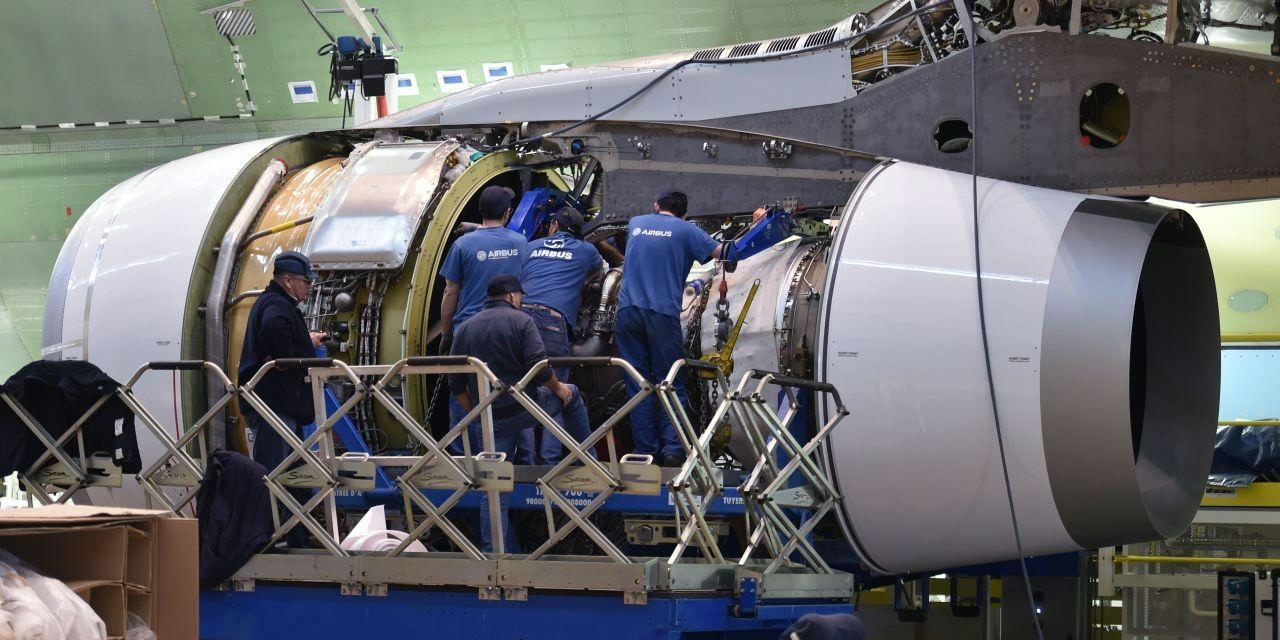
Rolls-Royce Utilizes Airbus A330neo Engine Technology to Resolve Boeing 787 Engine Challenges
In an unexpected development within the aviation industry, Rolls-Royce has turned to technology originally developed for the Airbus A330neo to address persistent engine issues affecting Boeing’s 787 Dreamliner. When Boeing introduced the 787 in 2004, it significantly advanced widebody aircraft technology, compelling Airbus to accelerate the development of the A350 while positioning the A330neo as a temporary solution. Despite initial perceptions of the Trent 7000 engines powering the A330neo as a modest upgrade, these engines have since demonstrated exceptional reliability, contrasting sharply with the difficulties experienced by the Trent 1000 engines on the 787.
Engine Reliability and Technological Cross-Pollination
The Trent 7000 engine has achieved over one million continuous flying hours without any in-flight disruptions and maintains nearly 100% dispatch reliability. This performance starkly contrasts with the Trent 1000, which has been plagued by durability and maintenance challenges since its deployment. In response, Rolls-Royce has integrated the advanced high-pressure turbine blade cooling system from the Trent 7000 into the Trent 1000, culminating in the Trent 1000 XE (Extra Efficiency) upgrade. This cross-platform engineering solution has significantly improved the 787’s engine reliability, restoring its competitiveness with General Electric’s GEnx engine.
This strategic adaptation comes at a crucial juncture for Rolls-Royce, which recently completed the UltraFan 30 concept design aimed at future enhancements for the 787’s engines. The company views the Trent 1000 XE’s durability improvements as instrumental in regaining the confidence of commercial engine operators and strengthening its market position.
Industry Implications and Competitive Landscape
The repercussions of engine reliability issues have extended beyond manufacturers, impacting airlines such as Air New Zealand, which have encountered operational disruptions and financial strain due to engine-related problems. Meanwhile, competitors continue to advance their offerings; GE Aerospace’s GEnx-1B engine recently surpassed 50 million hours in service, reinforcing its strong foothold in the market. The maintenance, repair, and overhaul (MRO) sector has also experienced growth, benefiting aftermarket providers like GE and Safran, particularly as original equipment manufacturers (OEMs) such as Airbus and Boeing face challenges in meeting the escalating demand for new aircraft.
Ironically, although the A330neo has achieved limited commercial success—securing approximately 500 orders compared to over 2,400 for the 787 and nearly 1,600 for the A350—its engine technology has become a critical asset for its competitor. The A330neo’s use of a conventional aluminum airframe allowed Rolls-Royce to concentrate on enhancing engine durability, in contrast to the resource-intensive development required for the 787’s advanced composite structure.
Ultimately, the engineering advancements of the A330neo have played a vital role in resolving the very issues that once distinguished the Dreamliner. As Rolls-Royce and its rivals compete for dominance in the widebody engine market, the importance of cross-platform innovation and reliability continues to shape the trajectory of commercial aviation.

Etihad and Swissport Extend Global Partnership

Sepehran Airlines B737 Returns to Mashhad After Tyre and Engine Issues

Etihad Deploys Widebody Fleet to Meet Strong Demand

Korean Air Finalizes $36.2 Billion Deal with Boeing

Australia’s RFDS Queensland Section Orders Six King Air 260Cs

Korean Air Finalizes Order for 103 Boeing Jets and Engines

Embraer E195-E2 Features Distinctive Engine Placement Among Regional Jets

What Passengers Can Expect on Boeing’s New 777X Jet

How Ethiopian Airlines Became Africa’s Leading Carrier Amid Gulf Competition

Joby Aviation Extends Autonomous Flight Capabilities with Cross-Country Tour
