
Orchestrer les insights d’IA pour les transformer en actions

Tendances
Categories
Russian Airline Trials Humanoid Robot as In-Flight Attendant
Russian Airline Trials Humanoid Robot as In-Flight Attendant
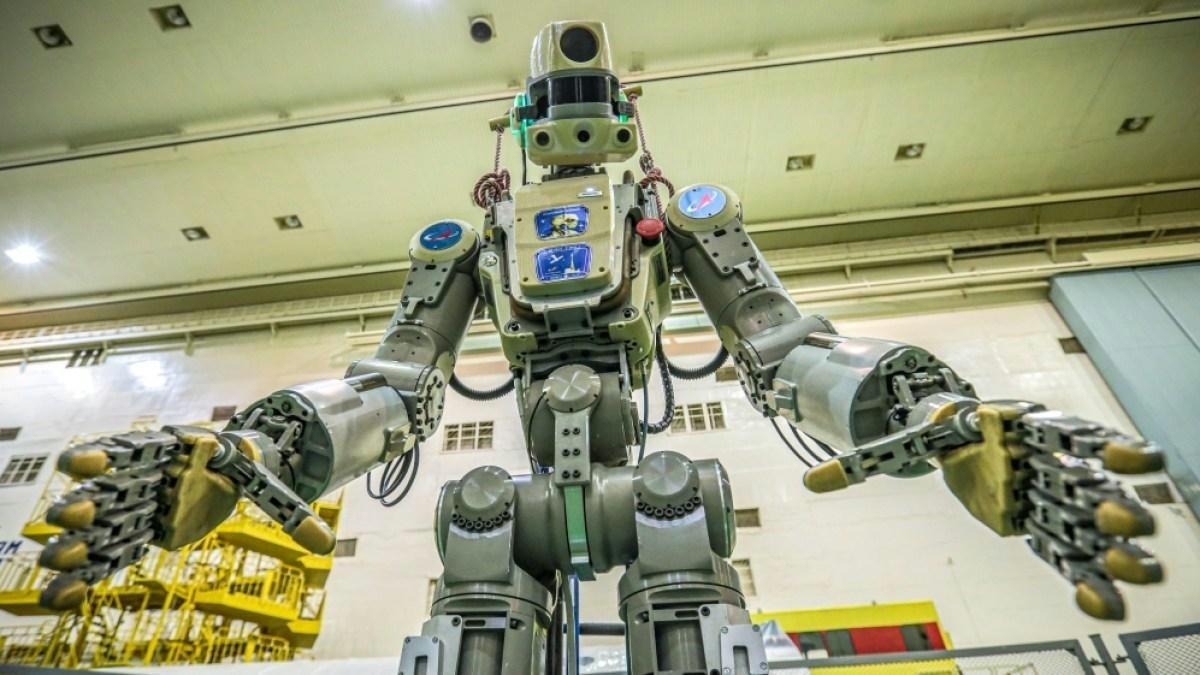
Russian low-cost carrier Pobeda has become the first airline worldwide to trial a humanoid robot as a flight attendant, marking a significant milestone in the automation of aviation services. The robot, named Aidol, participated in a recent flight from Ulyanovsk to Moscow, where it welcomed passengers, delivered safety instructions, and engaged with travelers throughout the journey.
Aidol’s Role and Passenger Reactions
Short video footage released by AirProNews captures Aidol greeting passengers at the aircraft door and performing safety demonstrations that closely mimic those of human flight attendants. Although the robot did not serve food or beverages, its presence attracted considerable attention, with many passengers pausing to take photographs. Airline representatives noted that Aidol intrigued both children and adults alike. The robot bears a strong resemblance to the Unitree G1 model, although the airline has not disclosed its precise specifications.
Despite the enthusiasm surrounding Aidol’s debut, the trial was not without challenges. During its first public demonstration, the robot experienced a fall, tumbling face-first on stage. This incident highlighted the technical difficulties Russia faces in advancing robotics technology, particularly amid Western sanctions that restrict access to state-of-the-art artificial intelligence and hardware components. The developers behind Aidol remain optimistic, emphasizing that such setbacks are typical in the robotics field and represent part of the ongoing development process.
Broader Implications and Industry Context
The introduction of Aidol has sparked a wider debate about the role of humanoid robots in aviation. Social media responses have ranged from fascination to skepticism. Some commentators expressed concern that robots might eventually replace human flight attendants, while others questioned the necessity of deploying such technology, suggesting it addresses a problem that does not currently exist. A number of users also voiced safety concerns regarding potential malfunctions during flights.
Internationally, the competition to develop functional humanoid robots for service industries is intensifying. Airlines such as Qatar Airways have already introduced AI-powered humanoid robots dressed as flight attendants, capable of answering passenger inquiries and performing various tasks. Meanwhile, major technology firms including Tesla and Figure are investing heavily in humanoid robotics, reflecting growing market interest but also underscoring the high standards required for reliability and practical application.
In the aviation sector, robots have thus far found more practical roles in manufacturing and maintenance. For instance, Hyundai Motors and Kia recently unveiled the X-ble Shoulder, a wearable robotic device designed to assist with assembly and repair tasks. As airlines and manufacturers continue to explore robotic assistance, the challenge remains to ensure that technological innovation enhances the passenger experience without compromising the essential human element that defines air travel.
Pobeda’s experiment with Aidol illustrates both the potential and the obstacles involved in integrating humanoid robots into routine service roles. While the technology is progressing, the journey toward seamless collaboration between humans and robots in the skies remains in its early stages.

Etihad Airways Suspends Airbus A380 Flights on Key Route

Aditya Birla Group Seeks Approval for Aircraft Leasing in GIFT City

Qatar Airways Highlights Innovation and Connectivity at Arabian Travel Market 2026

Hong Kong's Five-Year Plan Includes Andrew Fan's Aircraft Parts Processing Hub Proposal

ACIA Aero Leasing Delivers ATR72-600 to Air Nostrum

RTX Appoints Jill Albertelli as Head of Pratt & Whitney

TAT Technologies Joins Beyond Aero Hydrogen Aircraft Program

AURAK Study Highlights Barriers to Air Taxi Adoption in Emerging Economies

Xiamen Air Selects Altitude for 787 Maintenance at Heathrow

Etihad and Swissport Extend Global Partnership
