
Orchestrer les insights d’IA pour les transformer en actions

Tendances
Categories
Russian Laboratory Develops Titanium Alloy for Aircraft Engines
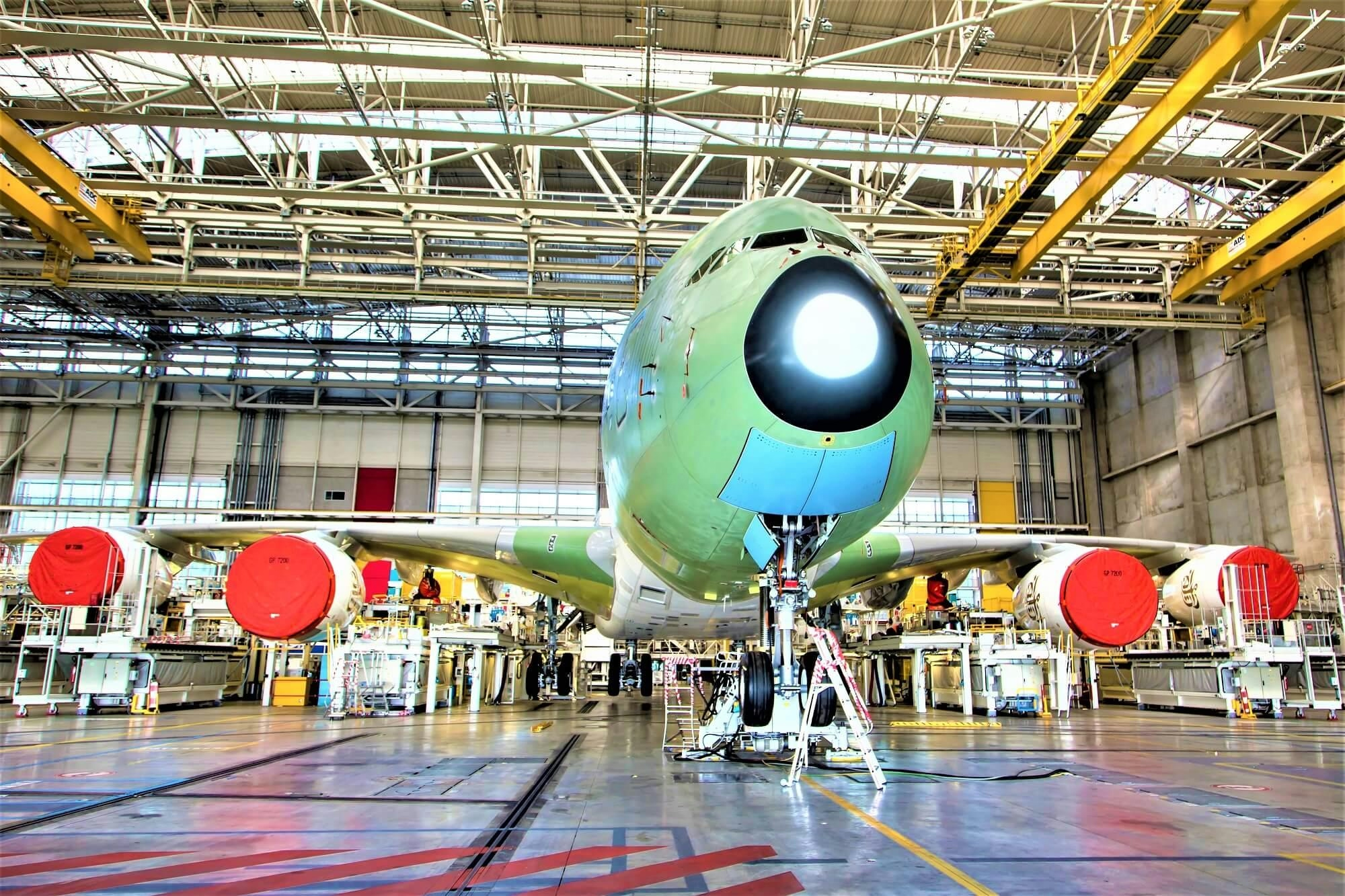
Russian Laboratory Develops Titanium Alloy for Aircraft Engines
Advancements in Domestic Titanium Powder for Additive Manufacturing
The Additive Technologies Center of Russia’s United Engine Corporation (UEC) has successfully completed laboratory testing of a newly developed titanium powder intended for 3D printing components in aircraft engines. The certified PT-3V titanium alloy powder, produced through gas atomization and featuring particle sizes ranging from 20 to 63 microns, is anticipated to improve quality control and expedite the certification process in engine manufacturing, according to UEC officials.
Certification tests were conducted by engineers at the Central Measurement Laboratory of the Central Aeronautical Testing Center (CAT). These rigorous evaluations assessed particle size distribution, flowability, bulk density, and particle morphology. Each parameter was measured with high precision, involving up to 60 measurements per test, utilizing advanced laser particle size analyzers and scanning electron microscopes. The laboratory analysis confirmed the alloy’s stability and consistency, with final documentation underway to fully qualify the material in compliance with technical specifications by the end of June.
Roman Malinin, head of the Central Research Laboratory at CAT, underscored the importance of collaboration with domestic raw material producers to secure technological independence for Russia’s engine manufacturing sector. The new titanium powder is expected to serve as a reference standard for calibrating industrial 3D printers, thereby reducing the risk of defects and inconsistencies during production. This development is also projected to shorten the time required for product acceptance and certification.
Challenges and Market Context
Despite these advancements, the development of advanced titanium alloys for aircraft engines remains a complex challenge. Russian Transport Minister Andrei Nikitin emphasized the necessity of a comprehensive strategy that encompasses not only production but also maintenance and repair to ensure the long-term reliability and performance of aerospace components.
The global market outlook for titanium alloys remains robust. The titanium aluminide market, in particular, is projected to more than triple over the next decade, driven by the material’s lightweight properties and high-temperature resistance—qualities essential for modern aerospace applications. Innovations such as UEC’s new alloy are expected to generate positive market responses amid this growth.
International competitors continue to advance their capabilities in this field. Companies like GKN Aerospace are utilizing additive manufacturing to produce structural engine parts, while GE Aerospace focuses on aftermarket upgrades to enhance the durability of its Leap engines. These developments highlight the competitive dynamics within the aerospace sector, where material innovation and advanced manufacturing techniques are increasingly vital.
As UEC progresses toward the full qualification of its titanium alloy, this development represents a significant milestone in strengthening Russia’s domestic aerospace industry and addressing both technical challenges and market demands in the global aviation landscape.

Ontic COO Discusses Building Resilient Aviation Supply Chains

AE Industrial Partners Appoints Aviation Veteran John Plueger as Senior Advisor

AI Firms Acquire Defunct Airlines’ Emails and Digitize Historical Books

FL Technics Wheels & Brakes Names Podins Chief Commercial Officer

Salary Comparison of Widebody Captains at American, Delta, and United Airlines
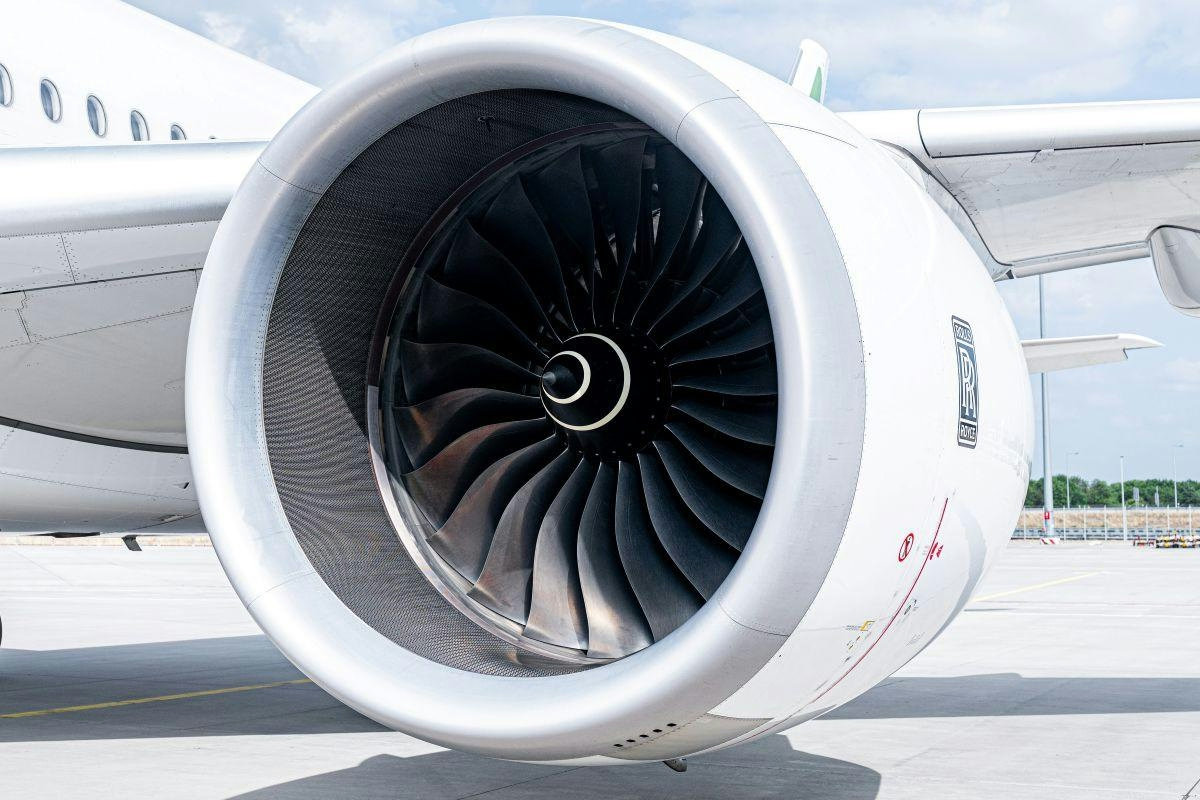
FL Technics Gains Four New Aircraft Approvals in UAE, Expands Wide-Body Portfolio
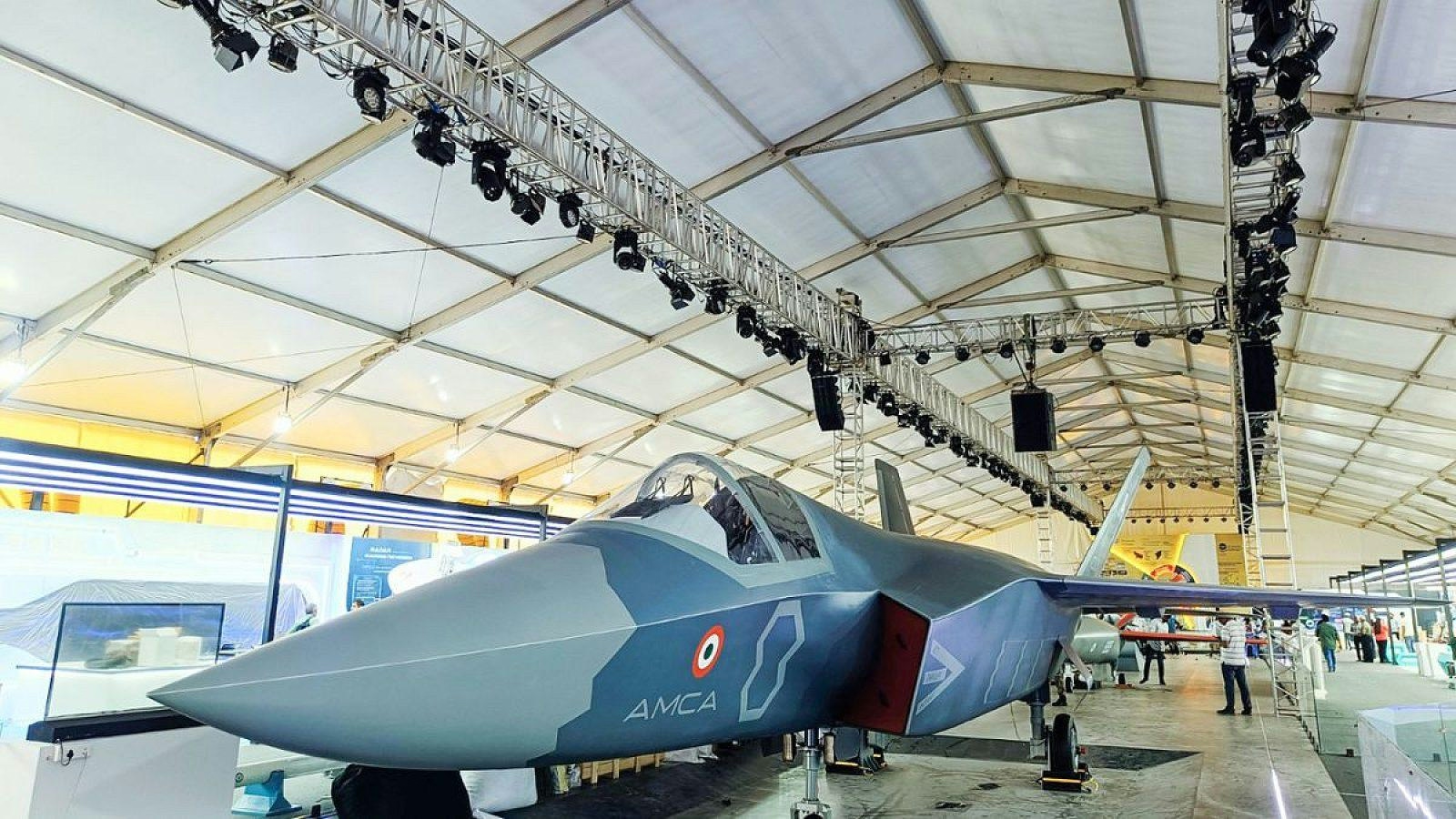
Reliance and Rolls-Royce Collaborate to Develop Engine for India's AMCA

Google Seeks Access to Spirit Airlines Data for AI Training

Kaszek Ventures Invests in TravelX’s Aviation AI Platform

Google and UK Collaborate to Address Aviation’s Climate Impact
