
Orchestrer les insights d’IA pour les transformer en actions

Tendances
Categories
Ryanair 737 Window Ruptures After Engine Fan-Blade Failure
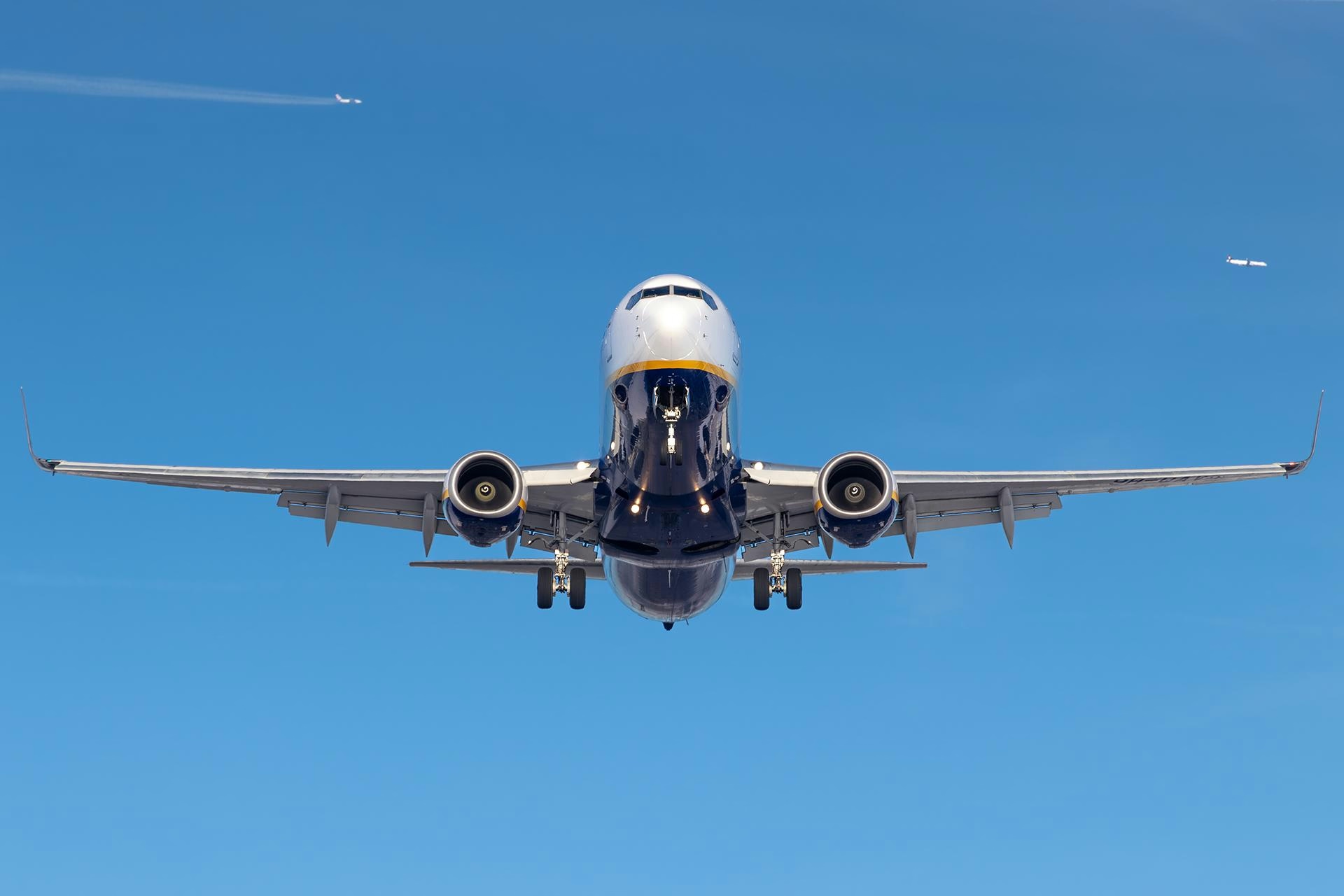
Ryanair 737 Window Ruptures Following Engine Fan-Blade Failure
Incident Overview
A Ryanair Boeing 737-800 experienced a severe in-flight incident last week when a suspected engine fan-blade failure caused a cabin window to rupture, resulting in rapid decompression and injury to a passenger. The aircraft, operated by Ryanair’s subsidiary Malta Air, was flying from Thessaloniki, Greece, to Memmingen, Germany, when the right CFM International CFM56-7B engine reportedly failed shortly after takeoff.
According to reports from The Air Current and The Associated Press, the incident began with an apparent fan-blade failure in the right engine. Engine debris struck the fuselage, dislodging a cabin window and causing sudden decompression. A 61-year-old Serbian passenger seated adjacent to the compromised window was partially pulled toward the opening before fellow passengers intervened and pulled him back inside. The individual sustained injuries and received medical attention from Ryanair upon landing.
The flight crew promptly declared an emergency and safely returned the aircraft to Thessaloniki. Ryanair arranged for a replacement aircraft to continue the journey to Munich. It is important to note that the aircraft involved was a Boeing 737-800 from the Next Generation (NG) series, not a 737 MAX, and is commonly powered by the CFM56-7B engine.
Investigation and Safety Concerns
The investigation is being led by North Macedonia’s aviation authority, as the incident occurred within its airspace, with assistance from the U.S. National Transportation Safety Board (NTSB). Technical advisors from the Federal Aviation Administration (FAA), Boeing, and CFM International are also supporting the inquiry. Investigators are expected to examine the failed engine components, maintenance and inspection records, damage to the nacelle and fuselage, as well as flight data and cockpit voice recordings. Any recovered debris will also be analyzed to determine the precise sequence of events.
This incident has attracted significant attention due to previous fan-blade failures involving the CFM56-7B engine on Boeing 737NG aircraft. In 2018, a Southwest Airlines 737-700 experienced a similar engine failure that resulted in debris breaching a cabin window and causing a fatal decompression. That event prompted regulators to mandate enhanced inspections of certain CFM56-7B fan blades. Another Southwest incident in 2016 also involved a fan-blade failure, though it did not result in injuries.
While initial reports suggest the event originated from engine debris, investigators continue to explore critical questions, including whether the failure was contained, how debris penetrated the fuselage, and why the window structure failed. The broader safety implications extend beyond the damaged window to understanding and preventing such catastrophic engine failures in the future.
Authorities have yet to issue a final determination on the cause. The investigation remains ongoing, with all relevant parties collaborating to establish the facts and enhance aviation safety.

Etihad and Swissport Extend Global Partnership

Sepehran Airlines B737 Returns to Mashhad After Tyre and Engine Issues

Etihad Deploys Widebody Fleet to Meet Strong Demand

Korean Air Finalizes $36.2 Billion Deal with Boeing

Australia’s RFDS Queensland Section Orders Six King Air 260Cs

Korean Air Finalizes Order for 103 Boeing Jets and Engines
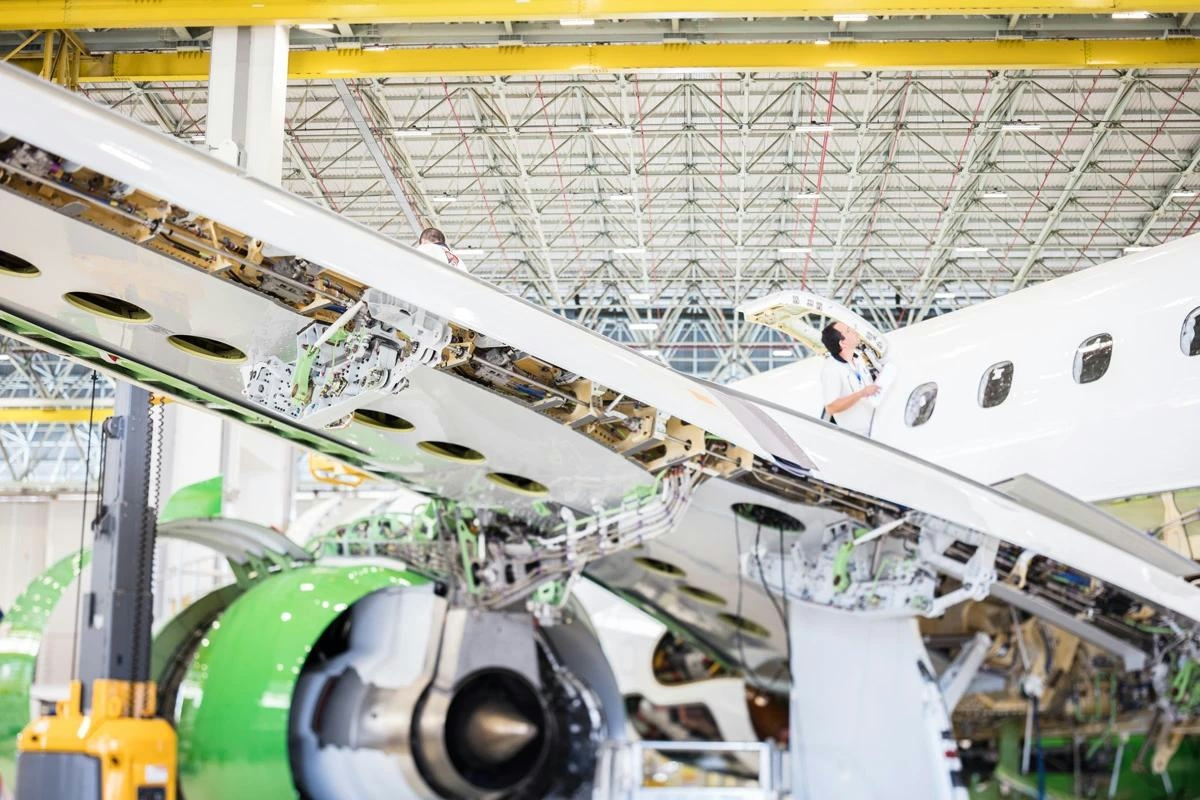
Embraer E195-E2 Features Distinctive Engine Placement Among Regional Jets
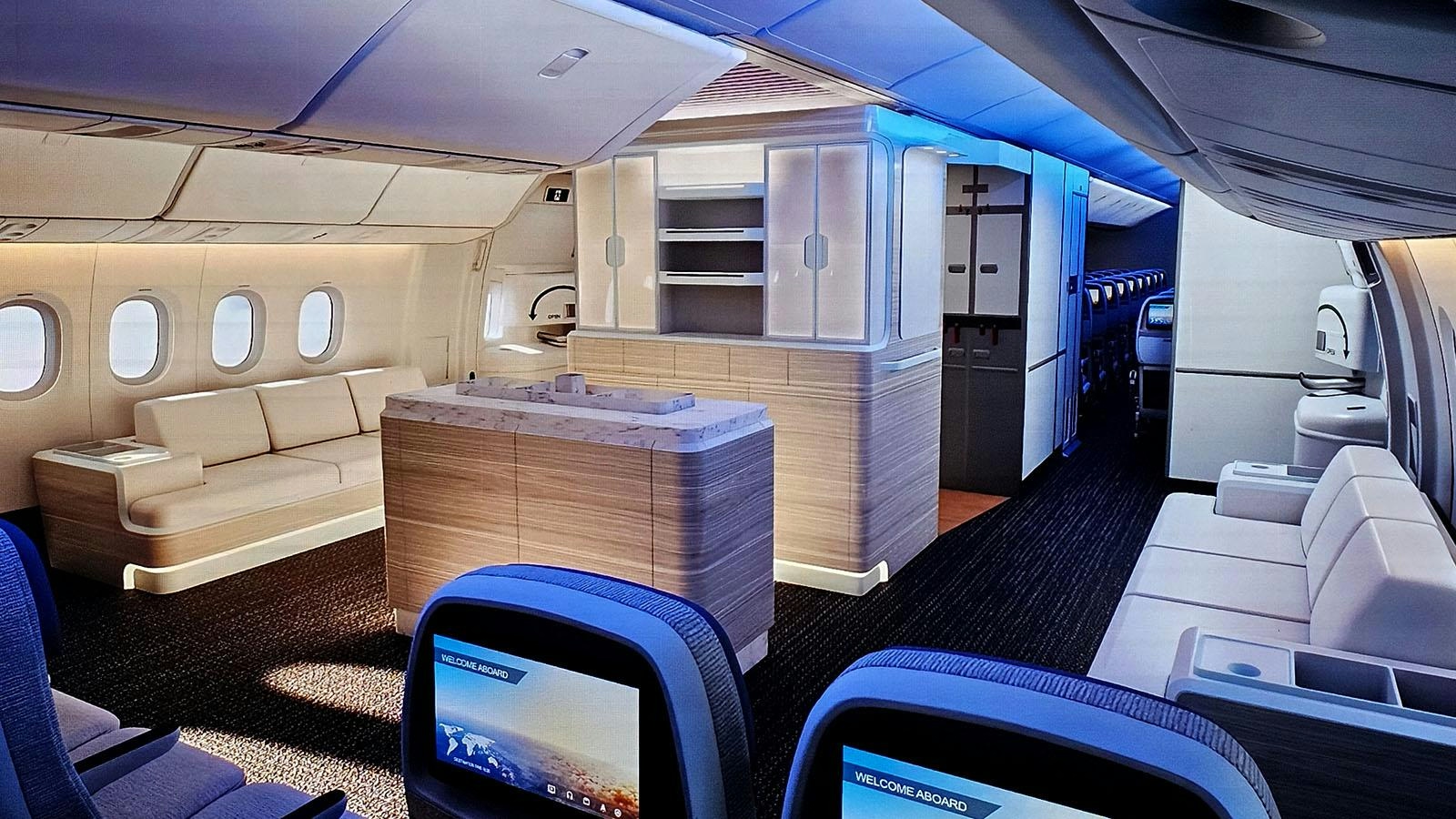
What Passengers Can Expect on Boeing’s New 777X Jet

How Ethiopian Airlines Became Africa’s Leading Carrier Amid Gulf Competition

Joby Aviation Extends Autonomous Flight Capabilities with Cross-Country Tour
