
Orchestrer les insights d’IA pour les transformer en actions

Tendances
Categories
Sabre Corporation Introduces AI-Powered Revenue Optimizer for Airlines

Sabre Corporation Launches AI-Driven Revenue Optimizer for Airlines
Sabre Corporation (NASDAQ: SABR) has introduced the SabreMosaic Continuous Revenue Optimizer (CRO), an advanced AI-powered revenue management tool designed to revolutionize airline pricing strategies. Officially launched on October 14, the CRO system moves beyond traditional fare class structures by providing continuous, optimized pricing recommendations tailored to each individual shopping request. Sabre projects that this innovation could increase overall airline revenues by up to 3.5% without necessitating additional capacity, by ensuring that the optimal price is offered to the right customer at the right moment.
Advancing Airline Revenue Management with AI
The CRO solution addresses the inherent limitations of legacy revenue management systems that rely heavily on fixed fare classes. Built on the SabreMosaic platform, which debuted last year and has already contributed tens of millions in incremental revenue for over ten airline customers, the optimizer integrates Sabre IQ—an advanced artificial intelligence layer. This AI combines proprietary algorithms with Sabre’s extensive Travel Data Cloud, which aggregates more than 50 petabytes of anonymized travel data. This vast repository enables more precise, dynamic pricing decisions that adapt in real time to market conditions and consumer behavior.
Sabre Corporation operates globally as a leading software and technology provider for the travel industry, with a presence across the United States, Europe, Asia-Pacific, and other international markets. Its business is divided into two primary segments: Travel Solutions and Hospitality Solutions, both of which benefit from the company’s ongoing investment in AI and data-driven technologies.
Challenges and Industry Implications
Despite the promise of CRO as a breakthrough in airline revenue management, the deployment of AI-driven pricing tools faces several challenges. Regulatory scrutiny is expected to intensify as authorities examine how companies collect, manage, and utilize large volumes of consumer data. Privacy concerns among travelers may also arise, particularly as AI systems become more deeply embedded in pricing and personalization processes.
The market response to Sabre’s announcement is likely to be mixed. Established revenue management providers may express skepticism regarding the transparency and effectiveness of AI-based pricing models. Meanwhile, competitors are anticipated to accelerate their own AI initiatives or pursue strategic partnerships to incorporate similar technologies, thereby intensifying competition in the airline revenue management sector.
Sabre’s recent whitepaper underscores the transformative potential of conversational commerce, suggesting that the travel industry is approaching a significant technological shift. However, the pace at which airlines adopt these AI-driven solutions and their tangible impact on revenue and customer experience remain uncertain as stakeholders balance innovation with regulatory and consumer considerations.
As Sabre expands its AI portfolio, investor attention remains focused on the company’s stock performance. While some analysts view SABR as an undervalued technology investment, others recommend alternative AI-focused stocks that may offer higher growth potential with comparatively lower risk.

Adobe Warns AI-Driven Trip Planning Challenges Travel Sites

The Global Parts Shortage
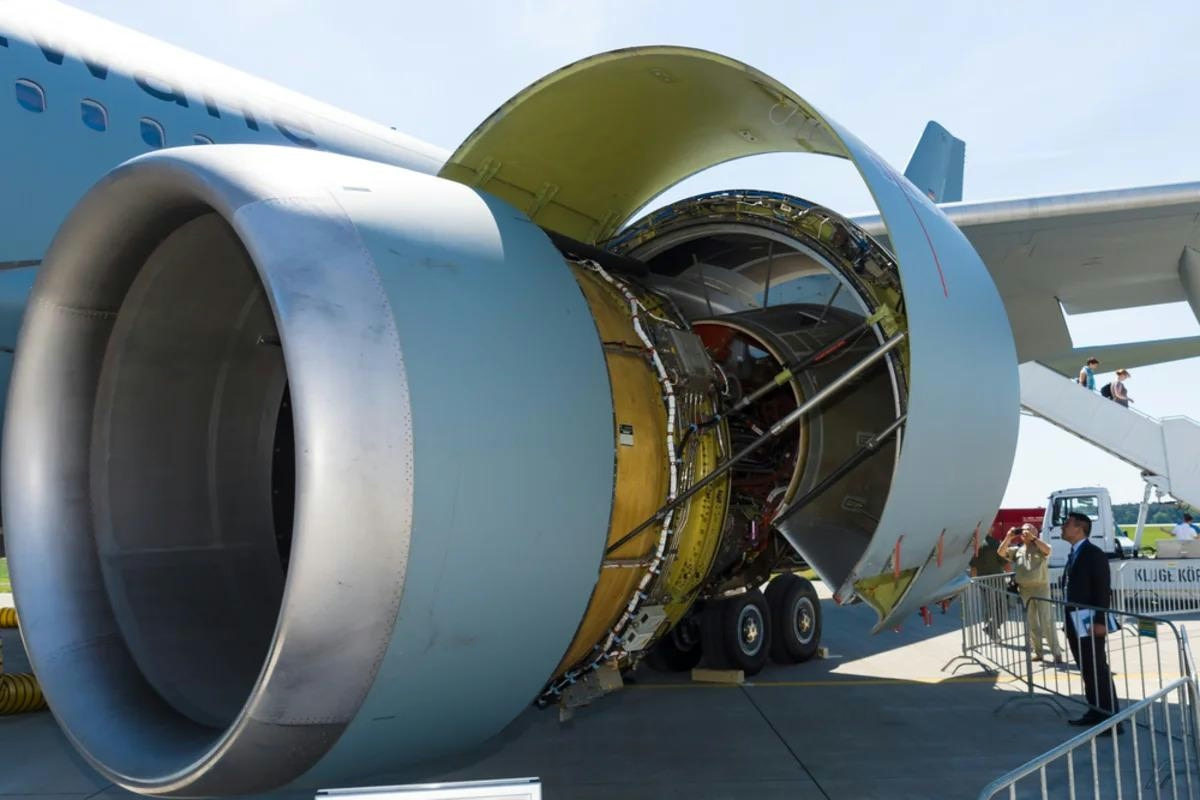
GE Aerospace's Robust Capital Position Fuels Higher Shareholder Returns

AI Advances Support Sustainable Aviation and Efficient Flight Paths

Airbus Faces Freighter Deadline Amid Weak Order Growth and Stagnant Shares

Integrated CNS System for Low-Altitude Aircraft

Chinese Robots Debut in Aviation and Military Roles at WRC 2026
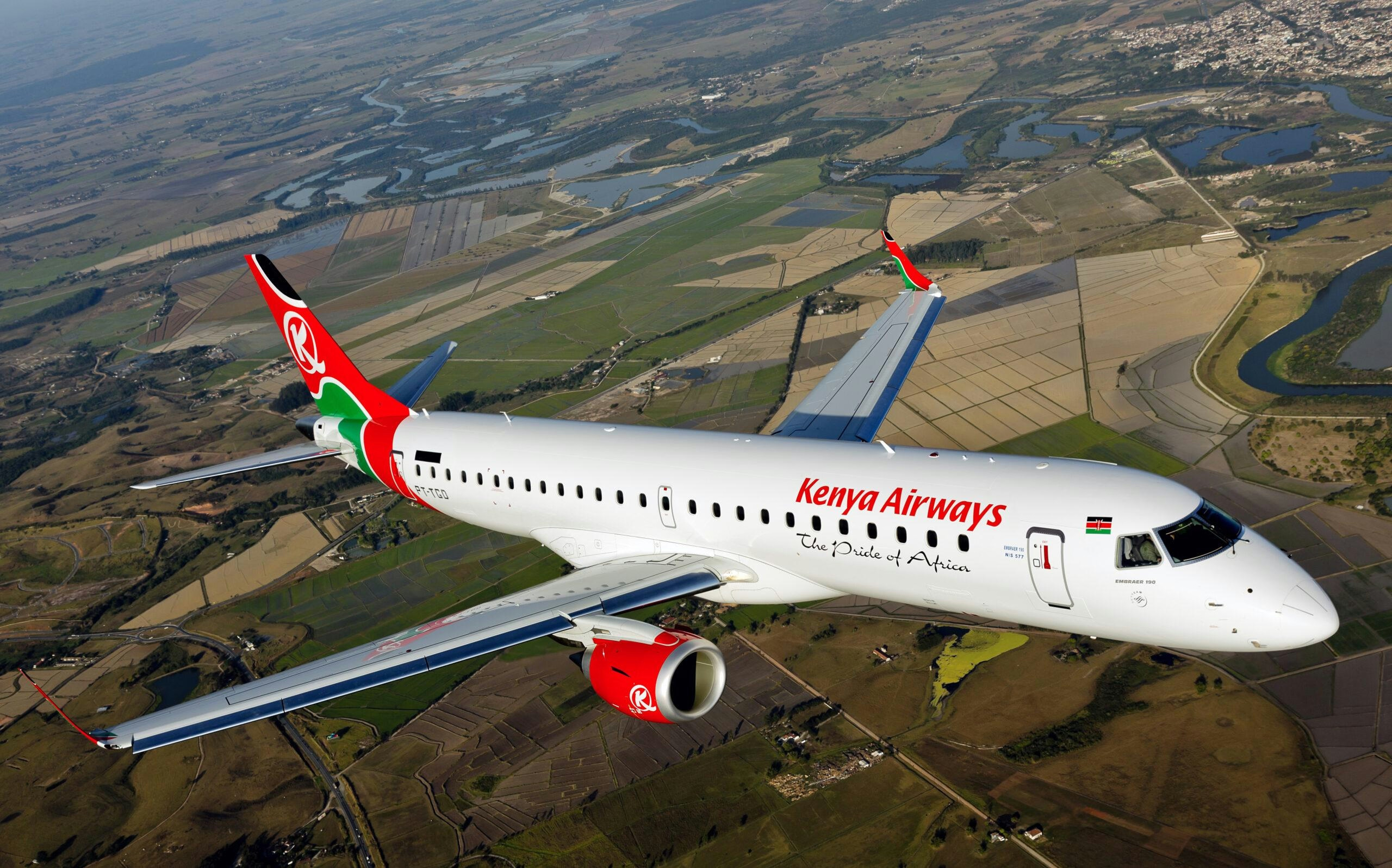
Kenya Airways Aims to Resume Operations of Grounded Fleet by Early 2027

Avora Aviation Completes A320 Sale-Leaseback Agreement with FTAI
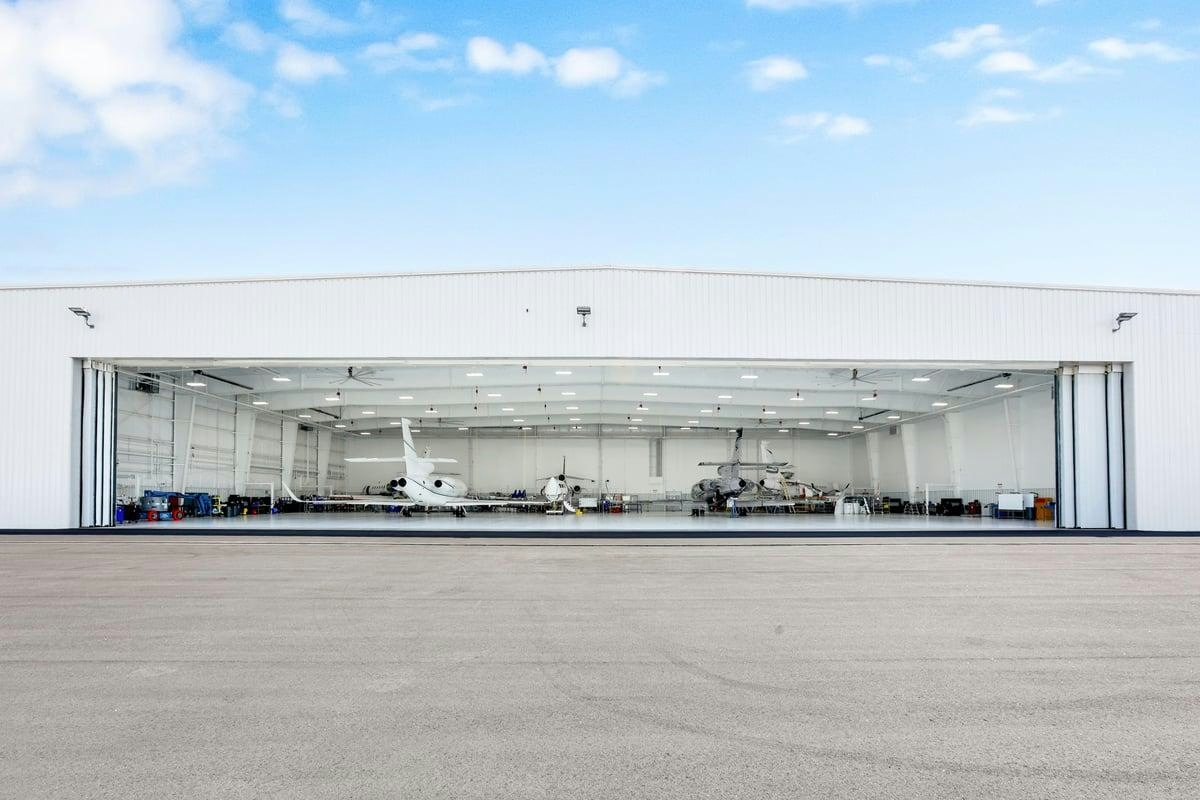
StandardAero Expands Bombardier Global MRO Services at Van Nuys Facility
