
Orchestrer les insights d’IA pour les transformer en actions

Tendances
Categories
Safran CEO Says Global Supply Chain Is Improving
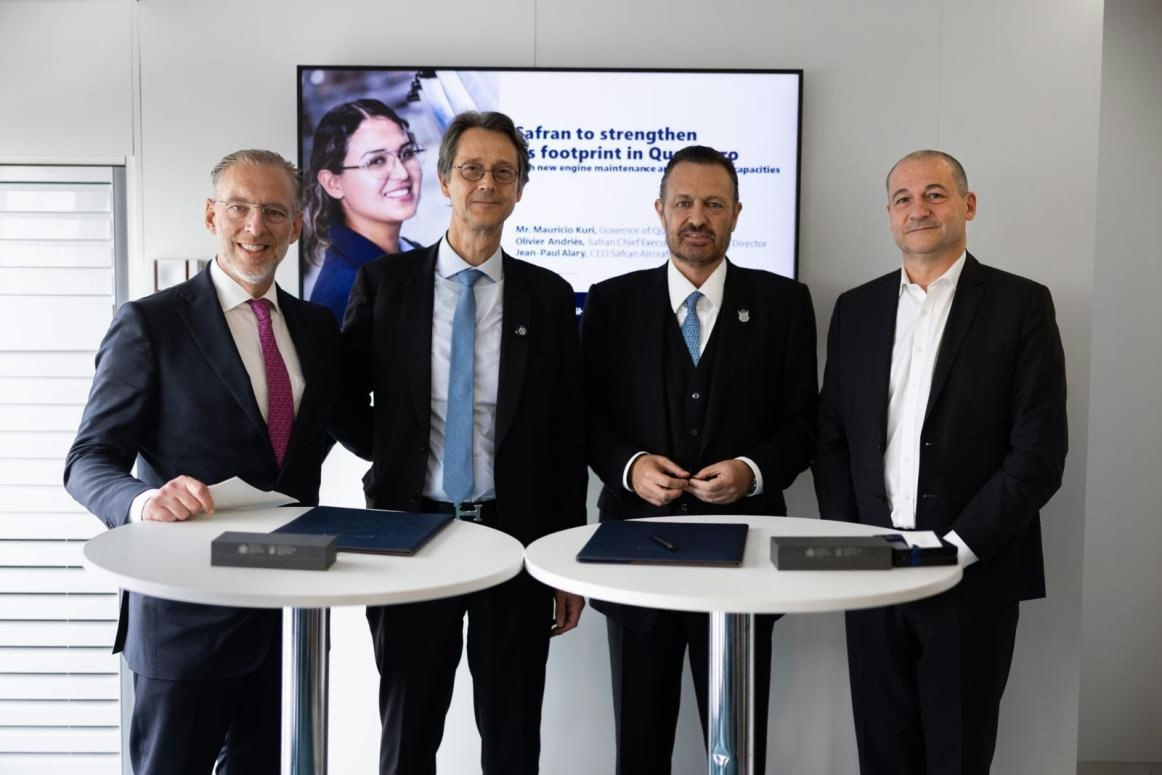
Safran CEO Highlights Gradual Recovery in Global Supply Chain
Olivier Andries, CEO of the French aerospace conglomerate Safran, has expressed cautious optimism regarding the state of the global supply chain, describing signs of improvement despite ongoing challenges. Speaking at a briefing in Hyderabad, Andries acknowledged the significant disruptions that have affected aerospace manufacturing in recent years but emphasized that conditions are beginning to stabilize.
Impact of Geopolitical and Pandemic-Related Disruptions
Andries detailed the series of shocks that have strained supply chains worldwide. The onset of the COVID-19 pandemic precipitated a sharp decline in demand, severely disrupting production and logistics. This was compounded by Russia’s invasion of Ukraine, which critically affected the supply of essential raw materials such as titanium, nickel, and aluminium—materials vital to aerospace manufacturing. “Russia is a big supplier of raw materials for our sector, and the conflict created a big shock,” Andries noted, highlighting the resulting shortages and price volatility that have challenged the industry.
Despite these setbacks, Andries conveyed a positive outlook, stating, “We are recovering from that... we see the light at the end of the tunnel.”
Safran’s Strategic Expansion and Industry Challenges
Safran, a leading manufacturer of engines for commercial aircraft and military jets, operates through its joint venture with GE Aerospace, CFM International. This partnership produces the LEAP engines that power widely used narrow-body aircraft such as the Airbus A320neo and Boeing 737 MAX. India, recognized as one of the fastest-growing civil aviation markets globally, has become CFM’s third-largest market, with five Indian carriers operating over 400 LEAP-powered aircraft and holding orders for 2,000 engines.
In line with its growth strategy, Safran recently inaugurated its largest Maintenance, Repair, and Overhaul (MRO) facility for LEAP engines in Hyderabad, scheduled to become operational early next year. The company also plans to establish an MRO facility for M88 engines, which power Dassault Aviation’s Rafale fighter jets, further strengthening its service capabilities in the region.
Nevertheless, the aerospace sector continues to face persistent supply chain difficulties. A recent study by the International Air Transport Association (IATA) and consulting firm Oliver Wyman projects that these challenges will cost the global airline industry over $11 billion in 2025. The financial impact stems from increased fuel consumption, additional maintenance requirements, higher engine leasing expenses, and surplus inventory costs. IATA Director General Willie Walsh has publicly expressed frustration over the slow pace of supply chain recovery, while GE Aerospace has acknowledged ongoing constraints and is employing its proprietary lean operating model to mitigate bottlenecks.
Competitive Pressures and Industry Adaptation
Safran’s initiatives to reinforce its supply chain resilience come amid intensified scrutiny and competitive pressures within the aerospace sector. The company must navigate global uncertainties while addressing vulnerabilities that threaten less digitally advanced players. Meanwhile, Morocco’s emergence as a new aircraft-engine assembly hub is reshaping the competitive landscape, positioning the country as a significant participant in the global aviation supply chain.
Other aerospace firms are similarly accelerating efforts to enhance supply chain efficiency and adopt advanced technologies. For instance, BOSGAME’s recent expansion aims to increase global mini-PC production capacity, reflecting broader industry trends toward innovation and operational agility.
As the aerospace industry continues to adapt to these evolving dynamics, Safran’s progress in supply chain management will remain a focal point for market analysts and competitors alike.

Etihad Airways Suspends Airbus A380 Flights on Key Route

Aditya Birla Group Seeks Approval for Aircraft Leasing in GIFT City

Qatar Airways Highlights Innovation and Connectivity at Arabian Travel Market 2026

Hong Kong's Five-Year Plan Includes Andrew Fan's Aircraft Parts Processing Hub Proposal

ACIA Aero Leasing Delivers ATR72-600 to Air Nostrum

RTX Appoints Jill Albertelli as Head of Pratt & Whitney

TAT Technologies Joins Beyond Aero Hydrogen Aircraft Program

AURAK Study Highlights Barriers to Air Taxi Adoption in Emerging Economies

Xiamen Air Selects Altitude for 787 Maintenance at Heathrow

Etihad and Swissport Extend Global Partnership
