
Orchestrer les insights d’IA pour les transformer en actions

Tendances
Categories
Safran Exceeds First-Quarter Jet Engine Revenue Estimates, Affirms Outlook
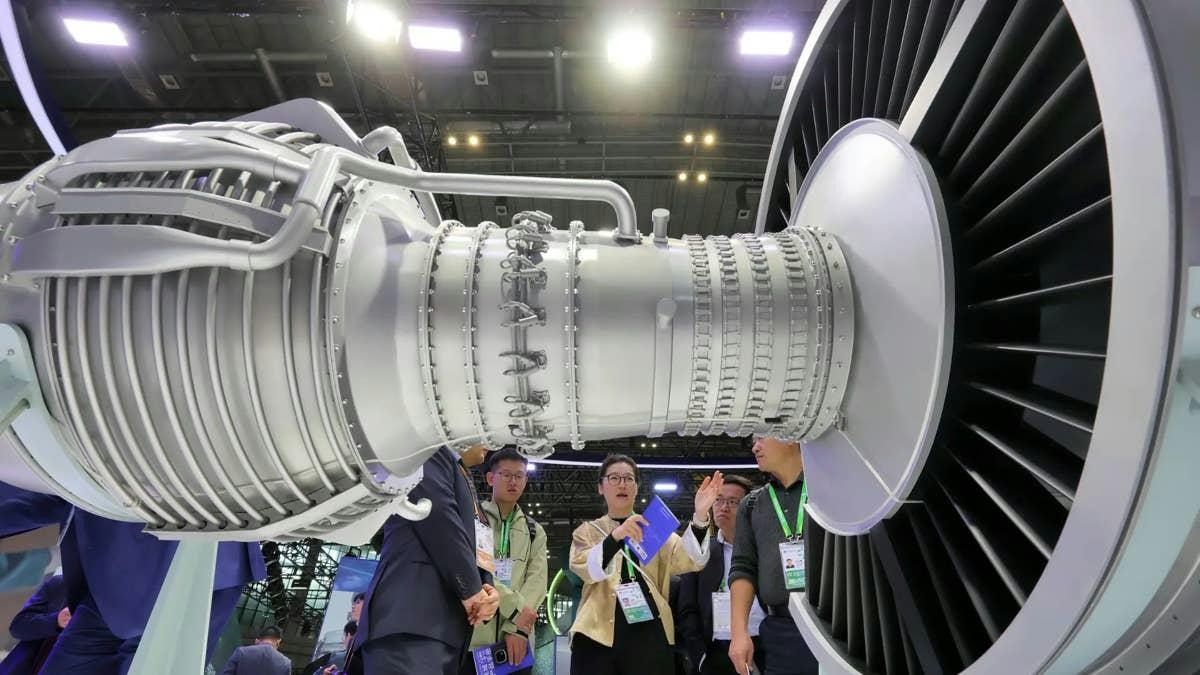
Safran Surpasses First-Quarter Revenue Expectations Amid Strong Jet Engine Demand
French aerospace conglomerate Safran reported first-quarter revenue that significantly exceeded market forecasts, driven by a surge in jet engine deliveries and robust demand for spare parts and maintenance services. The company reaffirmed its full-year outlook, emphasizing that the ongoing conflict in the Middle East has had a limited impact on its operations to date.
Robust Growth in Engine Deliveries and Aftermarket Services
Safran, which co-produces the LEAP jet engines for Boeing and Airbus narrow-body aircraft through its CFM International joint venture with GE Aerospace, announced adjusted revenue of €8.62 billion ($10.08 billion) for the first quarter. This figure represents an 18.8% increase year-on-year and surpasses the analyst consensus of €8.28 billion compiled by the company. The revenue growth was primarily driven by a more than 60% rise in LEAP engine deliveries. Additionally, sales of spare parts increased by 29%, while services revenue grew by 43%. Notably, civil engine spare parts revenue—a key industry indicator—rose by 29.3% in dollar terms.
Chief Executive Olivier Andriès addressed the impact of geopolitical tensions during a media call, stating that Safran had not experienced any disruption from the Middle East conflict in the first quarter and did not foresee significant effects in the near term. “We saw no impact in the first quarter and do not expect a significant impact in the second quarter at this stage,” Andriès affirmed.
Industry Context and Future Outlook
Safran’s strong performance aligns with broader positive momentum in the aerospace sector. Its CFM partner, GE Aerospace, also reported robust engine deliveries and indicated it remains on track to achieve the upper range of its 2026 profit forecast. This is despite preparing for potential challenges such as rising oil prices, fuel supply constraints, and slower global economic growth.
Looking ahead, Safran projects revenue growth of low- to mid-teens percentages for 2026. The company anticipates recurring operating income between €6.1 billion and €6.2 billion, alongside free cash flow ranging from €4.4 billion to €4.6 billion. Safran maintains a dominant market position, with CFM engines accounting for approximately 60% of the A320neo-family order book. Andriès emphasized that the company has no plans to expand this market share, even as competitor Pratt & Whitney contends with engine supply difficulties.
Navigating Technological and Market Challenges
Safran and its competitors face ongoing industry challenges, including the integration of larger electrical systems into aircraft and advancing engineering efforts toward hybrid propulsion technologies. These developments have prompted manufacturers to address durability concerns in their latest-generation turbofan engines. Safran’s hybridisation initiatives are designed to sustain its competitive advantage amid these technological shifts.
The market has responded positively to Safran’s quarterly results, reflecting confidence in the company’s capacity to manage operational growth while addressing emerging industry challenges.
($1 = 0.8549 euros)

Etihad Airways Suspends Airbus A380 Flights on Key Route

Aditya Birla Group Seeks Approval for Aircraft Leasing in GIFT City

Qatar Airways Highlights Innovation and Connectivity at Arabian Travel Market 2026

Hong Kong's Five-Year Plan Includes Andrew Fan's Aircraft Parts Processing Hub Proposal

ACIA Aero Leasing Delivers ATR72-600 to Air Nostrum

RTX Appoints Jill Albertelli as Head of Pratt & Whitney

TAT Technologies Joins Beyond Aero Hydrogen Aircraft Program

AURAK Study Highlights Barriers to Air Taxi Adoption in Emerging Economies

Xiamen Air Selects Altitude for 787 Maintenance at Heathrow

Etihad and Swissport Extend Global Partnership
