
Orchestrer les insights d’IA pour les transformer en actions

Tendances
Categories
Saudi Arabia Outlines Dual-Track AI Strategy for Aviation, Says GACA President
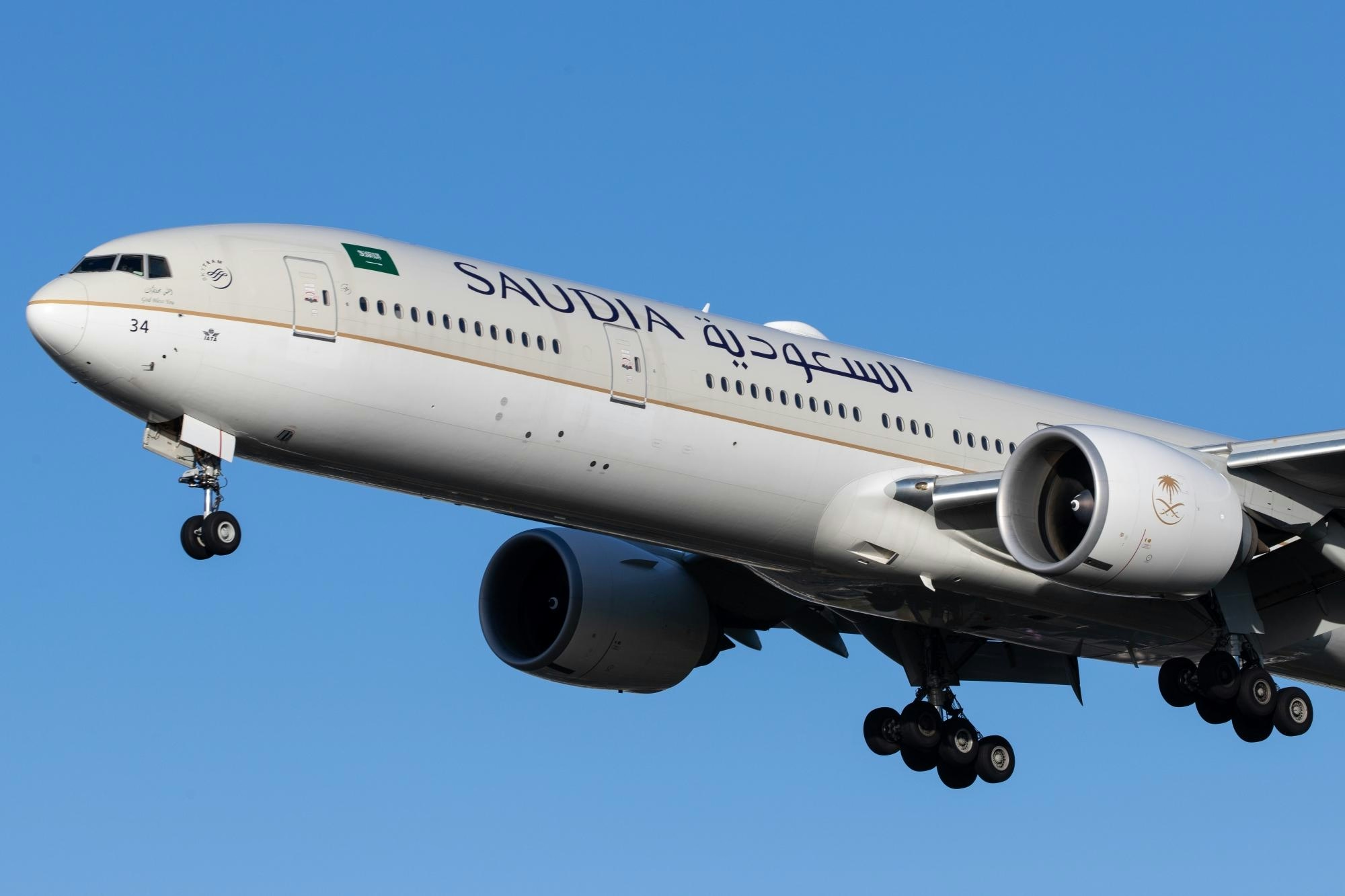
Saudi Arabia Advances Dual-Track AI Strategy in Aviation
Saudi Arabia is pursuing a dual-track approach to integrating artificial intelligence (AI) and automation within its aviation sector, aiming to balance rapid technological advancement with stringent safety oversight. Abdulaziz Al-Duailej, President of the General Authority of Civil Aviation (GACA), detailed this strategy during the Aerospace Future Technology Symposium held alongside the El Alamein International Airshow 2026 in Egypt. His remarks underscored the kingdom’s commitment to fostering innovation while preserving human expertise and operational integrity.
Balancing Innovation with Safety
The first component of Saudi Arabia’s strategy focuses on accelerating the deployment of advanced technologies in areas that do not directly impact safety-critical operations. This approach allows for swift modernization and operational efficiency gains without compromising safety standards. The second component involves a cautious, phased introduction of AI and automation into safety-sensitive functions. This measured rollout ensures that new systems are rigorously evaluated and meet or exceed existing safety benchmarks before full implementation. Throughout both tracks, Al-Duailej emphasized that human oversight and expertise will remain central to aviation operations, even as automation expands.
The evolving role of AI is also reshaping workforce requirements within the sector. There is growing demand for specialized skills in AI assurance, data science, and human factors to ensure effective collaboration between humans and automated systems. Al-Duailej highlighted the Saudi Data & AI Authority’s One Million Saudis in AI (SAMAI) Initiative, which has successfully trained over one million citizens in AI competencies. This milestone reflects Saudi Arabia’s broader ambition to build an AI-driven digital society and underscores the importance of translating general AI readiness into sector-specific expertise through advanced training and simulation programs.
Navigating Challenges and Strategic Partnerships
Despite the promising outlook, the dual-track strategy faces significant challenges, particularly in regulatory adaptation. As AI becomes one of the most heavily regulated industries worldwide, Saudi Arabia must carefully navigate complex regulatory frameworks that could influence the pace of AI adoption. Al-Duailej called for regulatory evolution that keeps pace with technological progress while ensuring robust human oversight remains integral to critical safety functions.
The competitive landscape within Saudi aviation is also evolving. Local carriers are strengthening their market positions through strategic partnerships. For instance, Flynas recently acquired a stake in Swissport Saudi Arabia to enhance ground-handling capabilities. Additionally, collaborations such as the partnership between Mistral and Humain aim to develop sovereign AI capabilities, potentially positioning Saudi Arabia as a regional leader in AI innovation. However, there remains a strong emphasis on monetizing existing technologies like 5G, with telecom operators such as Mobily prioritizing current revenue streams over long-term AI investments.
As automation becomes increasingly prevalent, Al-Duailej reiterated the enduring importance of human judgment, situational awareness, and the capacity to intervene during critical moments. He stressed that while technology will drive progress, safeguarding human skills and adapting regulatory structures are essential to ensuring the safe and effective integration of AI within Saudi Arabia’s aviation sector.

Etihad Airways Suspends Airbus A380 Flights on Key Route

Aditya Birla Group Seeks Approval for Aircraft Leasing in GIFT City

Qatar Airways Highlights Innovation and Connectivity at Arabian Travel Market 2026

Hong Kong's Five-Year Plan Includes Andrew Fan's Aircraft Parts Processing Hub Proposal

ACIA Aero Leasing Delivers ATR72-600 to Air Nostrum

RTX Appoints Jill Albertelli as Head of Pratt & Whitney

TAT Technologies Joins Beyond Aero Hydrogen Aircraft Program

AURAK Study Highlights Barriers to Air Taxi Adoption in Emerging Economies

Xiamen Air Selects Altitude for 787 Maintenance at Heathrow

Etihad and Swissport Extend Global Partnership
