
Orchestrer les insights d’IA pour les transformer en actions

Tendances
Categories
Scoot Orders 11 Airbus A320neo Jets
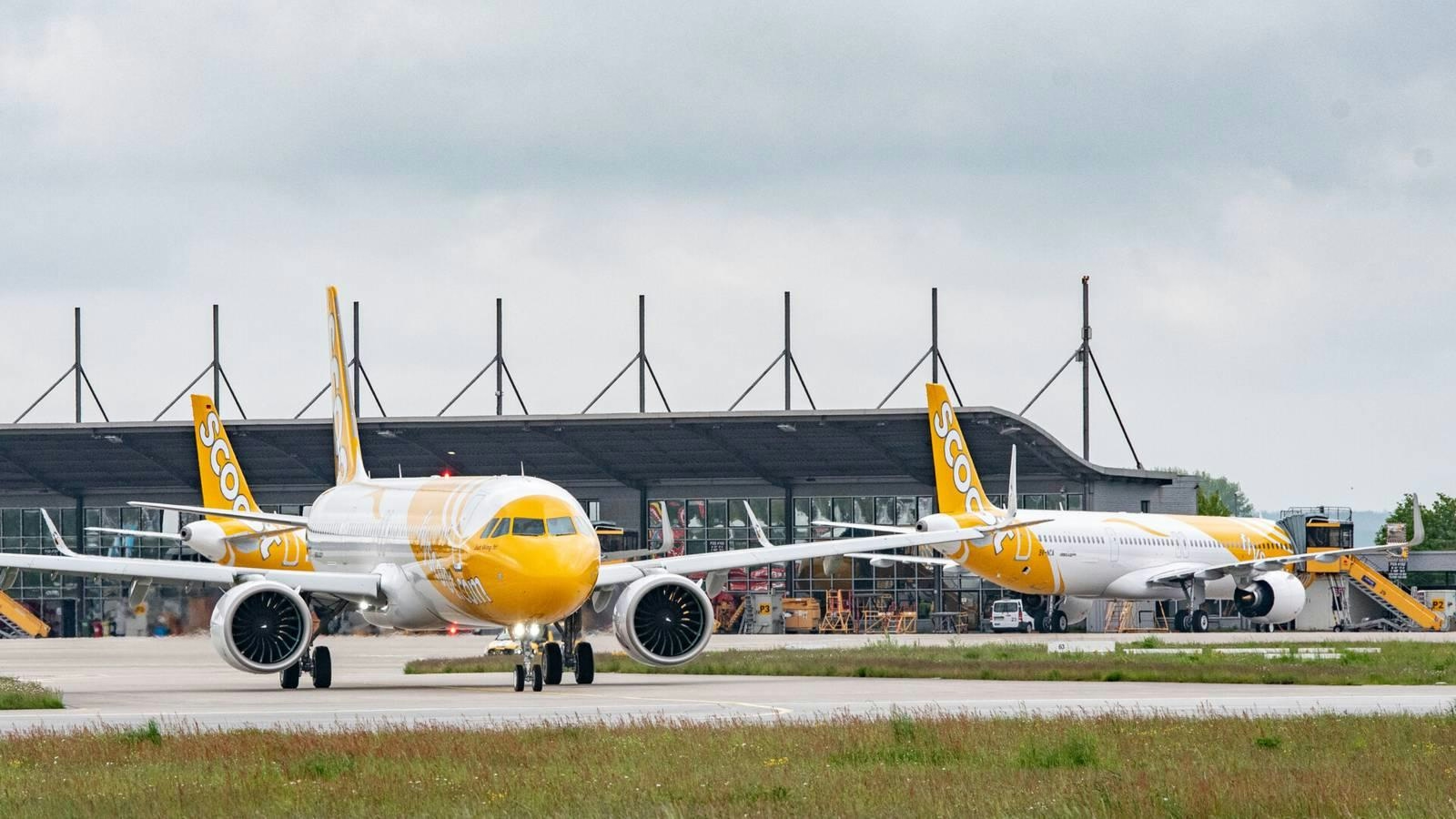
Scoot Expands Fleet with Order for 11 Airbus A320neo Jets
Singapore Airlines’ low-cost subsidiary, Scoot, has announced a significant expansion of its fleet with an order for five new Airbus A320neo family aircraft, alongside the exercise of options for an additional six jets. This move increases Scoot’s total A320neo orderbook to 20 aircraft. The new planes, slated for phased delivery beginning in 2028, will be equipped with Pratt & Whitney geared turbofan engines, according to a company statement released on Thursday.
Strategic Growth and Network Expansion
Scoot’s fleet expansion aligns with its broader strategy to increase capacity and launch new routes within a five- to six-hour flying radius from its Singapore hub. The airline aims to enhance connectivity across Southeast Asia, North Asia, and other key markets, while reinforcing its integration within the wider Singapore Airlines Group network. Scoot’s CEO, Leslie Thng, emphasized the anticipated growth in travel demand across the Asia-Pacific region in the coming years. Since the 2022/23 financial year, Scoot has introduced 25 new destinations, including secondary cities such as Chiang Rai in Thailand and Phu Quoc in Vietnam, as well as long-haul routes like Vienna.
The newly ordered aircraft will feature a single-class layout, accommodating 186 passengers on the A320neo and 236 on the larger A321neo variants, reflecting Scoot’s focus on maximizing efficiency and passenger capacity.
Intensifying Competition in the Single-Aisle Market
Scoot’s latest order highlights the escalating competition in the single-aisle aircraft segment, where Airbus and Boeing continue to vie for market leadership. While Scoot has committed to the Airbus A320neo, other regional carriers, such as Kazakhstan’s SCAT Airlines, have expressed interest in Boeing’s 737 MAX 9, underscoring the ongoing rivalry between the two manufacturers. Industry analysts expect Boeing to respond to Airbus’s growing presence by intensifying promotion of its MAX series, particularly as airlines across the Asia-Pacific region expand their fleets.
Nevertheless, Boeing faces considerable challenges in the region, including geopolitical tensions between the United States and China, which have disrupted delivery schedules and affected its order book. These factors contribute to a complex competitive environment as carriers like Scoot make strategic decisions to capitalize on rising demand in the Asia-Pacific aviation market.

Etihad Airways Suspends Airbus A380 Flights on Key Route

Aditya Birla Group Seeks Approval for Aircraft Leasing in GIFT City

Qatar Airways Highlights Innovation and Connectivity at Arabian Travel Market 2026

Hong Kong's Five-Year Plan Includes Andrew Fan's Aircraft Parts Processing Hub Proposal

ACIA Aero Leasing Delivers ATR72-600 to Air Nostrum

RTX Appoints Jill Albertelli as Head of Pratt & Whitney

TAT Technologies Joins Beyond Aero Hydrogen Aircraft Program

AURAK Study Highlights Barriers to Air Taxi Adoption in Emerging Economies

Xiamen Air Selects Altitude for 787 Maintenance at Heathrow

Etihad and Swissport Extend Global Partnership
