
Orchestrer les insights d’IA pour les transformer en actions

Tendances
Categories
Shenzhen and Shanghai Lead China’s eVTOL Development
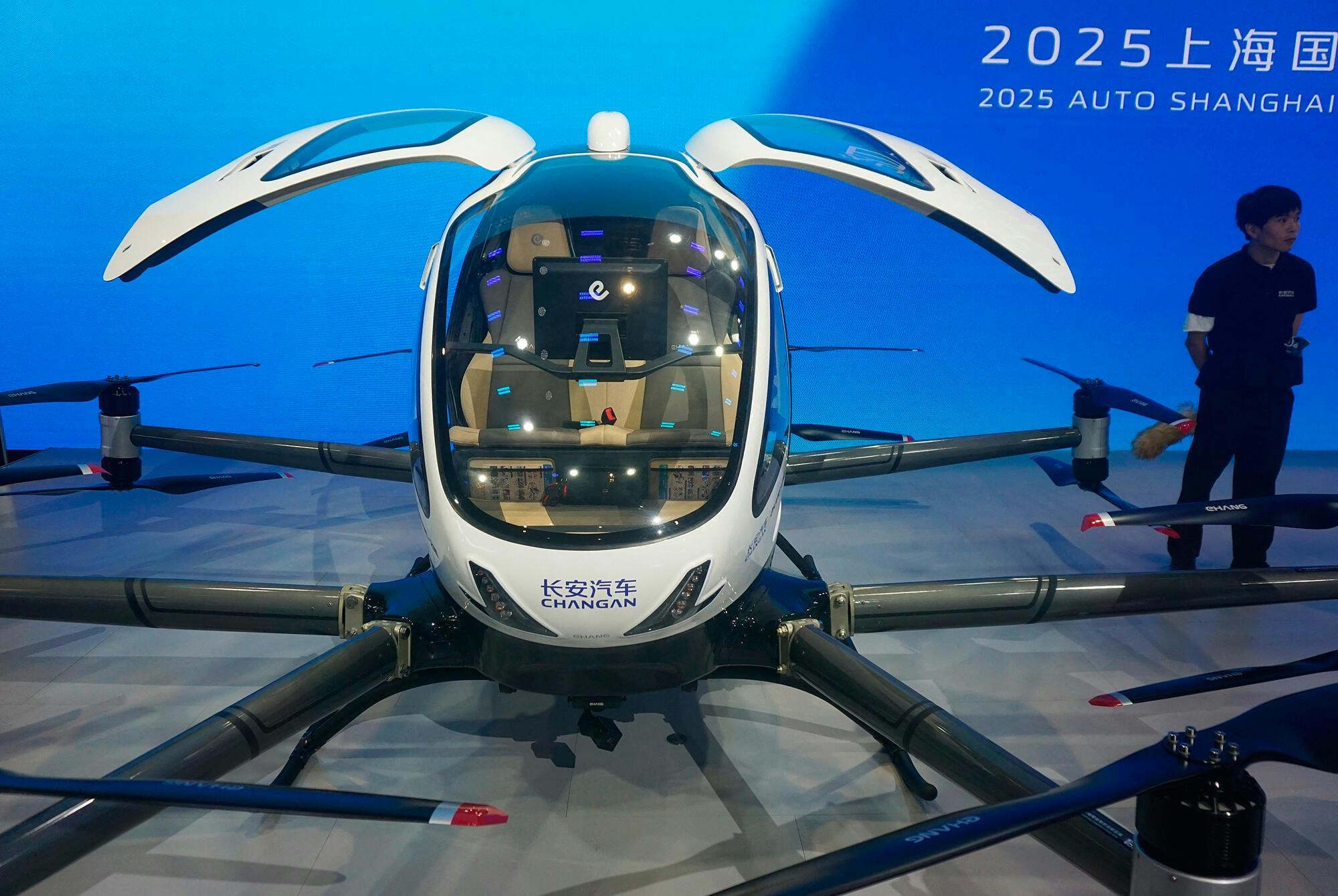
Shenzhen and Shanghai Lead China’s eVTOL Development
As China’s urban population exceeds 950 million, with sixteen megacities each housing over 10 million residents, the nation is intensifying its efforts to develop urban air mobility (UAM) and electric vertical takeoff and landing (eVTOL) technologies. Shenzhen and Shanghai have emerged as the primary centers driving this rapidly evolving sector, reflecting both national strategic priorities and local innovation dynamics.
National Priorities and Regional Leadership
Innovation in the low-altitude economy has been prioritized by the National Congress of the Chinese Communist Party, featuring prominently in the 14th and 15th Five-Year Plans (2021-2025 and 2026-2030). These plans identify the low-altitude segment as a critical area for investment and technological advancement. The 2024 Implementation Plan for Innovative Application of General Aviation Equipment (2024-2030), issued by a coalition of state ministries alongside the Civil Aviation Administration of China (CAAC), further institutionalizes these objectives. This framework signals to regional and municipal authorities the strategic importance of fostering growth in the UAM and eVTOL sectors.
Shenzhen and Shanghai exemplify China’s ongoing economic transformation. Shanghai, historically the nation’s financial gateway, and Shenzhen, once a modest fishing village now recognized as a global innovation hub, are both competing to lead the eVTOL revolution. While the low-altitude economy is developing across the country—with notable contributions from companies such as Geely’s Aerofugia in Chengdu—these two cities have become focal points of competition, each aiming to secure economic benefits and prestige associated with pioneering next-generation air transportation.
Regional Innovation and Urban Air Mobility Initiatives
The Guangdong coastal corridor, which includes Shenzhen, Guangzhou, and Hong Kong, is widely regarded as an ideal environment for UAM deployment. This region, home to over 40 million people, is a dense nexus of industrial and technological activity. Shenzhen, often referred to as “China’s Silicon Valley,” has become a significant center for eVTOL and UAM development. The city is advancing its ambitious ‘City in the Sky’ initiative under the ‘Action Plan for Promoting High-Quality Development of Low-Altitude Economy in Guangdong Province (2024-2026),’ integrating technological and infrastructural innovation to support aerial mobility.
Meanwhile, Shanghai continues to leverage its strengths in automation and advanced manufacturing. The city recently garnered attention when a robot barista outperformed a human competitor in a coffee-making contest, underscoring its commitment to automation and technological progress.
Challenges and Competitive Dynamics
Despite a downturn in China’s electric vehicle (EV) market in 2026 and a broader decline in the automotive sector, the country’s commitment to innovation remains resolute. This determination is further illustrated by ongoing legal disputes between major eVTOL developers Archer Aviation and Joby Aviation, with both companies claiming victories in their respective lawsuits. These legal battles highlight the intense competition within the sector.
On the international stage, Europe’s plans to introduce affordable EVs aimed at competing with Chinese models have raised questions about the long-term viability of such efforts, reinforcing China’s leadership in both ground and aerial mobility innovation.
As Shenzhen and Shanghai vie to define the future of urban air transport, their endeavors reflect China’s broader ambition to lead in next-generation mobility and automation technologies.

Etihad Airways Suspends Airbus A380 Flights on Key Route

Aditya Birla Group Seeks Approval for Aircraft Leasing in GIFT City

Qatar Airways Highlights Innovation and Connectivity at Arabian Travel Market 2026

Hong Kong's Five-Year Plan Includes Andrew Fan's Aircraft Parts Processing Hub Proposal

ACIA Aero Leasing Delivers ATR72-600 to Air Nostrum

RTX Appoints Jill Albertelli as Head of Pratt & Whitney

TAT Technologies Joins Beyond Aero Hydrogen Aircraft Program

AURAK Study Highlights Barriers to Air Taxi Adoption in Emerging Economies

Xiamen Air Selects Altitude for 787 Maintenance at Heathrow

Etihad and Swissport Extend Global Partnership
