
Orchestrer les insights d’IA pour les transformer en actions

Tendances
Categories
Shield AI Wins U.S. Air Force Contract for Combat Aircraft Autonomy
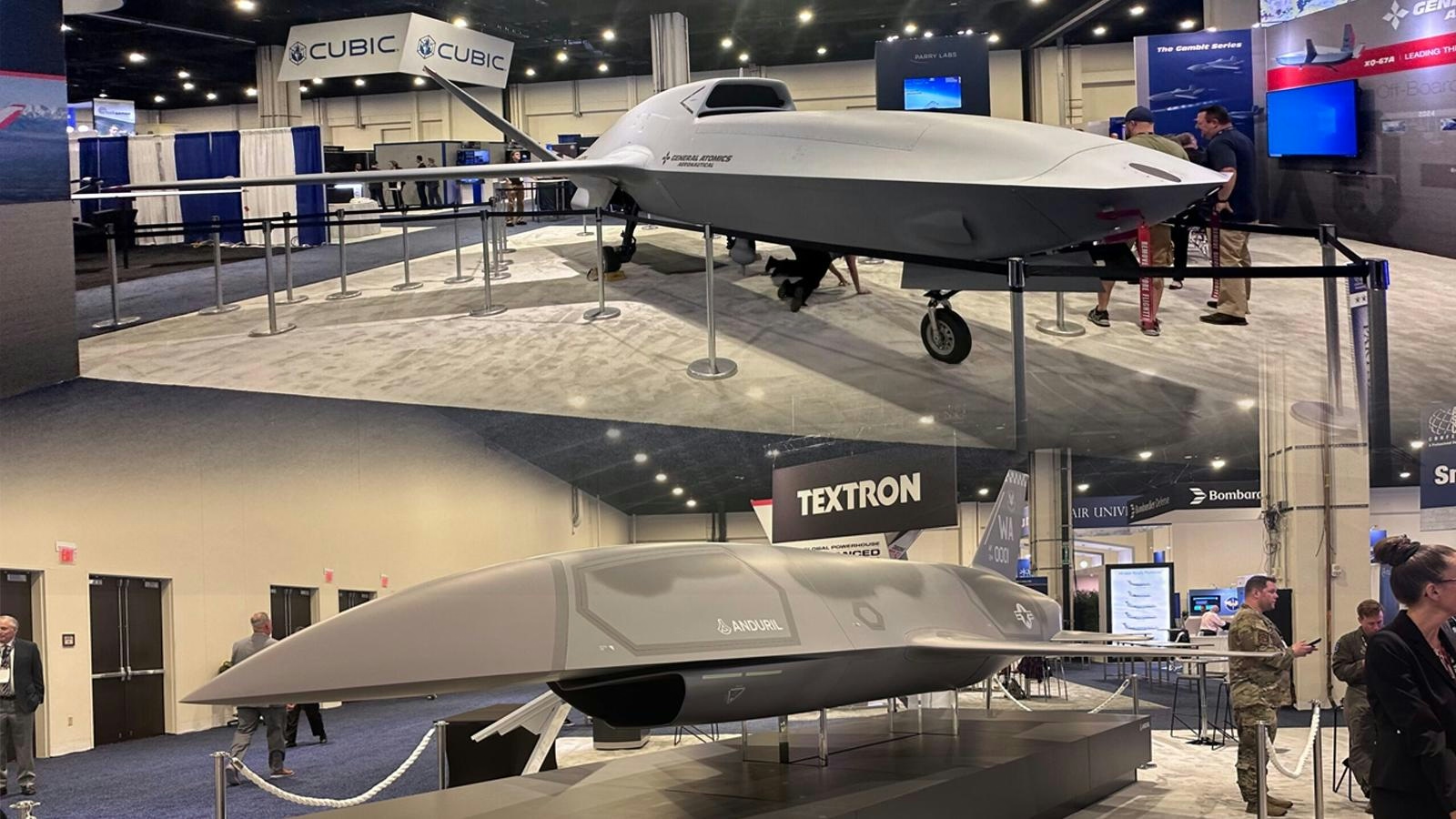
Shield AI Secures U.S. Air Force Contract to Advance Combat Aircraft Autonomy
WASHINGTON (June 17, 2026) — Shield AI, a prominent defense technology company specializing in autonomous systems and next-generation aircraft, has been awarded a production contract by the U.S. Air Force to deploy its Hivemind mission autonomy software within the Collaborative Combat Aircraft (CCA) program. This contract highlights the Air Force’s strategic emphasis on a software-first approach, recognizing mission autonomy as a critical and standalone capability in the development of future combat aircraft.
Advancing Mission Autonomy Through Software Innovation
The Air Force’s adoption of the Autonomy Government Reference Architecture (A-GRA) enables rapid and independent upgrades to mission autonomy software without necessitating changes to aircraft hardware. This decoupling of software from airframe design accelerates innovation, reduces integration costs, and mitigates program risks by allowing software enhancements to be deployed across multiple platforms seamlessly.
Christian Gutierrez, senior vice president of Hivemind at Shield AI, emphasized the significance of this approach, stating, “Mission autonomy is a foundational capability for future airpower. The Air Force’s approach enables faster innovation, rapid capability deployment, and greater operational advantage for the warfighter. We’re excited to continue our partnership with the Air Force to field collaborative autonomy and deliver these capabilities at scale.”
Under the terms of the contract, Shield AI will concentrate on developing collaborative combat autonomy behaviors that allow multiple autonomous aircraft to operate cohesively under human supervision. This capability is designed to reduce operator workload and enable coordinated operations on a larger scale, enhancing mission effectiveness.
Competitive Landscape and Program Development
Shield AI faces robust competition from other defense technology firms such as Anduril and General Atomics, all competing for autonomy software contracts within the CCA program. The company must also meet the Air Force’s stringent schedule and affordability requirements, which aim to ensure the rapid and cost-effective deployment of cutting-edge technologies.
Earlier this year, Shield AI was selected as a mission autonomy provider following a competitive evaluation supporting the Technology Maturation and Risk Reduction (TMRR) phase of the CCA program. The Hivemind software, which is platform-agnostic and compliant with A-GRA standards, is currently undergoing testing aboard Anduril’s YFQ-44A aircraft as part of ongoing development efforts.
Unlike traditional autopilot systems, Hivemind empowers unmanned platforms to sense, decide, and act autonomously. The software can dynamically reroute around obstacles, execute collaborative tactics alongside both autonomous and piloted aircraft, and respond to unforeseen conditions. This capability supports safe and effective mission completion within a human-machine teaming framework.
The Air Force’s strategy preserves competition and flexibility by allowing autonomy solutions like Hivemind to be integrated across the broader CCA ecosystem rather than being restricted to a single aircraft platform. This approach has generated heightened interest from investors and stakeholders in autonomous combat technologies, while prompting competitors to intensify their development efforts.
About Shield AI
Founded in 2015, Shield AI is a venture-backed defense technology company dedicated to protecting service members and civilians through intelligent systems. Its portfolio includes the Hivemind autonomy software and the V-BAT and X-BAT unmanned aircraft. The company operates across the United States, Europe, the Middle East, and the Asia-Pacific region, with its technology currently supporting military operations worldwide.

Etihad Airways Suspends Airbus A380 Flights on Key Route

Aditya Birla Group Seeks Approval for Aircraft Leasing in GIFT City

Qatar Airways Highlights Innovation and Connectivity at Arabian Travel Market 2026

Hong Kong's Five-Year Plan Includes Andrew Fan's Aircraft Parts Processing Hub Proposal

ACIA Aero Leasing Delivers ATR72-600 to Air Nostrum

RTX Appoints Jill Albertelli as Head of Pratt & Whitney

TAT Technologies Joins Beyond Aero Hydrogen Aircraft Program

AURAK Study Highlights Barriers to Air Taxi Adoption in Emerging Economies

Xiamen Air Selects Altitude for 787 Maintenance at Heathrow

Etihad and Swissport Extend Global Partnership
