
Orchestrer les insights d’IA pour les transformer en actions

Tendances
Categories
Singapore Airlines Reports Profit Decline Amid AI-Related Losses, Affirms Commitment to Maharaja Brand
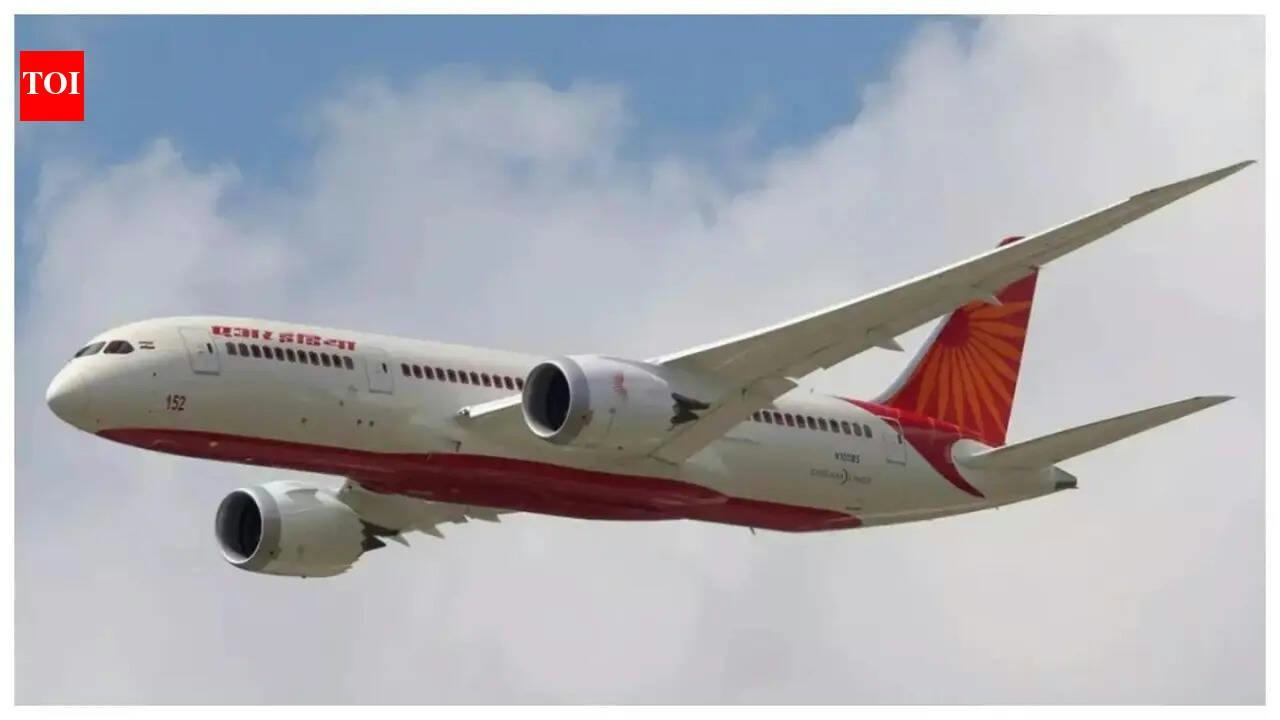
Singapore Airlines Reports Profit Decline Amid Air India-Related Losses, Reaffirms Commitment to Maharaja Brand
Financial Performance and Contributing Factors
Singapore Airlines (SIA) has announced a marked decline in net profit, primarily driven by its share of losses from Air India (AI), in which it holds a 25.1% stake. For the full fiscal year, the SIA Group recorded a 39% increase in operating profit, reaching $2.4 billion, alongside a record revenue of $20.5 billion. However, net profit fell sharply by 57.4% to $1.18 billion, representing a decrease of $1.59 billion compared to the previous year. This downturn was influenced by the absence of a one-off, non-cash accounting gain of $1.1 billion recognized in November 2024 following the completion of the Air India-Vistara merger. Additionally, SIA’s share of Air India’s full-year losses—compared to only four months in the prior year—resulted in a swing from a share of profits to a loss of $846 million from associated companies.
SIA acknowledged that Air India continues to grapple with several challenges, including industry-wide supply chain disruptions, airspace restrictions, operational constraints in key Middle Eastern markets, and persistently elevated jet fuel prices. These factors have not only weighed on Air India’s performance but have also contributed to broader volatility across the Asia-Pacific aviation sector. Other regional carriers have reported mixed earnings and have adjusted their operations in response to fluctuating fuel costs and intensifying competition, with some opting to modify flight routes and capacity to manage expenses more effectively.
Strategic Commitment to Air India and the Maharaja Brand
Despite these headwinds, Singapore Airlines reaffirmed its commitment to its investment in Air India and the Maharaja brand, underscoring the strategic importance of the Indian market to its long-term growth objectives. The airline highlighted ongoing operational improvements at Air India, including a comprehensive fleet renewal and aircraft retrofit program designed to enhance customer experience and operational efficiency. SIA emphasized that its partnership with Tata Sons, which holds the remaining 74.9% stake in Air India, remains central to its multi-hub strategy. In a statement, SIA described this strategic investment as providing the group with a direct stake in one of the world’s largest and fastest-growing aviation markets, complementing its Singapore hub and strengthening its prospects for sustained growth.
SIA has intensified its engagement with Air India as the latter navigates a series of challenges, including the aftermath of the AI 171 crash last June, which significantly impacted the airline. The search for Air India’s next CEO is ongoing, with SIA senior vice president Vinod Kannan—formerly CEO of Vistara—among the leading candidates, alongside Air India’s Chief Commercial Officer Nipun Aggarwal and two international contenders.
Market reactions to SIA’s financial results have been mixed, with investors closely monitoring the airline’s continued support for the Maharaja brand and its broader strategic positioning within the competitive Asia-Pacific aviation landscape. Singapore Airlines remains optimistic, emphasizing its backing of Air India’s multi-year transformation program and its confidence in the long-term potential of the Indian aviation market.

Etihad Airways Suspends Airbus A380 Flights on Key Route

Aditya Birla Group Seeks Approval for Aircraft Leasing in GIFT City

Qatar Airways Highlights Innovation and Connectivity at Arabian Travel Market 2026

Hong Kong's Five-Year Plan Includes Andrew Fan's Aircraft Parts Processing Hub Proposal

ACIA Aero Leasing Delivers ATR72-600 to Air Nostrum

RTX Appoints Jill Albertelli as Head of Pratt & Whitney

TAT Technologies Joins Beyond Aero Hydrogen Aircraft Program

AURAK Study Highlights Barriers to Air Taxi Adoption in Emerging Economies

Xiamen Air Selects Altitude for 787 Maintenance at Heathrow

Etihad and Swissport Extend Global Partnership
