Image

Orchestrer les insights d’IA pour les transformer en actions

Inscrivez-vous dès aujourd’hui sur la liste d’attente d’AeroGenie !

Tendances

Categories

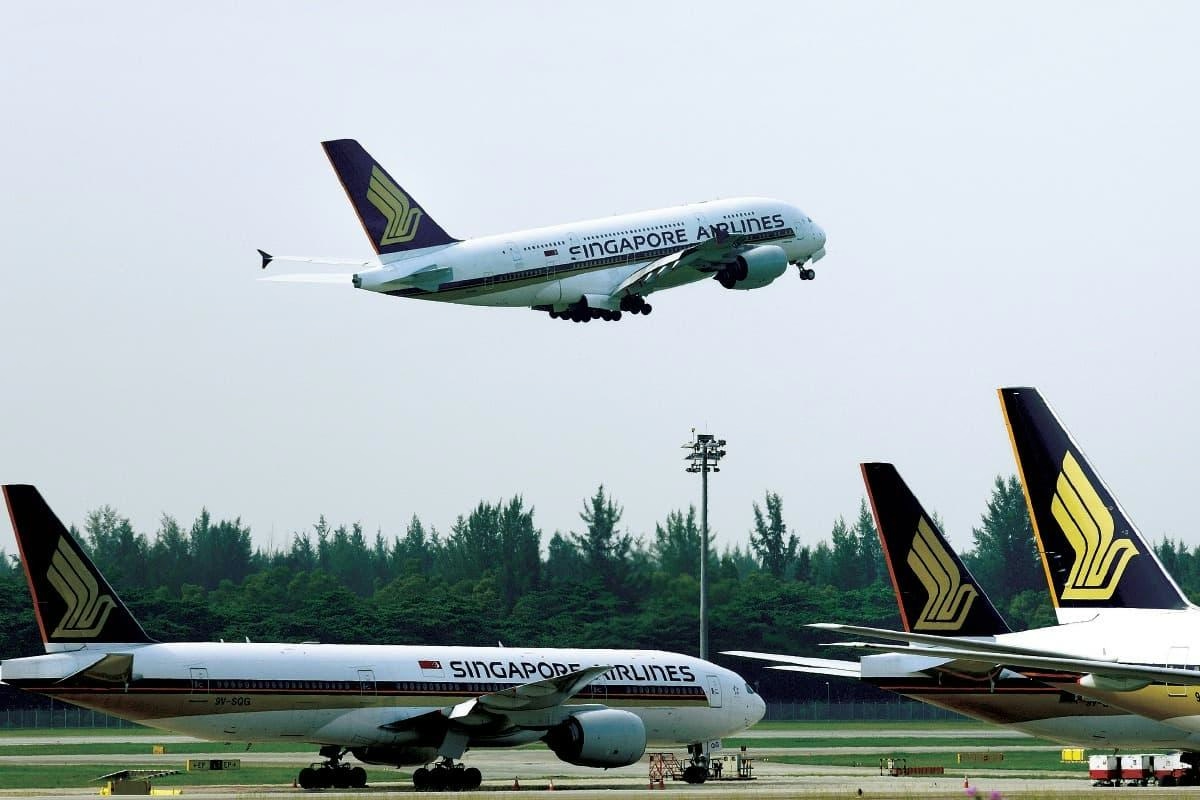
Singapore Airlines Shares Fall Amid Supply Chain Challenges Ahead of SGX Reopening
February 7, 2026By ePlane AI
Singapore Airlines Shares Fall Amid Supply Chain Challenges Ahead of SGX Reopening
0
0
Singapore Airlines
Supply Chain Disruptions
Aircraft Parts Delays

Singapore Airlines Shares Decline Amid Persistent Supply Chain Challenges Ahead of SGX Reopening

Singapore Airlines shares closed marginally lower by 0.15% at S$6.70 on Friday, reflecting ongoing concerns over supply chain disruptions that continue to pressure the aviation sector. The decline coincides with mounting apprehension about delays in aircraft and engine parts, which have significantly increased maintenance and inventory costs for airlines worldwide.

Supply Chain Disruptions and Industry Response

At the recent Singapore Airshow, industry leaders characterized supply delays as the “new norm,” emphasizing that these challenges are unlikely to abate in the near term. Leslie Thng, CEO of Scoot, highlighted the carrier’s need to “secure more spare engines at our own expense” to mitigate operational disruptions. The International Air Transport Association (IATA) reinforced these concerns, warning that supply chain issues will remain a substantial obstacle for airlines throughout 2026.

These difficulties are further exacerbated by broader geopolitical tensions and industrial bottlenecks. On the eve of the airshow, Subhas Menon, outgoing director general of the Association of Asia Pacific Airlines, urged for increased regional investment to bolster the aerospace sector and reduce ongoing supply chain vulnerabilities.

Strategic Measures and Market Outlook

In response to these challenges, Singapore Airlines has taken proactive steps to strengthen its operational resilience. The airline recently extended its component services contract with Collins Aerospace for its Boeing 777 fleet by an additional five years, underscoring the critical importance of dependable maintenance support as carriers are compelled to operate older aircraft for longer periods. IATA estimates that operating aging fleets contributed an additional $11 billion in expenses across the industry last year.

Investor attention is now focused on Singapore Airlines’ forthcoming third-quarter FY2025/26 business update, scheduled for release after market close on February 24. Key concerns include how the airline is managing margin pressures stemming from rising maintenance, leasing, and inventory costs, and whether it can counterbalance these through pricing power or improved yields. There is also apprehension that increased competition on major regional routes may force Singapore Airlines to absorb higher costs rather than pass them on to customers.

Fuel prices added further uncertainty, with Brent crude closing at $68.05 per barrel on Friday, up 0.74%, amid ongoing U.S.-Iran negotiations. The broader Singapore market also retreated, with the Straits Times Index falling 0.8%, ending a three-day winning streak and exerting additional pressure on transport stocks.

As trading resumes on Monday, market participants will be closely monitoring whether aviation shares continue to decline in response to the airshow’s supply chain narratives or if investors will view the dip as a buying opportunity. For Singapore Airlines, the central challenge remains balancing operational resilience—such as stockpiling spare parts—with the risks of capital lock-up and elevated short-term costs. Should supply bottlenecks intensify or fuel prices rise sharply, escalating expenses and potential disruptions to punctuality could further weigh on demand and profitability.

All eyes will be on the February 24 business update, where investors seek clarity on unit revenue trends, capacity management, and the true cost of maintaining Singapore Airlines’ fleet amid ongoing industry turbulence.

More news
Florida governor touts air taxi testing, hoping to ease interstate traffic

Florida governor touts air taxi testing, hoping to ease interstate traffic

Florida Advances Air Taxi Testing to Address Interstate Congestion Florida Governor Ron DeSantis has announced a significant step toward integrating futuristic transportation solutions into the state’s infrastructure. On August 10, he unveiled plans to commence testing of flying electric taxis at SunTrax in Polk County by the end of the year. This initiative aims to transform the longstanding vision of airborne commuting into a practical reality, with the potential to alleviate chronic congestion along Interstate 4. Vision for Airborne Commuting Speaking to attendees, DeSantis emphasized the transformative potential of air taxis in reshaping travel between Florida’s cities. The demonstration showcased prototypes of electric vertical takeoff and landing (eVTOL) vehicles, engineered to transport passengers above heavily trafficked highways. The governor framed the project as a pioneering effort to position Florida at the forefront of transportation innovation, expressing optimism that successful trials could lead to broader adoption and help ease the state’s persistent traffic challenges. Challenges and Industry Outlook Despite the enthusiasm surrounding the initiative, significant obstacles remain before air taxis can become a mainstream mode of transport. Industry experts highlight the complex regulatory environment, noting that federal and state aviation authorities must establish new safety standards and airspace management protocols tailored to this emerging technology. Ensuring the reliability and safety of eVTOL vehicles in real-world conditions is critical to gaining public trust. Financial considerations also present a considerable hurdle. The development and certification of air taxi fleets, alongside the construction of necessary infrastructure such as vertiports and charging stations, demand substantial investment. While some investors are optimistic about the sector’s long-term potential, others remain cautious, questioning the readiness of the technology for widespread deployment. The competitive landscape reflects this cautious optimism. As Florida advances its testing program, other states and countries are accelerating their own air taxi initiatives to maintain a competitive edge. Major technology companies are increasing investments in eVTOL development, seeking to capture a share of what could evolve into a lucrative market. Testing of the air taxis is slated to begin before the end of the year, with officials closely monitoring the outcomes to evaluate the technology’s feasibility and its potential impact on Florida’s transportation network.
Lynchburg Regional Airport Receives $5.2 Million Federal Grant for Infrastructure Expansion

Lynchburg Regional Airport Receives $5.2 Million Federal Grant for Infrastructure Expansion

Lynchburg Regional Airport Awarded $5.2 Million Federal Grant for Infrastructure Expansion Lynchburg Regional Airport in Virginia has secured a $5.2 million federal grant from the Federal Aviation Administration, funded through the Infrastructure Investment and Jobs Act, marking a significant step forward in its development plans. The funding will support the North Development Project, which includes the construction of roads, parking facilities, and other site improvements adjacent to a recently completed apron and taxiway. These enhancements are intended to facilitate the future construction of a hangar facility, thereby expanding the airport’s operational capacity and opening new avenues for growth. Preparing for Future Growth and Economic Impact Airport Director Cedric Simon highlighted that the grant represents an investment in the airport’s next phase of development, with particular emphasis on the potential establishment of a maintenance, repair, and overhaul (MRO) facility. Simon noted that such a facility could create a pipeline for local talent, allowing individuals to train at nearby Liberty University and subsequently build careers within the region. “It really is an investment in the community,” he stated, underscoring the broader economic benefits anticipated from the project. The expansion arrives at a critical juncture for local aviation businesses, which are currently constrained by limited space. Kyle Falwell, owner of Bon Air—a Lynchburg-based company specializing in medical transport and private charter flights—described the increasing demand for aviation services. Bon Air operates a fleet of 10 jets, with plans to add three more, intensifying the need for additional hangar space. Falwell emphasized the challenges of managing a diverse fleet in limited quarters, noting that “hangar space is a commodity” and that maximizing operating room is essential, especially when accommodating both jets and smaller piston aircraft. Addressing Capacity Constraints and Attracting Investment The federal grant is expected to alleviate some of these spatial limitations, although accommodating a wide range of aircraft types remains a complex task. By expanding its infrastructure, Lynchburg Regional Airport aims to attract private investment and enhance its aviation capabilities, positioning itself as a competitive hub within the region. The improvements are anticipated to generate positive market reactions by fostering new business opportunities and creating well-paying jobs in the aviation sector. Falwell views the infrastructure investment as a catalyst for broader economic development, observing that enhanced facilities enable surrounding businesses to grow. As airport officials collaborate with contractors to finalize construction timelines, regional competitors may respond by upgrading their own facilities or monitoring the economic impact of Lynchburg’s expansion. This federal grant firmly establishes Lynchburg Regional Airport as a key player in the regional aviation landscape, poised to capitalize on emerging opportunities.
Archer Aviation Projects $5 Million Revenue and $263.2 Million Net Loss for 2026

Archer Aviation Projects $5 Million Revenue and $263.2 Million Net Loss for 2026

Archer Aviation Forecasts $5 Million Revenue and $263.2 Million Net Loss for 2026 Archer Aviation Inc. has announced projections indicating a modest revenue of $5 million alongside a substantial net loss of $263.2 million for the year 2026. This forecast marks the company’s initial transition into revenue generation, even as its financial losses deepen due to aggressive investments in aircraft development and operational expansion. Compared to the previous year, Archer expects revenue to rise from zero, while the net loss attributable to common stockholders is anticipated to increase from $206 million. Despite the widening loss, diluted loss per share is projected to improve slightly, moving from ($0.36) to ($0.34). Financial Performance and Revenue Drivers The projected revenue growth is primarily attributed to new income streams from leases at Hawthorne Airport and fixed-base operator (FBO) services, which have contributed $6.6 million year-to-date, alongside increased utilization of hangar facilities. Archer continues to advance the certification process for its Midnight electric vertical takeoff and landing (eVTOL) aircraft, with plans to initiate international deliveries, particularly targeting the United Arab Emirates. The company aims to commence initial passenger operations within the forecast period. Strategic partnerships remain a cornerstone of Archer’s expansion strategy. The company has been selected to participate in the U.S. eVTOL Integration Pilot Program and is collaborating with airlines, infrastructure providers, and defense technology firm Anduril. These collaborations focus on exploring both commercial applications and defense uses for Archer’s Halo unmanned aerial system (UAS) platform. Operationally, Archer has increased spending on research and development as well as general and administrative expenses to accelerate aircraft development, scale manufacturing capabilities, and deploy its aviation artificial intelligence system, ZEE. Challenges and Competitive Landscape Despite these advancements, Archer anticipates an adjusted EBITDA loss ranging from $170 million to $200 million in the second quarter of 2026, reflecting the high cash burn associated with ongoing R&D and certification efforts. Investor sentiment remains mixed, with some expressing caution over the company’s financial trajectory and concerns about potential dilution from insider share sales. Conversely, others maintain optimism regarding Archer’s progress toward Federal Aviation Administration (FAA) certification and the planned launch of commercial operations. The competitive environment is intensifying as rivals such as Joby Aviation pursue similar timelines for FAA certification and commercial eVTOL service launches. Established aerospace companies like Boeing are also demonstrating improved financial performance and regulatory compliance, potentially increasing competitive pressures as the urban air mobility sector evolves. Archer’s capacity to balance its ambitious growth objectives with financial discipline will be critical as it strives to secure a leading position in the emerging market for urban air mobility.
DeSantis Announces Air Taxi Testing in Central Florida by Year-End

DeSantis Announces Air Taxi Testing in Central Florida by Year-End

DeSantis Announces Air Taxi Testing in Central Florida by Year-End Florida is set to commence testing of electric air taxis in Central Florida by the end of this year, Governor Ron DeSantis announced on Monday. The initiative represents a significant advancement in the state’s efforts to embrace emerging transportation technologies. Speaking at the SunTrax testing facility in Auburndale, DeSantis outlined the potential of electric vertical takeoff and landing aircraft (eVTOLs) to revolutionize regional travel by enabling passenger transport between major Florida cities without reliance on traditional airports or runways. Advancing Air Mobility in Florida “These aircraft don’t need a runway,” DeSantis explained. “They’re going to lift off, fly, land, and bring people to different places, then come back.” He emphasized the prospect of establishing air taxi services between Tampa and Orlando, providing an alternative to the heavily congested Interstate 4 corridor. DeSantis likened the concept to “an Uber taxi in the air,” highlighting the convenience and efficiency such services could offer. Beyond passenger transport, he also noted the potential applications of eVTOLs in cargo delivery and emergency response operations. Florida’s selection by the Federal Aviation Administration (FAA) to participate in an Advanced Air Mobility integration pilot program places the state at the forefront of efforts to integrate these technologies into everyday transportation networks. This initiative arrives amid a complex industry landscape, where sustained venture capital investment underscores confidence in the sector’s future, even as companies face challenges related to high capital demands and rapid cash burn. The market remains fragmented, with a limited number of key players competing for dominance, intensifying the focus on scaling production and strengthening supply chains as technological differentiation narrows. The state’s commitment to this emerging sector includes plans to develop infrastructure such as air taxi pads. Notably, $200 million initially allocated for electric vehicle charging stations has been redirected to support the construction of vertiports and related facilities. However, integrating these new infrastructures into existing urban environments may present regulatory and logistical challenges. Autonomous Vehicle Testing and Safety Emphasis In addition to air mobility, DeSantis highlighted Florida’s ongoing initiatives in autonomous vehicle testing. The SunTrax facility offers companies a controlled environment to trial self-driving vehicles under conditions that simulate real-world scenarios, including adverse weather, urban congestion, pedestrian crossings, and varied terrain. Referencing vehicles such as Waymo’s Jaguar and Tesla’s Cybercab technology, DeSantis underscored the paramount importance of safety in the deployment of autonomous systems. “Clearly these things could potentially be very beneficial, but safety is important,” he stated. “They’ve got to pass these safety tests. You don’t want to be in an autonomous vehicle and it drives you into a ditch.” By advancing both autonomous vehicle and advanced air mobility technologies, Florida aims to enhance transportation options while positioning itself as a national hub for testing and innovation. Testing of eVTOL aircraft in Central Florida is anticipated to begin before the close of 2026.
PIT's xBridge Program Advances AI Solution for Airfield Safety

PIT's xBridge Program Advances AI Solution for Airfield Safety

PIT’s xBridge Program Pilots AI-Powered Airfield Safety Solution A Canadian artificial intelligence company is collaborating with Pittsburgh International Airport’s (PIT) xBridge innovation program to pilot an advanced foreign object debris (FOD) detection system in an operational airport setting. The initiative seeks to improve airfield safety by identifying hazardous debris—including litter, rocks, and broken branches—that can jeopardize aircraft operations. Bill Calhoon, airport duty manager at the Allegheny County Airport Authority (ACAA), emphasized the importance of addressing FOD risks. He noted that the airport continually seeks methods to enhance its airfield safety program, and testing this AI technology allows the Operations Team to determine whether it can augment existing inspection procedures by detecting debris more rapidly and enabling timely intervention before hazards escalate. FOD remains a significant contributor to airside safety incidents worldwide. The Federal Aviation Administration estimates that the global aviation industry incurs losses of approximately $4 billion annually due to direct damage and operational disruptions caused by such debris. In response, Illuminex AI has developed FODᴬᴵ, an AI-driven inspection system designed to integrate seamlessly with current airport inspection routines. The system automatically detects and records FOD, uploading data to its InspectEx Cloud platform for comprehensive review and analysis. This approach allows airport teams to prioritize swift response and remediation efforts. Brian Freed, CEO of Illuminex AI, praised the partnership with PIT’s xBridge program, describing it as an invaluable opportunity to test and refine FODᴬᴵ in a genuine operational environment. He highlighted the collaboration with PIT’s experienced Operations Team as critical to ensuring the technology effectively supports inspectors and fits smoothly within established operational workflows. Since its inception in April, the partnership has enabled Illuminex to validate its technology under real airport conditions, while PIT’s Operations Team assesses its potential to enhance both safety and the efficiency of routine runway inspections. Throughout the six-month pilot, the system is installed in an inspection vehicle and deployed at least twice weekly during standard airfield checks. Inspectors activate the system at the beginning and end of their rounds, ensuring minimal disruption to existing procedures. The xBridge program, operated by ACAA, serves as an innovation hub focused on developing and testing new technologies, processes, and systems aimed at improving airport operations, security, customer experience, and sustainability. It supports both internal initiatives and collaborations with early-stage companies to address the evolving needs of PIT. Despite the promise of AI-driven safety solutions, the path to widespread adoption presents challenges. The xBridge program, like many airport innovation efforts, contends with obstacles such as unclear procurement mandates, immature budget frameworks, and rapidly evolving regulatory landscapes. The pressing demand for robust safety tools has intensified market interest among AI developers, enterprises, regulators, and civil society organizations. Competitors in this space are emphasizing “safety-first” technologies, often backed by venture capital and support from institutions like the National Science Foundation, as exemplified by companies such as Mapless AI. Furthermore, ongoing aviation infrastructure projects—including upgrades to sub-structures, terminals, and concourses—are likely to influence competitive positioning and broader market dynamics. Calhoon reiterated the airport’s commitment to safety and operational efficiency, stating that the evaluation of the FOD detection system aims to determine whether it can help the Operations Team identify hazards more swiftly, reduce the time required for routine airfield inspections, and enable staff to concentrate on other critical responsibilities—all while upholding the highest safety standards.
Boeing Shares Decline Following Announcement to Divest Air Taxi Unit

Boeing Shares Decline Following Announcement to Divest Air Taxi Unit

Boeing Shares Decline Following Announcement to Divest Air Taxi Unit Strategic Divestment and Market Reaction Boeing shares experienced a modest decline on Monday after the aerospace giant announced its intention to divest its air taxi and drone operations by selling key assets to Archer Aviation. This decision reflects a strategic realignment as Boeing refocuses on its core commercial aircraft and defense sectors, stepping back from the burgeoning urban air mobility market. The divestiture includes Boeing’s stakes in Insitu, SkyGrid, and Wisk—companies specializing in uncrewed aircraft and air traffic management systems. Investor sentiment was mixed in response to the announcement. While some view the move as a prudent concentration on Boeing’s established strengths, others express concern that the company may be foregoing opportunities in innovative aviation technologies. This ambivalence was mirrored in the afternoon trading session, where Boeing’s share price edged lower. Continued Involvement Through Partnership Despite the divestment, Boeing is not completely withdrawing from the air taxi sector. As part of the transaction, Boeing will acquire a minority stake in Archer Aviation, positioning itself to benefit from Archer’s anticipated growth in the urban air mobility space. Furthermore, a technology-sharing agreement will provide Boeing access to Wisk’s autonomous flight systems, which could be integrated into both commercial and military aircraft platforms. Industry analysts suggest that the acquisition of Boeing’s former units will significantly enhance Archer Aviation’s competitive position by incorporating advanced technologies and expertise. Meanwhile, Boeing’s retained stake and technology partnership indicate a sustained interest in the sector’s long-term potential, even as the company reallocates resources toward its primary business areas. Broader Industry Context and Outlook In a related development within the aerospace industry, Chinese manufacturer COMAC is under scrutiny following the emergence of a leaked, unauthenticated report detailing several technical issues with its aircraft. The report highlights concerns such as damaged fire detection loop supports, potentially detachable flap panels, oil leaks, jammed anti-icing valves, and a burnt power panel. In response, China Southern Airlines has reportedly urged COMAC to fully disclose these problems and implement corrective measures, raising questions about the reliability of COMAC’s aircraft. Despite recent challenges, Wall Street analysts maintain a positive outlook on Boeing’s prospects. The stock currently holds a Strong Buy consensus, with sixteen Buy ratings and one Hold over the past three months. After a 3.74% gain in the past year, the average price target of $275.36 per share implies a potential upside of nearly 18%. Boeing’s decision to streamline its portfolio underscores its commitment to strengthening core operations while preserving a strategic foothold in next-generation aviation technologies. As the aerospace sector continues to evolve, investors and industry observers will closely monitor how these developments influence Boeing’s future trajectory.
Boeing Maintains Access to Wisk’s Autonomous Flight Technology After Divestment

Boeing Maintains Access to Wisk’s Autonomous Flight Technology After Divestment

Boeing Maintains Access to Wisk’s Autonomous Flight Technology After Divestment Boeing’s recent decision to divest its autonomous air taxi subsidiary, Wisk Aero, has attracted significant attention, particularly because the buyer is Archer Aviation, a former competitor. Industry analysts had long anticipated that Wisk, which lies outside Boeing’s primary focus on large commercial aircraft, might eventually be sold. This transaction highlights Boeing’s strategic emphasis on Wisk’s autonomous flight technology rather than its air taxi business model. Details of the Transaction and Strategic Implications Under the terms of the agreement, Archer will acquire Wisk along with related autonomy assets SkyGrid and Insitu. Boeing will retain access to Wisk’s core technology through a cross-licensing arrangement and will take an approximate 20% equity stake in Archer. Valued at around $1 billion and expected to close by the end of the year, the deal enables Boeing to reduce financial risk, free up capital, and maintain a significant position in critical autonomous flight systems. Jefferies analysts described the arrangement as an “intellectual property cross-license agreement” that ensures Boeing’s continued access to Wisk’s autonomous flight technology. Brian Yutko, Boeing’s vice president of commercial airplanes product development, characterized the deal as a “win-win,” emphasizing that it allows Wisk, SkyGrid, and Insitu to accelerate their development efforts while enabling Boeing to benefit from its two decades of investment in these technologies. Industry Context and Future Prospects The transaction occurs amid increased scrutiny of the Federal Aviation Administration’s certification process for autonomous flight systems, raising concerns about potential operational disruptions and the long-term sustainability of such partnerships. Competitors are likely to respond by intensifying marketing efforts or enhancing their own technological offerings to secure similar contracts with airlines, thereby heightening competition in the sector. Market observers are closely monitoring how Boeing’s continued access to Wisk’s technology will translate into operational advantages and cost efficiencies over time. This deal also marks a significant shift in the relationship between Archer and Wisk, who previously engaged in a protracted legal dispute over trade secrets and engineer retention. That conflict was resolved in 2023, with both companies committing to collaborate on potential autonomous variants of Archer’s Midnight air taxi. At the recent Farnborough International Airshow, Yutko—formerly Wisk’s CEO—rejected the characterization of Wisk as merely a technology incubator for Boeing. He stressed that genuine market engagement is essential for technological breakthroughs to achieve real-world impact. Wisk has made substantial progress in developing its Gen 6 electric vertical take-off and landing (eVTOL) aircraft, with ongoing flight tests of two prototypes advancing beyond what many industry observers had anticipated. The future of the Gen 6 aircraft under Archer’s ownership remains uncertain. In April, Yutko outlined Boeing’s vision for leveraging Wisk’s four-passenger eVTOL technology to drive next-generation aviation capabilities. As the industry assesses the implications of this deal, attention will focus on how Boeing and its partners navigate regulatory challenges and competitive pressures while striving to deliver tangible value from autonomous flight innovations.
JetBlue Flight Attendants Call in Sick Amid New Software Glitch

JetBlue Flight Attendants Call in Sick Amid New Software Glitch

JetBlue Flight Attendants Call in Sick Amid Software Glitch Disruptions JetBlue Airways is grappling with renewed operational challenges following a software malfunction that disrupted its crew scheduling system on August 9, 2026. The technical failure, which lasted from late morning until mid-evening, prevented flight attendants and pilots from picking up or swapping trips, exacerbating an already strained staffing situation. This latest glitch has contributed to a surge in flight attendants calling in sick, further complicating the airline’s efforts to maintain its flight schedule. Compounding Operational Difficulties The scheduling system outage came amid a series of difficulties for JetBlue, including severe weather conditions and Air Traffic Control (ATC) delays. These factors combined to make JetBlue the U.S. airline with the highest number of cancellations last week. Data from FlightAware indicates that on August 9 alone, the airline experienced 504 delays and 78 cancellations. These disruptions have intensified the pressure on JetBlue’s operational capacity and customer service. JetBlue’s scheduling problems have persisted for over a month, prompting the airline to offer financial incentives to retain staff. Flight attendants were recently offered bonuses of $5,000 for flying at least 150 hours in August. Despite these efforts, ongoing technical failures continue to undermine the airline’s ability to stabilize operations and maintain reliability. Industry and Employee Reactions The airline’s difficulties have attracted growing scrutiny from passengers and industry observers alike. Online complaints have highlighted not only the frequency of cancellations but also the lack of JetBlue personnel available to assist stranded travelers, raising concerns about the company’s customer service standards. The airline’s reputation faces significant risk, with potential financial consequences if disruptions persist. Competitors such as WestJet and Air Canada are reportedly preparing to capitalize on JetBlue’s troubles. Industry analysts anticipate that rival carriers will intensify marketing efforts, emphasizing their own operational reliability to attract dissatisfied JetBlue customers. JetBlue’s internal challenges have also drawn criticism from employee representatives. Captain Wayne Scales, chairman of the JetBlue Master Executive Council and a member of the Air Line Pilots Association (ALPA), identified the scheduling system outages as a key factor behind recent operational failures. In a recent ALPA press release, Scales stated, “Crews were unable to be positioned where they were needed most due to ongoing outages in the company’s scheduling system.” He further noted that pilots and crew members faced prolonged hold times and, in some cases, were left stranded at airports without overnight accommodations. Scales called on JetBlue management to provide reliable scheduling software, adequate hotel accommodations for crew rest, and sufficient resources to staff flights and meet customer expectations. He criticized the airline’s leadership for repeatedly failing to stabilize operations, saying, “JetBlue management claims that they are working to stabilize the airline and build consumer trust only to have these systems collapse week after week.” As JetBlue endeavors to address its software and staffing challenges, the airline faces mounting pressure to restore operational stability and regain customer confidence. Efforts to reach JetBlue for comment were unsuccessful prior to publication.
Boeing to Sell Three eVTOL Subsidiaries to Archer Aviation

Boeing to Sell Three eVTOL Subsidiaries to Archer Aviation

Boeing to Divest Three eVTOL Subsidiaries to Archer Aviation Boeing has announced its intention to sell three subsidiaries specializing in electric vertical takeoff and landing (eVTOL) technology to Archer Aviation, signaling a strategic realignment for both companies within the burgeoning urban air mobility sector. The transaction, anticipated to conclude by the end of 2026 subject to regulatory approval, will transfer ownership of Wisk Aero, SkyGrid, and Insitu from Boeing to Archer. Strategic Implications and Transaction Details As part of the agreement, Boeing will acquire an equity stake of nearly 20 percent in Archer Aviation, along with warrants and a seat on Archer’s board of directors. Financial terms of the deal have not been publicly disclosed. The acquisition provides Archer with access to a portfolio of advanced technologies and businesses: Wisk Aero, which focuses on autonomous electric aircraft development; SkyGrid, a provider of air traffic management software tailored for urban air taxi operations; and Insitu, a manufacturer of high-altitude drones utilized by the U.S. Navy. This consolidation is expected to broaden Archer’s revenue base and expedite its efforts to commercialize electric air taxi services. Archer has previously outlined plans to initiate pilot air taxi operations in key U.S. markets, including New York, Texas, and Florida, by the end of the year. Additionally, the company is expanding its footprint in the defense sector, recently unveiling a new eVTOL aircraft developed in collaboration with Anduril, a defense technology firm founded by Palmer Luckey. For Boeing, the divestiture allows a sharpened focus on its core commercial and defense manufacturing operations. Despite the sale, Boeing will maintain access to Wisk’s autonomous flight systems through cross-licensing and technology exchange agreements, ensuring continued integration of these technologies into its current and future projects. Brian Utko, Boeing’s vice president of commercial aircraft product development, characterized the deal as “mutually beneficial,” highlighting the potential for both companies to strengthen their positions in the rapidly evolving eVTOL and urban air mobility markets. Industry Context and Outlook Analysts suggest that this partnership could enhance Archer’s competitive position in the race to launch commercial electric air taxi services, while enabling Boeing to retain exposure to next-generation aviation technologies without direct operational involvement. Boeing currently holds an order backlog valued at $715 billion, with over 6,200 aircraft pending production. The company continues to face heightened regulatory scrutiny following several high-profile safety incidents, including a 2024 event in which a section of a Boeing 737 Max fuselage detached during flight. This transaction reflects the dynamic shifts occurring within the aerospace industry, as established manufacturers and emerging startups compete to lead the future of urban air transportation.
Dominican AI Aviation Technology Named Among Latin America’s Most Disruptive

Dominican AI Aviation Technology Named Among Latin America’s Most Disruptive

Dominican AI Aviation Technology Recognized Among Latin America’s Most Disruptive Innovations Santo Domingo—The Dominican Republic has earned a distinguished position among Latin America’s top five most disruptive technological innovations at the Women in Tech® LATAM Awards 2026. Olga Isabel Pérez Encarnación, an experienced air traffic controller at the Dominican Institute of Civil Aviation (IDAC), was named a Top Five Finalist in the Most Disruptive Award category for her pioneering leadership in the development of SARA (System AI Real-time for Aviation). SARA: Transforming Aviation Through Artificial Intelligence SARA is an artificial intelligence assistant specifically designed for the aviation industry, offering air traffic controllers, pilots, flight dispatchers, and other professionals rapid, reliable, and traceable access to critical information. The system pays homage to Sara Castaños, the Dominican Republic’s first female air traffic controller. Developed in partnership with Nolim Studios, a US-based software and AI firm staffed by Dominican talent, SARA is currently undergoing evaluation by aviation experts and students across six countries. Furthermore, it serves as the foundation for an international scientific research proposal exploring AI applications in aviation. The project’s innovative nature has already attracted international acclaim. In 2025, SARA secured first place in the initial phase of the ENAIRE Open Innovation International Business Ideas Competition, organized by Spain’s national air navigation authority, triumphing over more than 70 global submissions. Leadership and Advocacy in Aviation and STEM Olga Isabel Pérez Encarnación’s career reflects a deep commitment to innovation and education within the aviation sector. She is the creator and producer of "Quiero Ser Piloto," the Dominican Republic’s first aviation competition and the world’s first educational aviation reality show, which has awarded scholarships and training opportunities to hundreds of young participants. In 2025, she was recognized as Runner-up at the Air Traffic Management Awards by CANSO during Airspace World in Lisbon, Portugal. Beyond her technical contributions, Pérez Encarnación has championed the first female fly-in event in the Dominican Republic and actively leads initiatives promoting STEM education. She also contributes as a specialized journalist for El Nuevo Diario. Challenges and Prospects for AI in Aviation The recognition of SARA as one of Latin America’s most disruptive technologies arrives at a critical juncture for the AI aviation sector, which is projected to reach a market value of USD 20.63 million by 2034. This accolade, however, introduces new challenges. SARA will face stiff competition from established industry players, accompanied by increased scrutiny regarding transparency and operational efficacy. Market dynamics may accelerate innovation, stimulate investment, and foster collaborations as competitors strive to maintain or expand their market presence. The future success of SARA will depend on its capacity to deliver measurable improvements in aviation operations while navigating the complex regulatory and competitive environment. Women in Tech® LATAM Awards: Promoting Female Leadership in STEM The Women in Tech® LATAM Awards, part of a global initiative founded by Ayumi Moore Aoki, seek to address the gender gap in technology and promote female leadership in STEM fields. The 2026 awards ceremony is scheduled for August 27 in Cartagena de Indias, Colombia, where regional winners will be announced and will subsequently represent Latin America at the Women in Tech® Global Awards.
line









