
Orchestrer les insights d’IA pour les transformer en actions

Tendances
Categories
SITA: Software, Not Airports, Will Drive Aviation Growth
SITA: Software, Not Airports, Will Drive Aviation Growth
The aviation industry’s future growth will be propelled by software innovations rather than the expansion of physical infrastructure such as runways or terminals, according to a recent impact report by SITA. With airline passenger numbers expected to double and reach approximately 10 billion by 2050, SITA’s analysis of the year 2025 identifies a pivotal shift towards customer-driven change in global travel. The primary challenge facing the sector is to increase capacity through technological advancements rather than costly construction projects.
Technological Advancements Easing Capacity Strains
SITA emphasizes that improvements in customs processing, border control, baggage handling, and communication systems are already mitigating the pressures of rising passenger volumes. One notable example is SITA’s OptiFlight tool, which employs machine learning and digital-twin modeling to optimize flight profiles for fuel efficiency. In 2025 alone, OptiFlight managed 2.9 million flights across 59 airlines, resulting in fuel savings of 127,732 tons and a reduction of 403,633 tons in CO₂ emissions. Additionally, AI-powered solutions such as SITA WorldTracer Auto Reflight have revolutionized baggage handling by automatically rebooking mishandled luggage onto the next available flight, cutting reconciliation times from three minutes to a mere second.
David Lavorel, CEO of SITA, highlights the collaborative nature of these advancements: “Airports are scaling capacity within the buildings they already have. Governments are clearing borders before passengers ever reach the queue. AI is moving out of pilots and into the operations rooms where flights are run. None of this is one company’s achievement; it belongs to the airlines, airports, governments, and partners doing the work together as a unit.”
Challenges and Industry Response
Despite the clear benefits of software-driven growth, the transition presents significant challenges. Substantial investment in technology and supporting infrastructure is necessary, and some traditional stakeholders may resist adopting new digital solutions. Ensuring robust cybersecurity to protect sensitive aviation data remains a critical concern, while regulatory frameworks could delay implementation. Market reactions have been mixed, with some stakeholders maintaining a preference for physical infrastructure investments. Meanwhile, competitors are accelerating their own software integration efforts or acquiring technology firms to maintain a competitive edge. Achieving compatibility and interoperability across the diverse aviation ecosystem will require extensive cooperation among all parties involved.
Financially, the case for digitization is compelling. SITA reported a 7 percent increase in revenue to $1.71 billion in 2025, marking its fourth consecutive year of growth between 7 and 8 percent.
Global Momentum in Biometric and AI Technologies
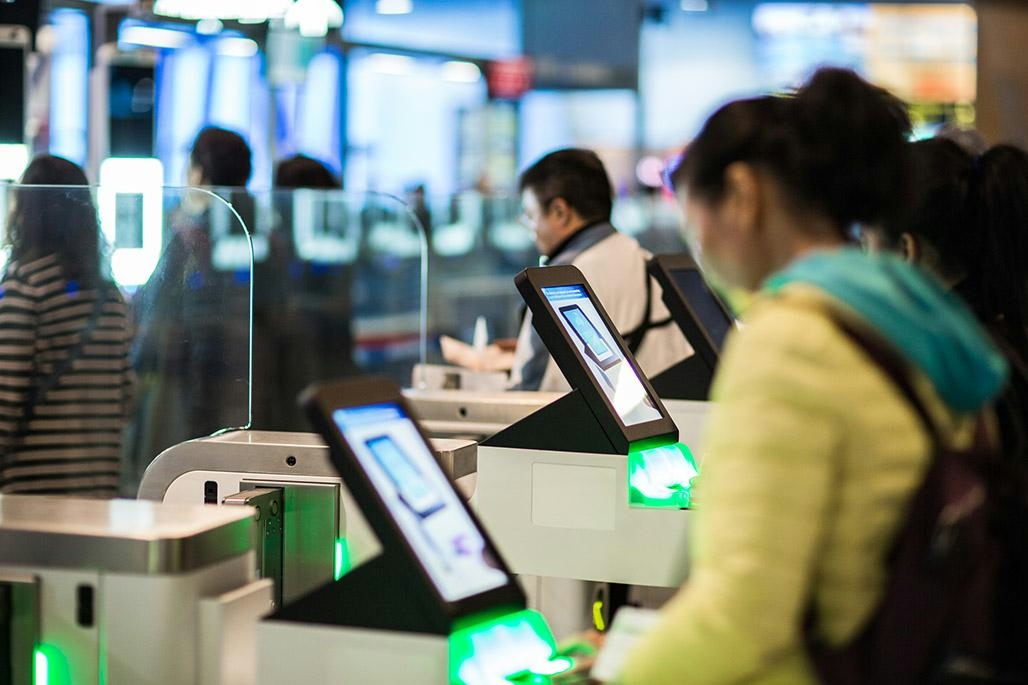
Biometric and AI-driven airport initiatives are gaining traction worldwide. Security operations in countries such as Germany, Thailand, and Somalia are poised for transformation as airports increasingly adopt biometric identification systems to streamline passenger checks, enhance safety, and combat criminal activity. In the Middle East, nations including Egypt, Jordan, the United Arab Emirates, Saudi Arabia, and Qatar are upgrading to faster, AI-powered biometric systems in response to surging passenger volumes, which are projected to approach 240 million this year.
In Germany, legislative progress has been made with a bill permitting the use of passport or ID card data combined with facial recognition technology for airport check-ins. Approved by the cabinet in April, authorities assert that this legal framework will not only improve operational efficiency but also bolster security measures.
As the aviation sector continues to evolve, the prevailing consensus underscores that software and digital innovation, rather than physical infrastructure, will serve as the primary drivers of future growth.

Etihad and Swissport Extend Global Partnership

Sepehran Airlines B737 Returns to Mashhad After Tyre and Engine Issues

Etihad Deploys Widebody Fleet to Meet Strong Demand

Korean Air Finalizes $36.2 Billion Deal with Boeing

Australia’s RFDS Queensland Section Orders Six King Air 260Cs

Korean Air Finalizes Order for 103 Boeing Jets and Engines

Embraer E195-E2 Features Distinctive Engine Placement Among Regional Jets

What Passengers Can Expect on Boeing’s New 777X Jet

How Ethiopian Airlines Became Africa’s Leading Carrier Amid Gulf Competition

Joby Aviation Extends Autonomous Flight Capabilities with Cross-Country Tour
