Image

Orchestrer les insights d’IA pour les transformer en actions

Inscrivez-vous dès aujourd’hui sur la liste d’attente d’AeroGenie !

Tendances

Categories

South Korea Expands Role in Global Aerospace Supply Chain
July 23, 2026By ePlane AI
South Korea Expands Role in Global Aerospace Supply Chain
0
0
Aerospace Supply Chain
Korea AeroSpace Administration
Aviation Materials Localization

South Korea Expands Role in Global Aerospace Supply Chain

Advancing Domestic Aerospace Manufacturing

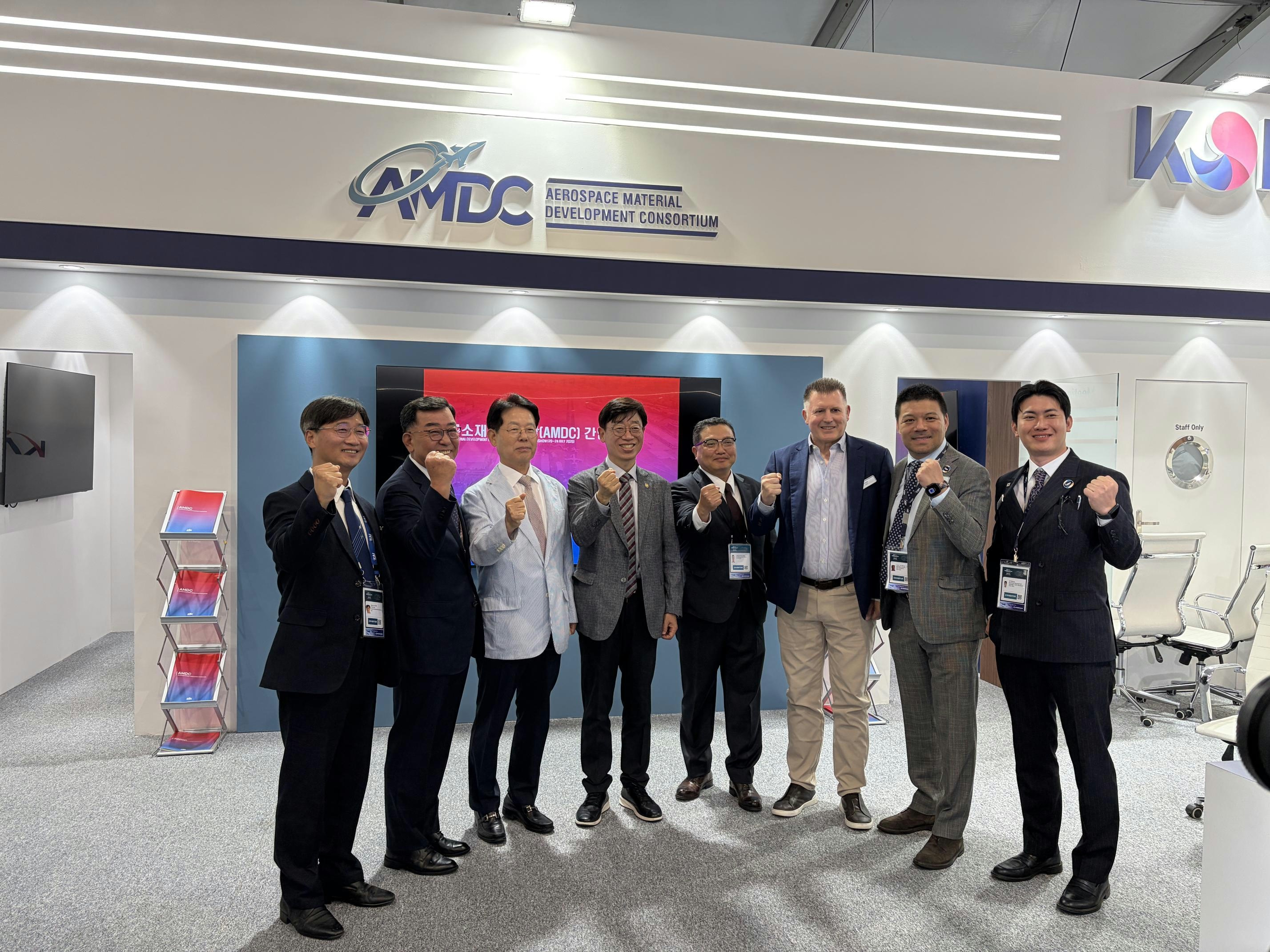
Historically dependent on foreign suppliers for critical aviation components, South Korea is swiftly establishing itself as a significant player in the global aerospace supply chain. At the Farnborough International Airshow, the Korea AeroSpace Administration (KASA) unveiled a range of domestically developed lightweight aviation materials, marking a pivotal advancement in the country’s aerospace ambitions. Supported by export contracts and agreements valued at 40 billion won ($29 million), the showcase featured nine specialized alloys, including advanced aluminum extrusions and super-heat-resistant nickel fasteners. These materials were developed through a state-led initiative aimed at localizing essential aerospace components.

This initiative is a collaborative effort between KASA, the Korea Institute of Materials Science, and Korea Aerospace Industries (KAI). It also introduced K-MIDAS, a standardized design allowable software platform that aligns with international aerospace certification standards. Korean-made components are already being integrated into global aircraft manufacturing; for instance, high-performance aluminum materials are used in the wing structures of Israel Aerospace Industries’ G280 business jets and are planned for inclusion in Embraer’s E-Jets.

Public-Private Synergy and International Expansion

The Farnborough event underscored the dynamic interplay between public research and private sector investment driving South Korea’s aerospace growth. Korean manufacturer Taesang announced plans to construct ultra-large forging facilities, while KAI committed to prioritizing the procurement of key structural components from domestic suppliers. Additionally, TESTCOR, a Korean producer of specialized fasteners, signed a memorandum of understanding with global distributor FDH Aero, facilitating the entry of its heat-resistant nickel hardware into international supply chains.

KASA Administrator Oh Tae-seok, during his visit to the Korean pavilion, highlighted the critical importance of materials in aviation. He remarked, “At Farnborough, we confirmed that the competitiveness of our domestic materials resonates in the global marketplace. To ensure more of our companies become proud suppliers in the global supply chain, we will establish an integrated support system linking material development, system application, and commercialization.”

Challenges and Global Implications

Despite these advances, South Korea faces significant challenges as it expands its aerospace footprint. The country must navigate complex international trade dynamics, maintain competitive pricing against established industry leaders, and sustain continuous technological innovation to meet evolving global standards. As South Korea’s presence in the aerospace supply chain grows, the global market may experience heightened competition and potential shifts in supplier alliances and partnerships.

Established aerospace powers are likely to respond by intensifying efforts to protect their market share, potentially through strategic collaborations or acquisitions. The commercial momentum demonstrated at Farnborough reflects a broader transformation for South Korea. Amid geopolitical uncertainties, global aerospace giants are seeking to diversify and strengthen their supply chains, positioning South Korea—with its government-backed standardization efforts and agile private manufacturing sector—as an increasingly vital partner in the development of next-generation aviation.

More news
Boeing 767 Returns to Newark After Six Hours Over Atlantic Due to Technical Issue

Boeing 767 Returns to Newark After Six Hours Over Atlantic Due to Technical Issue

Boeing 767 Returns to Newark After Six Hours Over Atlantic Due to Technical Issue Flight Disrupted by Hydraulic System Malfunction A United Airlines transatlantic flight bound for Switzerland was compelled to return to Newark Liberty International Airport after spending six hours over the Atlantic Ocean due to a hydraulic system malfunction. The incident involved a 26-year-old Boeing 767-300ER and occurred on July 20, intensifying scrutiny over United’s aging widebody fleet and highlighting broader operational challenges confronting both the airline and Boeing. The disruption began on the ground at Newark’s Terminal C, where passengers on United Flight UA956 experienced an hour-long delay. During this period, the captain announced a return to the gate prompted by conflicting load-sheet data, which raised concerns about the aircraft’s cargo and luggage balance—a critical safety factor for takeoff. Subsequent verification from dispatch confirmed that the weight distribution was within acceptable limits, allowing the flight to proceed. At 6:30 PM EDT, the Boeing 767 departed from Runway 22R, navigating northeast through Nova Scotia airspace en route to its planned North Atlantic crossing. Mid-Flight Hydraulic Failure and Return Decision Approximately three hours into the flight, while cruising at 35,000 feet south of Greenland, the flight crew detected a failure in the backup hydraulic system. Although the primary controls remained functional, the loss of redundancy on an Extended-range Twin-engine Operational Performance Standards (ETOPS) route over frigid ocean waters presented elevated risks. Prioritizing safety, the pilots elected to abort the transatlantic crossing and return to Newark. Flight UA956 landed safely six hours after departure, with more than 200 passengers disembarking at their original departure point. Operational and Financial Implications The diversion resulted in significant fuel consumption and operational costs. A Boeing 767-300ER typically burns between 1,500 and 1,600 gallons of jet fuel per hour during cruise. Over the six-hour flight, including taxiing, the aircraft consumed an estimated 9,000 to 10,000 gallons (34,000 to 38,000 liters) of fuel. At current prices, this equates to a direct fuel cost ranging from $23,000 to $27,000, exclusive of additional expenses such as crew overtime, landing fees, and passenger re-accommodation. Context of Broader Challenges for United and Boeing This incident occurs amid a period of intensified operational strain for United Airlines, which has recently experienced widespread flight delays linked to technology issues at major hubs, including Newark. The reliability of aviation technology remains under close examination as airlines contend with both technical malfunctions and the challenges posed by aging fleets. United has also faced difficulties with its Boeing 787 Dreamliner fleet, including aircraft returned to Boeing for maintenance and subsequent groundings. Meanwhile, the Federal Aviation Administration’s recent decision to restore ticketing authority to Boeing for its 737 MAX and 787 models marks progress for the manufacturer. Nonetheless, ongoing technical and operational disruptions continue to challenge both Boeing and its airline customers. Following an overnight inspection, the 26-year-old Boeing 767 was cleared for service and operated a flight to Berlin the following day. The episode underscores persistent concerns regarding fleet reliability and the critical importance of robust technology in modern aviation.
Airport Group Supports Ryanair’s MRO Plans for Shannon

Airport Group Supports Ryanair’s MRO Plans for Shannon

Airport Group Endorses Ryanair’s €50 Million MRO Expansion at Shannon The Shannon Airport Group has expressed strong support for Ryanair’s announcement of a €50 million investment to develop a new four-bay aircraft maintenance, repair, and overhaul (MRO) hangar alongside an Engineering Academy at Shannon Airport. This significant project is anticipated to generate 400 highly skilled jobs, marking a major expansion of Ryanair’s footprint at the airport and reinforcing Shannon’s status as a prominent European aviation hub. Ryanair has submitted a planning application for the facility, which is proposed to be constructed on a 6.7-acre site within the airport’s airfield. If approved, the new hangar will become Ryanair’s largest aircraft maintenance operation in Ireland, further solidifying Shannon’s pivotal role in the national aerospace sector. Strategic Importance and Industry Context Minister for Transport, Darragh O’Brien, welcomed the development, emphasizing its alignment with the State’s vision to strengthen the aerospace industry cluster at Shannon Airport. He noted that the investment would contribute significantly to job creation and economic growth in the mid-west region, while also enhancing Ireland’s global standing as a leader in aviation and aerospace. Ray O’Driscoll, CEO of the Shannon Airport Group, described Ryanair’s proposal as a “powerful endorsement” of Shannon Airport and the broader regional aviation ecosystem. He highlighted Shannon’s transformation from the birthplace of aircraft leasing into a global aviation hub, now hosting nearly 100 companies across the airport and its adjacent business park. O’Driscoll underscored that the scale of Ryanair’s planned expansion reflects the deep aviation expertise, engineering capabilities, and talent cultivated in the region over several decades. The announcement comes amid ongoing challenges within the European MRO sector, which is currently grappling with constrained capacity, rising material costs, and unpredictable turnaround times. These factors pose risks to the efficiency and cost-effectiveness of large-scale maintenance projects. In response, some European carriers are investing in their own in-house MRO facilities to reduce reliance on external providers. Airlines such as GetJet exemplify this trend by developing proprietary maintenance operations, signaling a broader industry shift toward greater self-sufficiency. Project Details and Future Outlook Despite these sector-wide challenges, Ryanair’s investment—backed by Enterprise Ireland—aims not only to expand employment opportunities but also to cultivate the next generation of aviation professionals, thereby strengthening the regional skills base and supporting sustained economic development. The new facility will complement Ryanair’s existing three-bay maintenance operation at Shannon, which currently employs over 200 staff. Ryanair, a key partner at Shannon since 1987, now operates a record 30 routes from the airport, with seat capacity increasing by 15% this summer compared to the previous year. The proposed hangar will offer more than 15,000 square meters of maintenance and ancillary space. Subject to planning approval, construction is expected to commence in early 2027, with operations projected to begin in late 2028.
Astana to Host Demonstration Flight for Air Taxi

Astana to Host Demonstration Flight for Air Taxi

Astana to Host Demonstration Flight for Air Taxi Astana is preparing to host a demonstration flight of the AutoFlight Prosperity, an electric vertical take-off and landing (eVTOL) aircraft, as part of Kazakhstan’s broader initiative to advance urban air mobility. The event is scheduled for 9:00 a.m. on July 24 at the Kazanat hippodrome, although organizers have indicated that the timing may be subject to change depending on weather conditions. The AutoFlight Prosperity and Kazakhstan’s Urban Air Mobility Efforts The AutoFlight Prosperity is engineered to accommodate one pilot and five passengers, with a maximum speed of 200 kilometers per hour and a range of up to 200 kilometers. This demonstration follows Kazakhstan’s inaugural eVTOL flights conducted in Alatau in May 2026, reflecting the country’s ongoing commitment to developing the necessary infrastructure to support urban air taxi services. The event represents a significant milestone in Kazakhstan’s efforts to integrate innovative aerial transportation solutions into its urban landscape. Challenges Facing Air Taxi Adoption in Astana Despite the promising technology, Astana’s plans to showcase air taxi services confront several substantial challenges. High operational costs and the complexities involved in managing urban air traffic present significant obstacles. Moreover, gaining public acceptance remains a critical hurdle, as skepticism persists regarding the feasibility and safety of incorporating air taxis into densely populated urban environments. These concerns have been echoed by market observers and competitors alike, who are closely monitoring Kazakhstan’s approach while grappling with similar issues in their own air mobility projects. Compounding these challenges are recent operational disruptions experienced by Air Astana, attributed to regional security concerns. These disruptions have raised questions about the reliability of scheduled demonstration flights and the broader implementation timeline for air taxi services within the country. A Step Toward Modernizing Urban Transportation Despite these difficulties, the upcoming demonstration flight marks an important step in Kazakhstan’s ambition to modernize urban transportation. The event will not only test the capabilities of the AutoFlight Prosperity but will also assess Astana’s preparedness to address the operational, regulatory, and public perception challenges inherent in introducing air taxis to the city’s airspace.
Boeing Edges Out Airbus in Farnborough Jet Orders

Boeing Edges Out Airbus in Farnborough Jet Orders

Boeing Edges Out Airbus in Farnborough Jet Orders At this year’s Farnborough Airshow in England, Boeing narrowly outpaced Airbus in jet order announcements, securing a slight lead over its European rival amid a subdued industry environment. The event, held against the backdrop of persistent supply chain challenges and record backlogs, saw both manufacturers announce deals totaling just over 300 aircraft—figures that aligned with industry expectations but fell short of earlier forecasts predicting up to 800 orders. Order Totals and Industry Context Boeing reported firm and preliminary orders for 173 aircraft, while Airbus announced 154 firm and provisional orders, according to a Reuters tally. After adjusting for previously undisclosed buyers already accounted for in manufacturer order books, the net total stood at 218 aircraft. This represents a modest increase from the 2022 Farnborough event but remains significantly below the 2018 peak of 1,109 orders. The relatively muted order activity reflects a broader shift in the aerospace sector, where the once-frenzied pace of airshow announcements has diminished as manufacturers and airlines prioritize managing extensive backlogs and navigating ongoing supply constraints. Industry analysts attribute the restrained order volumes not to a lack of demand but to the current operational realities facing both companies. John Strickland, an airline analyst, noted that large orders had largely been placed prior to the show, and the prevailing macroeconomic and geopolitical climate contributed to tempered expectations. Boeing Commercial Airplanes CEO Stephanie Pope emphasized that demand remains strong, but production capacity and supply chain issues are the primary limiting factors. Key Deals and Market Dynamics The largest commercial agreement of the week was secured by SMBC Aviation, the world’s second-largest aircraft lessor, which placed an order for 200 single-aisle jets split evenly between Boeing and Airbus. This included 100 Boeing 737 MAX and 100 Airbus A320neo-family aircraft, underscoring the sustained demand for narrowbody jets that serve as the backbone of short- and medium-haul travel despite constrained delivery slots and supplier bottlenecks. In addition to narrowbody aircraft, there was continued interest in widebody jets. Riyadh Air and Philippine Airlines placed orders with both manufacturers, while leasing giant AerCap expanded its fleet with additional Boeing 787s. Regional jet manufacturer Embraer also reported orders for 50 aircraft, including 20 freighters. Beyond airframes, CFM International secured a record order for more than 1,000 LEAP-1A engines to power 500 previously ordered jets, highlighting ongoing investment in engine technology. Outlook for Boeing and Airbus Market observers noted the subdued nature of this year’s Farnborough orders compared to previous shows, prompting speculation about the future competitive landscape between Boeing and Airbus. While Boeing edged out Airbus in total orders, both companies remain focused on resolving supply chain disruptions, labor shortages, and manufacturing setbacks that have extended their order backlogs well into the next decade. Airbus, in particular, is expected to concentrate on enhancing its production flow as it responds to Boeing’s performance and evolving market conditions. The emphasis for both manufacturers appears to be on ramping up production capacity rather than aggressively pursuing new sales at this stage.
India Aims to Become a Global Hub for Aircraft Maintenance and Repair, Says Government

India Aims to Become a Global Hub for Aircraft Maintenance and Repair, Says Government

India Aims to Become a Global Hub for Aircraft Maintenance and Repair The Indian government has announced its strategic intent to establish the country as a global centre for aircraft Maintenance, Repair, and Overhaul (MRO). This ambition is supported by a comprehensive suite of policy reforms, tax incentives, and infrastructure development initiatives aimed at bolstering the domestic MRO sector and reducing foreign exchange outflows associated with overseas maintenance services. Policy and Regulatory Reforms to Boost the MRO Sector In a written statement to the Lok Sabha, Civil Aviation Minister Kinjarapu Rammohan Naidu outlined the government’s efforts to foster a competitive environment for MRO operations. Central to these efforts are the new MRO Guidelines introduced in September 2021, which eliminated royalties and enhanced transparency and certainty in land allotments for MRO facilities at Airports Authority of India (AAI) airports. These guidelines also permit MRO operators to extend land lease agreements by an additional 15 years beyond the initial tenure, providing greater stability for long-term investments. Taxation reforms have played a pivotal role in improving the sector’s competitiveness. The Integrated Goods and Services Tax (IGST) on imports of aircraft components and engine parts has been reduced to 5%, while the GST on MRO services has been lowered from 18% to 5%, with full Input Tax Credit (ITC) available. Furthermore, subcontracted transactions by foreign Original Equipment Manufacturers (OEMs) and MRO companies to Indian firms are now classified as exports, attracting zero-rated GST. These measures collectively aim to reduce the cost burden on domestic MRO providers and encourage greater participation from global players. Additional incentives were introduced in the Union Budget 2024-25, including an extension of the export period for goods imported for repairs from six months to one year, and an increase in the re-import time limit for goods sent abroad for warranty repairs from three to five years. The Addendum to the MRO Guidelines 2026, issued in February 2026, further supports infrastructure development by offering a moratorium and rent-free period for operators constructing new hangars at AAI airports. The Union Budget 2026-27 also extended Nil Basic Customs Duty (BCD) on aircraft components, including engines, used in manufacturing and MRO, with exemptions on parts, testing equipment, and toolkits extended until March 31, 2028. Private Sector Engagement and Competitive Challenges Highlighting private sector involvement, Minister Naidu cited the example of Safran, which has established Safran Aircraft Engine Services India (SAESI) in Hyderabad with an initial investment of ₹1,300 crore. This facility is among the world’s largest aircraft engine MRO centres, underscoring the growing confidence of global aerospace companies in India’s MRO potential. Despite these positive developments, India faces significant competition from established global players such as MTU, which maintains a broad portfolio of manufacturer authorizations and a strong presence in the CFM aftermarket. Industry experts suggest that India’s regulatory and operational frameworks will need to meet stringent international standards to gain wider acceptance. Competitors like AAR Corp. are also expanding their global reach, capitalizing on supply chain efficiencies and benefiting from the resurgence in commercial aviation and increased defense spending. The government remains optimistic that its reforms will enhance India’s aircraft maintenance capabilities, nurture a globally competitive MRO ecosystem, and position the country as a preferred destination for aircraft maintenance, repair, and overhaul services on the international stage.
Scalefocus Receives Silver Globee Award for Aviation Intelligence Solution

Scalefocus Receives Silver Globee Award for Aviation Intelligence Solution

Scalefocus Honored with Silver Globee Award for Aviation Intelligence Solution SOFIA, Bulgaria, July 23, 2026 — Scalefocus, a prominent European engineering firm, has been awarded the Silver Globee® at the 21st Annual 2026 Globee® Awards for Technology. The accolade recognizes the company’s AI-driven Aviation Information Publication (AIP) IFR smart assistant and document intelligence platform, developed for a leading European aviation organization responsible for airspace information management and regulatory compliance. Advancing Aeronautical Data Management The awarded solution addresses a critical challenge in the aviation sector: the efficient retrieval of essential aeronautical data dispersed across extensive and diverse publications. Traditionally, aviation teams managing Aeronautical Information Publications (AIP IFR) have relied on manual, time-consuming searches prone to errors and inefficiencies. Scalefocus’s platform revolutionizes this process by integrating intelligent search capabilities and automated compliance reporting within a secure, locally hosted environment. This innovation streamlines workflows and enhances adherence to regulatory standards. The platform delivers instant, regulation-backed responses to natural-language queries, complete with precise paragraph citations. It supports full-text search, automated report generation from structured operational data, and document version comparison. Operating entirely within a controlled on-premises environment, the solution complies with stringent aviation security and regulatory requirements. Krasimir Kostadinov, CTO of Scalefocus, emphasized the importance of the innovation: “Aviation teams deserve immediate, accurate access to the aeronautical data they rely on. Manual lookup and the risk of imprecision are problems that should have been solved long ago. Seeing our solution validated by an independent jury reinforces that purpose-built, domain-specific AI is where the industry needs to go.” Impact and Industry Implications The platform has demonstrated a 70% improvement in aeronautical data retrieval efficiency and a 50% acceleration in report creation and document comparison processes. It effectively eliminates human error in recurring reporting workflows, with every AI-generated response accompanied by traceable source citations to ensure regulatory confidence. The underlying technology stack includes React, Java, Quarkus, RabbitMQ, Ollama, PyTorch, FlagEmbedding, PostgreSQL, PgVector, and Kubernetes, enabling secure on-premises deployment. While the Silver Globee Award marks a significant achievement for Scalefocus, it also presents new challenges. The company must sustain its competitive advantage amid established industry players, adapt to rapidly evolving market demands, and continue innovating to maintain leadership. The recognition is expected to attract heightened investor interest and foster new partnerships, while prompting competitors to accelerate their own product development or seek strategic collaborations in response to Scalefocus’s advancements. The Globee® Awards for Technology celebrate exceptional achievements in technological innovation worldwide, with winners selected by an independent panel of experts. Founded in 2012, Scalefocus specializes in empowering businesses within highly regulated sectors—including Financial Services, Energy & Utilities, iGaming, Aviation, Aerospace, and Defense—to build, operate, and scale AI-enabled systems. With over 1,000 projects completed, the company combines deep domain expertise with proprietary AI solutions to deliver measurable outcomes and help clients maintain a competitive edge.
Boeing’s 200-Jet China Order Stalls Amid Engine Parts Dispute

Boeing’s 200-Jet China Order Stalls Amid Engine Parts Dispute

Boeing’s 200-Jet China Order Stalls Amid Engine Parts Dispute Boeing’s ambitious agreement to sell at least 200 commercial aircraft to China is encountering significant delays due to a dispute over the long-term supply of engine parts and maintenance services. The Chinese government is demanding firm guarantees on the availability of engine components and after-sales support, raising concerns that the deal—valued between $17 billion and $19 billion—could unravel if a resolution is not reached. Disagreement Over Engine Support and Maintenance The impasse centers less on the pricing of the aircraft and more on assurances regarding the sustainability of engine parts supply and servicing. Chinese officials are wary of becoming dependent on a support framework controlled by the United States, fearing that future political tensions could lead to restrictions or leverage over Chinese airlines. Despite the White House’s rejection of Beijing’s demands—insisting that post-sale maintenance was not included in the initial terms agreed upon in May—Chinese authorities remain steadfast in their position. No formal contract was signed during the May negotiations in Beijing, although then-President Donald Trump publicly hailed the deal as potentially expanding to 750 aircraft, which would represent Boeing’s largest Chinese order in nearly a decade. Boeing CEO Kelly Ortberg has characterized the current agreement as an initial tranche, with the possibility of China ordering an additional 300 to 500 jets in the future. Strategic Concerns and Industry Implications The dispute over engine parts and servicing is expected to be a focal point during the upcoming visit of Chinese Vice Foreign Minister Ma Zhaoxu. Beijing’s insistence on supply guarantees reflects broader concerns about the long-term viability of operating a large fleet of Boeing aircraft. With a potential order encompassing both narrowbody and widebody jets, Chinese carriers would rely heavily on U.S.-controlled spare parts and technical support for decades, exposing them to vulnerabilities stemming from shifts in U.S. policy. These concerns are grounded in recent history. In May 2025, China was briefly subjected to U.S. sanctions that suspended export licenses for critical aviation technologies, including engines and components supplied by companies such as CFM International, GE Aerospace, Honeywell Aerospace, and Collins Aerospace. Although these licenses were reinstated by July, the episode highlighted the risks associated with dependence on foreign suppliers. The ongoing dispute has also influenced market sentiment. Boeing has refrained from announcing new orders, instead prioritizing production and maintaining close communication with customers and suppliers. The company’s position in China remains delicate, as previous years have seen Beijing suspend deliveries and impose restrictions on Boeing aircraft. Meanwhile, the broader aviation industry is grappling with similar challenges. Airbus, Boeing’s principal competitor, is reportedly seeking additional Pratt & Whitney jet engines by 2027 to address its own supply chain constraints. This development signals a shift in industry dynamics as manufacturers and airlines adapt to persistent uncertainties surrounding engine supply. As negotiations continue, the future of Boeing’s multi-billion-dollar China order remains uncertain, with both parties under considerable pressure to reach an agreement on the critical issue of long-term engine support.
Aerolíneas Argentinas to Expand Fleet with Boeing 737-10s

Aerolíneas Argentinas to Expand Fleet with Boeing 737-10s

Aerolíneas Argentinas to Expand Fleet with Boeing 737-10s Aerolíneas Argentinas has formalized lease agreements with Aviation Capital Group (ACG) for six Boeing 737-10 aircraft, marking a pivotal advancement in the airline’s ongoing fleet renewal and capacity expansion initiatives. The new aircraft are slated for delivery starting in 2028 and will operate primarily from the airline’s Buenos Aires hubs at Aeroparque Jorge Newbery Airport and Ezeiza Airport. These planes will serve a range of domestic and South American regional routes, aligning with the carrier’s strategic growth objectives. Strategic Fleet Renewal and Capacity Enhancement The incorporation of the Boeing 737-10s is central to Aerolíneas Argentinas’ 2027–2031 fleet strategy, which seeks to increase capacity on high-demand routes, improve operational efficiency, and reduce environmental impact. Fabián Lombardo, president and CEO of Aerolíneas Argentinas, emphasized the significance of the agreement, stating that the new aircraft will enable the airline to better meet passenger demand while maintaining a competitive service offering. The partnership with ACG underscores a commitment to modernizing the fleet through long-term leasing arrangements, a move that ACG has characterized as part of its broader support for airline modernization efforts. Context and Industry Implications This fleet expansion occurs amid ongoing scrutiny of Boeing’s 737 MAX series, which includes the 737-10 model. The MAX family has been under intense examination following two fatal crashes that resulted in global groundings and enduring reputational challenges for Boeing. Aerolíneas Argentinas’ decision to invest in the 737-10 signals confidence in the aircraft’s future viability, yet market reactions are expected to remain cautious as the industry continues to evaluate Boeing’s progress in addressing safety concerns and restoring trust. Competitors are likely to monitor Aerolíneas Argentinas’ operational experience with the 737-10 closely, as it may influence their own fleet acquisition strategies. The airline anticipates that the new aircraft will support rising passenger demand and enhance profitability, but broader market sentiment will hinge on Boeing’s ability to reassure both airlines and travelers regarding the safety and reliability of its products. The initial six aircraft will be sourced from ACG’s existing Boeing orderbook, with deliveries commencing in 2028. As Aerolíneas Argentinas advances its fleet renewal program, industry observers will be attentive to both the airline’s performance outcomes and Boeing’s efforts to regain market confidence.
Zenix Aerospace Pursues Growth with One Zenix Strategy

Zenix Aerospace Pursues Growth with One Zenix Strategy

Zenix Aerospace Pursues Growth with One Zenix Strategy A New Chapter in Aerospace Manufacturing Zenix Aerospace, a recently established entity, is embarking on an ambitious expansion plan by consolidating a portfolio of specialist manufacturing businesses under a unified global operating model. At the Farnborough International Airshow, Group CEO Scott McLarty emphasized that the company’s current operations serve as a foundation rather than a final destination. “This is a foundation for growth. It’s not the end game,” McLarty stated. “We’re going to go further, and we really want to be a global player in the industry.” The company was formed in January 2026 following the acquisition of the former aerostructures businesses of Senior plc by funds managed by Sullivan Street Partners. Zenix Aerospace integrates manufacturing operations with a heritage spanning over 80 years across the UK, US, Malaysia, and Thailand. Specializing in the production of complex components and structures from advanced materials such as titanium, Inconel, and aluminium, Zenix supplies critical parts for aircraft engines, fuselages, wings, and engine pylons. The company’s focus remains on challenging, mission-critical manufacturing tasks. Having completed a six-month transition period, Zenix is now assessing how to capitalize on the strengths of its constituent businesses. McLarty noted, “We’ve bought some very capable businesses and have things we want to do with those businesses. We’ve now reached the stage where we’re looking to grow and exploring how we can build upon the capabilities we already have.” The ‘One Zenix’ Operating Model At the core of Zenix’s growth strategy is the “One Zenix” operating model, designed to integrate previously independent sites into a cohesive global supplier network. While each facility maintains its specialist expertise as a centre of excellence, customers engage with Zenix through a single point of contact. The group coordinates work across its international network to provide seamless service. “What we’re trying to do is bring them together as one global team providing one solution,” McLarty explained. This integrated approach enables Zenix to offer comprehensive packages rather than isolated components, allowing for faster responses to customer demands and the ability to address more complex manufacturing challenges. By leveraging the combined capabilities of its sites, the company aims to enhance efficiency and innovation within the aerospace supply chain. Navigating Opportunities and Challenges Zenix is targeting growth in the commercial aerospace, defence, and space sectors, all of which are experiencing increasing demand. However, McLarty underscored that expanding capacity alone is insufficient. Reliability, quality, and strict adherence to safety and scheduling standards are equally vital. “There is a need for capacity, but there is also a need for reliable suppliers,” he said. “Our mission is really about being that supplier of choice, being a trusted partner and a solution provider.” The company’s path forward is not without challenges. The “One Zenix” strategy must contend with geopolitical uncertainties and ongoing supply chain restructuring, issues that have prompted similar dual-track approaches in other industries such as biopharmaceuticals. Market reactions may vary, with some investors expressing caution over the risks associated with rapid expansion and intensified competition. Competitors may also respond by adopting platform-based strategies to secure high-value opportunities, particularly in mature markets. Despite these hurdles, Zenix’s leadership team, which collectively brings over a century of industry experience, remains committed to establishing the company as a trusted and innovative partner within the global aerospace supply chain.
Aerolineas Argentinas to Lease Max 10 Aircraft from ACG

Aerolineas Argentinas to Lease Max 10 Aircraft from ACG

Aerolineas Argentinas Advances Fleet Modernization with New Leasing Agreements Aerolineas Argentinas has announced a significant update to its fleet renewal strategy, entering into new leasing agreements aimed at modernizing its aircraft lineup. The Argentine national carrier will lease six Airbus A330neo aircraft from Irish lessor Avolon, alongside six Boeing 737 Max 10s—the largest variant in the Max family—from US-based Aviation Capital Group (ACG). Details of the Leasing Agreements and Fleet Strategy Airbus’s Latin America division confirmed the deal for six A330-900s, which will replace an equal number of older A330-200s currently in Aerolineas Argentinas’ fleet. The manufacturer highlighted that this transition is intended to reduce training costs and enhance operational efficiency for the airline. Meanwhile, the lease agreement with ACG represents a pivotal element of Aerolineas Argentinas’ 2027-2031 fleet plan. CEO Fabian Lombardo described the Max 10s as “a key part” of the airline’s strategy, emphasizing their role in increasing capacity on high-demand domestic and regional routes, improving operating efficiency, and maintaining a competitive product offering for passengers. The airline initially revealed its fleet renewal ambitions in November of the previous year, outlining plans to acquire four A330neos and 14 Max jets, including eight Max 10s. Aerolineas Argentinas has stressed that this expansion will be entirely self-funded, without reliance on government subsidies. Challenges and Market Implications Despite the positive outlook, the leasing of the Max 10s from ACG introduces potential challenges. The first Max 10 aircraft is scheduled for delivery in 2028, prompting questions about the timely fulfillment of the order and the airline’s capacity to integrate the new aircraft type into its operations effectively. Industry observers are closely monitoring Aerolineas Argentinas’ financial stability and operational preparedness as it undertakes this substantial fleet upgrade. The move is also likely to influence competitive dynamics within the South American aviation market. Regional competitors may pursue similar leasing arrangements for Max 10s to sustain competitive capacity and efficiency, potentially intensifying the race for modern, fuel-efficient aircraft. The broader market response to Aerolineas Argentinas’ modernization efforts could significantly affect the carrier’s market share and operational performance, particularly on routes where capacity and product competitiveness are crucial. Aviation Capital Group, a launch customer for the Max 10, expects to receive its first aircraft this year, with deliveries to Aerolineas Argentinas commencing in 2028. As the airline progresses with its fleet renewal, industry attention will remain focused on its execution capabilities and the resulting impact on the regional aviation landscape.
line









