
Orchestrer les insights d’IA pour les transformer en actions

Tendances
Categories
Southwest Joins Other Major Airlines in Operating the World’s Largest Narrowbody Fleets
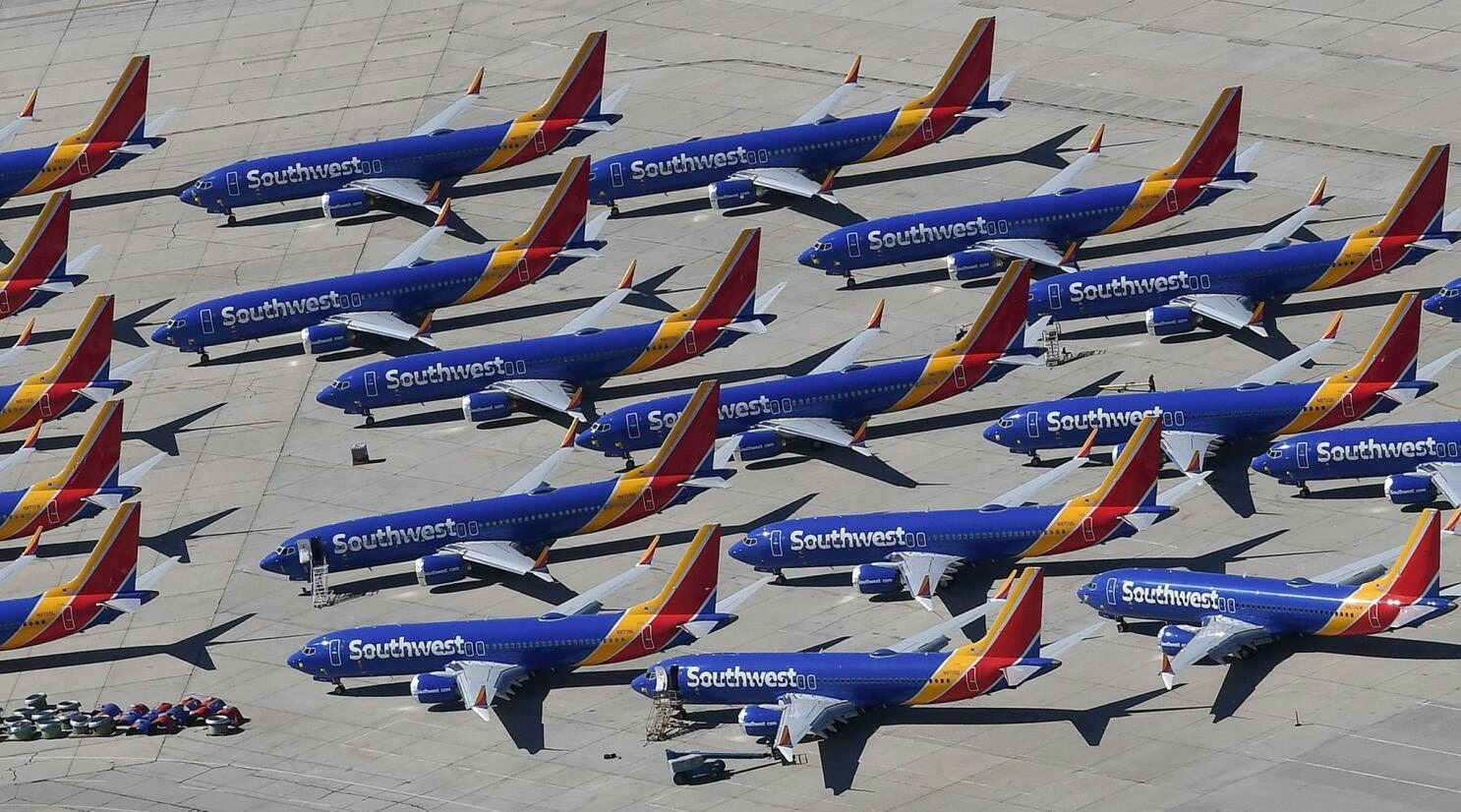
Southwest Airlines Joins Elite Group Operating the World’s Largest Narrowbody Fleets
Southwest Airlines has solidified its position among the world’s leading carriers by operating one of the largest narrowbody fleets globally, joining the ranks of United, American, Delta, and other major airlines. This achievement highlights Southwest’s continued dominance in the narrowbody sector, with its all-Boeing 737 fleet making it the largest single-type narrowbody operator worldwide.
Narrowbody aircraft, characterized by their single-aisle design and primarily used for short- to medium-haul routes, remain the cornerstone of modern air travel. Airlines such as Southwest, United, American, Delta, IndiGo, and Ryanair depend heavily on these jets to sustain extensive domestic and international networks. In 2025, these carriers are not merely participants in the narrowbody market; they are actively shaping its trajectory.
Southwest’s fleet, consisting of approximately 810 Boeing 737 aircraft, offers significant operational benefits. By standardizing on a single aircraft type, the airline streamlines maintenance, crew training, and scheduling processes, thereby enhancing efficiency and reliability. This strategic focus has firmly established Southwest as the world’s largest operator of Boeing 737s.
Strategic Shifts Amid Industry Evolution
Despite its strong position, Southwest is adapting to a rapidly evolving industry landscape. The airline recently announced a partnership with Turkish Airlines aimed at expanding into transatlantic travel, signaling a broader international ambition beyond its traditional domestic focus. Concurrently, Southwest is contemplating the introduction of more conventional revenue models, including seat assignments, extra legroom options, and baggage fees. While these changes may appeal to customers seeking additional convenience and choice, they also risk alienating loyal passengers accustomed to Southwest’s longstanding no-fee policies.
The competitive response from other airlines remains uncertain. Some carriers may adjust their service offerings to mirror Southwest’s new initiatives, while others might reinforce their existing strengths. Market reactions are expected to be varied, reflecting the ongoing tension between innovation and tradition in airline customer service.
Southwest’s financial outlook has encountered recent challenges. The US government shutdown caused a temporary decline in air traffic and capacity, adversely affecting the airline’s fourth-quarter performance. Nevertheless, Southwest’s extensive point-to-point network continues to distinguish it from hub-and-spoke competitors, providing travelers with greater flexibility and direct connections.
As competition intensifies among airlines operating the world’s largest narrowbody fleets, carriers like Southwest, American, IndiGo, and Ryanair are redefining leadership in global aviation. Their dominance in narrowbody operations not only drives operational efficiency but also influences the future of air travel by offering passengers an expanding array of routes and choices.

Etihad Airways Suspends Airbus A380 Flights on Key Route

Aditya Birla Group Seeks Approval for Aircraft Leasing in GIFT City

Qatar Airways Highlights Innovation and Connectivity at Arabian Travel Market 2026

Hong Kong's Five-Year Plan Includes Andrew Fan's Aircraft Parts Processing Hub Proposal

ACIA Aero Leasing Delivers ATR72-600 to Air Nostrum

RTX Appoints Jill Albertelli as Head of Pratt & Whitney

TAT Technologies Joins Beyond Aero Hydrogen Aircraft Program

AURAK Study Highlights Barriers to Air Taxi Adoption in Emerging Economies

Xiamen Air Selects Altitude for 787 Maintenance at Heathrow

Etihad and Swissport Extend Global Partnership
