
Orchestrer les insights d’IA pour les transformer en actions

Tendances
Categories
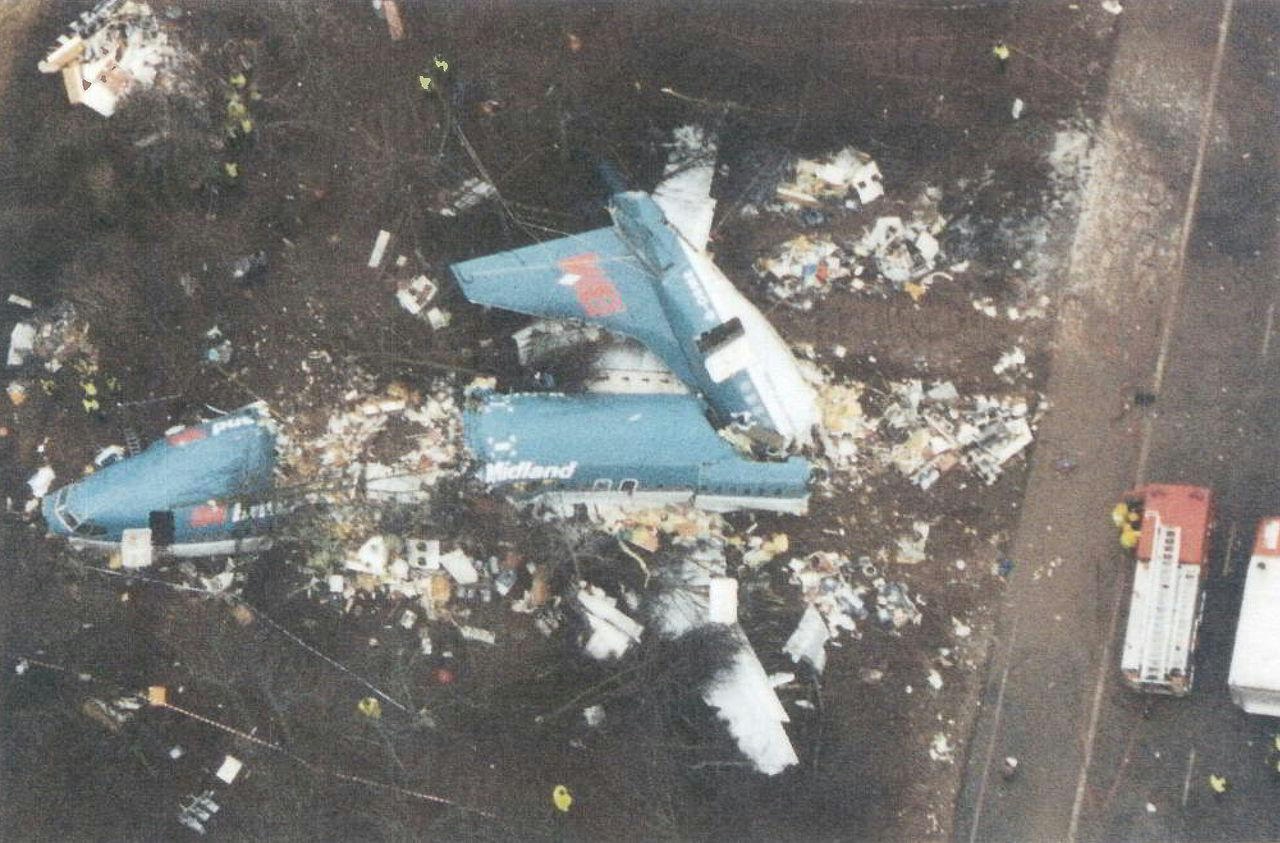
The 1989 Kegworth Air Disaster
The 1989 Kegworth Air Disaster
On the evening of 8 January 1989, British Midland Flight 92, a nearly new Boeing 737-400, departed London Heathrow bound for Belfast with 118 passengers and eight crew members on board. The aircraft, only four months into service, had climbed to 28,000 feet when a sudden and violent vibration shook the airframe. A fan blade in the left engine had fractured, causing smoke to drift into the cabin and filling the air with the smell of burning, alarming passengers. Within half an hour, the aircraft crashed near the M1 motorway embankment close to Kegworth, Leicestershire, resulting in 47 fatalities. Investigations later revealed that the disaster’s primary cause was not the mechanical failure itself, but a critical error made in the cockpit.
A New Aircraft with Unfamiliar Challenges
Although the Boeing 737-400 bore a strong resemblance to earlier models, it incorporated significant technological changes that complicated its operation. The aircraft was equipped with upgraded CFM56 engines and featured a modernized instrument panel, both of which presented new challenges to the flight crew. Captain Kevin Hunt, a highly experienced pilot with over 13,000 flight hours, and First Officer David McClelland, who had accumulated 3,300 hours, had collectively logged only 76 hours on the 737-400 variant. Crucially, neither pilot had undergone simulator training for this specific model, as no such simulator existed in the United Kingdom at the time.
This lack of familiarity proved to be a fatal factor. Previous 737 models drew cabin air exclusively from the right engine, so smoke in the cabin was typically interpreted as indicating a problem on that side. However, the 737-400 drew air from both engines, making this assumption invalid. Additionally, the new engine-vibration gauges, though more accurate, were smaller and less trusted by pilots accustomed to earlier instruments. These design changes combined to create a misleading situation for the crew.
The Critical Error and Its Consequences
As smoke began to fill the cabin, Captain Hunt took control and sought to identify the failing engine. Relying on the assumption that smoke indicated a right-engine problem, the crew mistakenly throttled back the No. 2 (right) engine, which was in fact operating normally. This left the aircraft dependent on the damaged left engine, which continued to deteriorate rapidly. Despite several passengers and cabin crew members witnessing flames emanating from the left engine, this vital information was never communicated to the cockpit. The most crucial evidence on board was lost in transmission.
The Air Accidents Investigation Branch (AAIB) later concluded that the crew had shut down the wrong engine, stating: “The crew shut down the No. 2 engine when the evidence, correctly interpreted, indicated that it was the No. 1 engine that had suffered damage.”
Aftermath and Industry Reforms
The Kegworth disaster exposed the severe risks associated with pilot unfamiliarity with new aircraft variants and underscored the profound impact of decision-making under extreme stress. The tragedy prompted immediate and widespread scrutiny of airline safety protocols, emphasizing the importance of human factors such as fatigue, communication, and training. In response, airlines intensified crew training programs and conducted comprehensive safety audits. The disaster ultimately catalyzed significant changes in aviation safety regulations and operational practices, reshaping industry standards to mitigate the risk of similar catastrophes in the future.

Etihad Airways Suspends Airbus A380 Flights on Key Route

Aditya Birla Group Seeks Approval for Aircraft Leasing in GIFT City

Qatar Airways Highlights Innovation and Connectivity at Arabian Travel Market 2026

Hong Kong's Five-Year Plan Includes Andrew Fan's Aircraft Parts Processing Hub Proposal

ACIA Aero Leasing Delivers ATR72-600 to Air Nostrum

RTX Appoints Jill Albertelli as Head of Pratt & Whitney

TAT Technologies Joins Beyond Aero Hydrogen Aircraft Program

AURAK Study Highlights Barriers to Air Taxi Adoption in Emerging Economies

Xiamen Air Selects Altitude for 787 Maintenance at Heathrow

Etihad and Swissport Extend Global Partnership
