
Orchestrer les insights d’IA pour les transformer en actions

Tendances
Categories
The Advantages and Disadvantages of Owning Versus Leasing a Private Jet
The Advantages and Disadvantages of Owning Versus Leasing a Private Jet
Private jets have long been emblematic of luxury and exclusivity, yet access to them has expanded significantly in recent years. Between 2000 and 2022, the global private jet fleet more than doubled, increasing from 10,000 to over 23,000 aircraft. Demand continues to rise sharply, with over 8,000 new jets anticipated in the coming decade and 3.6 million business jet flights recorded worldwide in 2024—a 30% increase compared to 2019. Leading companies such as NetJets, VistaJet, and Flexjet are responding to this surge by prioritizing sustainability, personalization, and cutting-edge technology.
Privacy, Comfort, and Flexibility
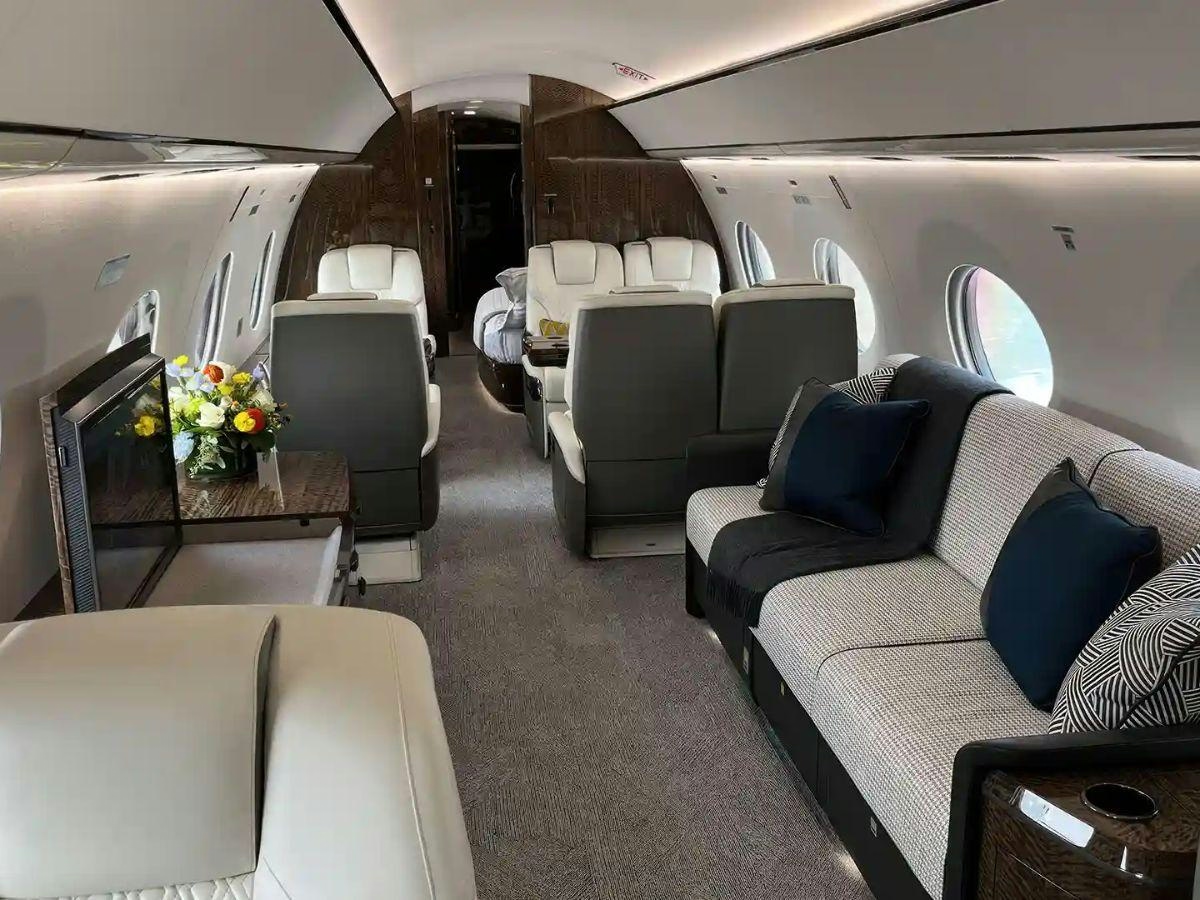
For high-net-worth individuals and corporations, commercial air travel often fails to meet the demands of time efficiency, flexibility, and privacy. Private jet ownership offers a level of control unattainable through commercial airlines. Owners have the authority to determine exactly who is on board, a critical advantage for executives, celebrities, and others requiring confidentiality. Additionally, cabin customization is a significant benefit, allowing owners to tailor everything from seating arrangements and lighting to Wi-Fi connectivity and in-flight dining according to personal preferences.
Flexibility remains a defining feature of private aviation. Owners can fly directly to smaller regional airports, depart according to their own schedules, and alter routes mid-flight if necessary. Unlike commercial airlines, private jets are not subject to blackout dates or competition for seats. Speed is another advantage; most private jets cruise between Mach 0.78 and 0.81 (approximately 515–621 mph), with high-performance models such as the Gulfstream G650 and Bombardier Global 8000 pushing these limits even further.
The High Cost and Commitment of Private Jet Ownership
This level of control and convenience, however, comes at a considerable cost. The largest private jets can exceed $400 million in price, while smaller models like the HondaJet Elite start at around $5.5 million. Mid-size jets such as the Bombardier Global 5000 typically range from $35 million to $60 million. Although purchasing a used jet may reduce upfront expenses, it often necessitates additional investment in upgrades or refurbishments.
Beyond the initial purchase, ownership entails substantial ongoing costs. Annual operating expenses—including maintenance, repairs, hangar fees, insurance, and crew salaries—generally fall between $500,000 and $1 million. Recent developments have introduced new financial pressures; for instance, Starlink’s private jet internet service recently doubled its monthly fee for the Aviation Global Unlimited plan and launched a new Regional plan with limited coverage. Industry responses have varied, with Flexjet absorbing these increased costs for its fractional owners, while Nicholas Air has publicly criticized the price hikes.
Emerging Trends: Return on Investment and Shared Luxury
As operational costs escalate, business leaders are increasingly evaluating the return on investment (ROI) of private aviation with a focus on productivity and operational efficiency rather than solely on acquisition costs. Concurrently, the trend of private jet sharing is gaining momentum. Affluent travelers are increasingly opting for shared luxury flights, seeking to enjoy the benefits of private aviation without bearing the full financial burden of ownership.
Private jets continue to offer unmatched privacy, comfort, and flexibility, but these advantages come with significant financial and operational commitments. As the industry evolves in response to new technologies, rising costs, and changing traveler preferences, prospective owners and lessees must carefully assess the true value of private aviation, balancing luxury and convenience against the challenges and expenses involved.

Etihad Airways Suspends Airbus A380 Flights on Key Route

Aditya Birla Group Seeks Approval for Aircraft Leasing in GIFT City

Qatar Airways Highlights Innovation and Connectivity at Arabian Travel Market 2026

Hong Kong's Five-Year Plan Includes Andrew Fan's Aircraft Parts Processing Hub Proposal

ACIA Aero Leasing Delivers ATR72-600 to Air Nostrum

RTX Appoints Jill Albertelli as Head of Pratt & Whitney

TAT Technologies Joins Beyond Aero Hydrogen Aircraft Program

AURAK Study Highlights Barriers to Air Taxi Adoption in Emerging Economies

Xiamen Air Selects Altitude for 787 Maintenance at Heathrow

Etihad and Swissport Extend Global Partnership
