
AeroGenie — Votre copilote intelligent.

Tendances
Categories
The Boeing 787 Engine Rivalry: GE Versus Rolls-Royce
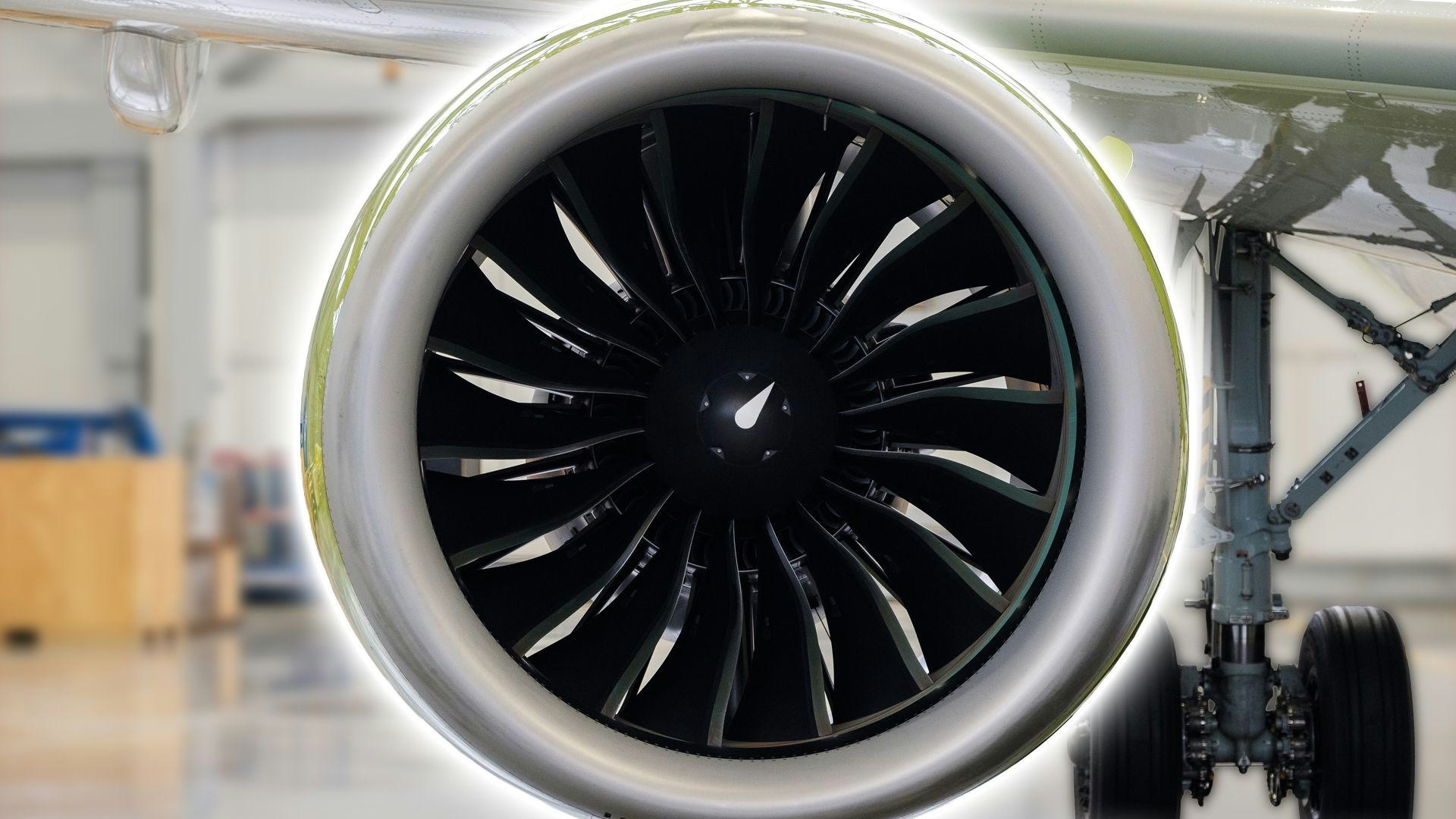
The Boeing 787 Engine Rivalry: GE Versus Rolls-Royce
Engine Performance and Reliability Challenges
For years, airlines operating the Boeing 787 Dreamliner have faced a critical choice between two leading engine options: Rolls-Royce’s Trent 1000 and General Electric’s GEnx. Both engines have been marketed on the basis of enhanced efficiency, reduced emissions, and cutting-edge technology. However, recent developments have begun to influence airline preferences, as concerns over reliability and shifting market strategies prompt a reevaluation of these options.
Rolls-Royce has encountered significant challenges with the durability of its Trent 1000 engines, which have resulted in costly maintenance and operational disruptions for several carriers. In response, the company has announced an ambitious goal to improve the durability of its Trent engines by more than 100% by the end of the coming year. This initiative aims to extend the interval between major servicing, thereby restoring confidence among airline customers and helping Rolls-Royce regain competitiveness in the engine market.
Conversely, General Electric’s GEnx engine has gained increasing favor among airlines, largely due to its reputation for reliability and lower maintenance requirements. This growing preference for the GEnx is reshaping the operational landscape for Boeing 787 operators, as engine selection plays a crucial role in determining an airline’s profitability and operational stability over the long term.
Broader Industry Implications and Future Outlook
Despite the GEnx’s current advantages, GE Aerospace is not without its own technical concerns. The company is investigating a potential durability issue involving a seal in its GE9X engine, which is slated to power Boeing’s forthcoming 777X aircraft. Nevertheless, Boeing remains confident in GE’s ability to resolve the problem, maintaining its expectation to commence 777X deliveries in 2027 without significant delay.
The competition between GE and Rolls-Royce extends beyond engine performance to encompass wider industry trends and strategic partnerships. Singapore, for instance, has recently demonstrated its aerospace ambitions by securing agreements with both RTX and Rolls-Royce. These collaborations are designed to develop new capabilities that support next-generation commercial aircraft platforms and address increasing regional demand, underscoring the global significance of the engine rivalry.
As airlines continue to evaluate their options, the evolving dynamics between GE and Rolls-Royce underscore the critical importance of reliability, long-term support, and technological innovation in engine selection. While the GEnx currently holds a reputation for dependability, Rolls-Royce’s intensified focus on enhancing durability could alter the competitive balance in the years ahead.
Ultimately, the rivalry over Boeing 787 engines represents more than a technical contest; it is a strategic battle with far-reaching consequences for airline operations, manufacturer fortunes, and the future trajectory of commercial aviation worldwide.

Why British Airways Chose the Airbus A380

Akwa Ibom Expands Aviation Sector with Delivery of Two Airbuses

Pratt & Whitney to Invest $200 Million in U.S. Engine Facility Expansion
NTSB: Bird Strike Caused Engine Failure and Smoke Alert on Alaska Cargo A330 in Cincinnati

Davcon Aviation to Develop $100 Million MRO Facility at Salina Regional Airport

Lufthansa Technik Develops Next-Generation Praetor Cabins

Flexjet’s Vision for the Future of Private Air Travel

SMFL Helicopters Launches Global Rotorcraft Leasing Platform

The Mechanics and Importance of Single-Engine Autorotations
Nexus Airlines Adds Refurbished Dash 8-400 to Fleet
