
Orchestrer les insights d’IA pour les transformer en actions

Tendances
Categories
The Role of Artificial Intelligence and Machine Learning in Marine Corps Aviation
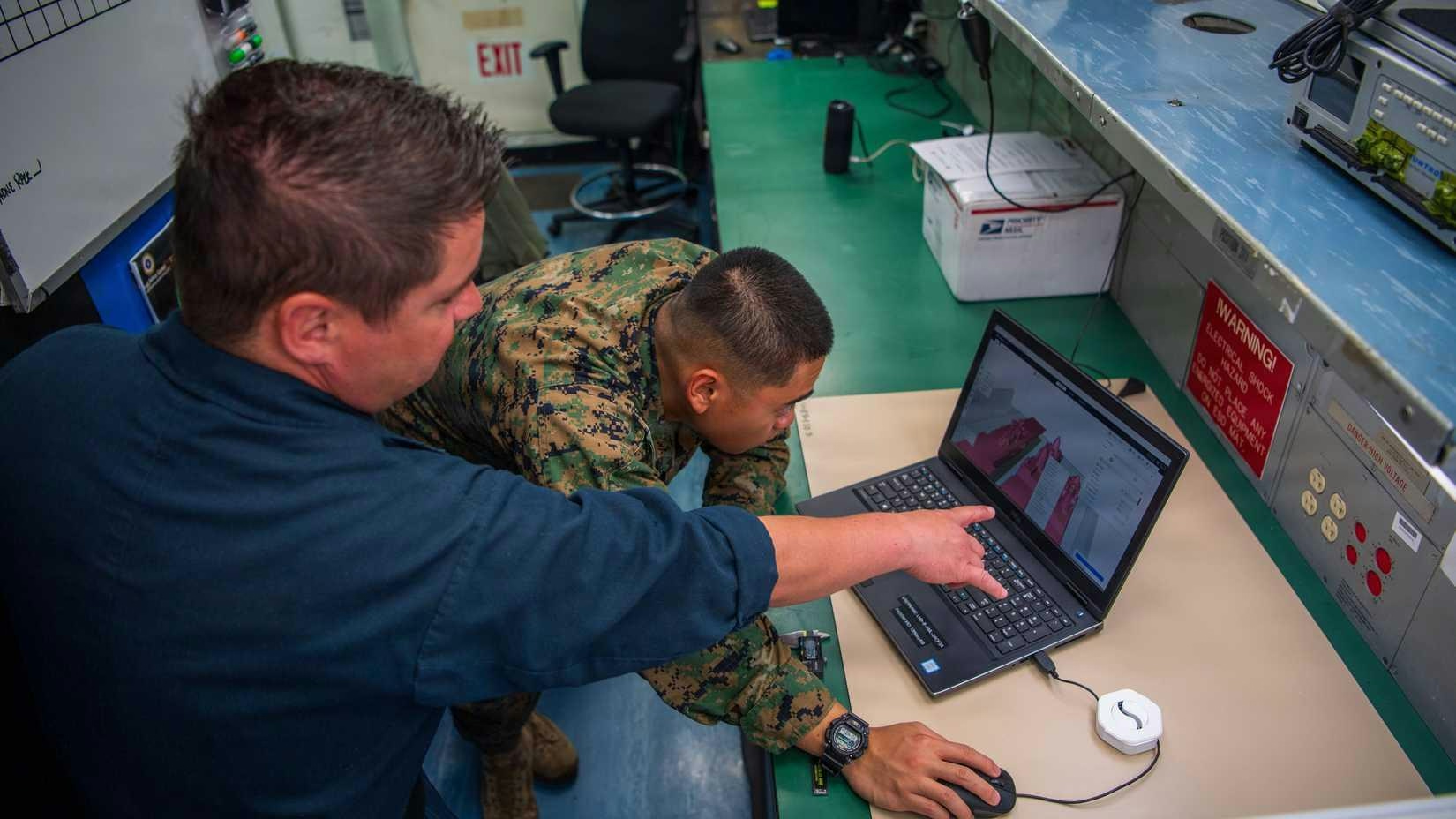
The Role of Artificial Intelligence and Machine Learning in Marine Corps Aviation
Carl von Clausewitz famously noted that while the nature of war remains constant, its character is subject to change. This observation resonates profoundly in the current era, as artificial intelligence (AI) and machine learning (ML) are fundamentally transforming military aviation. AI, when directed by human-defined objectives, can process vast amounts of data and generate recommendations at unprecedented speeds. Machine learning, a subset of AI, empowers systems to learn from data and make informed inferences, thereby accelerating decision-making processes and potentially shortening the military kill chain.
The U.S. Marine Corps has acknowledged the transformative potential of these technologies, positioning AI and ML integration as a cornerstone of its Aviation Plan. Their applications span a broad spectrum, including decision-support tools for operations and planning, predictive maintenance, and supply chain optimization. As the Corps modernizes its aviation assets—highlighted by the recent acquisition of UC-12W support aircraft—leaders remain attentive to the ethical and practical boundaries inherent in deploying these powerful tools.
Enhancing Safety and Lethality through Computer Vision
Among the most promising AI applications is computer vision, which serves critical roles in both identification and targeting. On the flight deck, AI-enabled systems are being developed to provide real-time digital visualization, tracking the precise location and movement of every aircraft. Initially validated on aircraft carriers, this technology is expected to extend to amphibious platforms, thereby enhancing safety and mitigating collision risks. This development is particularly significant as the fleet increasingly incorporates unmanned aerial vehicles such as the MQ-9A.
Beyond the flight deck, AI-powered vision systems are being designed to enable drones to autonomously detect and avoid other aircraft within increasingly congested airspace. These safety enhancements not only protect valuable assets but also facilitate more complex and integrated operational capabilities.
AI’s offensive applications are also advancing. Lockheed Martin’s Project Overwatch, for instance, seeks to integrate AI-enhanced combat identification into the F-35’s electronic suite. These systems are not intended to automate lethal decisions but rather to support pilots by enabling faster and more accurate threat assessments amid the uncertainties of air combat.
Navigating Challenges and Competitive Pressures
Despite these technological advances, integrating AI and ML into Marine Corps aviation presents significant challenges. Cybersecurity vulnerabilities remain a critical concern, as underscored by industry experts such as Okta. The increasing interconnectivity of military systems heightens the risk of cyberattacks targeting AI-driven platforms, necessitating robust and adaptive security measures.
The Department of Defense’s collaboration with leading technology firms highlights the strategic importance of AI in enhancing warfighter decision-making. Nevertheless, the military faces intense competition from the commercial sector for skilled personnel, particularly aviators. The allure of higher salaries in civilian aviation continues to affect pilot retention, complicating efforts to cultivate and maintain a technologically advanced force.
As the Marine Corps advances its modernization efforts, the interplay between technological innovation, workforce dynamics, and security considerations will critically influence the future trajectory of military aviation. The ultimate impact of AI and machine learning will depend not only on their technical capabilities but also on the thoughtful and ethical manner in which they are employed in service of national defense.

Etihad Airways Suspends Airbus A380 Flights on Key Route

Aditya Birla Group Seeks Approval for Aircraft Leasing in GIFT City

Qatar Airways Highlights Innovation and Connectivity at Arabian Travel Market 2026

Hong Kong's Five-Year Plan Includes Andrew Fan's Aircraft Parts Processing Hub Proposal

ACIA Aero Leasing Delivers ATR72-600 to Air Nostrum

RTX Appoints Jill Albertelli as Head of Pratt & Whitney

TAT Technologies Joins Beyond Aero Hydrogen Aircraft Program

AURAK Study Highlights Barriers to Air Taxi Adoption in Emerging Economies

Xiamen Air Selects Altitude for 787 Maintenance at Heathrow

Etihad and Swissport Extend Global Partnership
