
Orchestrer les insights d’IA pour les transformer en actions

Tendances
Categories
ThinkYoung and Boeing Open STEM School in Luanda Focused on AI, Robotics, and Aviation
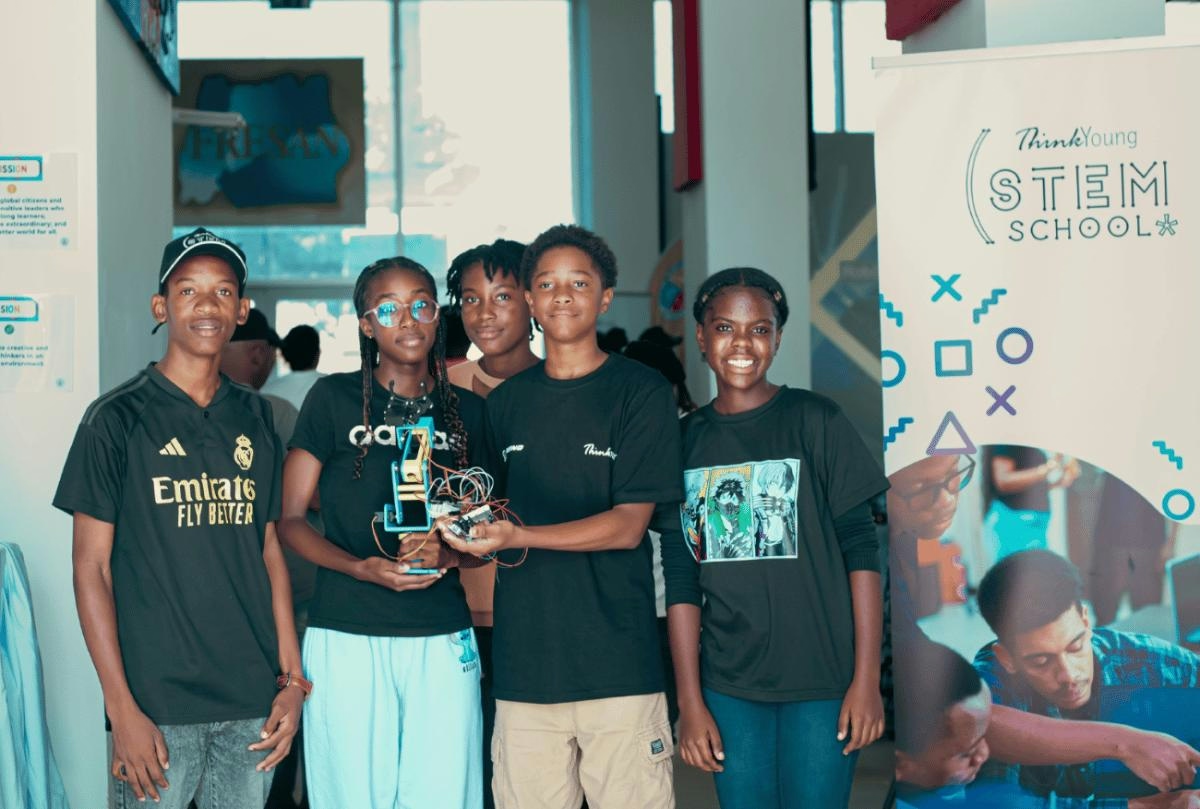
ThinkYoung and Boeing Launch STEM School in Luanda Emphasizing AI, Robotics, and Aviation
ThinkYoung, in collaboration with Boeing, has inaugurated the first edition of the ThinkYoung STEM School in Luanda, Angola. This initiative aims to equip young learners with practical skills in artificial intelligence (AI), robotics, and aviation through a free educational program. Developed alongside the American Schools of Angola and Global Shapers Luanda, the program welcomed 52 participants aged 12 to 18, including 31 girls, marking a significant advancement in STEM education within the region.
Innovative Curriculum and Educational Goals
The school’s curriculum extends beyond traditional coding instruction, incorporating modules on AI, robotics, and the metaverse. It places strong emphasis on teamwork, critical thinking, and problem-solving skills. Organizers anticipate that this hands-on approach will inspire students to pursue careers in science, technology, and aviation sectors. Henok Teferra Shawl, Managing Director of Boeing Africa, highlighted the importance of the initiative, stating, “The government of Angola has invested in STEM education to shape the country’s future. We are proud to support this journey. By giving students hands-on experience in robotics, AI and aviation technologies, we create opportunities and build a pipeline of tech-savvy, skilled talent.”
Andrea Gerosa, founder of ThinkYoung, underscored the broader vision behind the program: “Bringing our ThinkYoung STEM School to Angola – and soon to Senegal – for the first time sends a clear signal: together with Boeing, we are committed to advance STEM education for young people everywhere. In a time of global uncertainty and rapid advances in AI, STEM skills are more important than ever.”
Challenges and Broader Implications
Despite the promise of integrating advanced technologies into K-12 education, the initiative faces notable challenges. Industry experts point out that AI development remains predominantly male-dominated, raising concerns about gender imbalance and the potential for limited perspectives in both curriculum design and classroom experience. This issue, highlighted by recent research, underscores the critical need to foster diversity and inclusivity as the school expands its AI and robotics offerings.
Moreover, the increasing adoption of AI-driven education has sparked debate among educators and parents. While such programs aim to modernize learning and prepare students for future careers, some critics question the long-term social and emotional impacts of AI-based instruction. Skepticism persists regarding the effectiveness and inclusivity of these new educational models, particularly in regions where access to technology and teacher training may be uneven.
The launch of the ThinkYoung STEM School in Luanda also reflects a broader shift in the local educational landscape. As more institutions consider AI-focused curricula, competition is expected to intensify, potentially driving innovation but also raising concerns about equitable access and educational outcomes.
Expansion and Future Prospects
ThinkYoung and Boeing plan to extend the program to Dakar, Senegal, later this year as part of a wider initiative spanning Africa, Europe, and West Asia. Over the past decade, the partnership has engaged nearly 1,900 young people globally, including 850 in Africa, with approximately 60 percent of participants being girls and young women. The program’s future success will depend on its ability to navigate the opportunities and challenges inherent in integrating advanced technologies into education, ensuring that the next generation of innovators is both skilled and diverse.

Etihad Airways Suspends Airbus A380 Flights on Key Route

Aditya Birla Group Seeks Approval for Aircraft Leasing in GIFT City

Qatar Airways Highlights Innovation and Connectivity at Arabian Travel Market 2026

Hong Kong's Five-Year Plan Includes Andrew Fan's Aircraft Parts Processing Hub Proposal

ACIA Aero Leasing Delivers ATR72-600 to Air Nostrum

RTX Appoints Jill Albertelli as Head of Pratt & Whitney

TAT Technologies Joins Beyond Aero Hydrogen Aircraft Program

AURAK Study Highlights Barriers to Air Taxi Adoption in Emerging Economies

Xiamen Air Selects Altitude for 787 Maintenance at Heathrow

Etihad and Swissport Extend Global Partnership
