
AeroGenie — Votre copilote intelligent.

Tendances
Categories
TPConnects Integrates MCP Layer into Iris Content Platform

TPConnects Integrates MCP Layer into Iris Content Platform
Airline content aggregator TPConnects Technologies has enhanced its Iris platform by incorporating a Model Context Protocol (MCP) layer, designed to enable seamless interaction between airline content and artificial intelligence (AI) agents. The Iris platform consolidates content from New Distribution Capability (NDC), low-cost carriers, and global distribution systems into a unified access point. With the integration of the MCP layer, this content is now converted into a machine-readable protocol, significantly improving accessibility for AI agents and automated tools.
Advancing AI-Driven Travel Commerce
Praveen Kumar, co-founder and CTO of TPConnects, emphasized the importance of structured, machine-readable access in the evolving travel ecosystem. He noted that as the industry moves toward AI-driven commerce, conversational booking, and automated agents, systems require a protocol that can instantly recognize new carriers and airline capabilities without manual configuration or update cycles. The MCP layer fulfills this need by enabling MCP-compatible systems to discover new functionalities immediately, thereby removing barriers to operational velocity.
Challenges in Integration and Compliance
Despite the advantages, integrating the MCP layer into the Iris platform involves several challenges. Ensuring seamless user approval processes and comprehensive logging mechanisms is essential to prevent unauthorized modifications and maintain user trust. As AI-generated content becomes more widespread, TPConnects must also comply with platform policies regarding AI disclosure and address potential regulatory concerns related to content authenticity. These considerations are critical as machine-generated outputs become increasingly prevalent across the travel industry.
Market Implications and Future Prospects
The introduction of the MCP layer is expected to provoke significant reactions within the market. Competitors may accelerate the development of their own AI-integrated platforms to retain customers and enhance their service offerings. This move by TPConnects could trigger a broader adoption of similar features across the sector, as rivals seek to match its technological advancements. Furthermore, TPConnects may leverage the MCP layer to expand into more agent-driven functionalities, such as e-commerce management, thereby automating site operations and increasing the platform’s overall utility.
Last month, TPConnects announced the addition of an MCP layer to its Astra NDC platform, which provides a single integration point for all NDC versions and schema variations. These ongoing efforts to streamline and automate airline content distribution reflect a wider industry trend toward AI-powered solutions, even as companies navigate the complexities of trust, regulatory compliance, and competitive pressures.

Jakub Dvořák Appointed CEO of Job Air Technic

HEICO Acquires Majority Stake in Sherwood
ST Engineering Extends MRO Partnership with Skymark
Sky Airline to Lease A321XLR Aircraft via BOC Aviation Agreement
VTOL Manufacturer Supported by Toyota Conducts Scaled Flight Tests Ahead of Launch

Validation of Icing Certification Methods for SMR and Regional Aircraft

Counterfeit Aerospace Parts Highlight Supply Chain Vulnerabilities
United Engine Nears Completion of PD-8 Certification Tests
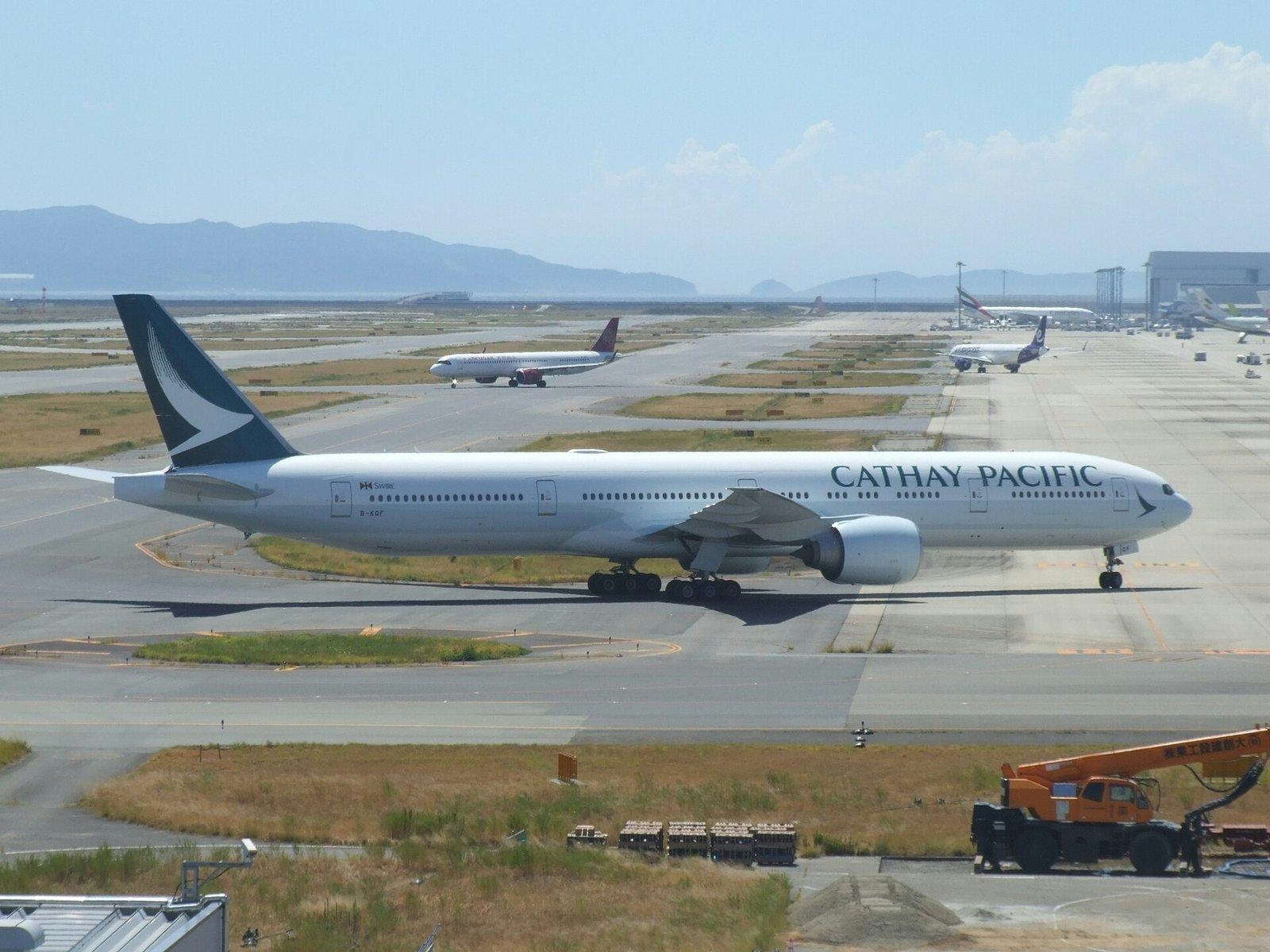
Cathay Pacific Flight Diverts to Osaka After Engine Oil Alert; No Injuries Reported
Loading, Please Wait
