image

AeroGenie — Votre copilote intelligent.

Posez toutes vos questions. Analysez tout. Agissez instantanément.

Tendances

Categories

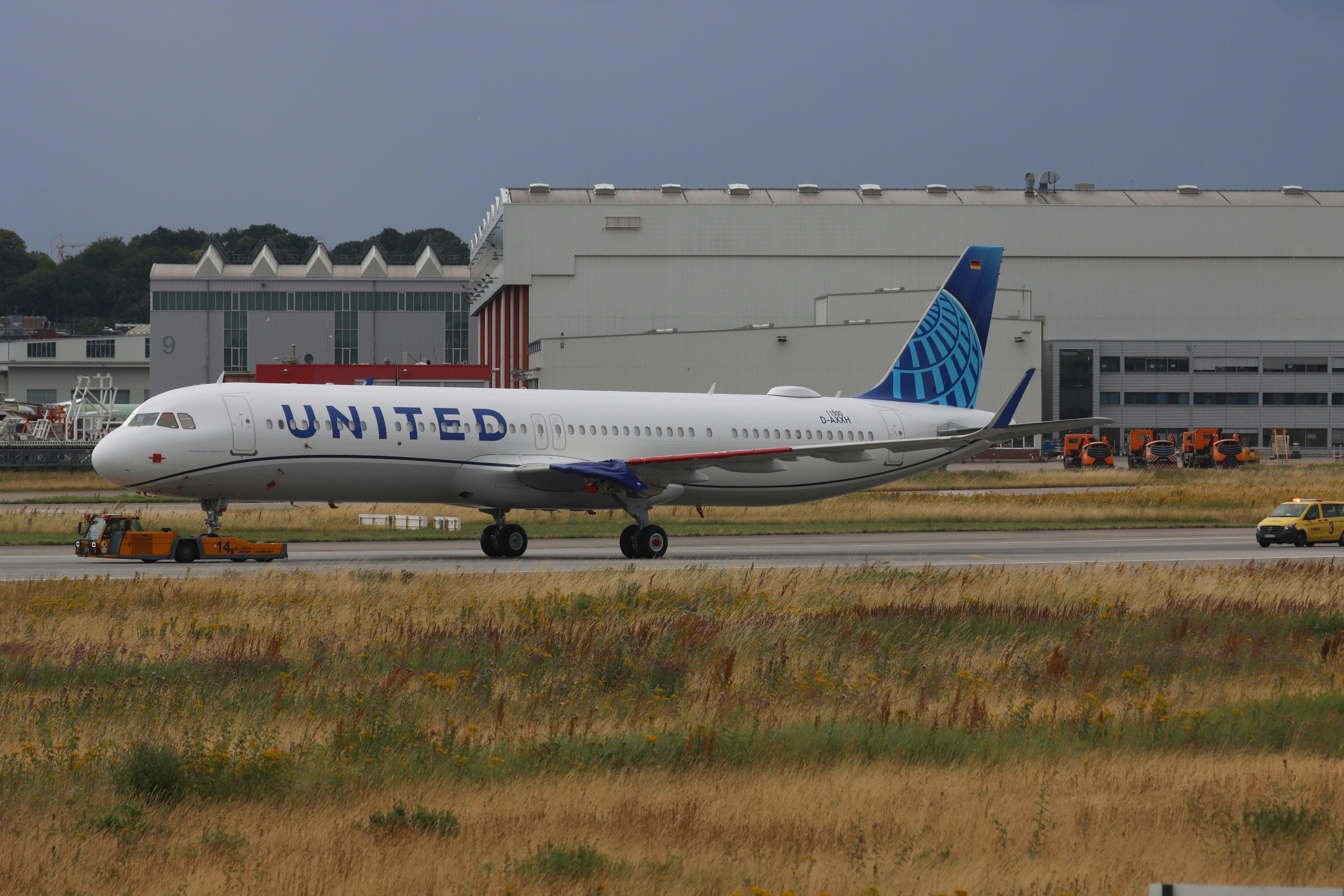
Two Six-Year-Old Airbus A321neos Sold for Spare Parts
August 10, 2025By ePlane AI
Two Six-Year-Old Airbus A321neos Sold for Spare Parts
0
0
Airbus A321neo
Spare Parts
Supply Chain Shortages

Two Six-Year-Old Airbus A321neos Sold for Spare Parts Amid Industry Shortages

Two Airbus A321neo aircraft, each only six years old, are being dismantled for spare parts as the aviation sector grapples with persistent supply chain disruptions. Previously operated by IndiGo, these jets have been acquired by aftermarket specialist Setna iO. Despite their relatively young age and the potential for decades of further service, the soaring value of their components amid ongoing shortages has made parting out the aircraft more financially attractive than continued operation.

Setna iO confirmed the purchase of the two 2019-built A321neos via its LinkedIn page. Both aircraft are equipped with high gross weight enhanced landing gear, Honeywell GTCP131-9A auxiliary power units, GTF nacelles, and advanced avionics. Notably, they are powered by Pratt & Whitney PW1133G-JM engines, which are in particularly high demand due to global parts scarcity. Industry sources indicate that the aircraft, registered as OE-IHD and OE-IHH (formerly VT-IUD and VT-IUE with IndiGo), were ferried to Castellon, Spain, in early May after completing their final commercial flights in late February.

The first aircraft, VT-IUD, was delivered on May 16, 2019, and logged 18,705 flight hours and 9,210 cycles. The second, VT-IUE, delivered on May 20, 2019, accumulated 19,374 flight hours and 9,675 cycles. Both jets were leased from UK-based Deucalion Aviation and configured to seat 222 passengers in an all-economy layout. Their removal from IndiGo’s fleet in February 2025 represents an unusually early retirement for aircraft of this type, which typically remain in service for much longer periods.

Economic Rationale Behind Early Dismantling

The decision to scrap such young airframes is particularly striking given the current shortage of both aircraft and spare parts. Market valuations from ch-aviation place each jet’s worth at over $43 million, while aviation consultancy Cirium estimates their part-out value between $45 million and $56.5 million, depending on engine condition. The engines alone could command between $15.2 million and $21.4 million each. By contrast, the market lease rate for comparable aircraft is approximately $350,000 per month, or $4.2 million annually. Over a hypothetical extended service life of 20 years, each aircraft could generate between $60 million and $70 million in rental revenue.

Industry analysts suggest that the owners are prioritizing immediate financial returns by selling the aircraft for parts rather than navigating the uncertainties of long-term leasing in a volatile market environment.

Implications for the Aviation Market

The sale and dismantling of such young aircraft may have significant repercussions across the aviation aftermarket. Regulatory compliance and market dynamics could become increasingly complex as competitors adjust their spare parts strategies or seek alternative suppliers. This development may also influence the leasing market, as demonstrated by airlines such as China’s Loong Air, which leases A321neos from CDB Aviation. Such shifts could prompt changes in fleet management and operational strategies among lessors and airlines.

As airlines and manufacturers continue to contend with supply chain bottlenecks, the industry’s emphasis on cost-effective solutions and competition for scarce resources is expected to intensify. The timeline for relief from the current parts shortage remains uncertain, compelling the market to adapt to these evolving challenges.

More news
Etihad Airways Wins Over 25 Awards at 2025 Global Travel Ceremony

Etihad Airways Wins Over 25 Awards at 2025 Global Travel Ceremony

Etihad Airways Secures Over 25 Awards at 2025 Global Travel Ceremony Etihad Airways, the national carrier of the United Arab Emirates, concluded 2025 with an impressive collection of more than 25 international accolades at the Global Travel Ceremony. This accomplishment highlights the airline’s unwavering dedication to service excellence, innovation, and operational efficiency, reinforcing its standing as a prominent leader in the global aviation sector. Recognition Across Service, Sustainability, and Innovation Throughout the year, Etihad garnered awards across a broad spectrum of categories, including customer service, sustainability, safety, and technological advancement. The airline’s commitment to providing an exceptional passenger experience was acknowledged by numerous travel and aviation bodies, underscoring its leadership in a highly competitive industry. Particularly noteworthy were Etihad’s sustainability initiatives, such as the introduction of eco-friendly aircraft and the implementation of zero-waste policies, which earned the airline top honors for environmental responsibility. Central to Etihad’s success was its emphasis on customer service and luxury. Investments in onboard amenities—ranging from state-of-the-art entertainment systems to gourmet dining and personalized service—have established new benchmarks for comfort, especially within First and Business Class cabins. These enhancements not only elevated passenger satisfaction but also contributed significantly to the airline’s extensive recognition for service excellence. Innovation and safety also played pivotal roles in Etihad’s achievements. The airline pioneered the integration of advanced technologies, including contactless check-in procedures and biometric screening, which streamlined the travel experience and secured multiple awards for innovation. Safety remained a paramount concern, with Etihad receiving international commendations for its strict adherence to global safety standards, affirming its position among the world’s safest airlines. Strategic partnerships and network expansion further amplified Etihad’s global influence in 2025. Collaborations with leading carriers and travel providers, such as its alliance with Condor to enhance connectivity within the Middle East, strengthened the airline’s international footprint. The expansion of its route network enabled Etihad to connect an increasing number of destinations worldwide, supporting its growth and reinforcing its industry presence. Navigating a Competitive Aviation Landscape Etihad’s dominance at the Global Travel Ceremony occurred amid intensifying competition within the aviation sector. Airlines such as Air New Zealand, which led the winners in Oceania, and Malaysia Airlines, recognized at the Asian Experience Awards, are also elevating standards in service and innovation. Meanwhile, carriers like Emirates continue to expand their fleets and partnerships, reflecting a dynamic and competitive market environment. These developments indicate that other airlines may pursue similar strategies and accolades in response to Etihad’s success. As Etihad Airways celebrates a landmark year, its achievements reflect the dedication of its workforce and leadership, as well as the evolving benchmarks of the aviation industry. With competitors poised to challenge its position, the airline’s sustained focus on innovation, sustainability, and customer experience will be essential to maintaining its status as a global aviation leader.
Companies Producing Diesel Airplane Engines Face Questions About Safety and Performance

Companies Producing Diesel Airplane Engines Face Questions About Safety and Performance

Companies Producing Diesel Airplane Engines Face Questions About Safety and Performance Diesel Engines in Aviation: An Overview Diesel engines, commonly associated with heavy-duty vehicles such as pickup trucks and semi-trailers, have also carved out a specialized role in aviation, particularly within the realm of general aviation aircraft powered by piston engines. Unlike commercial airliners that predominantly utilize jet or turboprop engines, smaller general aviation planes can benefit from the efficiency and fuel flexibility offered by diesel technology. These aircraft diesel engines operate on the compression-ignition principle, similar to their terrestrial counterparts, eliminating the need for spark plugs. A notable advantage is their capability to run on both standard diesel fuel and Jet A fuel, the latter being widely accessible at airports worldwide. Currently, two principal manufacturers dominate the market for factory-installed diesel-powered general aviation aircraft. Diamond Aircraft, headquartered in Europe, incorporates diesel engines extensively across its product range, including the single-engine DA40 series, the twin-engine DA42 and DA62, as well as the high-performance DA50 RG. In the United States, Piper Aircraft offers diesel variants for its Archer DLX and the trainer model DX. Cessna, a longstanding name in general aviation, briefly ventured into the diesel segment with the Turbo Skyhawk JT-A in 2014 but discontinued the model in 2018, less than a year after its certification. Despite Cessna’s withdrawal, diesel engine conversions remain available through specialized manufacturers, sustaining interest in this technology. Emerging Challenges and Industry Scrutiny The integration of diesel engines into aviation has not been without its challenges. Recent developments within the broader aerospace industry have intensified scrutiny over safety and performance standards. Airbus, for instance, recently disclosed software malfunctions affecting approximately 6,000 A320-family aircraft, coupled with quality issues related to fuselage panels on several dozen jets. These revelations precipitated a sharp decline in Airbus’s stock value and cast doubt on the company’s capacity to achieve its ambitious production and delivery goals set for 2025. The aviation sector as a whole is currently engaged in a competitive technological race among engine manufacturers, heightening the emphasis on reliability and innovation. Boeing, despite encountering setbacks in recent years, continues to exert significant industrial and political influence. Meanwhile, GE Aerospace confronts its own challenges, particularly concerning the durability and maintenance demands of its LEAP engines. With global aircraft deliveries still constrained by supply chain and production issues, airlines and operators are preparing for increased maintenance requirements, underscoring the critical importance of engine safety and performance. Navigating the Future of Diesel Aviation Engines As competition intensifies among producers of diesel airplane engines, manufacturers face the dual pressures of overcoming technological obstacles and responding to heightened regulatory and customer scrutiny. The recent incidents involving major aerospace companies highlight the imperative for rigorous quality control and continuous innovation. These factors are essential to ensuring that diesel-powered aircraft remain a viable, safe, and efficient option within the evolving landscape of aviation technology.
Explained: How GE Became a Jet Engine Manufacturer

Explained: How GE Became a Jet Engine Manufacturer

Explained: How GE Became a Jet Engine Manufacturer DALLAS — General Electric (GE), now a name synonymous with jet engines, embarked on its journey far from the aviation sector. Founded in 1892 and closely associated with Thomas Edison, GE initially concentrated on electrical equipment, power systems, and heavy industrial machinery. Aviation was not part of its original business scope. However, over the decades, the company’s focus shifted, culminating in the establishment of GE Aerospace as an independent public company on April 2, 2024, following a spin-off from the original GE. Despite this recent corporate restructuring, GE’s involvement in aviation dates back to the 1940s, with the “GE Aerospace” division first emerging in the 1960s. From Electrical Engineering to Aviation Innovation GE’s foray into aviation began during World War I, not with jet engines but with the development of turbo-superchargers. At that time, military aircraft relied on piston engines that suffered significant power loss at high altitudes due to thinner air. The U.S. government turned to GE’s engineering expertise to address this challenge. GE engineers successfully developed a 350-horsepower turbo-supercharged Liberty engine, demonstrating that forced induction could effectively restore engine power at altitude. This transition into aviation was a logical extension of GE’s existing capabilities. By the early 20th century, the company had established itself as a leader in heavy industrial engineering, with extensive experience in steam turbines, high-temperature metallurgy, precision machining, and large-scale manufacturing. These competencies were directly transferable to the production of advanced aircraft components, setting the stage for GE’s deeper involvement in aviation technology. Pioneering America’s Jet Engine Industry World War II accelerated GE’s ambitions in aviation. In 1942, the U.S. Army Air Forces commissioned GE to produce an American version of the British Whittle W.1X turbojet engine. The result was the I-A engine, the first operational jet engine manufactured in the United States, assembled at GE’s Massachusetts facility. This achievement marked a significant milestone, laying the foundation for the American jet engine industry. By the late 1940s, GE introduced the J-47 gas turbine engine, which became the most widely produced jet engine of the early jet age. The J-47 powered iconic aircraft such as the F-86 Sabre and fueled rapid expansion at GE, including the establishment of new factories and a growing workforce dedicated to aviation technology. Commercial Expansion and Contemporary Challenges GE entered the commercial jet engine market in the 1960s with the CF6 engine, which first flew on the DC-10 in 1971. The CF6’s success solidified GE’s position as a major player in commercial aviation, with the engine subsequently powering a broad range of aircraft models. Today, GE Aerospace operates in a highly dynamic and competitive environment. The company faces ongoing challenges in maintaining supply chain efficiency amid industry-wide constraints and ensuring the reliability of its LEAP engines, which are currently under regulatory scrutiny. Competition is intensifying, with established rivals such as Honeywell developing new engine families, while emerging companies like Venus Aerospace are advancing rotating detonation rocket engine technology to capture market share in next-generation propulsion systems. Despite these pressures, market sentiment toward GE Aerospace remains optimistic. Strong demand for commercial jet engines and aftermarket services, coupled with significant new orders and upward revisions to earnings forecasts, have bolstered the company’s outlook. As the propulsion market continues to evolve, GE’s longstanding legacy of innovation and industrial expertise remains central to its ongoing role in shaping the future of aviation.
Aviation Capital Group Delivers Boeing 737 MAX 8 to LOT Polish Airlines

Aviation Capital Group Delivers Boeing 737 MAX 8 to LOT Polish Airlines

Aviation Capital Group Delivers Boeing 737 MAX 8 to LOT Polish Airlines Strengthening a Strategic Partnership Aviation Capital Group LLC (ACG), a prominent global aircraft asset manager based in Newport Beach, California, has delivered a Boeing 737 MAX 8 to LOT Polish Airlines. This delivery represents the first of three 737 MAX 8 aircraft scheduled for handover to the Polish carrier in the coming months, reinforcing the longstanding partnership between the two companies. Since 2017, LOT has leased Boeing 787 aircraft from ACG, establishing a collaborative relationship that continues to expand with this latest transaction. Industry Context and Market Dynamics The delivery occurs amid a period of significant activity and competition within the commercial aviation sector. Boeing recently raised its delivery forecasts for 2026, a move that triggered a 7% increase in its stock price as investors responded favorably to anticipated growth in 737 and 787 deliveries. This positive outlook contrasts with Airbus, which has reduced its delivery targets due to newly discovered technical challenges, highlighting the evolving competitive landscape between the world’s leading aircraft manufacturers. Airlines continue to seek flexible fleet solutions to adapt to market demands. For instance, United Airlines recently entered into sale-leaseback agreements for 20 Boeing 737 MAX 9 aircraft with SMBC Aviation Capital, underscoring the sustained demand for the 737 MAX series among major carriers. Within this context, ACG’s delivery to LOT Polish Airlines exemplifies the resilience of the 737 MAX program and the critical role of aircraft leasing in modern fleet management strategies. Despite these developments, the sector remains under regulatory scrutiny, particularly concerning the Boeing 737 MAX series, which has undergone extensive safety reviews in recent years. Both lessors and airlines must carefully navigate evolving compliance requirements as they expand or modernize their fleets. About Aviation Capital Group Founded in 1989, Aviation Capital Group is a wholly owned subsidiary of Tokyo Century Corporation. As of September 30, 2025, ACG manages a portfolio of approximately 470 owned, managed, and committed aircraft. The company leases aircraft to around 90 airlines across 50 countries, providing a comprehensive range of commercial aircraft leasing, asset management, and financing solutions tailored to the specific needs of its airline clients. For further information, visit aviationcapitalgroup.com.
Thai Airways Receives First A321neo Aircraft

Thai Airways Receives First A321neo Aircraft

Thai Airways Takes Delivery of First Airbus A321neo Thai Airways International has received its first Airbus A321-200neo aircraft, marking a pivotal advancement in the airline’s fleet modernization efforts. The aircraft, registered HS-TOA (msn 12846), was delivered on December 23 and subsequently ferried from Hamburg Finkenwerder to Bangkok Suvarnabhumi Airport via Dubai World Central the following day. This delivery inaugurates a lease agreement with AerCap for ten A321neo jets, with the remaining nine scheduled for phased delivery through 2028. The second aircraft, HS-TOB (msn 12942), is anticipated to arrive shortly. Strategic Fleet Modernization and Operational Plans Chief Executive Chai Eamsiri emphasized the significance of this milestone, highlighting its role in enhancing the efficiency and competitiveness of Thai Airways’ fleet. He noted that the lease partnership with AerCap is integral to the airline’s broader strategy to modernize its narrowbody fleet and strengthen its position in the global aviation market. The airline intends to introduce the A321neo into commercial service by mid-January 2026, gradually replacing and expanding its current narrowbody fleet, which presently comprises twenty A320-200 aircraft. Although Thai Airways has not placed direct orders with Airbus for the A321neo, it has secured a total of 32 aircraft of this type through various lessors, including the ten from AerCap. This approach reflects a strategic preference for leasing arrangements to facilitate fleet renewal while managing capital expenditure. Challenges and Market Implications The introduction of the A321neo is not without potential challenges. Industry observers have noted that other carriers, such as Delta Air Lines and American Airlines, have encountered delays related to seat certification and software integration issues with this aircraft model. Thai Airways may face similar obstacles, which could impact the planned timeline for the aircraft’s entry into service. The arrival of the A321neo is also expected to intensify competition within the regional aviation market. Rival airlines, including Tigerair Taiwan, may respond by revising their fleet strategies or enhancing onboard services to maintain market share. Thai Airways’ decision to equip its A321neo fleet with new flat-bed business class seats is likely to influence passenger preferences, potentially setting a new benchmark for comfort on regional routes and prompting competitors to upgrade their cabin offerings. As Thai Airways advances its fleet renewal program, its capacity to manage operational challenges and respond effectively to competitive pressures will be closely monitored by industry analysts and travelers alike.
Seoul Invests 3.35 Trillion Won in New Fighter Jet Engine Development

Seoul Invests 3.35 Trillion Won in New Fighter Jet Engine Development

Seoul Commits 3.35 Trillion Won to Indigenous Fighter Jet Engine Development A Strategic Move Toward Defense Self-Reliance South Korea has embarked on an ambitious 3.35 trillion won (approximately $2.4 billion) program to develop a domestically produced fighter jet engine, marking a pivotal step in the nation’s pursuit of defense autonomy. Led by the Defense Acquisition Program Administration (DAPA), the initiative unites multiple government ministries and key aerospace industry players, including Korean Air, Hanwha Aerospace, and Doosan Enerbility, under a newly established interagency council headquartered in Seoul. This council, which will convene for the first time later this month, comprises representatives from the Ministry of National Defense, Ministry of Trade, Industry and Energy, Korea Aerospace Administration, and Ministry of Land, Infrastructure and Transport. Its primary role is to enhance coordination across technical planning, certification, and project management, addressing previous challenges caused by fragmented decision-making that have delayed major defense and aerospace undertakings. Technical Ambitions and Operational Implications Central to the program is the development of a 16,000-pound-force class engine designed for the KF-21 Boramae, South Korea’s next-generation fighter jet. The new engine is expected to improve fuel efficiency by reducing specific fuel consumption by 15 percent compared to the imported General Electric F414 engine currently powering the KF-21. The target is to integrate this indigenous engine into the KF-21 Block 3 variant, projected to enter service around 2040. Officials underscore the program’s importance in enhancing operational independence, boosting aircraft performance, and lowering long-term costs. Presently, South Korea’s fighter fleet, including the KF-21 and FA-50, depends heavily on foreign engines, primarily sourced from the United States. This reliance imposes export restrictions and necessitates external approvals for overseas sales, thereby limiting South Korea’s strategic flexibility in the global defense market. Additionally, maintenance challenges arise as certain engine repairs require sending components abroad, resulting in prolonged aircraft downtime. The development of a domestic engine is anticipated to alleviate these vulnerabilities, improve fleet readiness, and potentially catalyze advancements in commercial aviation propulsion technologies. Initial funding for the upcoming year allocates 8.6 billion won toward advanced component research, focusing on critical elements such as combustors, turbines, compressors, and afterburners. Challenges and Competitive Pressures Despite its strategic significance, the program faces considerable obstacles. The substantial financial investment required to develop an indigenous fighter jet engine raises concerns about the long-term sustainability of South Korea’s defense budget. Industry analysts have expressed skepticism regarding the feasibility and competitiveness of the new engine relative to established foreign alternatives. In response, international manufacturers may intensify efforts to secure contracts or partnerships within South Korea’s defense sector while accelerating their own technological innovations to maintain market dominance. Furthermore, rapid advancements in fighter engine technology by the United States and Russia exert additional pressure on South Korea to ensure its engine meets evolving global standards. The success of the program will depend not only on overcoming technical challenges but also on effective interagency collaboration and sustained financial commitment. South Korea’s 3.35 trillion won investment in fighter jet engine development represents a bold stride toward aerospace and defense independence. However, its ultimate impact will be determined by the nation’s ability to navigate financial constraints, technical complexities, and fierce international competition in a swiftly advancing global market.
Can the A321XLR Replace Widebody Aircraft?

Can the A321XLR Replace Widebody Aircraft?

Can the A321XLR Replace Widebody Aircraft? The Airbus A321XLR has ignited considerable discussion within the aviation industry even before its widespread deployment. Since its introduction, the aircraft has been perceived in two primary ways: as a natural progression in the development of narrowbody jets and as a potential challenger to the entrenched role of widebody aircraft on international routes. Central to this debate is the question of whether the A321XLR can supplant widebody aircraft. Redefining Long-Haul Narrowbody Operations The straightforward answer is that the A321XLR will not replace widebody aircraft across all long-haul operations. Rather, it provides airlines with a new operational model, enabling profitable service on long-haul routes with fewer passengers. This capability removes the previous necessity to deploy widebodies on routes where their size and capacity were not the most efficient choice. This nuance explains both the enthusiasm and the uncertainty surrounding the aircraft’s potential impact. In practical terms, the A321XLR allows airlines to maintain nonstop service on routes that attract between 180 and 220 passengers, depending on cabin layout. Widebody aircraft, by contrast, generally require a minimum of 250 to 300 daily travelers to justify their deployment. Although this difference may appear marginal, it can be decisive in determining whether a route is commercially viable or remains unserved. Historically, airlines often operated widebodies on routes with insufficient demand, constrained more by aircraft range limitations than by passenger numbers. The A321XLR alleviates this constraint, facilitating more direct flights between secondary cities and unlocking new market opportunities. Limitations and Market Positioning Despite its advantages, the A321XLR’s ability to replace widebodies is constrained by several factors. Its range, while exceptional for a narrowbody, does not match that of traditional widebody jets such as the Boeing 777 or Airbus A350. Consequently, the A321XLR is primarily suited to medium-haul and select transatlantic routes rather than the longest intercontinental sectors. Cargo capacity also remains a significant differentiator. Widebodies like the Airbus A330, Boeing 787, and Boeing 777 generate substantial belly cargo revenue, which is often critical to the profitability of long-haul routes—an area where the A321XLR cannot compete. The adoption of the A321XLR by American Airlines for transcontinental and transatlantic services reflects a strategic shift toward more premium seating configurations and operational flexibility. Nonetheless, market responses have been cautious amid ongoing economic uncertainties and subdued international travel demand. Competitor reactions have been measured, as the A321XLR’s strengths are concentrated in medium-haul markets, leaving widebodies to retain dominance on high-demand, long-haul routes. Ultimately, the A321XLR does not render widebody aircraft obsolete. Instead, it reshapes the economics of long-haul air travel by enabling airlines to better align capacity with demand and to inaugurate nonstop routes that were previously unfeasible. The aircraft’s true significance lies in its role as a complement to widebody operations, expanding the strategic options available to airlines as they navigate evolving market dynamics.
Airline Uses AI to Hold Flights for Passengers with Tight Connections

Airline Uses AI to Hold Flights for Passengers with Tight Connections

American Airlines Employs AI to Facilitate Tight Flight Connections American Airlines has introduced an innovative artificial intelligence system designed to assist passengers with tight connecting flights, aiming to alleviate the stress associated with missed connections while maintaining overall schedule integrity. This new approach allows the airline to briefly delay certain departures, providing arriving passengers from delayed inbound flights a better chance to board their subsequent flights, contingent on the network’s capacity to absorb such delays without causing broader disruptions. Connect Assist: AI at the Core of Flight Holding Decisions Central to this initiative is Connect Assist, American Airlines’ proprietary generative AI tool that operates in conjunction with ground personnel. The system continuously monitors departing flights with connecting passengers who are at risk of missing their next leg. It then evaluates whether a short delay is feasible without negatively impacting downstream schedules or other customer itineraries. According to spokesperson Luisa Barrientos Flores, the AI analyzes numerous variables to ensure that any hold does not cascade into wider operational issues. When a flight is held, affected passengers receive automated notifications specifying the duration of the delay at the gate. While most domestic flights begin boarding approximately 40 minutes before departure, American Airlines sometimes schedules connections as brief as 25 minutes, a challenging timeframe for travelers, especially when gates are located far apart. On average, flights are held for about 10 minutes, providing a critical window for passengers to make their connections. Addressing Passenger Frustrations and Industry Implications The introduction of AI-driven flight holds responds to growing passenger frustrations over tight connections and missed flights, a frequent topic of discussion on social media platforms. One passenger recounted on Reddit how, after a 50-minute delay on their initial flight, they received a notification that their connecting flight would be held for 17 minutes, enabling them to catch the last flight out that evening. Many travelers have welcomed this development, noting that timely notifications significantly reduce the anxiety associated with tight connections. American Airlines’ deployment of AI tools reflects a broader industry trend toward integrating artificial intelligence into various operational aspects, including pricing strategies. However, this shift raises important questions regarding transparency and fairness. Regulators and consumer advocates have expressed concerns that AI-driven pricing models may lead to personalized fares or diminished clarity for consumers, prompting increased scrutiny from both regulatory bodies and the public. Moreover, the energy consumption associated with advanced AI systems has attracted attention amid the aviation industry’s efforts to meet sustainability targets. Experts caution that the substantial power demands of large-scale AI could compete with investments in sustainable aviation fuels, potentially complicating environmental commitments. Competitors are closely observing American Airlines’ approach, with other major carriers expected to adopt similar AI-driven solutions to remain competitive. As this technology becomes more widespread, airlines will face the challenge of balancing operational efficiency with ethical considerations and environmental responsibilities. For the time being, American Airlines’ AI-powered flight holds represent a practical advancement for passengers navigating tight connections, while underscoring the complex interplay between innovation, customer service, and broader industry challenges.
How Airlines Use AI to Set Flight Prices and What Consumers Can Do

How Airlines Use AI to Set Flight Prices and What Consumers Can Do

How Airlines Use AI to Set Flight Prices Airfare pricing has evolved into a complex and high-stakes process, with airlines increasingly relying on sophisticated algorithms to optimize revenue by gauging what each traveler is willing to pay. Modern fares fluctuate rapidly, influenced by a multitude of factors including demand patterns, booking windows, route competition, seasonal trends, and the pace at which seats are sold on specific flights. This dynamic pricing model often leaves travelers feeling that flight shopping is unpredictable and, at times, unfair. Prices can surge unexpectedly, attractive deals may disappear within hours, and traditional tactics such as clearing cookies or using incognito browsing have proven largely ineffective. At the core of this system are advanced revenue management platforms powered by machine learning. These platforms analyze extensive datasets encompassing booking velocity, remaining seat inventory, competitor pricing, and seasonal travel trends. The outcome is a pricing structure that can adjust multiple times daily, or even within the same hour. While this approach enables airlines to reduce unsold seats and maximize revenue, it also generates frustration among consumers due to its opacity. Two individuals searching for identical routes mere hours apart may encounter vastly different prices, despite no changes in their search behavior. Consumer Strategies and Industry Implications The increasing complexity of airline pricing algorithms has rendered many traditional consumer strategies obsolete. In response, a growing number of travelers are adopting AI-driven tools—not to uncover hidden fares, but to conduct more strategic and efficient searches. Rather than simply querying for the cheapest flight to a destination, savvy consumers are leveraging AI to explore alternative routes, flexible travel dates, and innovative booking strategies. For instance, some begin their search by specifying the maximum price they are willing to pay, allowing AI to recommend destinations or travel windows that align with their budget constraints. The deployment of AI in airfare pricing has also sparked controversy and regulatory scrutiny. Airlines’ use of personal data to tailor fares has raised significant concerns regarding privacy and fairness. Reports that Delta employs AI-driven pricing on approximately 3% of its domestic flights have intensified calls from lawmakers and regulators for greater transparency. Consumers remain apprehensive about how their data is utilized and whether personalized pricing could result in discrimination or disproportionately higher costs for certain travelers. Beyond consumer concerns, the expansion of AI infrastructure presents broader challenges for the aviation industry’s sustainability objectives. The substantial energy consumption of AI data centers increasingly competes with the renewable energy resources earmarked for sustainable aviation fuel, a critical element in airlines’ net-zero emissions strategies. The International Air Transport Association has cautioned that the rapid growth of AI technology is contributing to rising energy prices and increased CO2 emissions, potentially undermining efforts to decarbonize air travel. For travelers navigating this evolving landscape, the environment is more complex than ever. While AI has introduced greater volatility and opacity into airfare pricing, it has simultaneously provided consumers with new tools to better manage their travel planning. Success lies in employing these tools strategically—embracing flexibility, experimenting with search parameters, and remaining informed about the technological practices shaping airline pricing. As debates over transparency and fairness continue, travelers can find some reassurance in their growing ability to adapt within the era of algorithmic airfare.
Juniper Expands Fleet with Converted Freighter Leasing

Juniper Expands Fleet with Converted Freighter Leasing

Juniper Expands Fleet with Converted Freighter Leasing Juniper Aviation Investments, a joint venture equally owned by Temasek Holdings and ST Engineering, is intensifying its involvement in the converted freighter leasing market to meet growing demand driven by expanding global trade and the surge in e-commerce. Capitalizing on ST Engineering’s proficiency in maintenance, repair, and overhaul (MRO) as well as passenger-to-freighter (P2F) conversions, Juniper acquires mid-life aircraft and transforms them into environmentally sustainable freighters. This approach extends the economic life of these assets, which are subsequently leased and managed for airlines aiming to modernize their fleets and enhance operational sustainability. Market Challenges and Regulatory Landscape Juniper’s expansion occurs within a complex market environment influenced by regulatory dependencies and certification processes. Recent developments, including Boeing’s ongoing certification challenges, highlight potential obstacles that could affect the speed at which converted freighters are delivered to airline customers. These regulatory factors remain critical in determining the pace of fleet modernization and the availability of converted aircraft in the market. Competitive Pressures and Industry Responses The competitive landscape is becoming increasingly dynamic, with regional logistics operators and maintenance providers introducing new freighter options. For instance, Taby Air Maintenance’s Saab 2000 Cargo Supplemental Type Certificate (STC) has garnered interest from operators seeking modern and efficient cargo solutions. This trend reflects intensifying competition within the converted freighter segment, as airlines and logistics companies pursue flexible and cost-effective fleet strategies. In response to these evolving market conditions, industry players are adopting strategic initiatives to modernize their fleets. Wheels Up, for example, has engaged in sale-leaseback transactions to free up capital for future aircraft acquisitions, illustrating a broader shift toward asset-light business models and enhanced financial agility. Juniper’s strategy, which combines technical expertise with sustainable leasing solutions, positions the company to play a significant role in the transforming air cargo sector. By focusing on repurposing mid-life aircraft, Juniper supports airlines’ sustainability objectives while addressing the growing demand for reliable freighter capacity in a competitive and rapidly evolving market.
Ask AeroGenie










