Image

Orchestrer les insights d’IA pour les transformer en actions

Inscrivez-vous dès aujourd’hui sur la liste d’attente d’AeroGenie !

Tendances

Categories

UAE National Pavilion Shines at El Alamein International Airshow 2026
September 9, 2026By ePlane AI
UAE National Pavilion Shines at El Alamein International Airshow 2026
0
0
El Alamein International Airshow
UAE Aviation Industry
Edge Group

UAE National Pavilion Shines at El Alamein International Airshow 2026

A Prominent Presence in a Global Arena

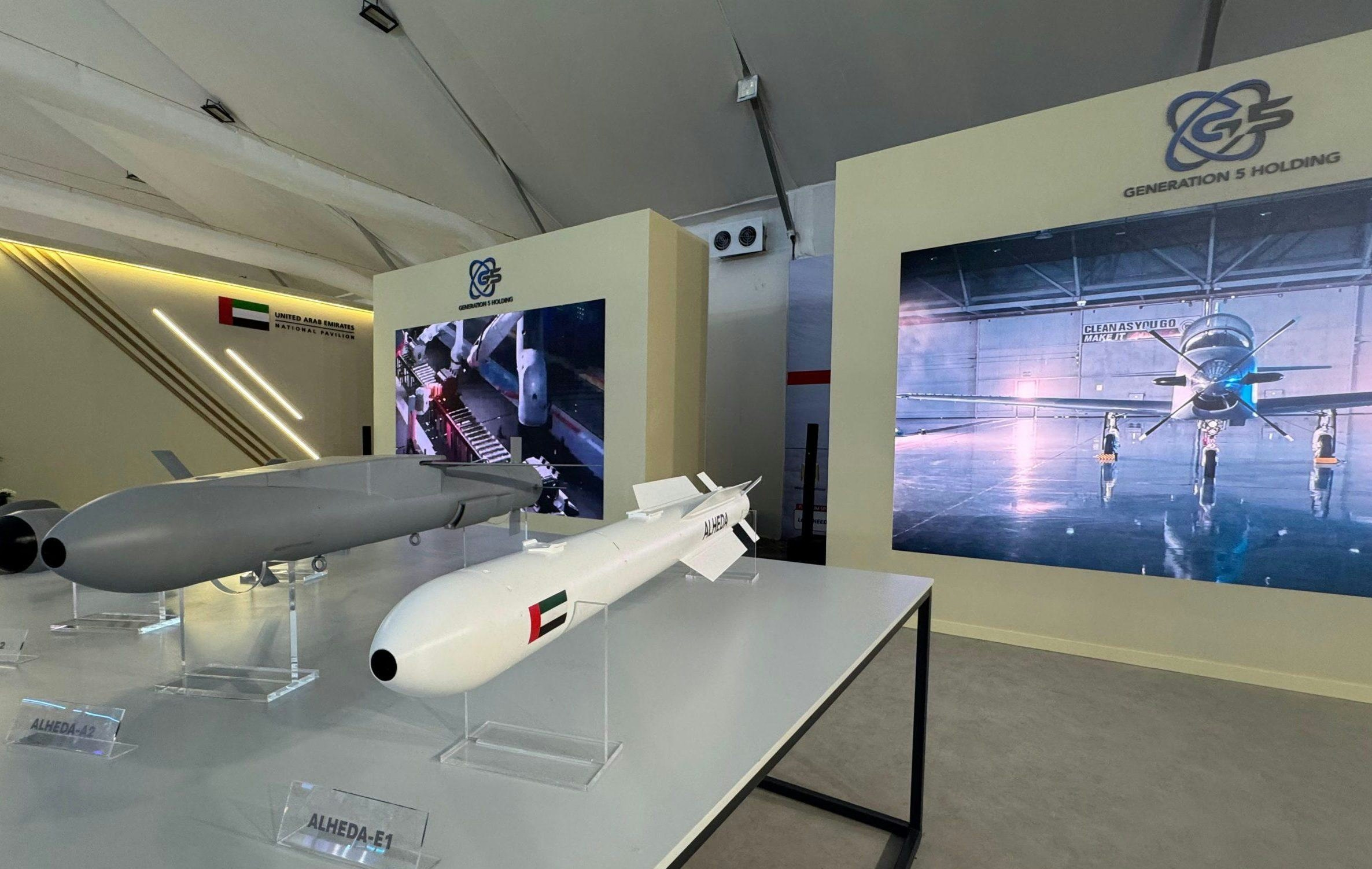
The UAE National Pavilion made a striking impression on the opening day of the El Alamein International Airshow 2026, attracting significant attention from official delegations, industry leaders, and technical experts. Occupying 871 square metres—the largest footprint at the event—the pavilion showcased cutting-edge advancements from Emirati companies across defence, aviation, aerospace, aircraft maintenance, and advanced technology sectors.

Hosted at El Alamein International Airport in Egypt’s Matrouh Governorate, the airshow runs until September 10 and features over 250 exhibitors representing 50 countries within a sprawling 125,000-square-metre exhibition space. The UAE’s participation was highlighted by a strong contingent of leading enterprises, including Edge Group, Generation 5, Abu Dhabi Aviation Group and its affiliates, and Multi Level Group. Organised by Adnec Group, a subsidiary of Modon, with support from the Ministry of Defence and Tawazun Council, the pavilion served as a vital platform for fostering partnerships and promoting international cooperation.

Strategic Engagements and Industry Highlights

The opening day witnessed the signing of a memorandum of understanding between Abu Dhabi Aviation and Air Cairo, underscoring the pavilion’s role in facilitating business growth and collaboration. Senior officials and military delegations from Egypt, Bahrain, and Morocco visited the pavilion, engaging with Emirati exhibitors to explore the nation’s technological achievements in defence and aerospace.

Activity at the pavilion was robust, with 1,037 visitors recorded and 59 meetings held between UAE participants and international delegations, partners, and stakeholders. These included eight meetings led by Edge Group, four by Generation 5, ten by Abu Dhabi Aviation Group, and six by Multi Level Group. Additional discussions focused on promoting forthcoming events such as IDEX and NAVDEX 2027, UMEX and SimTEX, and ISNR.

Exhibitors presented a diverse range of advanced systems and solutions, highlighting the UAE’s expanding industrial and technological capabilities. Displays featured innovations in aviation, aircraft maintenance, repair and overhaul (MRO), autonomous systems, unmanned aviation, and other specialised technologies, reflecting the country’s commitment to advancing its defence and aerospace sectors.

Navigating Intense International Competition

Despite the UAE’s strong showing, the pavilion faces considerable challenges amid fierce global competition. Major powers including the United States, Russia, and China are showcasing advanced military hardware that could potentially overshadow the UAE’s offerings. China’s prominent participation, featuring four aircraft types such as the J-16 fighter and Z-20 helicopter, alongside Russia’s display of cutting-edge systems including the Su-57E fighter and S-71 air-launched drones, have attracted significant attention from attendees and prospective buyers. These high-profile debuts may shift market interest toward the military technologies of these nations, presenting a challenge for the UAE to maintain visibility and competitiveness.

In response, UAE exhibitors are emphasising their technological advancements and seeking to enhance their displays to match the scale and sophistication of their international counterparts. The pavilion’s active engagement and diverse offerings underscore the UAE’s ambition to strengthen its position in regional and global defence and aerospace markets, even as it navigates a highly competitive landscape at El Alamein.

More news
Avianca Obtains $300 Million Financing for Engine Maintenance

Avianca Obtains $300 Million Financing for Engine Maintenance

Avianca Secures $300 Million Financing for Engine Maintenance at GE Aerospace Brazil Avianca has secured up to $300 million in financing to support maintenance, repair, and overhaul (MRO) services for its CFM56 engines at GE Aerospace’s Celma facility in Brazil. The agreement, announced jointly by Avianca, GE Aerospace, and the Brazilian Agency for Management of Guarantee Funds and Guarantees (ABGF), was arranged through Citibank and is backed by export credit insurance from ABGF. This marks a significant milestone as it is the first time a non-Brazilian airline has obtained funding under this framework for aircraft engine maintenance services. Strengthening Brazil’s Aerospace Sector and Avianca’s Fleet Reliability The deal not only facilitates the export of high-value Brazilian aerospace services but also reinforces Brazil’s position as a regional hub for specialized maintenance operations. The country’s skilled workforce, internationally certified facilities, and advanced technical capabilities underpin this growing sector. Avianca, part of the Abra Group alongside Gol and Wamos, emphasized that the financing will enhance its operational flexibility in executing engine maintenance plans, thereby improving the reliability and resilience of its fleet. Mahendra Nair, Group Vice-President of Global Commercial Sales at GE Aerospace, described the arrangement as an innovative, first-of-its-kind financing solution that grants Avianca access to world-class maintenance and overhaul services at the Celma facility. GE Aerospace’s Celma operation serves as the company’s principal aircraft engine overhaul center in Latin America. Approximately 25% of GE Aerospace’s internal engine maintenance work worldwide is conducted through its Brazilian operations, which include five sites located in Petrópolis, Rio de Janeiro, and Três Rios. Financial and Competitive Implications for Avianca While the financing provides Avianca with greater operational flexibility, it also introduces financial challenges. The airline must carefully manage the repayment of the $300 million loan to preserve its financial health and operational efficiency. This move is expected to attract scrutiny from investors, who will likely monitor Avianca’s financial strategy and its increasing reliance on external financing. Furthermore, competitors may respond by pursuing similar financing arrangements or adjusting their pricing and service offerings to maintain market share. The agreement highlights both the opportunities and complexities Avianca faces as it seeks to modernize its fleet and sustain a competitive advantage in the dynamic aviation market of the region.
MSA Safety Introduces A1X WinGrip Vacuum Anchor for Aircraft Maintenance

MSA Safety Introduces A1X WinGrip Vacuum Anchor for Aircraft Maintenance

MSA Safety Launches A1X WinGrip Vacuum Anchor to Advance Aircraft Maintenance Safety PITTSBURGH, Sept. 9, 2026 — MSA Safety has unveiled the A1X™, the newest model in its WinGrip® vacuum anchor series, designed to improve safety, efficiency, and adaptability in aircraft maintenance operations. Building upon the company’s established All-In-One (AIO) WinGrip® system, the A1X offers a lighter, more compact solution tailored to meet the evolving demands of aviation maintenance professionals. Engineering Innovation for Enhanced Maintenance The A1X WinGrip vacuum anchor employs advanced vacuum suction technology to establish secure, non-invasive anchor points on aircraft wings and fuselages. This innovation enables technicians to perform work at height safely without risking damage to delicate aircraft surfaces. Powered by refillable air or gas cylinders, the system operates independently of external air supplies or fixed infrastructure, making it suitable for use in hangars, on aprons, or at remote locations. Weighing only 7 kilograms—35 percent lighter than its predecessor—and featuring a reduced pad diameter of 350 millimeters compared to the previous 480 millimeters, the A1X is significantly more portable and easier to handle. Its redesigned pneumatic system doubles the number of anchor repositionings per cylinder, thereby streamlining workflows and minimizing the need for spare cylinders during critical, time-sensitive tasks. Broader Compatibility and Enhanced Safety Features A notable advancement of the A1X is its expanded compatibility across a wider range of aircraft. The smaller pad diameter allows use on business jets, private planes, and commercial airliners—segments that were previously beyond the reach of WinGrip technology. The A1X has received approval from major manufacturers including Airbus and Boeing, providing maintenance teams with assurance regarding its integration into standard operational procedures. The device is engineered to function without electronic components, allowing safe deployment in environments where fuel vapors may be present, such as during refueling, without any risk of ignition. An integrated audio alarm provides real-time status updates, and the unit maintains its vacuum seal even if airflow is interrupted, ensuring continuous safety during use. Market Considerations and Industry Outlook Despite its technical advancements, the A1X faces challenges within a competitive aircraft maintenance market. Integration with existing maintenance systems may require procedural adjustments, and comprehensive training will be necessary for technicians to fully adapt to the new technology. Some industry professionals accustomed to traditional methods may initially approach the A1X with caution. However, its demonstrated improvements in efficiency and safety have the potential to foster wider acceptance over time. Competitors are expected to respond by enhancing their own fall protection solutions or emphasizing the strengths of their current products. The introduction of the A1X may stimulate a wave of innovation and marketing activity across the sector as companies strive to meet the evolving needs of aviation maintenance. Reliable Performance in Diverse Environments Fully self-contained and free from electronic components, the A1X is designed to operate reliably across a broad range of environmental conditions. Its portability and ease of use position it as a versatile tool for maintenance teams working under varied and challenging circumstances. With the launch of the A1X WinGrip vacuum anchor, MSA Safety seeks to establish a new benchmark for fall protection in aviation maintenance, combining technological innovation with practical usability for technicians worldwide.
Air Cairo Chooses LEAP-1A Engines for New A320neo Fleet

Air Cairo Chooses LEAP-1A Engines for New A320neo Fleet

Air Cairo Chooses LEAP-1A Engines for New A320neo Fleet Strategic Fleet Modernization At the El Alamein International Airshow in Egypt on September 8, 2026, Air Cairo announced its selection of CFM International’s LEAP-1A engines to power its expanding Airbus A320neo fleet. The agreement includes LEAP-1A engines for 15 new aircraft, with options for an additional 15, as well as spare engines. Should all options be exercised, Air Cairo’s fleet could operate more than 60 LEAP-1A engines, marking a significant milestone in the airline’s ongoing modernization strategy. Hussein Sherif, Chairman and CEO of Air Cairo, highlighted the importance of this development, stating that the LEAP-1A engine’s exceptional performance and reliability are critical to the airline’s efforts to modernize its fleet. He emphasized that these engines will enable Air Cairo to enhance operational efficiency while delivering a superior travel experience to its passengers. Established Partnership and Technological Advancements Air Cairo’s relationship with CFM International dates back to 2005, and the airline currently operates 20 A320neo aircraft powered by LEAP-1A engines, alongside 12 A320ceo aircraft equipped with CFM56 engines. Gaël Méheust, President and CEO of CFM International, reaffirmed the strength of this partnership, expressing pride in Air Cairo’s continued confidence and reiterating CFM’s commitment to providing the performance and support the airline expects. CFM’s LEAP engine family has achieved a remarkable milestone, surpassing 10,000 deliveries and setting the record for the fastest production ramp-up in commercial aviation history. The company continues to advance the LEAP fleet with innovations such as a high-pressure turbine durability kit designed to extend engine time on wing, and a reverse bleed system aimed at reducing maintenance requirements. Additionally, CFM’s open maintenance, repair, and overhaul (MRO) ecosystem is intended to maximize engine availability while maintaining competitive ownership costs. Operational and Market Implications As Air Cairo integrates the new LEAP-1A engines into its fleet, it faces several operational and strategic challenges. These include the technical complexities of incorporating advanced engine technology into its existing aircraft, ensuring compliance with increasingly stringent environmental regulations, and managing the financial implications of a substantial fleet investment. This move is expected to enhance Air Cairo’s competitive position within the regional low-cost carrier market, potentially prompting rival airlines to pursue similar engine upgrades or fleet expansions to sustain their market share. Industry analysts observe that Air Cairo’s decision may influence broader market dynamics, encouraging competitors to accelerate their own modernization initiatives. The airline’s focus on operational efficiency and passenger experience underscores the growing significance of advanced engine technology in shaping the future of commercial aviation.
Airbus and Boeing Aircraft Deliveries Exceed 2025 Targets

Airbus and Boeing Aircraft Deliveries Exceed 2025 Targets

Airbus and Boeing Surpass 2025 Aircraft Delivery Targets Amid Industry Challenges Airbus and Boeing have both reported aircraft delivery figures for 2026 that exceed their performance in 2025, demonstrating resilience amid ongoing industry challenges and intensifying competition. Airbus has delivered 475 aircraft year-to-date, up from 434 at the same point last year, while Boeing has delivered 418 aircraft in 2026 compared to 385 in 2025. These figures underscore the robust demand for new aircraft despite operational hurdles faced by both manufacturers. Delivery Trends and Operational Challenges The delivery performance of Airbus and Boeing has been closely scrutinized, particularly as Boeing continues to address quality concerns following the 2024 Alaska Airlines door plug incident. Airbus, meanwhile, has grappled with persistent engine shortages that have affected production schedules. Despite these issues, Airbus’s deliveries increased by 9% by the end of August 2026, reflecting its strong market position. In August 2026, Airbus delivered 57 aircraft to 31 customers, a decline from 67 deliveries in July and slightly below the 61 aircraft delivered in August 2025. Among the August deliveries was an Airbus A330neo to Starlux Airlines on August 10, marking the resumption of A330neo handovers after a pause in June and July. This pause was due to inspections triggered by the discovery of a tool inside the structure of an A330neo during pre-delivery checks, prompting Airbus to examine every aircraft’s horizontal tail plane. Boeing experienced a slowdown in deliveries of certain models, with Dreamliner deliveries falling to four in August 2026, compared to 10 in July and 13 in June. In August 2025, Boeing delivered 57 aircraft, highlighting the recent dip in monthly deliveries. Nonetheless, both manufacturers have succeeded in increasing their overall delivery pace compared to the previous year. Order Activity and Market Competition Order activity remained strong in August. Airbus secured 67 new orders, including a major purchase of 40 A321neos by Shenzhen Airlines and eight A350 freighters from an undisclosed customer. Boeing received orders for 15 aircraft from four undisclosed customers, one of which placed an order for 10 787-9s. The competitive landscape is evolving with the entry of China’s COMAC into the international market. The manufacturer recently completed its first commercial flight with the C919, signaling increased competition for Airbus and Boeing, particularly in the narrowbody segment. In response to these pressures, airlines such as American Airlines are planning to enhance passenger experience by installing seatback screens on their narrowbody aircraft starting in 2028. Broader Industry Context The aviation sector continues to navigate broader challenges, including the ongoing conflict in the Middle East, which has resulted in higher fuel costs and route disruptions. These developments are prompting airlines to reassess long-term strategies and fleet planning decisions. Despite these headwinds and the emergence of new competitors, Airbus and Boeing’s ability to exceed their 2025 delivery targets highlights their resilience and the sustained global demand for new aircraft.
Regent’s Seaglider Completes First Manned Flight

Regent’s Seaglider Completes First Manned Flight

Regent’s Seaglider Completes First Manned Flight, Signaling a New Era in Coastal Transport Regent Craft has achieved a significant milestone with the successful completion of the first manned flight of its prototype Seaglider, a fully electric passenger vessel engineered to travel at high speeds just above the water’s surface. The test, conducted on September 2 with two individuals on board, represents a crucial step as the company prepares to commence production next year, according to Regent co-founder and CEO Billy Thalheimer. Innovative Design and Performance During the 30-second inaugural flight, the Seaglider covered 1,956 feet while maintaining an altitude of 33 feet above the water, collecting what Thalheimer described as “an incredible amount of data.” Designed to eventually carry up to 12 passengers, the vessel aims to offer rapid and sustainable transportation along coastlines and between coastal communities worldwide. The Seaglider operates through three distinct modes. At low speeds, it functions like a conventional boat, floating on the water’s surface. As it departs from the dock, it transitions to hydrofoils, which act as underwater wings to lift the vessel and reduce drag. At higher speeds, the Seaglider rises above the water, cruising between 20 and 50 miles per hour, with the potential to reach speeds up to 180 miles per hour under safe conditions. While airborne, it remains within a wingspan’s height of the surface to exploit the ground effect, a phenomenon that enhances lift and efficiency when flying close to water. Safety and Technological Advancements The vessel incorporates a triple-redundant digital control system alongside backup power supplies to ensure continued operation in the event of battery failure. Regent is also developing a computer vision-based detection system designed to enhance maritime situational awareness for captains, enabling safe navigation even during nighttime operations. The Seaglider can be operated by one or two crew members and is subject to regulation by the U.S. Coast Guard. Challenges and Market Outlook Despite the promising technology, Regent faces several challenges on the path to commercialization. These include the need for further technological refinement, navigating complex regulatory certification processes, and addressing the economic viability of large-scale deployment. The limited infrastructure for alternative fuels, such as hydrogen, presents additional obstacles to widespread adoption. Market responses have been mixed; while some transportation operators are optimistic about the Seaglider’s potential to reduce emissions, others remain concerned about the financial costs and the necessity for new fueling infrastructure. Although direct competitor reactions have not been publicly detailed, the Seaglider’s unique hybrid air-surface flight profile is expected to attract interest from both commercial and defense sectors over time. Regent reports a backlog of orders spanning two years and has secured defense contracts. Its first commercial partner, The Twenty Five—a luxury coastal travel operator—has placed orders for up to 60 vessels to serve routes including New York City to the Hamptons, Boston to Nantucket, and Miami to the Caribbean. Founded in 2020, Regent initially developed a quarter-scale prototype that has since evolved into a separate autonomous drone product for military applications. As the company advances toward full-scale production, the Seaglider’s development will be closely monitored by industry stakeholders and regulatory authorities alike.
Ontic Acquires SIRS Navigation

Ontic Acquires SIRS Navigation

Ontic Acquires SIRS Navigation, Enhancing Aviation Capabilities Amid Industry Challenges Ontic has completed the acquisition of SIRS Navigation, a Kent-based specialist known for its precision standby magnetic compasses used extensively in the global aviation industry. With a heritage exceeding six decades, SIRS Navigation’s products are installed across a broad spectrum of commercial and business aviation platforms, including both fixed-wing aircraft and rotorcraft. Their compasses are present in tens of thousands of aircraft worldwide, supplied directly to original equipment manufacturers for new production lines as well as to operators and distributors through the aftermarket. Established Expertise and Global Support SIRS Navigation maintains a 24/7 global support network, providing comprehensive logistical and technical assistance. The company’s compass designs, originally acquired from GE Aerospace, have been continuously refined in-house. Additionally, SIRS Navigation offers bespoke solutions tailored to meet specific customer and aircraft requirements, reinforcing its reputation for precision and reliability. Ontic’s acquisition reflects its strategic focus on investing in specialist aerospace firms with established intellectual property and enduring positions across various aircraft platforms. JC Gallagher, Ontic’s newly appointed CEO, emphasized SIRS Navigation’s “market-leading position” and strong industry standing, noting that the acquisition aims to ensure continuity and long-term commitment to customers while providing a stable environment for the business to flourish. Integration Challenges and Market Implications Despite the strategic benefits, Ontic faces several challenges in integrating SIRS Navigation into its operations. Regulatory compliance remains a critical concern, particularly given the increasing complexity of the space technology sector. Ontic must also manage the operational integration carefully to align with its existing business model, all while contending with intensified competition from established industry players such as L3Harris Technologies. The acquisition has attracted close attention from market observers and investors, who are evaluating the strategic fit and financial impact on Ontic. This move may prompt competitors to accelerate efforts to secure government contracts and partnerships, especially as agencies like the U.S. Space Force seek to diversify their supplier base and reduce reliance on single vendors for critical space and aviation technologies. As Ontic advances with the integration of SIRS Navigation, the company intends to leverage the acquired expertise and product portfolio to bolster its position in the global aerospace market, while addressing the operational and competitive challenges inherent in such expansion.
IATA Says P&W Canada’s Contract Changes Could Improve Engine Aftermarket

IATA Says P&W Canada’s Contract Changes Could Improve Engine Aftermarket

IATA Highlights Potential Benefits of Pratt & Whitney Canada’s Contract Revisions for Engine Aftermarket The International Air Transport Association (IATA) has expressed support for recent contractual amendments introduced by Pratt & Whitney Canada (P&WC), viewing them as a positive step toward enhancing competition in the market for used engine components. These revisions eliminate previous restrictions imposed on maintenance facilities within P&WC’s network, which had limited independent suppliers’ access to used engine parts and associated services. The changes specifically affect used components for P&WC’s PT6 and PW100-series turboprop engines. However, they do not extend to Pratt & Whitney’s larger commercial jet engines nor address the use of regulator-approved alternative parts and repairs. Addressing Supply Chain and Maintenance Challenges This development arrives amid ongoing supply chain difficulties confronting airlines, including persistent shortages of parts and constrained maintenance capacity. A joint study by IATA and Oliver Wyman projects that these challenges will increase engine leasing and maintenance expenses by approximately $5.7 billion in 2025. Compounding the issue are delays in aircraft deliveries from major manufacturers such as Boeing and Airbus, which have compelled airlines to retain older aircraft in service for longer periods. This extension has driven a significant surge in maintenance expenditures, with six leading U.S. carriers reporting a 68% increase in engine labor, repairs, and materials costs between 2019 and 2025. IATA emphasizes that fostering greater competition and expanding options for parts and repairs are critical to mitigating these pressures. The recent contractual changes by P&WC complement ongoing regulatory scrutiny, including the European Commission Directorate-General for Competition’s investigation into P&WC’s practices. These developments build on prior progress, such as the renewal of IATA’s agreement with CFM International, which covers CFM’s commercial engine portfolio. That agreement similarly seeks to promote competition by enabling independent maintenance providers to participate fully and supporting the use of all regulator-approved parts and repair options. Industry Response and Future Outlook The shifting dynamics in the engine aftermarket are prompting responses from major manufacturers and competitors, including GE Aerospace, Safran, and RTX. These companies are anticipated to increase their focus on engine overhauls and aftermarket services as airlines demand more flexible and cost-effective maintenance solutions. As the aviation industry contends with rising maintenance costs and operational complexities, IATA underscores the importance of cultivating a more competitive aftermarket environment. Measures such as P&WC’s contract revisions are viewed as vital to helping airlines manage expenses while maintaining fleet reliability.
August 2026 Parts Data Shows GE90 Engine Controls Tighten Before Maintenance Season

August 2026 Parts Data Shows GE90 Engine Controls Tighten Before Maintenance Season

August 2026 Parts Data Reveals Tightening Supply of GE90 Engine Controls Ahead of Maintenance Season August 2026 aftermarket parts data from Locatory.com highlights a notable tightening in the availability of GE90 engine control components, coinciding with the industry’s preparation for the upcoming heavy maintenance season. The data indicates that standard hardware—such as fasteners, seals, rivets, and gaskets—continues to dominate demand, accounting for 44.9% of the Top 50 Most Searched items. This trend reflects the sustained high utilization of narrowbody fleets, particularly the Airbus A320 family. Airframe and landing gear components for the A320 also remain prominent, representing 24.5% of searches. Persistent Scarcity in GE90 Engine Controls The most significant supply constraint is concentrated on GE90 engine controls for the Boeing 777. Engine components constitute 37.2% of the Hardest-to-Find list, with GE90 parts comprising approximately one-third of the Top 50. Notably, three variants of the GE90 FADEC units (part numbers 105E70898G1, G2, and G3), the HMU control assembly (PN: 1693M75P08), and a temperature/pressure sensor (PN: 0154GF9) have consistently appeared on the Hardest-to-Find list for four consecutive months, from May through August. This ongoing shortage emerges amid heightened industry scrutiny of maintenance procedures, intensified by recent incidents such as the Qantas A380 event involving a maintenance lamp left in the wing. In response, airlines are placing increased emphasis on engine control reliability and adherence to updated maintenance protocols. This focus is driving elevated demand for GE90 engine upgrades and related maintenance services. Market Implications and Broader Aftermarket Trends The August data further reveals that standard hardware items, including generic consumables (e.g., PN: CR3522-5-03, S700N1518) and Airbus-specific parts (e.g., PN: FA261-51100-000), continue to dominate search volumes. Airframe and landing gear components for the A320 family, particularly landing gear assemblies and brakes, account for nearly a quarter of searches. Engine parts, including CFM56-5B bolts for A320s and B757 ignition plugs, represent 16.3% of the most-searched items. The Hardest-to-Find list underscores the concentration of scarcity around GE90 engine controls, which includes not only FADEC units and HMU assemblies but also IDG check valve assemblies, fuel-oil cooler lube servo assemblies, oil-fuel heat exchangers, and various components related to IDG air-oil cooler interfaces and HMU assemblies. This sustained demand for GE90 engine controls is prompting strategic responses across the market. Airlines are actively pursuing upgrades and enhanced maintenance services to ensure compliance with evolving control protocols. Meanwhile, competitors are adjusting their supply strategies: CFM International is reportedly accelerating deliveries of Leap engine upgrade kits, and GE Aerospace is prioritizing the fulfillment of final CF6-80C2 engine orders ahead of the program’s planned conclusion in 2027. Overall, the August 2026 data reflects two distinct aftermarket dynamics. There is steady demand for standard hardware and A320-family components to support high-utilization narrowbody fleets, alongside a deepening supply challenge for GE90 engine controls as the maintenance season approaches and regulatory scrutiny intensifies.
Japanese Companies Expand Investment in Aircraft Leasing

Japanese Companies Expand Investment in Aircraft Leasing

Japanese Companies Expand Investment in Aircraft Leasing Japanese corporations are significantly increasing their investments in aircraft leasing operators, responding to a surge in global travel demand that has prompted airlines to seek additional aircraft. Leasing provides carriers with a strategic means to manage operational costs, particularly amid rising jet fuel prices, which continue to pressure airline profitability. Major Acquisitions and Strategic Growth At the forefront of this expansion is the trading house Sumitomo, which in April participated in a consortium to acquire the U.S.-based Air Lease Corporation for $7.4 billion. This acquisition elevates Sumitomo’s aircraft leasing business to the ownership and servicing of approximately 1,900 aircraft, positioning it as the world’s second-largest fleet operator. Sumitomo’s President and CEO, Ueno Shingo, highlighted the critical role of scale in addressing growing market demand. Speaking to NHK, Ueno stated, “The acquisition sharply expands the customer base and deepens relations with aircraft makers. Becoming the industry leader would allow us to expand even more. Our aim is to further strengthen our competitiveness.” The company has set an ambitious target to increase profits in its aircraft leasing division by over 20 percent by fiscal year 2030. Similarly, Japanese trading company Itochu has intensified its involvement in the sector, announcing in August a nearly $1.95 billion investment in the U.S.-based Aviation Capital Group. This move underscores a broader trend among Japanese firms to secure a stronger foothold in the global aircraft leasing market. Challenges and Competitive Dynamics Despite the promising growth prospects, Japanese companies face considerable challenges. Navigating complex regulatory frameworks across multiple jurisdictions remains a significant hurdle, as does managing currency fluctuations that can adversely affect profitability. Additionally, the inherently high capital costs associated with aircraft leasing demand careful financial management. The influx of Japanese investment is also reshaping the competitive landscape, intensifying rivalry in the global aircraft leasing market. This heightened competition may exert downward pressure on leasing rates, potentially compressing profit margins. In response, competitors are pursuing their own strategic initiatives. For instance, ORIX recently acquired AerFin to broaden its service offerings, reflecting a wider industry trend toward consolidation and partnership as companies strive to enhance their leasing portfolios. As Japanese firms endeavor to establish themselves as dominant players in aircraft leasing, their capacity to effectively manage these risks and adapt to a rapidly evolving market environment will be pivotal in sustaining long-term growth and profitability.
Air Traffic Control Disruptions Impact India-UK Flights

Air Traffic Control Disruptions Impact India-UK Flights

Air Traffic Control Disruptions Severely Impact India-UK Flights Widespread Cancellations and Diversions Following UK Air Traffic Control Failure Flights between India and the United Kingdom experienced significant disruptions on Tuesday night due to a major breakdown in the UK’s air traffic control system. The failure, attributed to a software glitch within the UK’s National Air Traffic Services (NATS), affected over 2,000 flights worldwide. This technical malfunction led to extensive delays and cancellations at key UK airports, including Heathrow, Gatwick, Manchester, and Stansted, severely impacting thousands of passengers. The disruption was particularly pronounced on routes operated by Air India, IndiGo, Emirates, and British Airways connecting India and the UK. Several Air India flights departing from Mumbai, Bengaluru, and Delhi to London were diverted to alternative airports in neighboring countries. For instance, flight AI 2017 from Delhi to London Heathrow was rerouted to Paris, while AI 2015 was diverted to Vienna. Similarly, flight AI 131 from Mumbai landed in Zurich, and the Bengaluru-London service was also redirected to Vienna. These diversions resulted in the cancellation of return flights on Wednesday, leaving many passengers stranded. Broader Impact on International Airlines and Recovery Efforts The technical failure in the UK’s flight processing system led to the cancellation of more than 400 flights, affecting not only Indian carriers but also major international airlines such as British Airways, EasyJet, KLM, and Lufthansa. The ripple effects of the disruption are expected to continue, with hundreds of flights likely to face delays as airlines work to restore normal schedules and reposition aircraft and crew. This incident also highlighted the dependence of Indian airlines on Gulf hubs for international connectivity. Past geopolitical tensions in the region have similarly caused significant declines in passenger traffic to and from India, underscoring the vulnerability of global travel routes to systemic disruptions. Although some Air India flights, including a service from Ahmedabad to Birmingham and two Delhi-London flights, managed to reach their destinations before the system failure, the recovery process has been slower than anticipated. While NATS has addressed the immediate technical issue, residual delays and cancellations are expected to persist for several days. The widespread disruption has underscored the critical importance of resilient air traffic control infrastructure in maintaining the stability of global air travel networks.
line










