
Orchestrer les insights d’IA pour les transformer en actions

Tendances
Categories
UK Commits £7.3 Million to Advance Zero-Emission Aviation and Flying Taxis
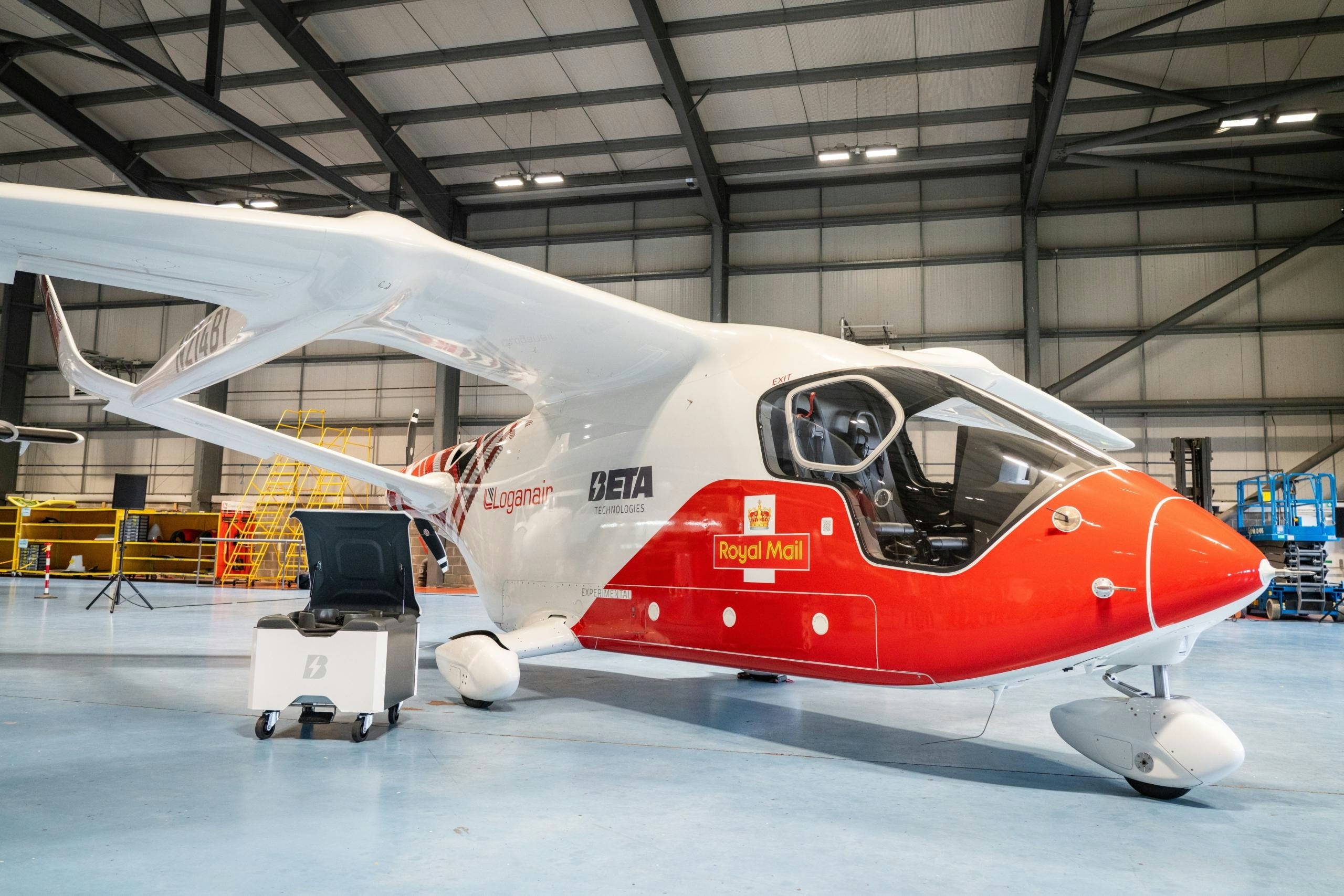
UK Commits £7.3 Million to Advance Zero-Emission Aviation and Flying Taxis
The UK government has announced a £7.3 million investment aimed at accelerating the development of zero-emission aviation infrastructure. This funding targets critical areas such as electric charging networks, hydrogen storage, and ground operations necessary for integrating electric and hydrogen-powered aircraft into commercial airports. Unveiled by the Department for Transport, the investment supports eight British companies and forms part of a broader £43 million package designed to foster next-generation aviation technologies, create skilled jobs, and advance the UK’s commitment to achieving net-zero carbon emissions by 2050.
Advancing Urban Air Mobility and Flying Taxis
A substantial portion of the funding is dedicated to promoting urban air mobility, with a particular focus on the commercialisation of electric “flying taxi” services. Companies including Vertical Aerospace and Beta Technology have been awarded up to £3.2 million to demonstrate the safe operation of electric vertical takeoff and landing (eVTOL) aircraft within standard commercial airport environments. This initiative comes amid rapid growth projections for the global air taxi market, which faces significant operational challenges such as integrating these new aircraft into existing urban infrastructure and ensuring safety in commercial operations.
Vertical Aerospace, a prominent player in the eVTOL sector alongside international competitors like Joby Aviation, recently revealed a six-seater aircraft and secured new manufacturing contracts in the UK. The company aims to launch regional passenger services by 2029. While Joby Aviation focuses on real-world testing, Vertical Aerospace benefits from additional government support, underscoring the competitive dynamics within this emerging market.
Research conducted by the University of Birmingham highlights the potential advantages of flying taxis, including enhanced regional transport connectivity, reduced travel times, and positive economic impacts on local communities.
Expanding Hydrogen Infrastructure and Enhancing Safety Protocols
The funding package also supports the expansion of hydrogen infrastructure within the aviation sector. The UK Civil Aviation Authority (CAA), in partnership with industry leaders such as Rolls-Royce, EasyJet, and Exeter Airport, has published new safety and operational guidelines for the integration of hydrogen fuel in aviation. This effort is part of the government-funded Hydrogen Challenge. An additional £2.5 million will be allocated by March 2027 to decarbonise airport ground vehicles and to test hydrogen-powered jet engines for commercial passenger aircraft.
Despite these advancements, the transition to zero-emission flights faces considerable challenges. Regulatory barriers and competition from established aviation sectors remain significant obstacles as the UK strives to position itself as a leader in electric and hydrogen-powered flight.
Broader Strategy for Net-Zero Aviation
The £7.3 million grant is a component of a comprehensive government strategy to transform the aviation industry. This includes the Aerospace Technology Institute (ATI) Programme, which will invest £2.3 billion over the next decade to advance aircraft technologies, including artificial intelligence-driven flight optimisation. Additionally, the Low-Carbon Fuels Fund, with a budget of £219 million, aims to scale up Sustainable Aviation Fuel (SAF) production, targeting £5 billion in economic value and the creation of 15,000 jobs by 2050. The government is also investing £46.5 million to support the development of commercial delivery drones and emergency medical logistics.
Transport Secretary Heidi Alexander emphasised the significance of these initiatives, stating, “By powering up electric and hydrogen-powered planes, we’re bringing passengers closer to the flights of the future—while creating skilled jobs, backing UK businesses and spreading economic growth to all four corners of the country.”
As the UK intensifies its investment in zero-emission aviation, the sector confronts both promising opportunities and complex challenges in the global effort to redefine air travel for a sustainable future.

Etihad and Swissport Extend Global Partnership
Sepehran Airlines B737 Returns to Mashhad After Tyre and Engine Issues

Etihad Deploys Widebody Fleet to Meet Strong Demand

Korean Air Finalizes $36.2 Billion Deal with Boeing
Australia’s RFDS Queensland Section Orders Six King Air 260Cs
Korean Air Finalizes Order for 103 Boeing Jets and Engines

Embraer E195-E2 Features Distinctive Engine Placement Among Regional Jets

What Passengers Can Expect on Boeing’s New 777X Jet
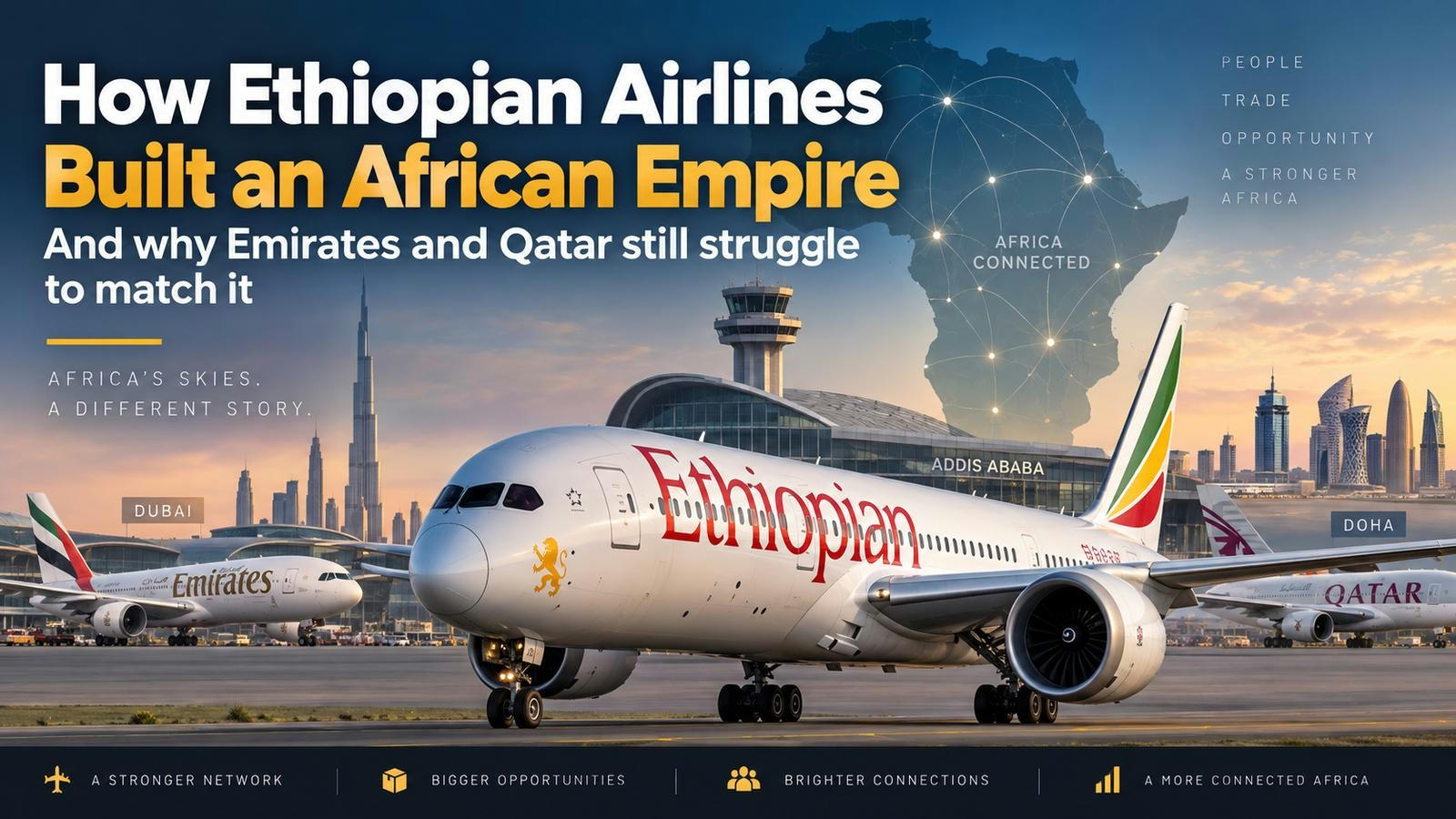
How Ethiopian Airlines Became Africa’s Leading Carrier Amid Gulf Competition

Joby Aviation Extends Autonomous Flight Capabilities with Cross-Country Tour
