
Orchestrer les insights d’IA pour les transformer en actions

Tendances
Categories
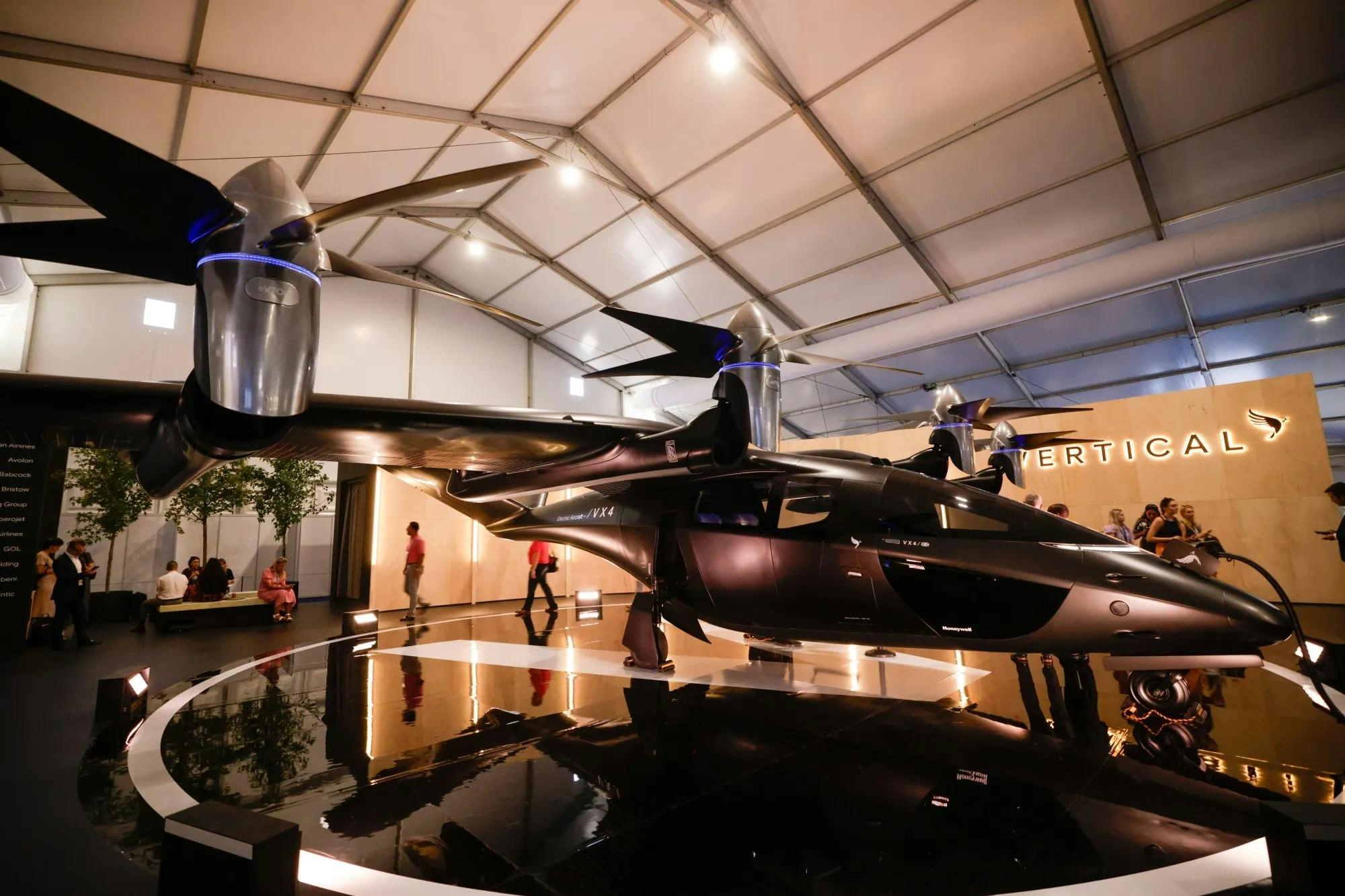
Vertical Aerospace Advances Air Taxi Program with New UK Flight Approval
Vertical Aerospace Advances Air Taxi Program with New UK Flight Approval
Vertical Aerospace (NYSE: EVTL) has achieved a pivotal milestone in the development of its VX4 electric aircraft by securing a Permit to Fly from the UK Civil Aviation Authority (CAA). This authorization permits the company to commence the critical transition-testing phase, during which pilots will assess the VX4’s capability to transition from vertical lift to wing-supported flight—a fundamental requirement for electric air taxis.
The inaugural flight of this phase occurred on November 13, with test pilot Paul Stone at the controls. This milestone enables Vertical Aerospace to rigorously evaluate the tiltrotor performance of the VX4 in real-world, piloted conditions. The transition-testing phase follows earlier stages that successfully validated the aircraft’s hover, thrustborne lift, and fixed-wing flight capabilities.
Vertical’s engineering teams have conducted extensive simulations, ground tests, and preliminary flights, having met over 200 Minimum Safe Aircraft requirements. The company has also submitted comprehensive technical documentation to support ongoing certification efforts with both the UK CAA and the European Union Aviation Safety Agency (EASA). CEO Stuart Simpson described this phase as a “defining moment,” highlighting the demonstration of core system reliability under stringent regulatory scrutiny. He emphasized that the current phase will showcase the VX4’s tiltrotor capabilities and further solidify its readiness for commercial certification. Vertical recently unveiled new visuals, including an animation of the transition maneuver and updated cabin design features for its certification aircraft. Full transition testing is anticipated to conclude by the end of 2025.
Competitive and Market Landscape
Vertical Aerospace’s progress unfolds amid intensifying competition within the advanced air mobility sector. Competitors such as Joby Aviation have recently advanced their own programs, including the flight of a hybrid-electric demonstrator and a strategic emphasis on defense applications. These developments may accelerate testing and certification timelines across the industry, increasing pressure on Vertical to maintain its technological leadership and operational readiness.
Despite these challenges, Vertical’s latest quarterly update underscores sustained momentum in its testing and development roadmap. The company projects a clear path toward type certification by 2028, with approximately $700 million in remaining costs as it navigates regulatory processes in the UK and Europe. Vertical is managing expenditures in line with its 2025 net operating cash outflow guidance of $110 million to $125 million and currently holds approximately £89 million ($117 million) in cash, expected to support operations into mid-2026. The company anticipates around £175 million ($235 million) in operating cash outflows over the next year as it advances prototype testing and certification aircraft development.
Market reactions to Vertical’s progress have been mixed. Shares of Vertical Aerospace declined 2.79% to $4.18 at the time of publication on Thursday, according to Benzinga Pro data. As the advanced air mobility sector continues to evolve, investor interest and competitive dynamics are expected to intensify, shaping the pace and direction of future developments in electric air taxi technology.

Etihad Airways Suspends Airbus A380 Flights on Key Route

Aditya Birla Group Seeks Approval for Aircraft Leasing in GIFT City

Qatar Airways Highlights Innovation and Connectivity at Arabian Travel Market 2026

Hong Kong's Five-Year Plan Includes Andrew Fan's Aircraft Parts Processing Hub Proposal

ACIA Aero Leasing Delivers ATR72-600 to Air Nostrum

RTX Appoints Jill Albertelli as Head of Pratt & Whitney

TAT Technologies Joins Beyond Aero Hydrogen Aircraft Program

AURAK Study Highlights Barriers to Air Taxi Adoption in Emerging Economies

Xiamen Air Selects Altitude for 787 Maintenance at Heathrow

Etihad and Swissport Extend Global Partnership
