
Orchestrer les insights d’IA pour les transformer en actions

Tendances
Categories
Volaris Delays Fleet Expansion Pending Availability of GTF Advantage Engines
Volaris Delays Fleet Expansion Pending Availability of GTF Advantage Engines
Strategic Shift in Fleet Management
Mexican low-cost carrier Volaris has announced a significant revision to its fleet expansion plans, driven by ongoing groundings of Airbus A320neo-family aircraft and escalating fuel costs. The airline is adopting a more streamlined and efficient fleet strategy by deferring new Airbus deliveries into the next decade. This approach aims to reduce lease liabilities and enhance operational efficiency amid current market challenges.
During the company’s April 28 earnings call, CEO Enrique Beltranena outlined the planned fleet adjustments. He stated that the contractual fleet size is expected to decrease from 155 aircraft in December 2025 to approximately 137 by the end of 2027. However, the productive, revenue-generating fleet will grow to around 125 aircraft, up from 112 at the close of 2025. Beltranena highlighted that this transition is designed to unlock significant efficiency gains for the airline.
In practical terms, Volaris has already sold four Airbus aircraft scheduled for delivery to a lessor and postponed the arrival of seven aircraft originally slated for 2027, along with three more planned for 2028. These deliveries have been rescheduled for 2030 or later. The airline projects that this fleet reduction initiative will reduce total lease liabilities by $360 million and yield approximately $50 million in annual savings.
Impact of GTF Advantage Engine Availability
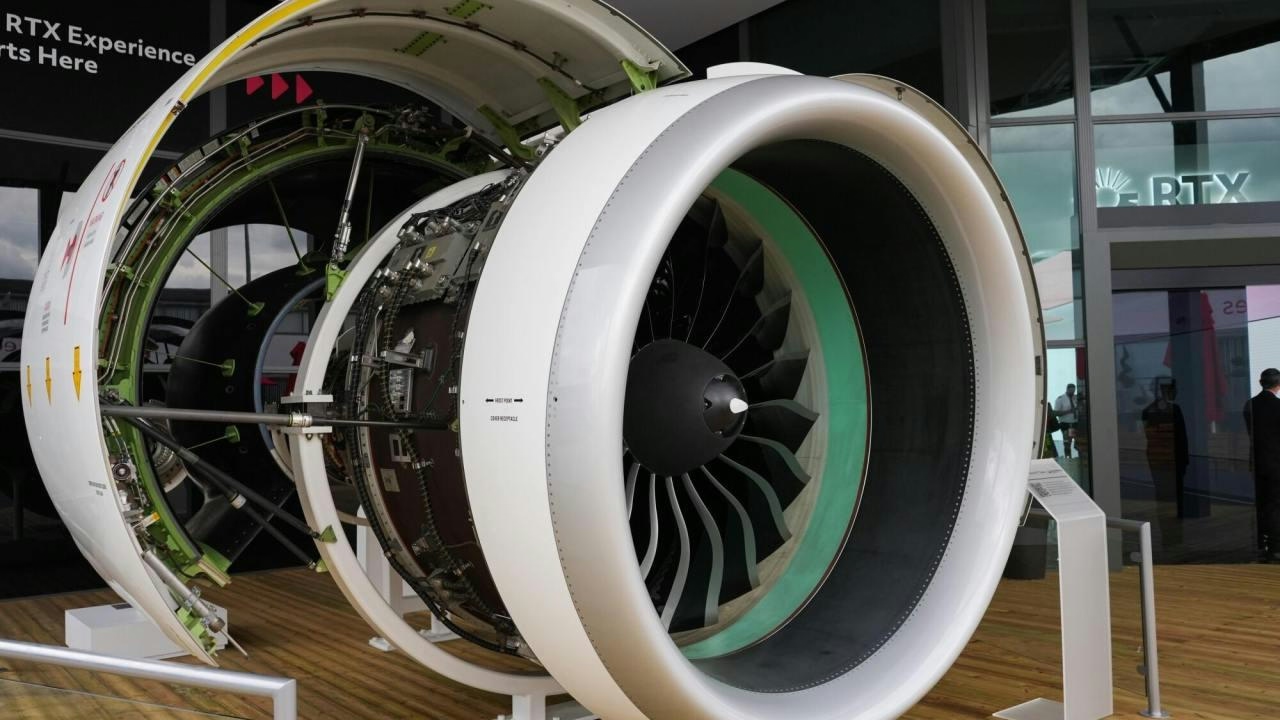
A critical factor influencing Volaris’s decision is the delayed availability of Pratt & Whitney’s GTF Advantage engines, which are integral to the airline’s A320neo-family jets. Although these engines have received certification from both the Federal Aviation Administration and the European Union Aviation Safety Agency, Pratt & Whitney continues to grapple with production challenges and ongoing quality inspections following a manufacturing issue identified in July 2023. Consequently, Volaris has paused incremental aircraft investments until the new engines become available.
Beltranena emphasized the importance of this development, noting, “Most 2027 and 2028 deliveries have been rescheduled, and no incremental aircraft investments will be made until the GTF Advantage engines enter service. Ultimately, the most powerful value-creation lever over the next several years is restoring fleet productivity and reducing aircraft ownership costs.”
The forthcoming GTF Advantage engines are expected to incorporate more durable components, including double-walled structures and advanced cooling systems designed to mitigate wear caused by high operating temperatures. Pratt & Whitney plans to gradually ramp up deliveries, aiming to supply only Advantage turbofans by 2028.
Operational Challenges and Future Outlook
The grounding of A320neo-family jets has had a pronounced impact on Volaris, which began the year with 41 grounded aircraft out of a total fleet of 155. By the end of the first quarter, this number had decreased to 32, aided by increased maintenance capacity and accelerated production of critical engine components. Parent company RTX reports a 15% reduction in grounded jets across the industry.
Volaris’s leadership anticipates that returning more A320neo-family jets to service will enhance fleet efficiency and help mitigate the effects of rising fuel prices. Beltranena noted that shifting every 10 aircraft from older A320ceo models to A320neos generates approximately $2 million in monthly fuel savings at current price levels.
Looking ahead, Volaris expects that by year-end, 70% of its operating fleet will consist of newer, more fuel-efficient Airbus narrowbodies. The airline’s decision to delay fleet growth until the GTF Advantage engines become widely available reflects broader industry concerns regarding engine reliability, maintenance costs, and the necessity for operational resilience amid ongoing supply chain disruptions.

Etihad Airways Suspends Airbus A380 Flights on Key Route

Aditya Birla Group Seeks Approval for Aircraft Leasing in GIFT City

Qatar Airways Highlights Innovation and Connectivity at Arabian Travel Market 2026

Hong Kong's Five-Year Plan Includes Andrew Fan's Aircraft Parts Processing Hub Proposal

ACIA Aero Leasing Delivers ATR72-600 to Air Nostrum

RTX Appoints Jill Albertelli as Head of Pratt & Whitney

TAT Technologies Joins Beyond Aero Hydrogen Aircraft Program

AURAK Study Highlights Barriers to Air Taxi Adoption in Emerging Economies

Xiamen Air Selects Altitude for 787 Maintenance at Heathrow

Etihad and Swissport Extend Global Partnership
