
Orchestrer les insights d’IA pour les transformer en actions

Tendances
Categories
Volaris Sees Long-Term Impact From GTF Engine Issues
Volaris Faces Prolonged Impact from GTF Engine Issues Amid Industry Challenges
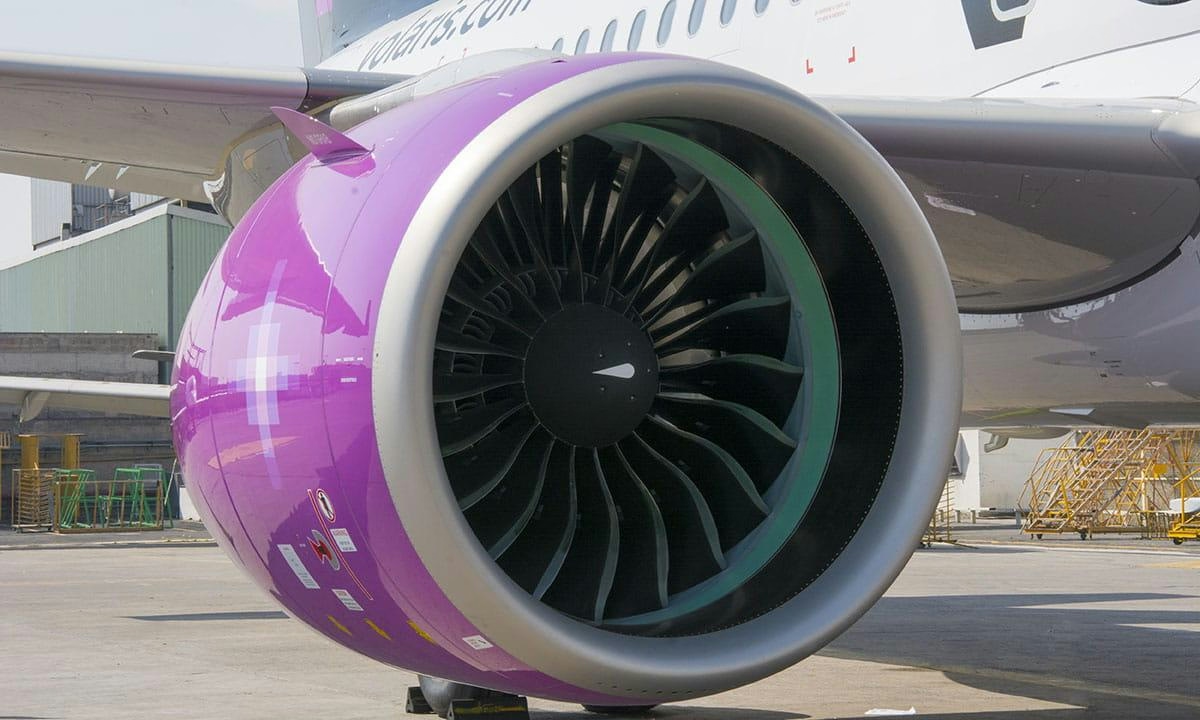
Volaris is bracing for an extended period of operational disruption as inspections of Pratt & Whitney geared turbofan (GTF) engines are expected to continue for at least two more years. This ongoing issue has resulted in 25 aircraft remaining grounded, complicating capacity planning not only for Volaris but across the airline industry. The persistent engine problems underscore the strategic rationale behind Volaris’s proposed holding company with Viva, as both carriers contend with engine-related disruptions, volatile fuel prices, and intensified regulatory scrutiny surrounding their planned merger.
Operational Challenges and Passenger Traffic Stability
Enrique Beltranena, president and CEO of Volaris, confirmed that the airline is still managing the repercussions of the global Pratt & Whitney engine recall, which has compelled airlines worldwide to withdraw aircraft from service for inspections and maintenance. Speaking at Felipe Ángeles International Airport, Beltranena stated, “The review of the Pratt & Whitney engines affecting the Volaris fleet will continue for at least two more years.” He added that while 25 aircraft remain grounded, this number is expected to decrease toward the end of 2026 as engines are cleared to return to service.
Despite the reduced fleet capacity, Volaris has managed to maintain stable passenger traffic. Beltranena highlighted the airline’s efforts to mitigate the impact through strategic pricing, product diversification, and the introduction of new routes connecting key markets. Load factors remain strong, with domestic routes averaging between 82% and 83% and international services between 88% and 89%, enabling Volaris to sustain passenger volumes amid capacity constraints.
More than 40% of Volaris’s routes operate without direct competition, a position the CEO attributes to close collaboration with federal and state tourism authorities as well as regional governments. “We have maintained our promise to keep flying and remain present despite difficult circumstances and a very challenging year. Our traffic volume has remained stable, and we believe it can be sustained and improve somewhat toward the World Cup,” Beltranena added.
Industry Outlook and Broader Challenges
These developments come as Mexico’s airline sector prepares for a surge in travel demand ahead of the 2026 FIFA World Cup. Forecasts from Monex project passenger traffic growth in Mexico averaging 5.9% in 2026, with Volaris expected to grow by 6.9%, Viva by 6.1%, and Aeroméxico by 4.4%. Analysts anticipate that low-cost carriers will capture a significant share of domestic demand through route optimization and selective capacity deployment, while Aeroméxico is positioned to benefit from international travelers and corporate delegations attending the tournament. However, recent booking trends suggest uneven demand, with declines in reservations in Mexico City and Guadalajara compared to 2025 levels.
The engine inspection challenges are compounded by broader industry pressures, including rising fuel costs driven by geopolitical tensions in the Middle East. In April, Volaris withdrew its full-year 2026 financial guidance, citing limited visibility on fuel prices, currency fluctuations, and demand trends. Industry leaders have expressed concerns about the longevity of engine supply constraints. United Airlines CEO Scott Kirby warned that these issues could persist for at least five more years, potentially increasing operational costs and delaying fleet expansion. Competitors are responding with capacity reductions; LATAM CEO Roberto Alvo has indicated the possibility of further cuts if fuel prices remain high. Swiss International Air Lines recently retired two A220-100 aircraft to support its larger A220-300 fleet, illustrating the widespread impact of engine problems across the sector.
Despite these challenges, Volaris remains focused on maintaining stable operations and positioning itself for future growth as the airline industry adapts to ongoing disruptions.

Etihad Airways Suspends Airbus A380 Flights on Key Route

Aditya Birla Group Seeks Approval for Aircraft Leasing in GIFT City

Qatar Airways Highlights Innovation and Connectivity at Arabian Travel Market 2026

Hong Kong's Five-Year Plan Includes Andrew Fan's Aircraft Parts Processing Hub Proposal

ACIA Aero Leasing Delivers ATR72-600 to Air Nostrum

RTX Appoints Jill Albertelli as Head of Pratt & Whitney

TAT Technologies Joins Beyond Aero Hydrogen Aircraft Program

AURAK Study Highlights Barriers to Air Taxi Adoption in Emerging Economies

Xiamen Air Selects Altitude for 787 Maintenance at Heathrow

Etihad and Swissport Extend Global Partnership
