
Orchestrer les insights d’IA pour les transformer en actions

Tendances
Categories
Which Airline First Introduced Lie-Flat Business Class Seats?
The Introduction of Lie-Flat Business Class Seats
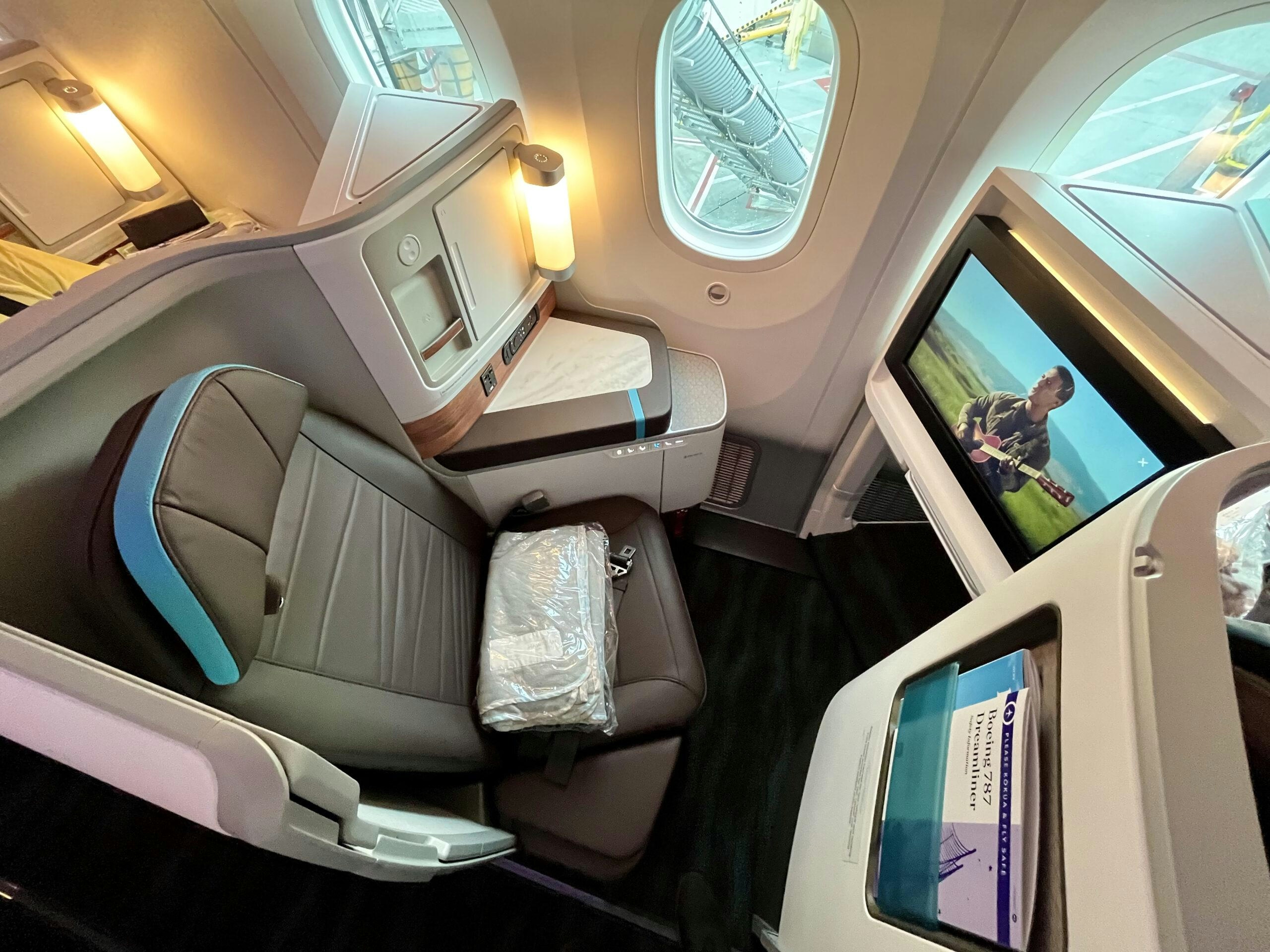
In the year 2000, British Airways transformed premium air travel by unveiling the world’s first lie-flat seat in business class. This innovation debuted in the airline’s Club World cabin on its flagship London Heathrow (LHR) to New York JFK route. The introduction of lie-flat seating established a new standard for comfort and privacy, quickly altering the expectations of business class passengers globally.
The immediate impact of this development was profound. Leading international carriers such as Cathay Pacific and Singapore Airlines soon introduced their own lie-flat seat configurations. By 2003, Virgin Atlantic had incorporated fully flat beds into its Upper Class cabins, and by the end of the decade, lie-flat seating had become the norm for long-haul business class travel. The evolution of premium cabins continued beyond flat beds, with modern offerings now featuring sliding privacy doors, enhanced bedding, and gourmet dining options, underscoring the industry’s ongoing pursuit of luxury and exclusivity.
Expansion and Industry-Wide Adoption
The adoption of lie-flat seats was not confined to Europe and Asia. In the United States, United Airlines became the first domestic carrier to offer lie-flat business class seats, setting a new benchmark for transcontinental and international flights. Delta Air Lines followed with its Delta One product, providing lie-flat comfort at more accessible price points. This competitive environment encouraged further innovation, with airlines like JetBlue entering the premium market by offering basic first-class fares and unbundled services designed to appeal to a wider range of travelers seeking flexibility and value.
These advancements have compelled airlines worldwide to reconsider their premium travel strategies. Many carriers have adjusted seating configurations and pricing models to balance the increasing demand for luxury with cost management. Consequently, the market now features a diverse spectrum of premium options, ranging from fully enclosed suites to more affordable lie-flat seats, reflecting the evolving nature of business travel.
British Airways’ Strategic Focus on Premium Travel
British Airways’ pioneering role in introducing lie-flat business class seats is closely linked to its strategic emphasis on premium cabins, particularly at its London Heathrow hub. The airline’s business model capitalizes on London’s strong origin-and-destination demand and a high-yield corporate market, especially on transatlantic routes. Heathrow’s capacity constraints, characterized by scarce and costly slots, further incentivize British Airways to maximize revenue per flight by prioritizing premium seating and frequent services over sheer passenger volume.
This premium-focused strategy is evident in the airline’s fleet configurations. For instance, British Airways’ Boeing 777-300ER aircraft, which typically accommodate 392 passengers in a two-class layout, are configured to carry just 256 passengers, with nearly half of the seats allocated to premium cabins. In contrast, at London Gatwick (LGW), where the airline serves more leisure-oriented destinations, the proportion of premium seats is significantly lower, and the onboard products tend to be older and less competitive.
As the airline industry continues to innovate and adapt, the legacy of British Airways’ introduction of lie-flat business class seats remains influential, shaping the expectations and experiences of premium travelers worldwide.

Hong Kong's Five-Year Plan Includes Andrew Fan's Aircraft Parts Processing Hub Proposal

ACIA Aero Leasing Delivers ATR72-600 to Air Nostrum

RTX Appoints Jill Albertelli as Head of Pratt & Whitney

TAT Technologies Joins Beyond Aero Hydrogen Aircraft Program

AURAK Study Highlights Barriers to Air Taxi Adoption in Emerging Economies

Xiamen Air Selects Altitude for 787 Maintenance at Heathrow

Etihad and Swissport Extend Global Partnership
Sepehran Airlines B737 Returns to Mashhad After Tyre and Engine Issues

Etihad Deploys Widebody Fleet to Meet Strong Demand

Korean Air Finalizes $36.2 Billion Deal with Boeing
