
Orchestrer les insights d’IA pour les transformer en actions

Tendances
Categories
Why Emirates Can Profitably Operate the A380 on Routes Others Serve with Narrowbodies
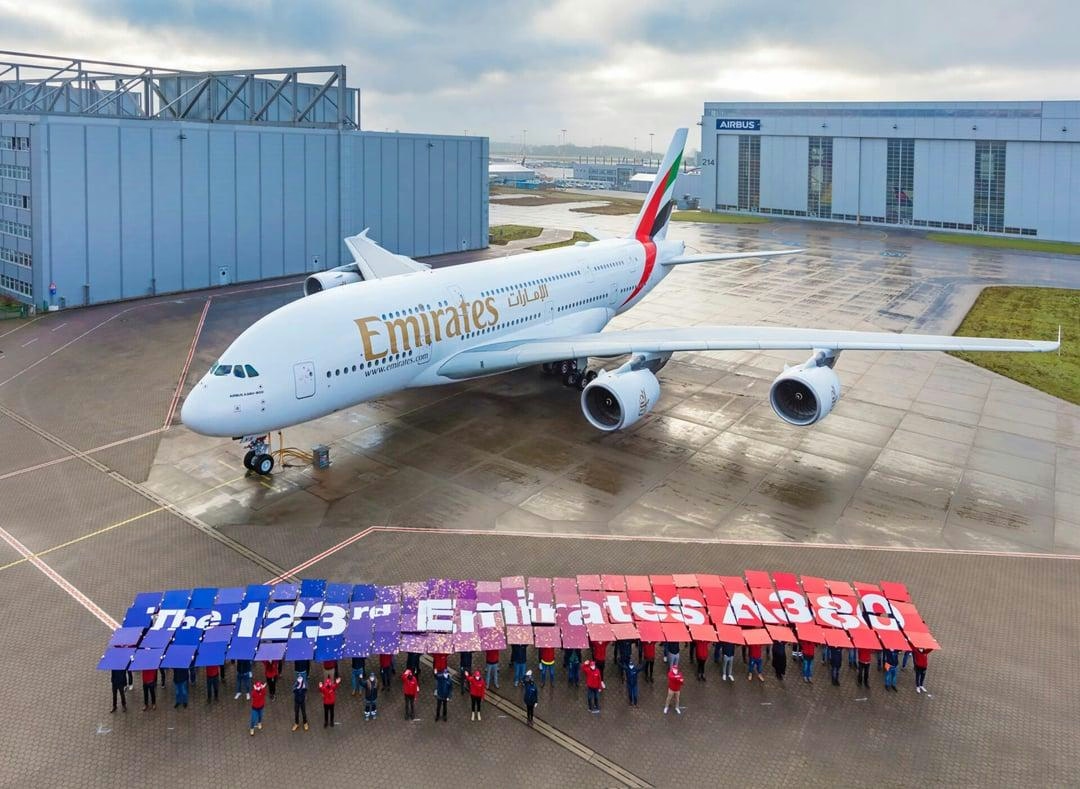
Why Emirates Can Profitably Operate the A380 on Routes Others Serve with Narrowbodies
The deployment of Emirates’ Airbus A380 on short regional routes may appear counterintuitive in an era when most global airlines are retiring their largest quad-jet aircraft in favor of smaller, more fuel-efficient narrowbodies. While many legacy carriers have shifted towards single-aisle jets for such sectors, Emirates continues to rely heavily on the superjumbo, operating it on routes where competitors typically use narrowbody aircraft. This strategy, far from being a financial misstep, is a fundamental element of Emirates’ highly optimized network and commercial framework.
Maximizing Capacity and Efficiency
Unlike traditional carriers that treat short routes as isolated, point-to-point markets dependent primarily on local demand, Emirates employs a sophisticated hub-and-spoke system. In this model, short regional flights serve as crucial feeders, channeling high-yield passengers into its extensive intercontinental network. This integration allows Emirates to extract significant commercial value from short sectors, particularly by deploying an aircraft considerably larger than those used by other airlines on similar routes.
From an operational perspective, airline planners must balance the overall cost of operating a flight against the cost per seat. Narrowbody jets such as the Airbus A321 are generally low-risk and easier to fill, making them the preferred choice for many carriers. However, when an A380 is fully loaded, the economics shift dramatically. Despite consuming approximately 15.4 tons of fuel per hour—compared to around 2.4 tons for a narrowbody—the A380’s exceptional seating capacity enables Emirates to distribute fixed costs, including landing fees and crew expenses, across more than 500 passengers. When demand is robust and flights maintain high load factors, the cost per seat mile on the A380 can fall below that of smaller aircraft, delivering unparalleled economies of scale.
Emirates’ ability to sustain high capacity utilization is central to this model. Even in the face of external challenges such as geopolitical tensions and global disruptions, the airline has restored its operations to 92% of pre-pandemic levels. This resilience is mirrored in its strong financial performance and continued investment in premium services on key routes. The recent introduction of the A380 on the Dubai-Delhi sector, alongside the deployment of the A350 on Dubai-Kolkata, highlights Emirates’ strategic focus on high-demand, commercially significant markets.
Strategic Fleet Choices and Network Design
The profitability of operating widebody aircraft on short-haul routes also depends heavily on network structure. Emirates’ four-class A380 configuration, which includes multiple premium cabins, is designed to serve both regional travelers and long-haul connecting passengers, thereby maximizing revenue potential. Dubai’s role as a global hub amplifies this effect by capturing substantial “sixth freedom” traffic—passengers traveling between continents via Dubai—enabling Emirates to fill large aircraft on routes where other airlines might struggle to do so.
Emirates’ fleet strategy aligns closely with its operational priorities. The airline’s recent decision to forgo the delayed Boeing 777X in favor of Airbus aircraft for future fleet renewal underscores a deliberate commitment to models that support its high-capacity, premium service approach.
In an industry where most carriers are downsizing and favoring smaller aircraft, Emirates’ distinctive combination of network design, fleet strategy, and rigorous focus on capacity utilization allows it to profitably operate the A380 on routes typically served by narrowbodies. This approach not only differentiates Emirates but also challenges conventional assumptions about modern airline economics.

Hong Kong's Five-Year Plan Includes Andrew Fan's Aircraft Parts Processing Hub Proposal

ACIA Aero Leasing Delivers ATR72-600 to Air Nostrum

RTX Appoints Jill Albertelli as Head of Pratt & Whitney

TAT Technologies Joins Beyond Aero Hydrogen Aircraft Program

AURAK Study Highlights Barriers to Air Taxi Adoption in Emerging Economies

Xiamen Air Selects Altitude for 787 Maintenance at Heathrow

Etihad and Swissport Extend Global Partnership
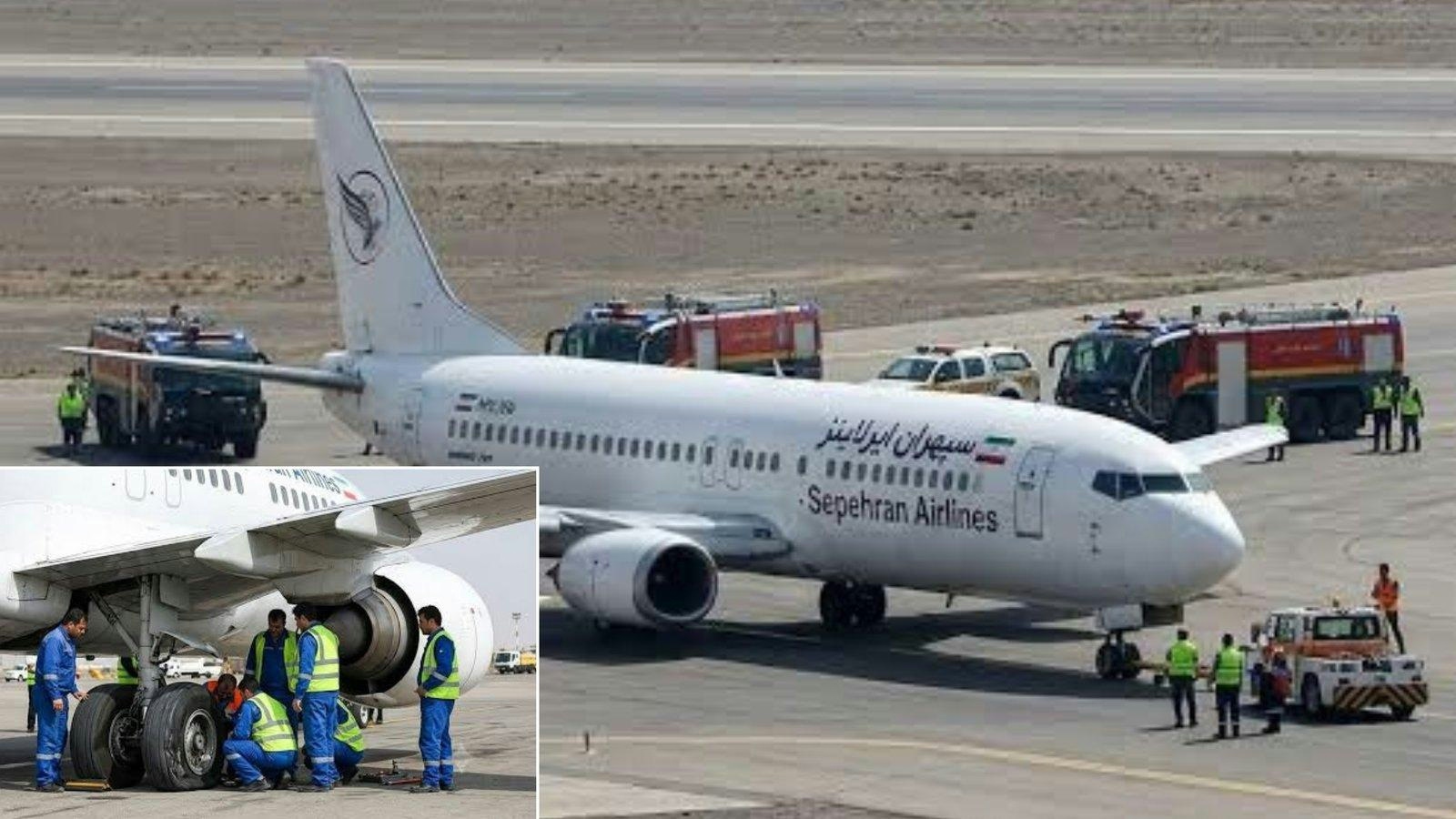
Sepehran Airlines B737 Returns to Mashhad After Tyre and Engine Issues

Etihad Deploys Widebody Fleet to Meet Strong Demand
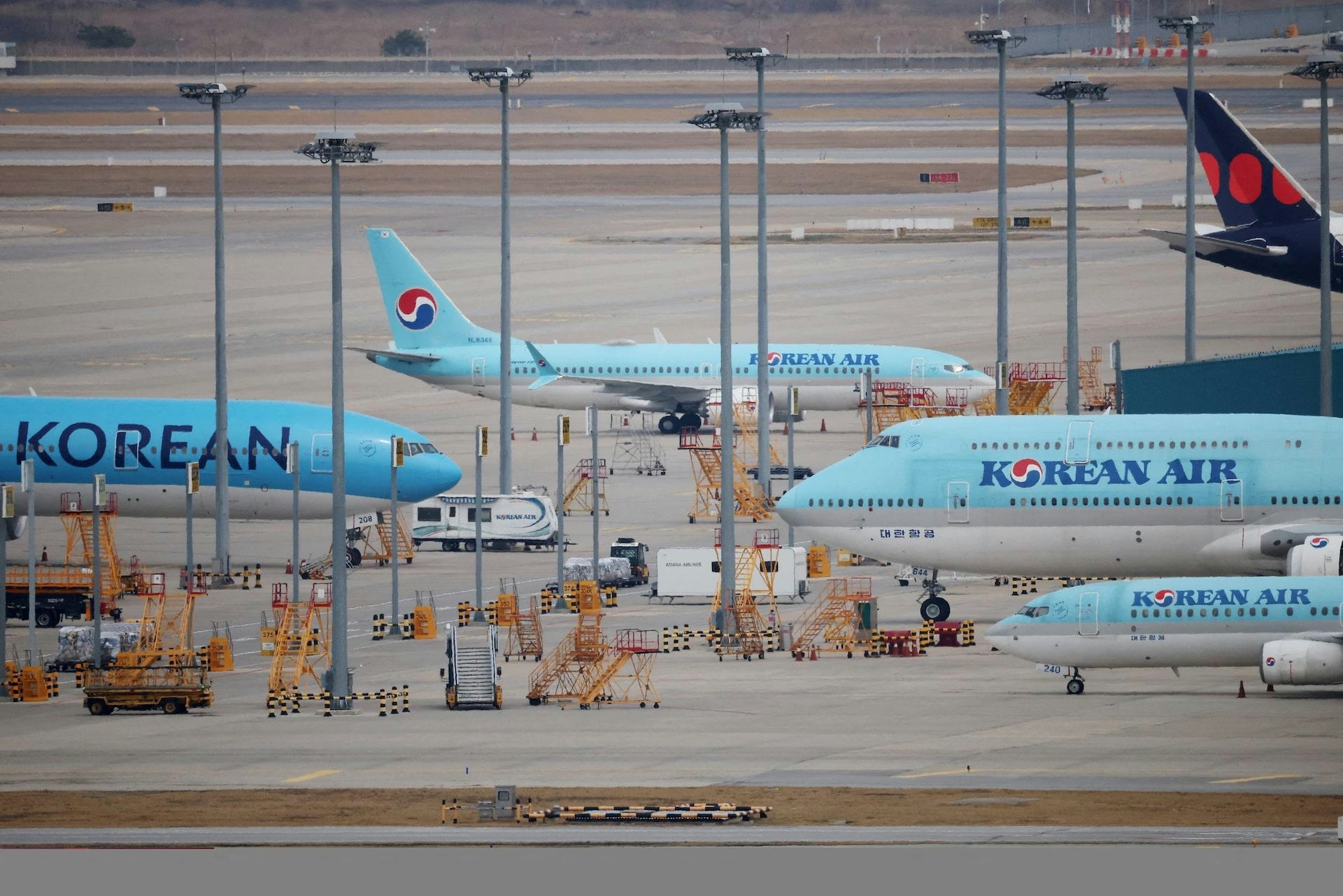
Korean Air Finalizes $36.2 Billion Deal with Boeing
