
Orchestrer les insights d’IA pour les transformer en actions

Tendances
Categories
Why Lufthansa Is Introducing Passenger Boeing 777s Now
Why Lufthansa Is Introducing Passenger Boeing 777s Now
For many years, Lufthansa refrained from incorporating the Boeing 777 into its passenger fleet. While numerous international carriers adopted the 777 for its extended range and fuel efficiency, Lufthansa maintained its reliance on the Boeing 747 as its flagship high-capacity aircraft. This approach was aligned with the airline’s strategy of channeling demand through major, slot-constrained hubs, a model that persisted even as competitors increasingly transitioned to large twin-engine aircraft.
Transitioning to a More Efficient Fleet
Lufthansa is now undergoing a significant transformation, phasing out its aging four-engine widebodies in favor of more efficient twin-engine jets such as the Boeing 787 and Airbus A350. Although the Boeing 747-400 remains operational, it is scheduled for retirement, which will create a capacity gap at the upper end of the fleet. The Boeing 777-9 is intended to fill this void, offering a combination of high passenger capacity and improved fuel efficiency. Boeing has designated Lufthansa as the launch operator for the 777-9, with the airline placing substantial firm orders for the aircraft.
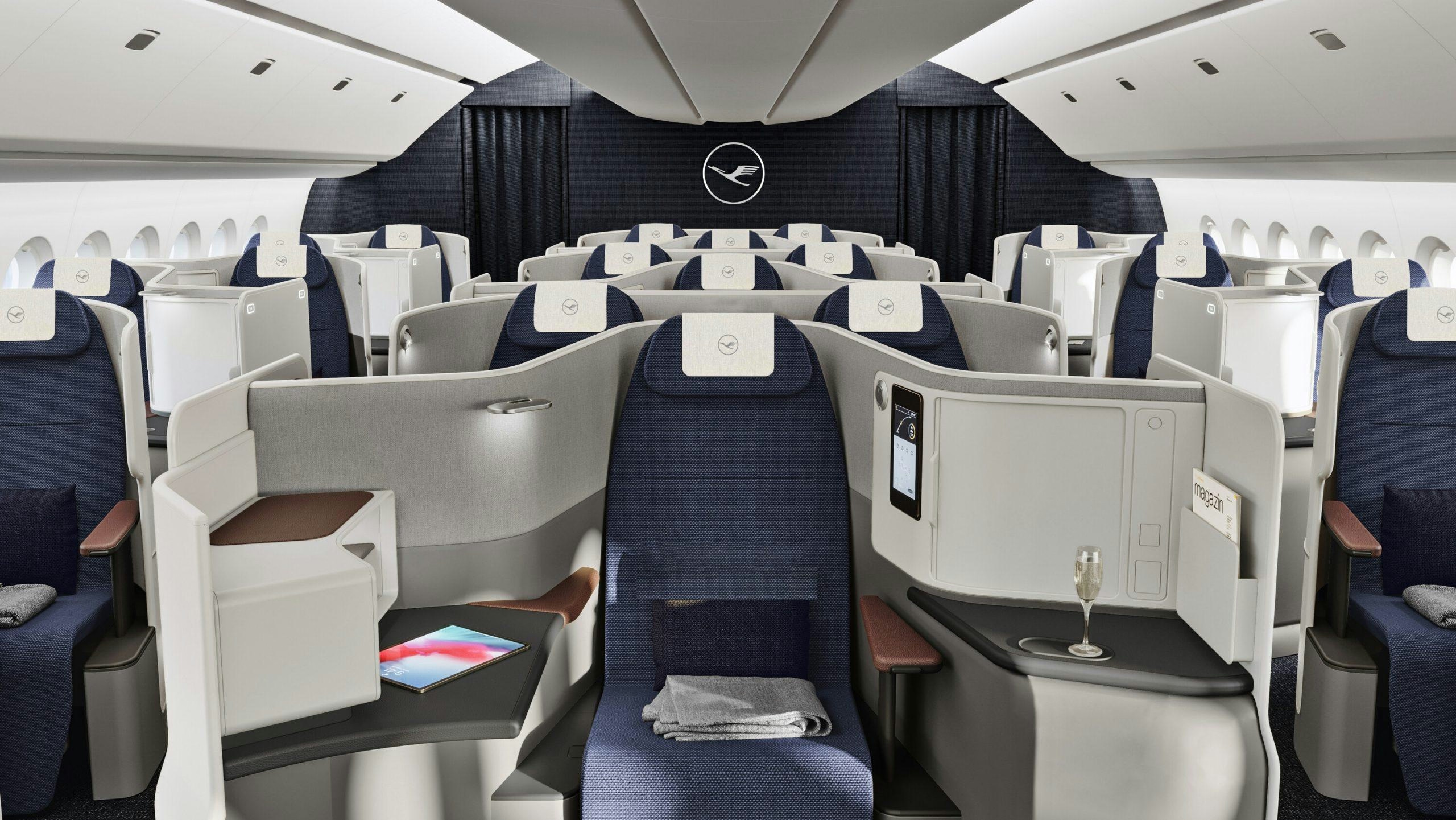
However, the introduction of the 777-9 has encountered challenges. Lufthansa’s new Allegris cabin, featuring complex seat and monument configurations, has introduced additional certification hurdles within the broader 777-9 program. Similar certification difficulties have also affected the airline’s Boeing 787 business class seats, potentially influencing passenger perceptions and competitive dynamics in the premium market segment.
Strategic Network and Fleet Considerations
Lufthansa’s long-haul network strategy remains firmly rooted in the traditional hub-and-spoke model, emphasizing high-frequency feed and premium demand rather than point-to-point flying. Frankfurt continues to serve as the airline’s primary European hub, supported by a comprehensive short-haul feeder network. Munich plays a complementary role, providing redundancy and expanded European coverage. This connectivity-first approach is further reinforced by Lufthansa’s central position within the Star Alliance and its reliance on immunized joint ventures, particularly across the North Atlantic. These partnerships enable coordinated scheduling and commercial decisions, presenting a unified transatlantic network to global business travelers, who constitute Lufthansa’s core market.
The airline’s preference for aircraft that align with banked hub waves—moving large volumes of passengers at specific times while retaining the flexibility to adjust capacity—has historically justified maintaining a diverse widebody fleet. Presently, Lufthansa’s mainline widebody fleet is unusually varied, reflecting both legacy decisions and the ongoing transition to newer aircraft types.
Challenges Amid Fleet Modernization
Lufthansa’s fleet modernization efforts come at a challenging time. The airline is contending with labor disputes, an aging fleet, and underwhelming financial performance within its mainline operations. Lufthansa Classic, the flagship brand, continues to face high operating costs and a heavy dependence on corporate travel in a difficult German market environment. These factors have slowed the pace of fleet renewal and may affect market reception to the introduction of the Boeing 777s. Competitors are expected to closely monitor Lufthansa’s strategic moves, potentially adjusting their own approaches to safeguard market share and profitability, especially as Lufthansa increasingly emphasizes its more profitable, lower-cost subsidiaries.
As Lufthansa navigates these operational and market pressures, the deployment of the Boeing 777-9 represents a critical step in its efforts to modernize the fleet, sustain network flexibility, and strengthen its position in the global long-haul aviation market.

Etihad Airways Suspends Airbus A380 Flights on Key Route

Aditya Birla Group Seeks Approval for Aircraft Leasing in GIFT City

Qatar Airways Highlights Innovation and Connectivity at Arabian Travel Market 2026

Hong Kong's Five-Year Plan Includes Andrew Fan's Aircraft Parts Processing Hub Proposal

ACIA Aero Leasing Delivers ATR72-600 to Air Nostrum

RTX Appoints Jill Albertelli as Head of Pratt & Whitney

TAT Technologies Joins Beyond Aero Hydrogen Aircraft Program

AURAK Study Highlights Barriers to Air Taxi Adoption in Emerging Economies

Xiamen Air Selects Altitude for 787 Maintenance at Heathrow

Etihad and Swissport Extend Global Partnership
