
Orchestrer les insights d’IA pour les transformer en actions

Tendances
Categories
Why the Airbus A350 Operates Late-Night Slots at London Heathrow When Other Widebodies Do Not
Why the Airbus A350 Operates Late-Night Slots at London Heathrow When Other Widebodies Do Not
London Heathrow Airport (LHR) remains one of the busiest international hubs globally, managing nearly 84 million passengers and close to half a million aircraft movements in 2024. Despite its scale, Heathrow is subject to some of the strictest noise and environmental regulations in Europe, particularly during overnight hours. The airport operates under a legal cap of 480,000 annual air transport movements, compelling airlines to optimize every available slot while complying with stringent noise restrictions designed to protect the surrounding communities.
Heathrow’s Nighttime Noise Regulations and the Quota Count System
Night operations at Heathrow are tightly controlled through a Quota Count (QC) system, which assigns each aircraft a QC value based on its certified noise levels during takeoff and landing. This system is designed to limit noise pollution during the night quota period, which runs from 23:30 to 06:00. Aircraft with lower QC ratings consume less of Heathrow’s limited overnight noise budget, allowing them to operate more freely during these hours. QC values range from QC/0 and QC/0.125 for the quietest aircraft to QC/16 for the loudest. Under current UK regulations, aircraft rated QC/4 or higher are generally prohibited from operating during the night quota period, making the choice of aircraft critical for airlines seeking late-night slots.
The Airbus A350’s Noise Advantage and Operational Benefits
The Airbus A350 has distinguished itself as a leading aircraft in this context due to its advanced design and quieter operation. Its composite airframe and exclusive use of Rolls-Royce Trent XWB engines contribute to noise levels that are up to nine decibels lower than many competing widebody aircraft. The Trent XWB engines, including the powerful XWB-97 variant used on the A350-1000, are among the quietest in their class, benefiting from extensive acoustic optimization. Noise reduction is achieved not only through engine technology but also through aerodynamic refinements across the aircraft, resulting in a significantly reduced overall noise footprint.
This quieter profile provides airlines with a crucial operational advantage at Heathrow, enabling them to schedule long-haul flights during late-night slots without breaching the airport’s strict noise quotas. Heathrow further encourages the use of quieter aircraft through its landing charge structure, which imposes lower noise-related fees on newer, Chapter 14-compliant jets. Currently, over 80% of Heathrow’s movements are conducted by aircraft meeting the latest ICAO noise standards, reflecting a rapid modernization of the fleet.
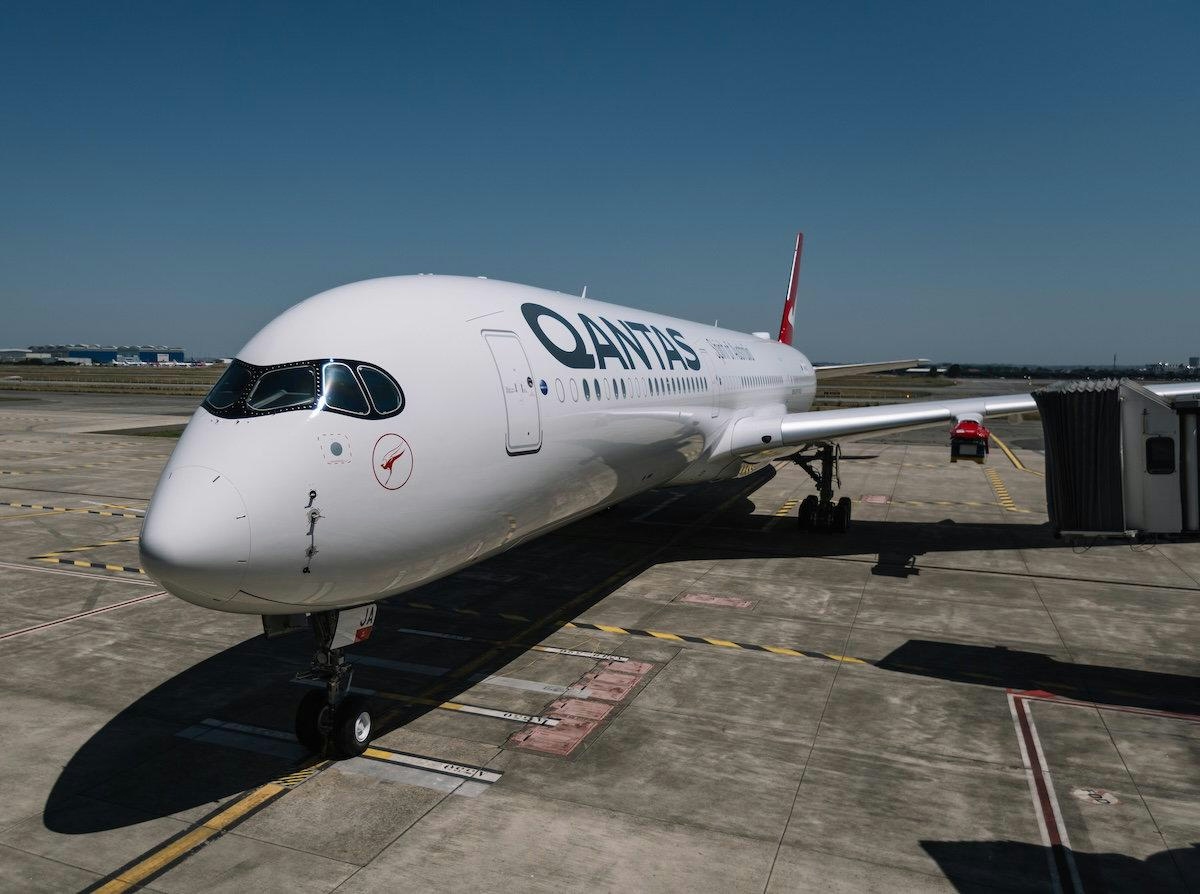
Beyond noise considerations, the A350 offers operational flexibility and efficiency that make it the preferred choice for airlines optimizing long-haul schedules at noise-sensitive airports. For instance, Qantas has selected the A350-1000ULR for its record-breaking non-stop Sydney to London flights, capitalizing on the aircraft’s extended range and fuel efficiency for ultra-long-haul operations. Similarly, Japan Airlines operates the A350-1000 on its Tokyo-London route, highlighting the aircraft’s performance and passenger comfort.
The Airbus A350’s combination of advanced noise reduction, long-range capability, and operational efficiency thus enables airlines to secure valuable late-night slots at London Heathrow—slots that are often inaccessible to noisier widebody aircraft. This advantage is increasingly shaping the future of long-haul travel at one of the world’s most capacity- and noise-constrained airports.

Hong Kong's Five-Year Plan Includes Andrew Fan's Aircraft Parts Processing Hub Proposal

ACIA Aero Leasing Delivers ATR72-600 to Air Nostrum

RTX Appoints Jill Albertelli as Head of Pratt & Whitney

TAT Technologies Joins Beyond Aero Hydrogen Aircraft Program

AURAK Study Highlights Barriers to Air Taxi Adoption in Emerging Economies

Xiamen Air Selects Altitude for 787 Maintenance at Heathrow

Etihad and Swissport Extend Global Partnership

Sepehran Airlines B737 Returns to Mashhad After Tyre and Engine Issues

Etihad Deploys Widebody Fleet to Meet Strong Demand

Korean Air Finalizes $36.2 Billion Deal with Boeing
