
Orchestrer les insights d’IA pour les transformer en actions

Tendances
Categories
Why the Boeing 777X Is Limited to a Single Engine Type
Why the Boeing 777X Is Limited to a Single Engine Type
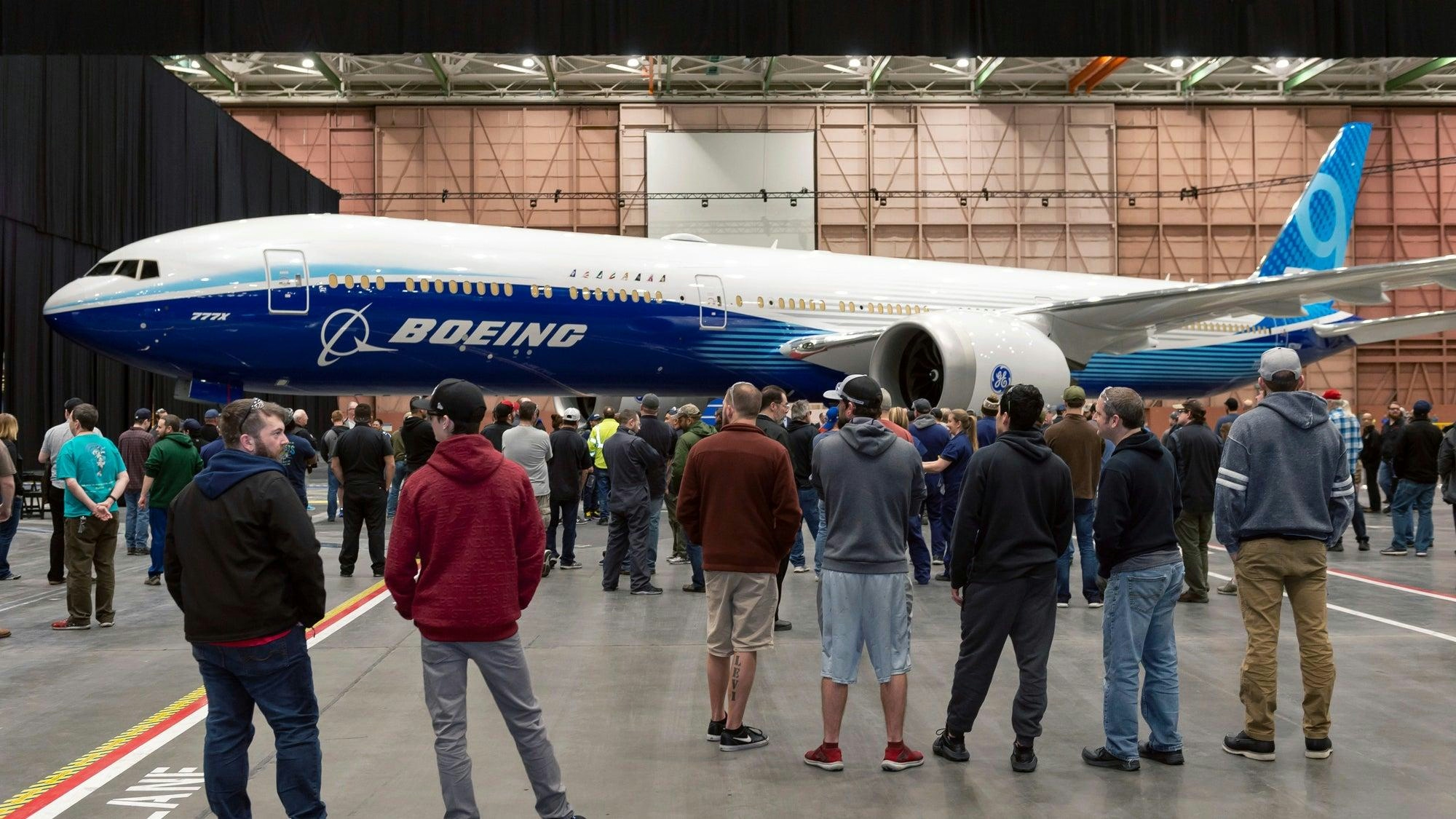
The Boeing 777X, poised to enter service in the coming years, will be powered exclusively by the GE Aerospace GE9X turbofan. This decision marks a significant shift from earlier Boeing 777 models, which offered airlines a choice among engines from General Electric, Pratt & Whitney, and Rolls-Royce. The move to a single engine supplier reflects broader industry trends and the specific circumstances surrounding the 777X program.
A Shrinking Pool of Engine Suppliers
The widebody aircraft engine market is currently dominated by just three major manufacturers: GE Aerospace, Rolls-Royce, and Pratt & Whitney. Unlike the 1990s, when airlines could select from multiple engine options for new aircraft, the development of bespoke engines for a limited market has become increasingly impractical. The 777X targets a specialized segment, with 565 firm orders as of late 2025. Notably, approximately half of these orders come from two airlines—Emirates and Qatar Airways—both longstanding customers of GE engines.
The substantial cost of developing a new engine capable of producing around 100,000 pounds of thrust presents a formidable barrier. For Rolls-Royce or Pratt & Whitney, the limited sales potential of the 777X makes the investment difficult to justify. Even if a second engine option were developed, it remains uncertain whether sufficient airline demand would exist to recoup the development expenses.
Industry Relationships and Standardization
Boeing’s longstanding partnership with GE Aerospace has also been a decisive factor. Airlines often prefer to standardize their fleets with engines from a single manufacturer to simplify maintenance and capitalize on existing supplier relationships. The 777X is designed as the successor to the 777-300ER and 777-200LR, both exclusively powered by GE engines. This continuity streamlines operations for major customers such as Emirates and Qatar Airways.
In contrast, Boeing’s 787 Dreamliner offers two engine options, partly to compete directly with Airbus and to appeal to a broader range of airline preferences. However, the 777X’s more specialized market and established customer base have made a single-engine strategy more practical and economically viable.
Competitive Pressures and Market Dynamics
The decision to rely solely on the GE9X engine comes amid intensified competition and evolving market dynamics. Airbus, Boeing’s chief competitor, recently encountered quality issues with its A320 family, highlighting the risks associated with complex supply chains. Meanwhile, Emirates, one of the largest customers for the 777X, has publicly expressed frustration over program delays but remains committed to operating both Boeing and Airbus fleets.
Looking forward, emerging players such as China’s Comac are beginning to challenge established aerospace manufacturers, adding further complexity to the competitive landscape. Boeing’s position remains fluid, with its stock price reacting to delivery figures, regulatory developments, and ongoing Federal Aviation Administration certification efforts for the 777X. The company aims to secure certification in 2026 and commence service in 2027.
The exclusive use of the GE9X engine on the 777X thus reflects a confluence of economic considerations, strategic partnerships, and market realities shaping the future of commercial aviation.

Etihad Airways Suspends Airbus A380 Flights on Key Route

Aditya Birla Group Seeks Approval for Aircraft Leasing in GIFT City

Qatar Airways Highlights Innovation and Connectivity at Arabian Travel Market 2026

Hong Kong's Five-Year Plan Includes Andrew Fan's Aircraft Parts Processing Hub Proposal

ACIA Aero Leasing Delivers ATR72-600 to Air Nostrum

RTX Appoints Jill Albertelli as Head of Pratt & Whitney

TAT Technologies Joins Beyond Aero Hydrogen Aircraft Program

AURAK Study Highlights Barriers to Air Taxi Adoption in Emerging Economies

Xiamen Air Selects Altitude for 787 Maintenance at Heathrow

Etihad and Swissport Extend Global Partnership
