
Orchestrer les insights d’IA pour les transformer en actions

Tendances
Categories
Wisk and Liebherr-Aerospace Collaborate on Gen Six Electric Air Taxi
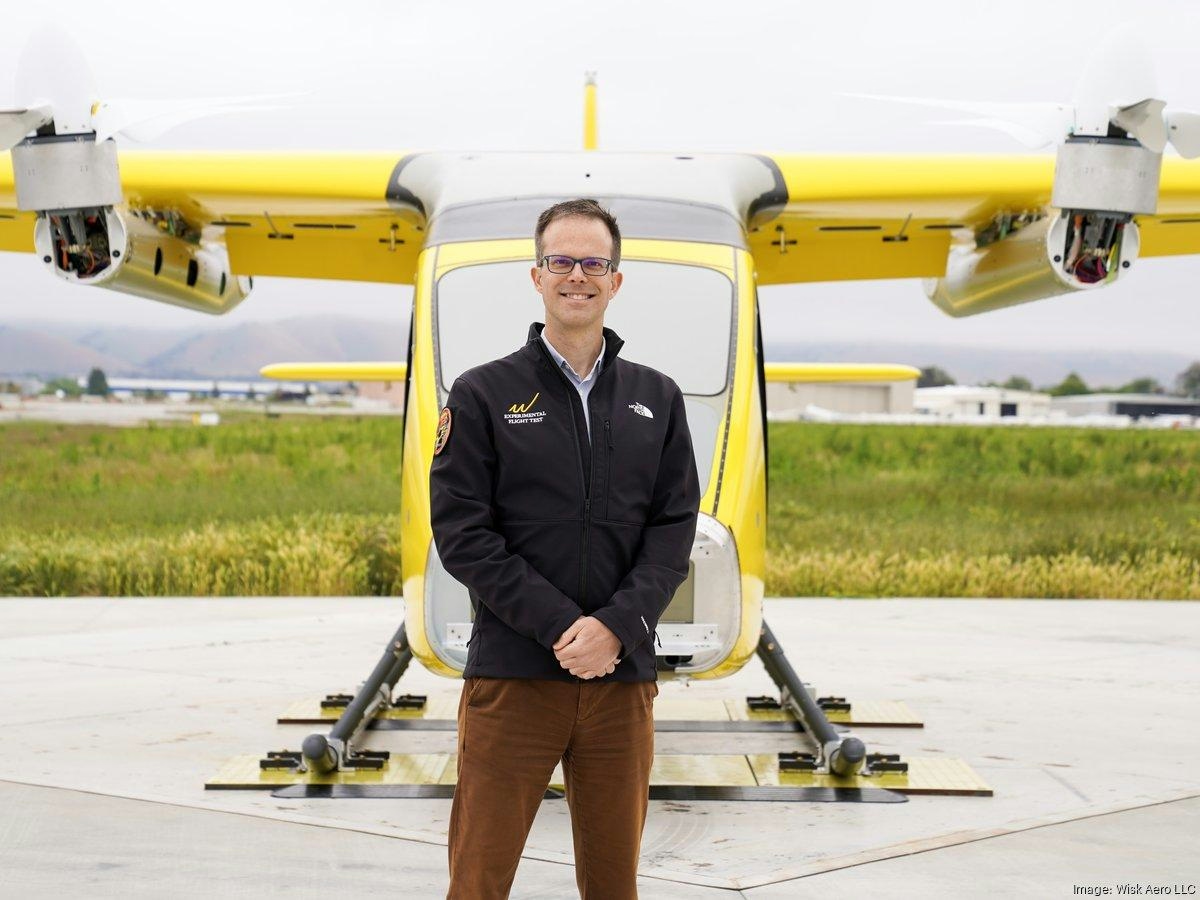
Wisk and Liebherr-Aerospace Collaborate on Gen Six Electric Air Taxi
Wisk Aero has entered into a strategic partnership with Liebherr-Aerospace to equip its Generation 6 electric vertical takeoff and landing (eVTOL) air taxi with advanced actuation systems. This collaboration represents a significant advancement in the development of autonomous and sustainable aviation, heralding a new phase in urban air mobility.
Advanced Actuation Systems for Enhanced Safety and Performance
Announced in September, the partnership will see Liebherr-Aerospace provide sophisticated actuation systems essential for controlling the Gen 6 eVTOL’s flight surfaces, including flaperons, elevators, and rudders, as well as its tilting propulsion mechanism. These systems incorporate built-in redundancy to ensure compliance with stringent aviation safety standards, a critical factor for regulatory certification by bodies such as the Federal Aviation Administration (FAA).
The integration of Liebherr’s technology is designed to meet the rigorous demands of autonomous flight, enhancing both reliability and safety. Liebherr-Aerospace’s extensive experience in certifying flight control systems for commercial aircraft bolsters Wisk’s efforts to navigate the complex certification process and regulatory landscape.
Pioneering Sustainable Urban Air Mobility
Wisk’s Gen 6 air taxi is engineered to be fully electric and autonomous, aiming to drastically reduce carbon emissions relative to conventional aircraft. By utilizing electric propulsion, the aircraft seeks to minimize the environmental footprint of air travel, aligning with global initiatives to promote sustainable aviation. Its vertical takeoff and landing capability enables efficient operation within densely populated urban areas, offering a novel solution to traffic congestion and urban pollution.
Beyond its urban applications, the Gen 6 air taxi is poised to transform tourism by providing rapid, eco-friendly aerial transport for city exploration. This innovation could allow tourists to traverse congested metropolitan regions from the air, connecting key destinations with unprecedented speed and convenience.
Challenges and Competitive Landscape
Despite the promise of this technology, Wisk and Liebherr-Aerospace face considerable challenges. The certification of autonomous electric aircraft remains a demanding process, with safety and reliability under intense scrutiny from regulators and the public alike. Additionally, the advanced air mobility sector is becoming increasingly competitive, with companies such as Archer Aviation and Green Taxi Aerospace, a partner of Delta, accelerating their development efforts and forging strategic alliances to secure market share.
Market reactions have been mixed, reflecting both enthusiasm for the potential of autonomous air taxis and skepticism regarding their feasibility and safety. The success of Wisk’s Gen 6 air taxi will depend on overcoming these regulatory, technological, and competitive hurdles.
As the collaboration between Wisk and Liebherr-Aerospace progresses, the Gen 6 electric air taxi remains at the forefront of a rapidly evolving industry. This partnership underscores a bold commitment to innovation and safety, positioning the aircraft as a potential catalyst in redefining short-distance travel and advancing sustainable urban aviation.

Etihad Airways Suspends Airbus A380 Flights on Key Route

Aditya Birla Group Seeks Approval for Aircraft Leasing in GIFT City

Qatar Airways Highlights Innovation and Connectivity at Arabian Travel Market 2026

Hong Kong's Five-Year Plan Includes Andrew Fan's Aircraft Parts Processing Hub Proposal

ACIA Aero Leasing Delivers ATR72-600 to Air Nostrum

RTX Appoints Jill Albertelli as Head of Pratt & Whitney

TAT Technologies Joins Beyond Aero Hydrogen Aircraft Program

AURAK Study Highlights Barriers to Air Taxi Adoption in Emerging Economies

Xiamen Air Selects Altitude for 787 Maintenance at Heathrow

Etihad and Swissport Extend Global Partnership
