
Orchestrer les insights d’IA pour les transformer en actions

Tendances
Categories
Wisk Conducts First Hover Flight of Gen 6 Autonomous Air Taxi
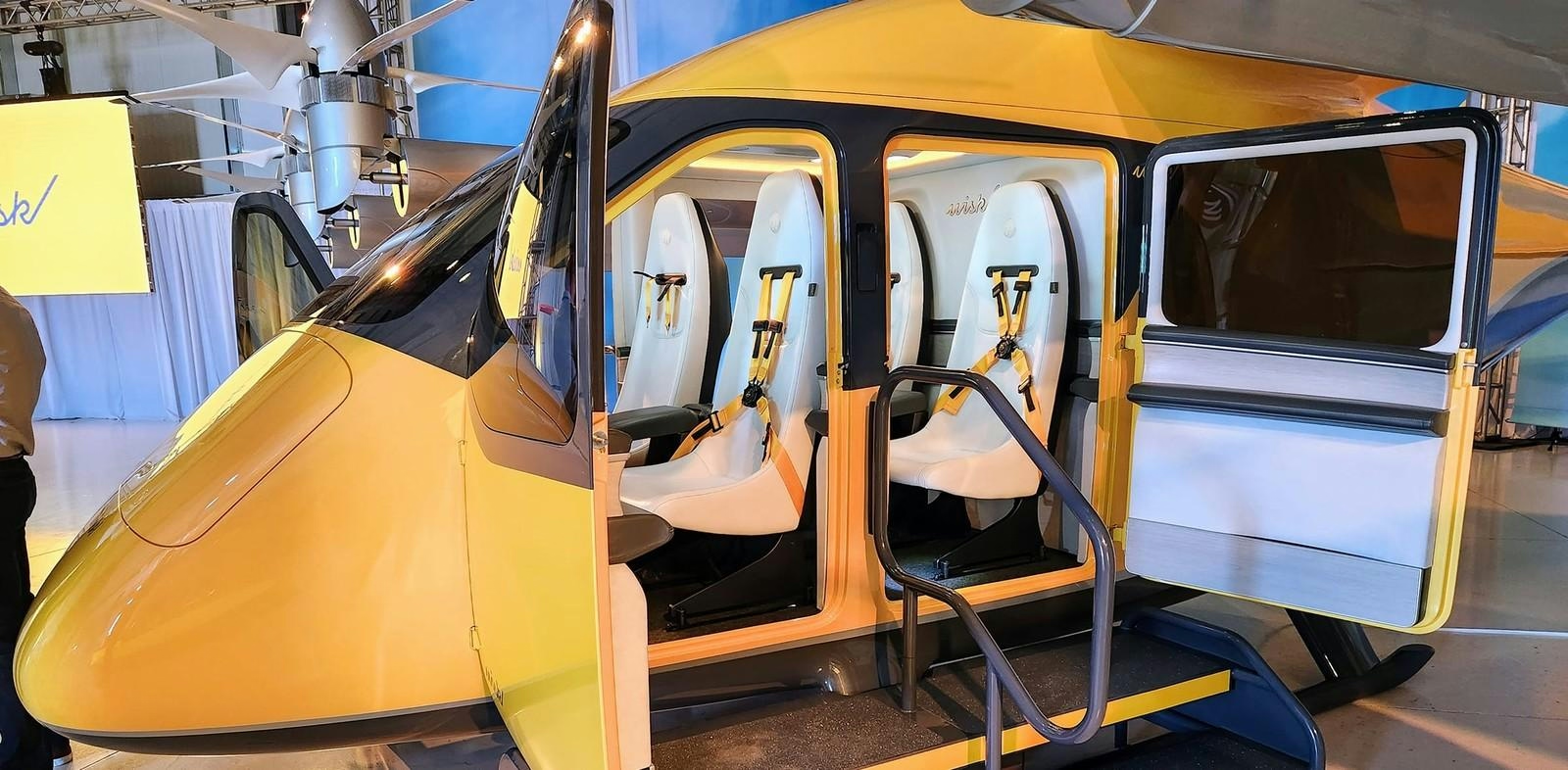
Wisk Conducts First Hover Flight of Gen 6 Autonomous Air Taxi
Milestone in Autonomous Flight Testing
Wisk Aero, the Boeing-backed air taxi start-up headquartered in Mountain View, California, has successfully completed the inaugural hover flight of its Gen 6 autonomous air taxi prototype. The test, conducted on December 16 at Wisk’s Hollister facility, marks a pivotal advancement in the company’s development of self-flying, all-electric passenger aircraft. During the 69-second flight, the bright-yellow Gen 6 prototype ascended approximately five meters (16 feet), executing vertical take-off, hover, and stabilized flight maneuvers entirely autonomously. This achievement aligns with Wisk’s vision of introducing pilotless air taxis to the commercial market.
Chief Executive Sebastien Vigneron described the test as “flawlessly” executed and underscored its significance as the initial phase of an extensive flight-test campaign. The program will initially focus on validating the aircraft’s hover profile, including take-offs, landings, and low-speed stability, before advancing to more complex maneuvers such as lateral transition flight and pedal turns. Wisk emphasized that each test provides essential data to verify control laws, structural loads, and aircraft dynamics, enabling continuous refinement of the system.
Progress and Challenges Ahead
The Gen 6’s first flight follows the recent completion of its full-scale prototype and fulfills Wisk’s commitment to achieve flight before the end of the year. This milestone builds upon more than 1,750 test flights conducted with earlier-generation prototypes, demonstrating the company’s steady progress in autonomous urban air mobility.
Despite this technical success, Wisk faces significant challenges on the path to commercialization. Securing regulatory approval, addressing safety concerns, and integrating autonomous air taxis into existing air traffic management systems remain critical hurdles. The envisioned operational model involves ground-based supervisors overseeing multiple aircraft, with the air taxis operating independently without onboard pilots.
The broader aviation industry is closely monitoring Wisk’s advancements, as the Gen 6’s autonomous capabilities and all-electric design have the potential to disrupt traditional aviation paradigms. Competitors may respond by accelerating their own development efforts or forming strategic partnerships to maintain competitiveness in the emerging urban air mobility sector.
“Seeing Gen 6 take flight is an exciting moment for Wisk and the future of aviation,” Vigneron stated. “It reaffirms our belief in autonomy, and we are even more energized to continue the journey to bring safe, everyday flight to everyone.”
As Wisk progresses through its flight-test campaign, its success will be measured not only by technical milestones but also by its ability to navigate the complex regulatory, operational, and market challenges that lie ahead.

Etihad Airways Suspends Airbus A380 Flights on Key Route

Aditya Birla Group Seeks Approval for Aircraft Leasing in GIFT City

Qatar Airways Highlights Innovation and Connectivity at Arabian Travel Market 2026

Hong Kong's Five-Year Plan Includes Andrew Fan's Aircraft Parts Processing Hub Proposal

ACIA Aero Leasing Delivers ATR72-600 to Air Nostrum

RTX Appoints Jill Albertelli as Head of Pratt & Whitney

TAT Technologies Joins Beyond Aero Hydrogen Aircraft Program

AURAK Study Highlights Barriers to Air Taxi Adoption in Emerging Economies

Xiamen Air Selects Altitude for 787 Maintenance at Heathrow

Etihad and Swissport Extend Global Partnership
