
Orchestrer les insights d’IA pour les transformer en actions

Tendances
Categories
Wizz Air Receives 200th Airbus A321neo, Highlighting Focus on Innovation and Sustainability
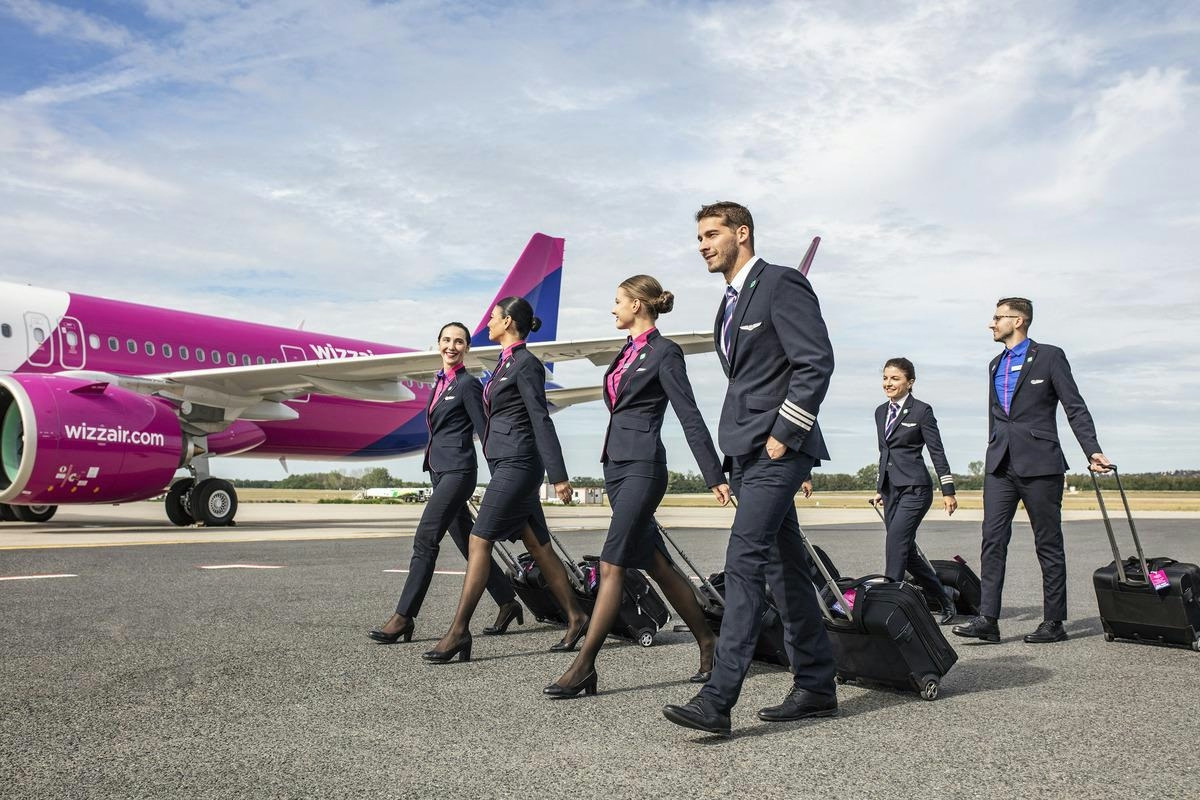
Wizz Air Marks Delivery of 200th Airbus A321neo, Reinforcing Commitment to Innovation and Sustainability
Wizz Air has reached a significant milestone with the delivery of its 200th Airbus A321neo aircraft, underscoring the airline’s dedication to innovation, sustainability, and affordable air travel. This achievement forms a key part of Wizz Air’s ambitious expansion strategy, which also includes the integration of the Airbus A321XLR, further solidifying its status as a leading low-cost carrier in Europe.
Fleet Expansion and Operational Efficiency
Since introducing its first A321neo in 2019, Wizz Air has rapidly expanded its fleet to include 200 aircraft within the A321neo family. This comprises 186 A321neo, 8 A321XLR, and 6 A320neo models. The modernized fleet supports the airline’s objective to broaden its European network and explore new international routes, while simultaneously enhancing operational efficiency and passenger experience.
The advanced design of the A321neo, featuring increased seating capacity and next-generation Pratt & Whitney engines, has been instrumental in Wizz Air’s growth. These engines offer up to 20% lower fuel consumption compared to previous models, significantly reducing CO₂ emissions per seat and aligning with the airline’s net-zero carbon ambitions. Additionally, the quieter operation of the aircraft helps mitigate noise pollution around airports, benefiting both travelers and local communities.
Challenges and Market Dynamics
Despite the successes, the rapid expansion and reliance on the A321neo have presented challenges. The aircraft model has recently come under scrutiny following tail-strike incidents, leading Airbus to issue revised flare guidance to operators. While these events have raised operational concerns, Wizz Air continues to prioritize safety and is committed to ongoing improvements within its fleet.
Market responses to Wizz Air’s milestone have been cautiously optimistic. The airline’s CEO has addressed industry challenges such as rising fuel prices and supply chain shortages, asserting that there is no imminent crisis for the company. He also acknowledged previous setbacks, particularly in the Abu Dhabi market, but expressed confidence in the airline’s future growth prospects.
Meanwhile, competitors like easyJet are expanding their route networks within the UK, intensifying competition in the low-cost sector. Nevertheless, Wizz Air’s investment in a modern and efficient fleet positions it well to maintain a competitive advantage and fulfill its promise of delivering affordable, sustainable air travel.
As Wizz Air celebrates the delivery of its 200th A321neo, the airline remains focused on leveraging technological advancements to connect more destinations, reduce environmental impact, and provide passengers with a comfortable and efficient flying experience.

Etihad Airways Suspends Airbus A380 Flights on Key Route

Aditya Birla Group Seeks Approval for Aircraft Leasing in GIFT City

Qatar Airways Highlights Innovation and Connectivity at Arabian Travel Market 2026

Hong Kong's Five-Year Plan Includes Andrew Fan's Aircraft Parts Processing Hub Proposal

ACIA Aero Leasing Delivers ATR72-600 to Air Nostrum

RTX Appoints Jill Albertelli as Head of Pratt & Whitney

TAT Technologies Joins Beyond Aero Hydrogen Aircraft Program

AURAK Study Highlights Barriers to Air Taxi Adoption in Emerging Economies

Xiamen Air Selects Altitude for 787 Maintenance at Heathrow

Etihad and Swissport Extend Global Partnership
