
Trasforma le intuizioni dell’IA in azioni concrete

Tendenze
Categories
A Retrospective on 50 Years of Commercial Aviation
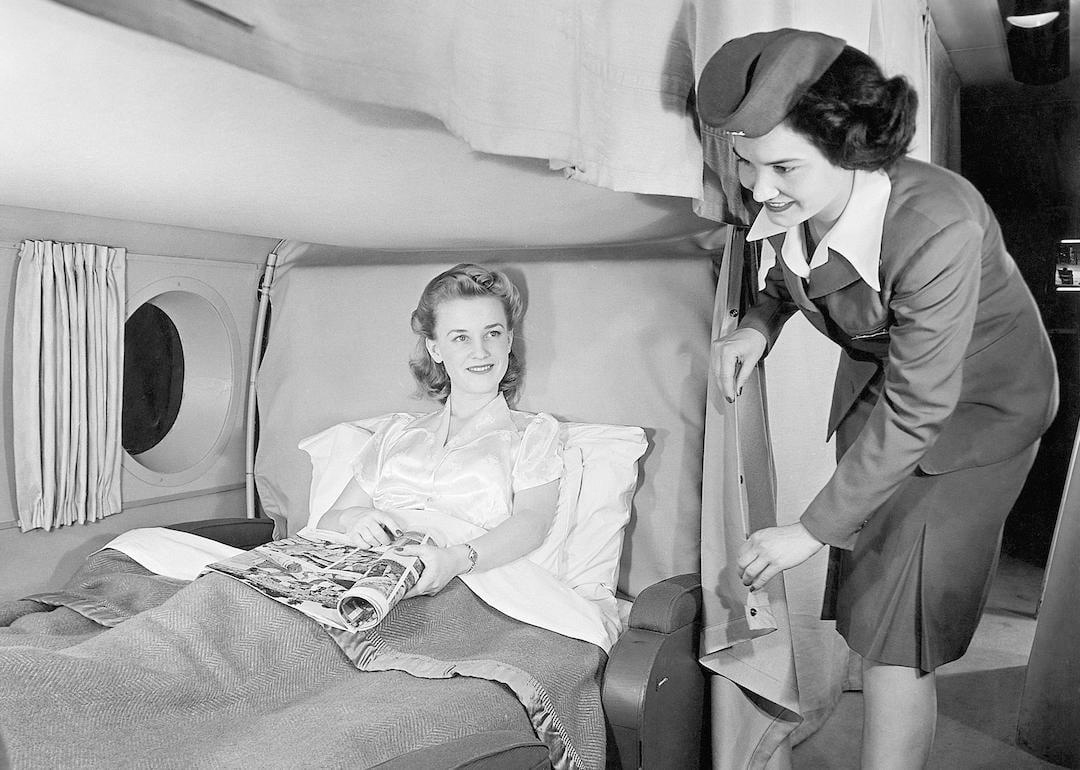
A Retrospective on 50 Years of Commercial Aviation
With the announcement of Scott Hamilton’s impending retirement next year, the aviation community marks the release of his third and final book, 50 Years in Commercial Aviation: Memories and Inside Stories. Hamilton, founder and editor of Leeham News, offers a comprehensive chronicle of his lifelong engagement with the airline industry, tracing his evolution from a general assignment and political reporter to a dedicated aviation journalist. His career spans five decades, during which he has witnessed and documented the profound transformations within commercial aviation.
A Career Rooted in Aviation
Hamilton’s initial foray into the airline industry began with a brief tenure at the first airline certified by the Civil Aeronautics Board for scheduled service in four decades. Although his time working directly within the airline business was short-lived, he soon returned to journalism, focusing his efforts on covering airlines, major manufacturers such as Airbus and Boeing, and the broader aviation supply chain. Over the years, Hamilton’s investigative reporting has uncovered critical industry developments, including the financial instability of Braniff Airways and the collapse of Pan American World Airways. His work often involved challenging powerful entities, exemplified by his legal battle to obtain information from the Federal Aviation Administration and his confrontations with industry giants Airbus and Boeing. The book also explores missed opportunities by companies like Mitsubishi and Bombardier in their attempts to expand globally. Interspersed with these accounts are personal reflections that reveal the experiences shaping Hamilton’s perspective and journalistic approach.
Industry Challenges and Evolution
Beyond recounting historical events, Hamilton’s book implicitly addresses the evolving challenges confronting commercial aviation today. The industry currently faces rising operating costs, geopolitical uncertainties, and an urgent imperative to transition toward greener, more efficient aviation fuels. European aviation leaders are responding by consolidating and strengthening their positions, while competitors worldwide race to develop next-generation aircraft powered by zero-emission and hybrid technologies. Concurrently, efforts to modernize air traffic control systems and expand airport capacity are underway, with a growing emphasis on sustainability and operational efficiency.
In a notable excerpt, Hamilton reflects on the turbulent early 1990s, a period marked by Pan Am’s decline and his contentious interactions with Delta Air Lines. He traces Delta’s origins from a modest crop-dusting operation in the Mississippi Delta to a paternalistic airline culture under founder C. E. Woolman. This culture persisted until the leadership of CEO Ron Allen, whose tenure introduced significant shifts in company dynamics and labor relations.
Hamilton’s career, characterized by investigative rigor and a deep passion for aviation, parallels the industry’s own trajectory—one defined by innovation, upheaval, and adaptation. As commercial aviation looks toward the next half-century, it confronts formidable challenges and opportunities for transformation, much as it did when Hamilton first began chronicling its story.

Etihad and Swissport Extend Global Partnership
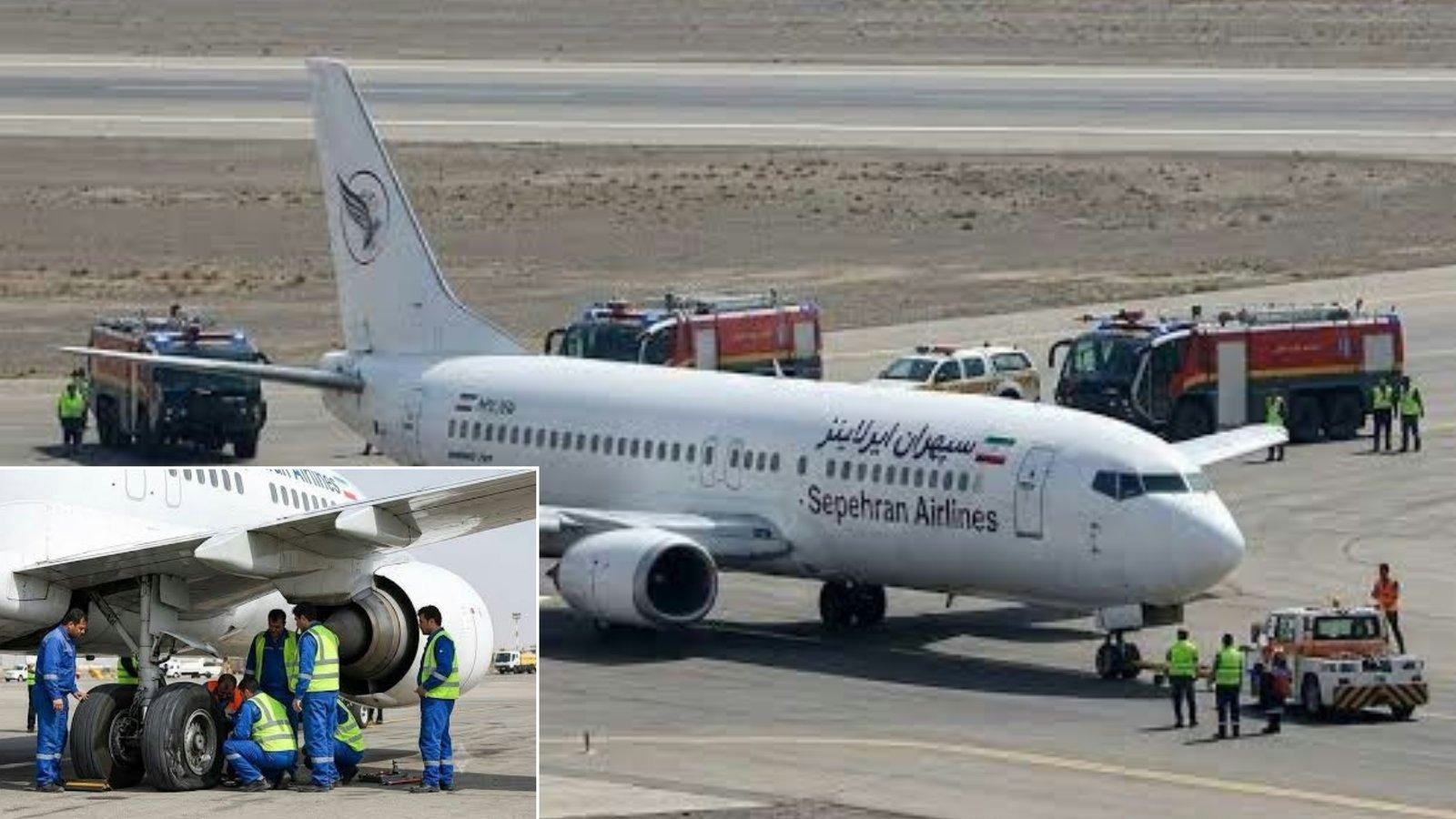
Sepehran Airlines B737 Returns to Mashhad After Tyre and Engine Issues

Etihad Deploys Widebody Fleet to Meet Strong Demand
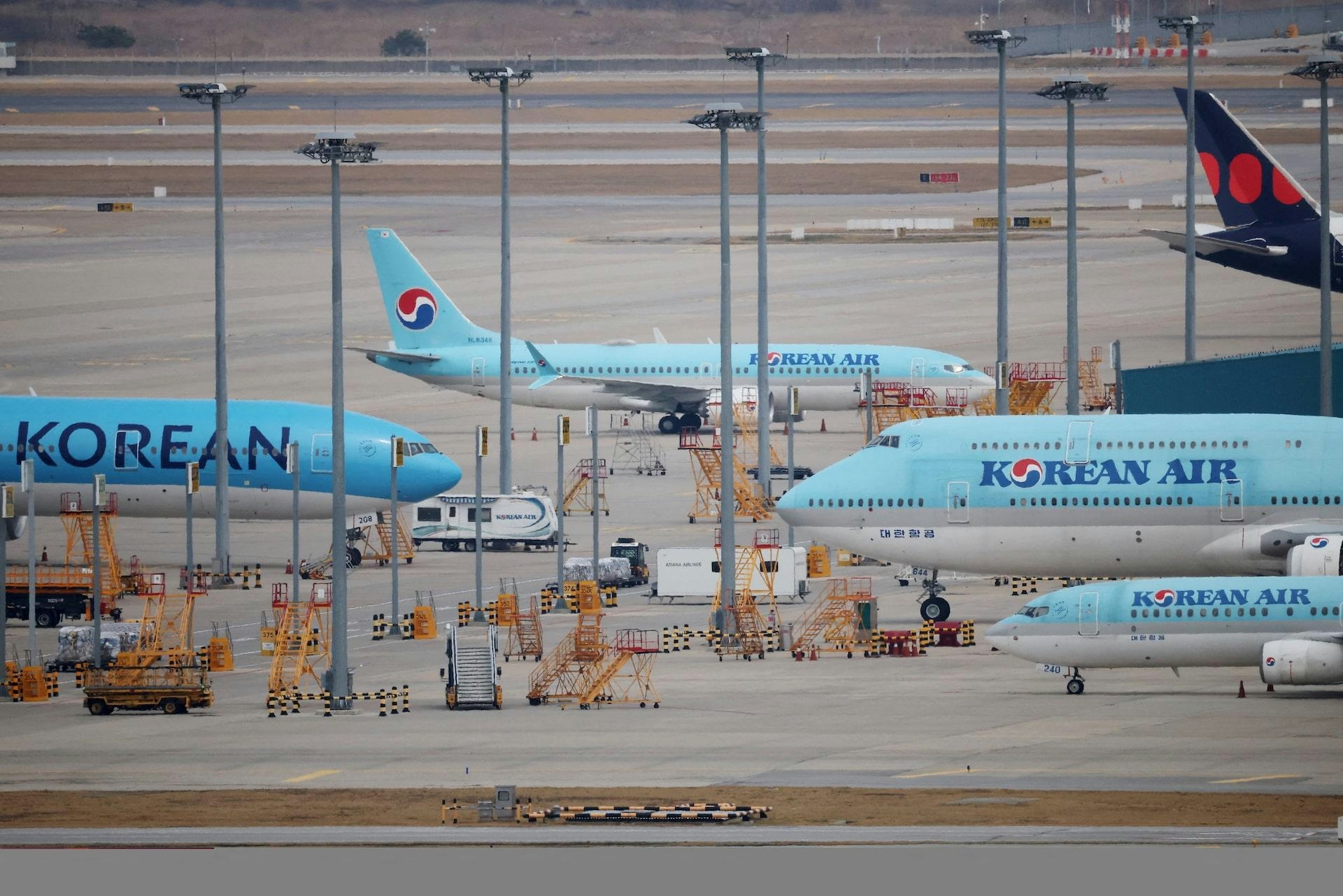
Korean Air Finalizes $36.2 Billion Deal with Boeing
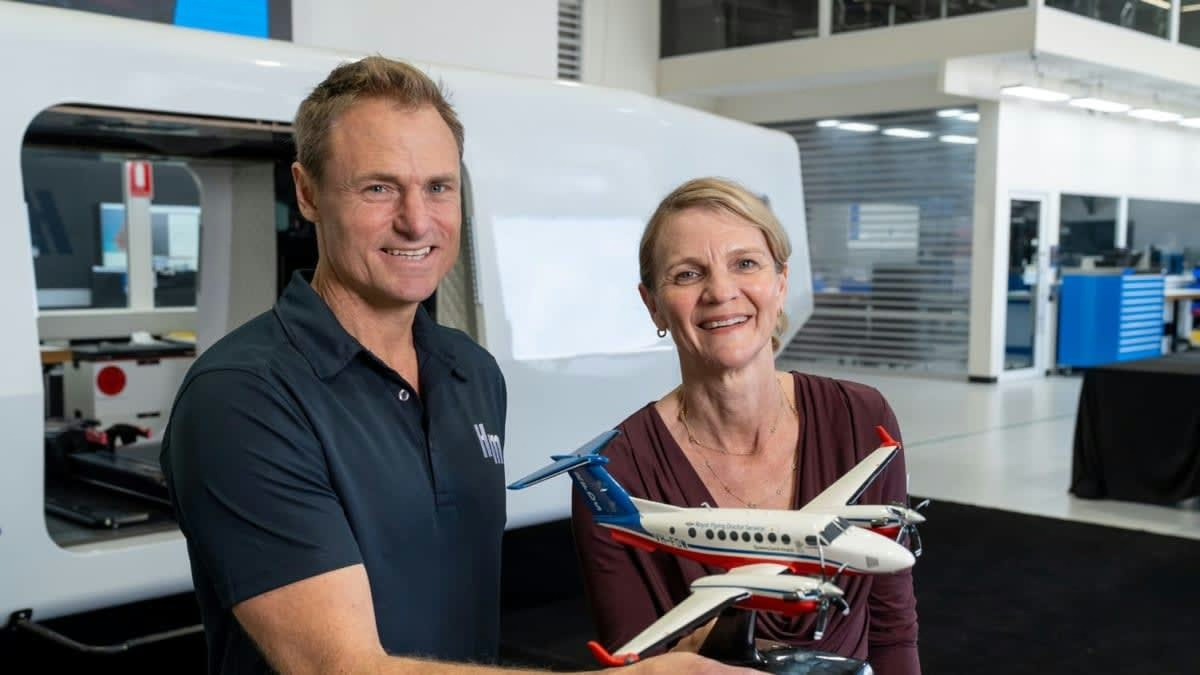
Australia’s RFDS Queensland Section Orders Six King Air 260Cs

Korean Air Finalizes Order for 103 Boeing Jets and Engines
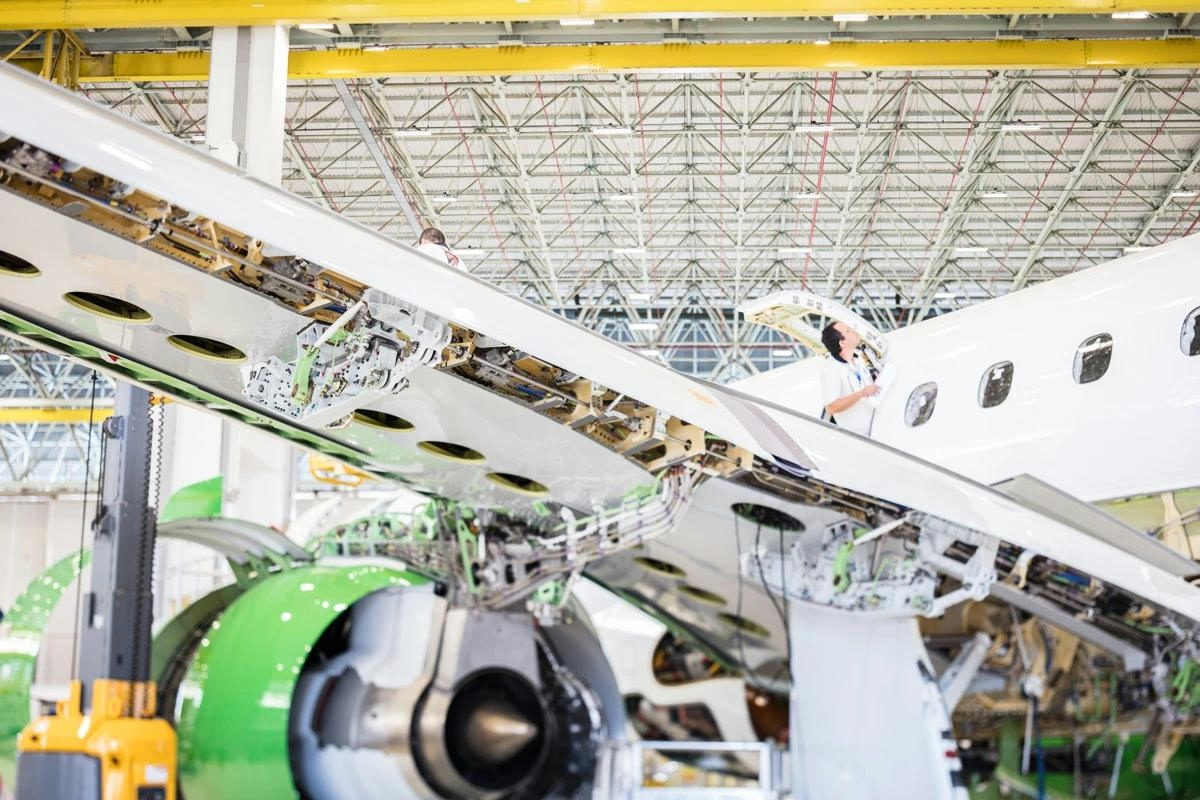
Embraer E195-E2 Features Distinctive Engine Placement Among Regional Jets

What Passengers Can Expect on Boeing’s New 777X Jet
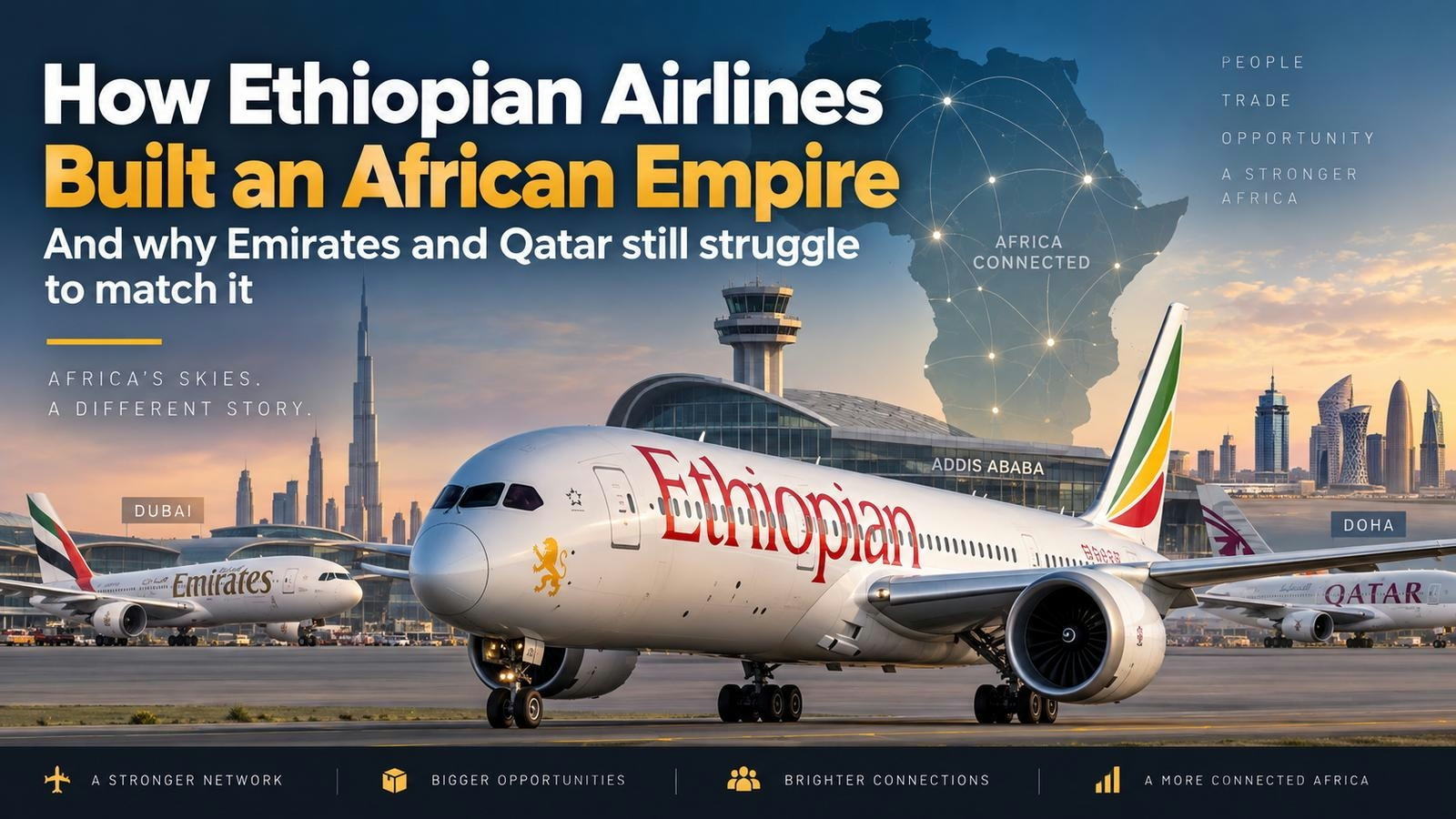
How Ethiopian Airlines Became Africa’s Leading Carrier Amid Gulf Competition

Joby Aviation Extends Autonomous Flight Capabilities with Cross-Country Tour
