
Trasforma le intuizioni dell’IA in azioni concrete

Tendenze
Categories
Air Astana Signs Agreement for Up to 50 Airbus A320neo Jets
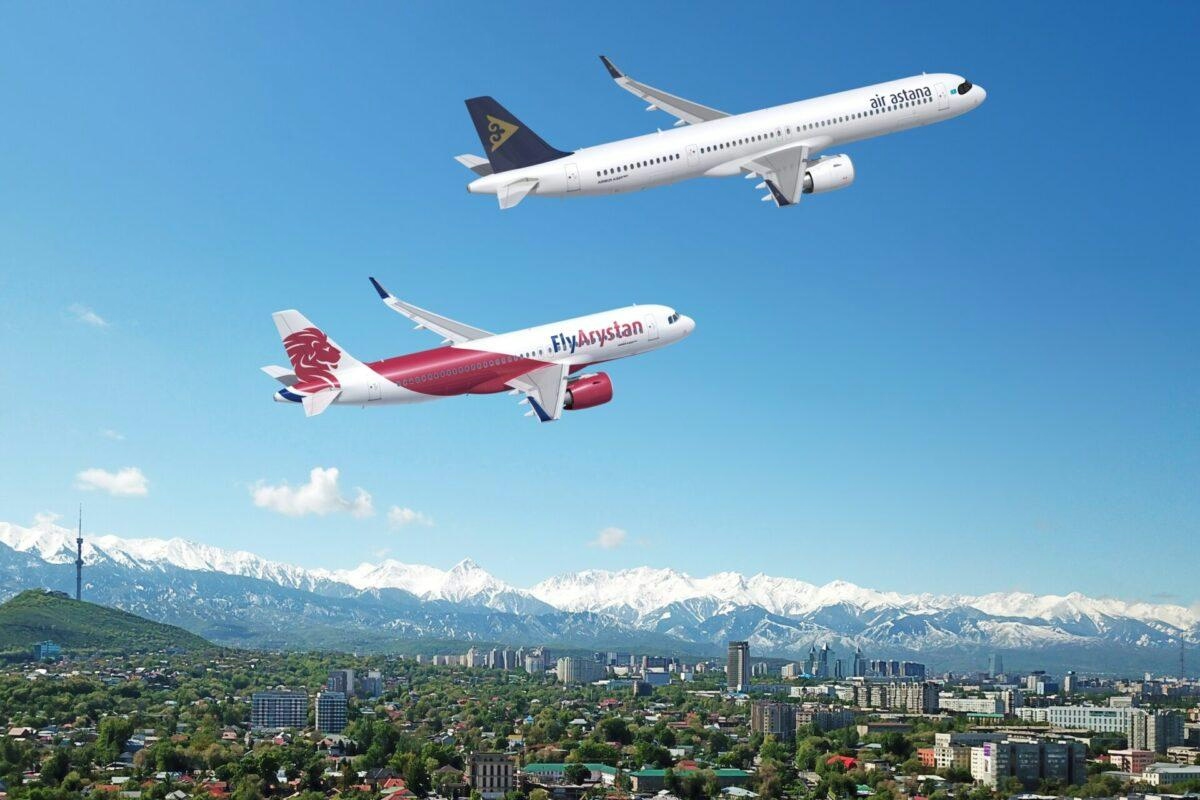
Air Astana Signs Agreement for Up to 50 Airbus A320neo Jets
Air Astana has formalized a landmark agreement with Airbus to acquire up to 50 aircraft from the A320neo family, marking the largest order in the airline’s history. Announced on Friday, the deal encompasses a combination of A320neo and A321neo models, with a predominant focus on the longer-range A321LR variant. This commitment follows Airbus’s successful showing at the recent Dubai Airshow, where the manufacturer secured 194 orders, highlighting robust demand for its latest narrowbody jets.
Details of the Agreement and Fleet Strategy
The Memorandum of Understanding (MoU) signed by Air Astana includes 25 firm orders and 25 options, with deliveries slated to commence in 2031. These new aircraft will augment the airline’s current fleet of A321LRs, which operate extensively across Asia and Europe. Peter Foster, Air Astana’s CEO who is scheduled to step down in March after nearly two decades leading the company, emphasized that the order underscores the airline’s dedication to operational efficiency and service excellence. Foster remarked, “The Airbus A320neo family has proven to be an outstanding success in service with Air Astana over many years and I’m confident that the new fleet will continue to boost sustainable growth and profitability in the long term.”
Currently, Air Astana’s fleet comprises 14 Airbus A320ceos, 11 A320neos, and 17 A321LRs, alongside three Boeing 767s. The latter are planned for retirement as the airline prepares to introduce 18 Boeing 787s in the near future. The A321LRs are integral to Air Astana’s long-haul network, servicing key routes such as Astana to Dubai (operated ten times weekly), Astana to Almaty (seven times weekly), and frequent flights from Almaty to destinations including Bangkok, Dubai, Beijing, Phu Quoc, Istanbul, Tashkent, and Tbilisi.
Operational Challenges and Market Implications
Despite the strategic importance of the A321LR fleet, Air Astana has encountered operational difficulties, particularly following Russia’s invasion of Ukraine. The conflict necessitated the suspension of flights to Moscow and forced the airline to reroute European services to avoid Russian airspace. These adjustments have extended flight times by up to 90 minutes per sector, occasionally pushing the A321LR’s range to its limits.
The integration of the new A320neo jets will present additional challenges, including managing the financial implications of such a substantial order and ensuring comprehensive training for the airline’s personnel. Careful coordination will be essential to seamlessly incorporate the new aircraft into existing operations while maintaining high standards of efficiency and service.
Industry analysts observe that Air Astana’s fleet renewal aligns with a broader regional trend among Central Asian carriers to modernize with more fuel-efficient aircraft. This significant order is expected to enhance Air Astana’s competitive standing in the region, potentially prompting rival airlines to accelerate their own fleet upgrades or adjust strategic plans to preserve market share.
As Air Astana embarks on this ambitious expansion, the airline signals its determination to maintain a leading role in Central Asia’s rapidly evolving aviation landscape.

Etihad Airways Suspends Airbus A380 Flights on Key Route

Aditya Birla Group Seeks Approval for Aircraft Leasing in GIFT City

Qatar Airways Highlights Innovation and Connectivity at Arabian Travel Market 2026

Hong Kong's Five-Year Plan Includes Andrew Fan's Aircraft Parts Processing Hub Proposal

ACIA Aero Leasing Delivers ATR72-600 to Air Nostrum

RTX Appoints Jill Albertelli as Head of Pratt & Whitney

TAT Technologies Joins Beyond Aero Hydrogen Aircraft Program

AURAK Study Highlights Barriers to Air Taxi Adoption in Emerging Economies

Xiamen Air Selects Altitude for 787 Maintenance at Heathrow

Etihad and Swissport Extend Global Partnership
