
Trasforma le intuizioni dell’IA in azioni concrete

Tendenze
Categories
Airlines Offering Lie-Flat Business Class Seats on Narrowbody Aircraft
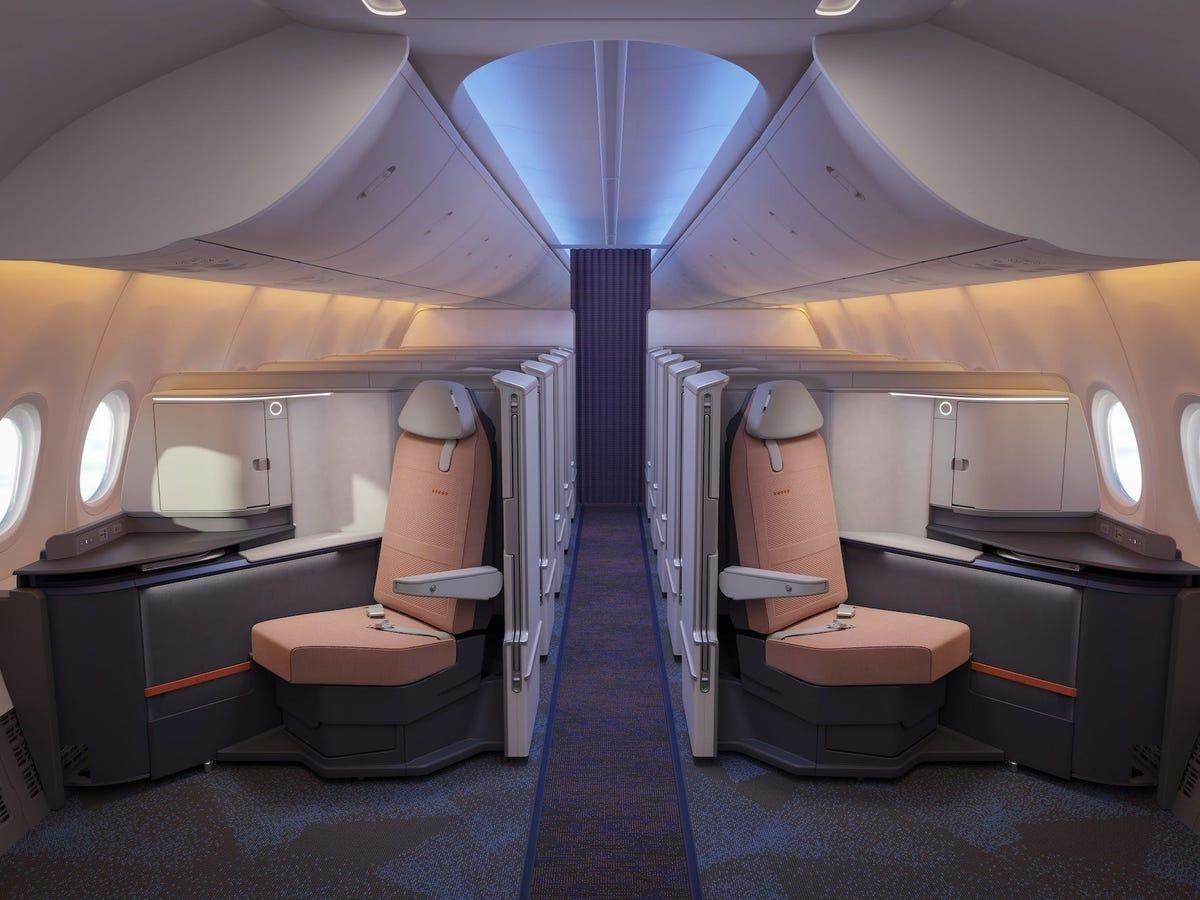
Airlines Introducing Lie-Flat Business Class Seats on Narrowbody Aircraft
The evolution of premium seating in commercial aviation has transformed significantly over recent decades. What was once defined by larger seats, additional legroom, and enhanced meal service has now progressed to cabins featuring lie-flat seats, direct aisle access, and privacy partitions, sometimes even enclosed by doors. While international first class remains available on select carriers, business class has largely supplanted it, offering comparable luxury at a more accessible price point, particularly on widebody aircraft. Traditionally, narrowbody aircraft—primarily deployed on shorter routes—have lagged behind in premium offerings, often limited to recliner seats or, in European markets, economy seats with blocked middle seats designated as business class.
The Shift Toward Lie-Flat Seats on Narrowbodies
This paradigm is shifting as airlines increasingly equip narrowbody aircraft with lie-flat business class seats, bringing a level of comfort once exclusive to long-haul widebody flights to single-aisle jets. The trend originated with Boeing 757-200s, which, despite their smaller size, were utilized on transatlantic routes where demand for premium seating justified the investment. Continental Airlines was a pioneer in this regard, introducing lie-flat seats on its 757-200 fleet in 2010—a configuration that remains in service today under United Airlines. In the United States, carriers such as Delta Air Lines have followed suit, offering lie-flat seats on select Boeing 757-200s for premium transcontinental routes. Similarly, JetBlue and American Airlines have outfitted Airbus A321 aircraft with comparable products.
Globally, the adoption of lie-flat seats on narrowbodies is gaining momentum. Airlines are now fitting Airbus A321neo and Boeing 737 MAX aircraft with modern lie-flat seats designed for longer flights. These installations often feature seat models such as the Collins Aerospace Diamond and Thompson Vantage, which are also employed on widebody aircraft but adapted to the narrower fuselage of single-aisle jets. The seating configurations frequently utilize herringbone or reverse herringbone layouts, angled strategically to optimize space within the more confined cabin environment.
Industry Challenges and Strategic Implications
The transition to lie-flat business class on narrowbody aircraft presents several challenges. Airlines must manage increased production demands and make strategic decisions regarding future aircraft orders amid a complex manufacturing landscape. Both Airbus and Boeing face varying obstacles as they approach 2026, influencing airline procurement strategies. The competitive environment is intensifying, with carriers like Korean Air cautioning about heightened competition and geopolitical uncertainties in the coming years. Boeing is actively working to reclaim market share in the narrowbody segment, while Embraer is concentrating on increasing sales of its E2 jets rather than initiating new aircraft programs.
These dynamics highlight the strategic importance of premium cabin offerings as airlines compete for high-yield passengers on longer narrowbody routes. In the Americas, United Airlines continues to operate former Continental 757-200s equipped with lie-flat seats on transcontinental and transatlantic services. Delta and American Airlines also deploy similar products on select aircraft within their narrowbody fleets. This trend is anticipated to persist as airlines and manufacturers respond to evolving market demands and intensifying competitive pressures.
The rise of lie-flat business class seats on narrowbody aircraft thus reflects shifting passenger expectations and the strategic maneuvers of airlines and manufacturers within an increasingly competitive global aviation market.

Etihad Airways Suspends Airbus A380 Flights on Key Route

Aditya Birla Group Seeks Approval for Aircraft Leasing in GIFT City

Qatar Airways Highlights Innovation and Connectivity at Arabian Travel Market 2026

Hong Kong's Five-Year Plan Includes Andrew Fan's Aircraft Parts Processing Hub Proposal

ACIA Aero Leasing Delivers ATR72-600 to Air Nostrum

RTX Appoints Jill Albertelli as Head of Pratt & Whitney

TAT Technologies Joins Beyond Aero Hydrogen Aircraft Program

AURAK Study Highlights Barriers to Air Taxi Adoption in Emerging Economies

Xiamen Air Selects Altitude for 787 Maintenance at Heathrow

Etihad and Swissport Extend Global Partnership
