
Trasforma le intuizioni dell’IA in azioni concrete

Tendenze
Categories
Airlines Overhaul Supply Chains Amid New Challenges in Aviation
Airlines Overhaul Supply Chains Amid New Challenges in Aviation
At the recent CAPA Airline Leader Summit in Berlin, industry leaders signaled a significant shift in the aviation sector’s primary challenge. Whereas the focus had previously been on recovering passenger demand, the current imperative centers on managing fragile and increasingly complex global supply chains. Executives from leading carriers and suppliers underscored how chronic shortages, escalating costs, and operational disruptions are compelling airlines to fundamentally rethink their strategic approaches.
A New Era of Disruption
The aviation industry has historically confronted numerous crises, including oil shocks, volcanic ash clouds, terrorist attacks, and pandemics. However, summit participants argued that the disruptions faced today are more pervasive and potentially enduring. Supply chains, once a peripheral concern, have now become a central strategic priority as airlines contend with persistent shortages of engines, aircraft parts, fuel, and skilled labor.
Recent developments have exposed these vulnerabilities starkly. The 2026 global fuel crisis has caused jet fuel prices to double, forcing airlines to increase fares by at least 20% merely to break even. This surge in costs has prompted some carriers to reconsider their business models and long-term planning frameworks. Concurrently, supply chain disruptions have delayed aircraft deliveries from manufacturers such as Bombardier and Gulfstream, directly affecting airline profitability and market positioning.
Operational Strain and Industry Fallout
The unexpected shutdown of Spirit Airlines has further complicated the operational landscape, leaving passengers scrambling for refunds and alternative travel arrangements. Other carriers, already operating at or near full capacity due to constrained schedules, have struggled to accommodate displaced travelers. These cascading effects underscore the interconnectedness and fragility of the aviation ecosystem.
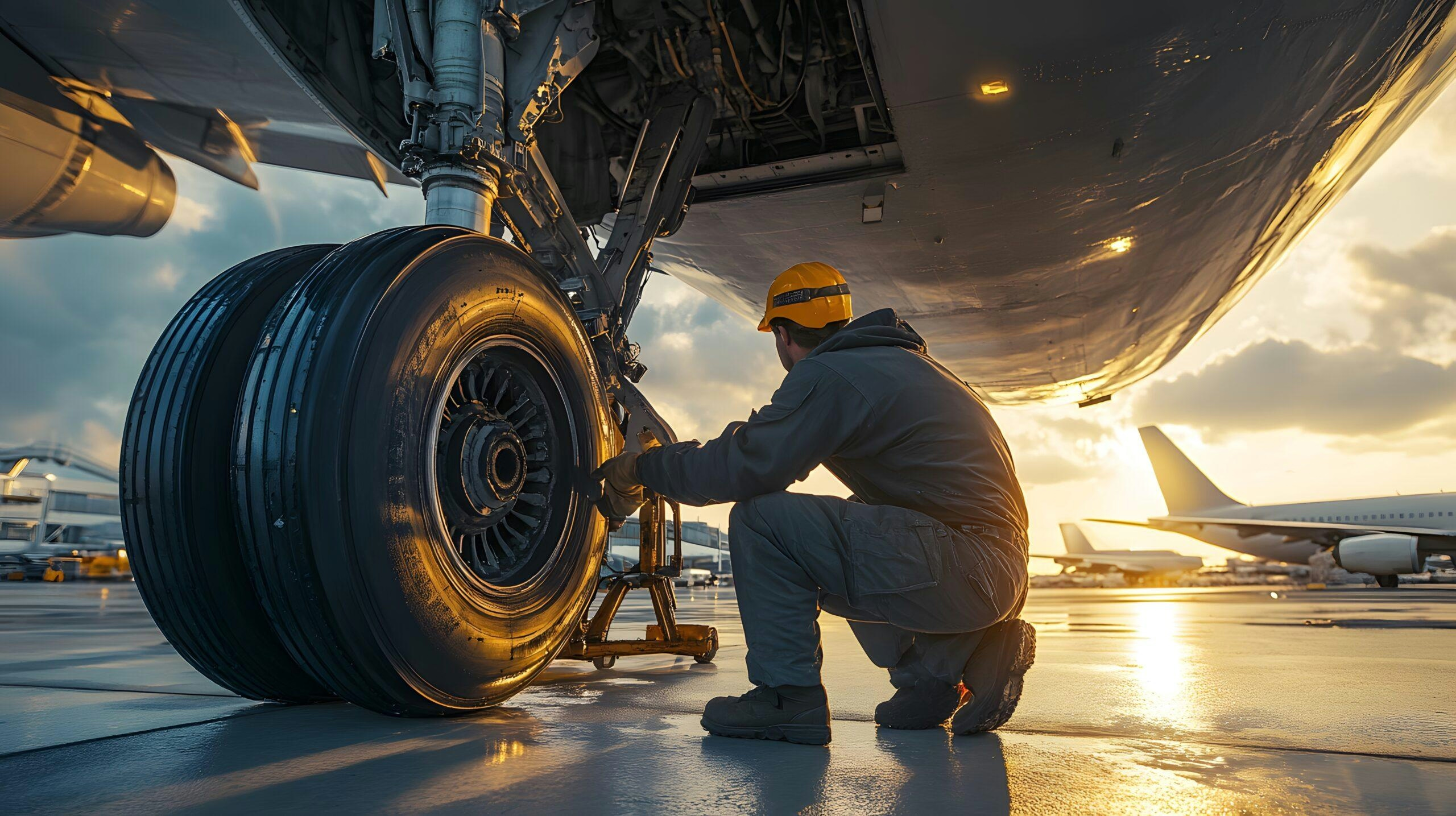
During a panel discussion focused on building resilient responses to supply chain disruptions, executives including Harsha Majeti (CAE), William Boulter, Conor McCarthy (Emerald Airlines), Ramiro Sequeira (Iberia), and Tilman Felix Reinshagen (TUI Airline) described an industry compelled to abandon long-held assumptions. Chronic shortages have resulted in aircraft being grounded for extended periods; McCarthy cited an ATR 72 that remained out of service for nine months due to the unavailability of a nose landing gear.
Strategic Shifts for Resilience
Panelists emphasized that supply chain management has evolved into a strategic imperative. Ramiro Sequeira noted, “Before COVID, supply chain was like an operational issue. Since COVID, and especially in the moment we are living now, it has become a strategic issue.” Airlines are now compelled to plan years in advance for potential shortages and disruptions, moving beyond a focus on short-term operational quarters.
To adapt, carriers are redesigning their operations with resilience at the core, forging long-term partnerships, and seeking greater strategic control over critical resources. The integration of AI-driven predictive maintenance and investment in talent pipelines have emerged as key strategies to mitigate risk and enhance operational stability.
As the industry navigates inflationary pressures, geopolitical instability, and increasing technological complexity, the ability to adapt supply chains will be crucial for sustaining future growth and stability. The lessons of recent years underscore that resilience and foresight have become as essential as efficiency in maintaining the global aviation network.

Etihad Airways Suspends Airbus A380 Flights on Key Route

Aditya Birla Group Seeks Approval for Aircraft Leasing in GIFT City

Qatar Airways Highlights Innovation and Connectivity at Arabian Travel Market 2026

Hong Kong's Five-Year Plan Includes Andrew Fan's Aircraft Parts Processing Hub Proposal

ACIA Aero Leasing Delivers ATR72-600 to Air Nostrum

RTX Appoints Jill Albertelli as Head of Pratt & Whitney

TAT Technologies Joins Beyond Aero Hydrogen Aircraft Program

AURAK Study Highlights Barriers to Air Taxi Adoption in Emerging Economies

Xiamen Air Selects Altitude for 787 Maintenance at Heathrow

Etihad and Swissport Extend Global Partnership
