
Trasforma le intuizioni dell’IA in azioni concrete

Tendenze
Categories
Boeing 747 Copilot Recalls Engine Fire During Takeoff, Crew Ensures Safe Landing
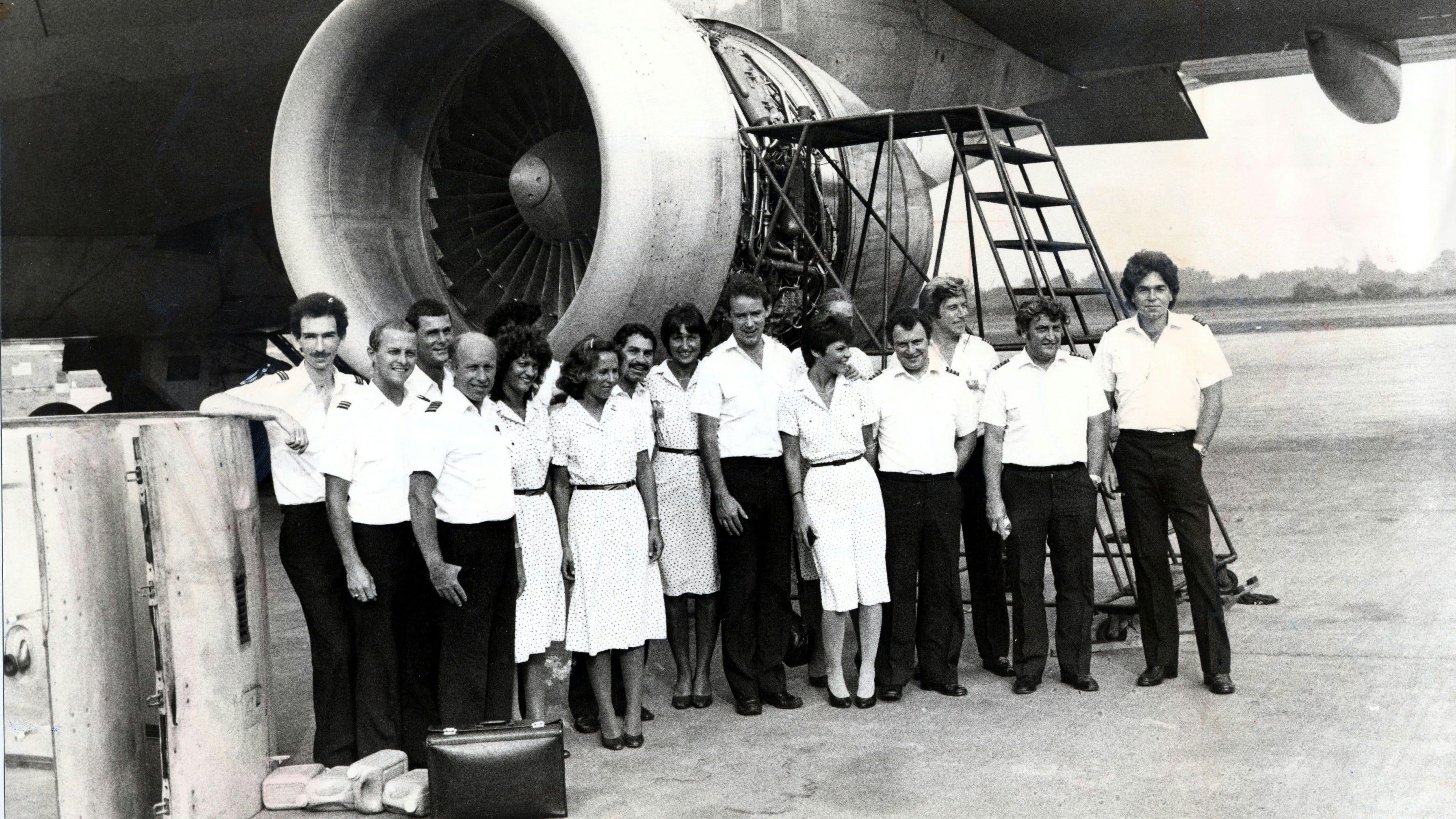
Boeing 747 Copilot Recounts Engine Fire During Takeoff, Crew Executes Safe Landing
An engine failure during takeoff represents one of the most critical emergencies a flight crew can encounter, with immediate and potentially severe consequences for both safety and aircraft performance. Multi-engine transport jets such as the Boeing 747 are engineered to sustain a minimum climb rate even after losing an engine, ensuring clearance from obstacles. Nonetheless, the ultimate outcome depends heavily on the crew’s training, coordination, and rapid response.
A Harrowing Experience at Kai Tak Airport
Frederick Pack, a former Boeing 747 Captain with Northwest Airlines, recounted his experience in a detailed Quora post. Over his 37-year career, he encountered only two engine failures during takeoff. The first occurred as a Second Officer on a Boeing 707 flight from Seattle to Tokyo, which was managed successfully by dumping fuel and returning safely to the airport.
His second incident was far more dramatic. Serving as copilot on a Boeing 747-200 departing from Hong Kong’s notoriously challenging Kai Tak Airport en route to Seattle, Pack described the harrowing moments after takeoff. Due to prevailing winds, the aircraft was forced to take off toward the checkerboard hill and surrounding mountains at maximum gross weight. At approximately 200 feet altitude, the number one engine exploded with a loud “BOOM,” sending a tongue of fire past the tail. While the captain was flying, Pack immediately called out the engine failure and concentrated on flying the aircraft while initiating a left turn to avoid terrain.
Despite the explosion, the crew did not receive any fire warning. The failure was traced to the N2 turbine, with the tailpipe later found filled with melted metal. Pack likened the flame to a “gunshot muzzle blast” that vanished almost instantly. Flight attendants visually confirmed the absence of ongoing fire, so the crew refrained from discharging the fire suppression bottles.
Coordinated Response and Emergency Management
With the aircraft heavy and flying low, the crew promptly began dumping fuel to reduce weight—a critical action that likely contributed to their ability to clear the surrounding terrain. Pack noted that the Second Officer, Bob Dowd, initiated fuel dumping without waiting for explicit command, a decisive move that may have been pivotal to their survival. Any complaints about fuel dumping over Kowloon were never reported.
Hong Kong air traffic controllers responded swiftly, activating emergency protocols and providing the crew with the necessary space to manage the crisis. Controllers witnessed the engine explosion and inquired if the crew had a problem before allowing them to handle the situation independently. Pack described the teamwork among the three crew members as seamless, culminating in a safe return to the ground.
Interestingly, the crew never declared a formal emergency, as the situation was self-evident. Pack later heard his radio transmissions broadcast on the news and remarked on how composed he sounded under pressure.
Broader Implications for Aviation Safety
This incident underscores the critical importance of crew coordination, training, and aircraft design in effectively managing in-flight emergencies. It also emerges amid renewed scrutiny of Boeing’s engine safety. The Federal Aviation Administration (FAA) recently proposed a rule mandating the replacement of fuel pumps in GEnx turbofan engines due to fire risks. This regulatory move could impose significant costs and operational challenges for Boeing.
Such heightened safety oversight reflects a broader industry trend, with potential implications for all aircraft manufacturers. As Boeing addresses these challenges, competitors may seize the opportunity to highlight the reliability of their own aircraft. Meanwhile, airlines and passengers remain attentive to developments that could signal improvements in aviation safety standards worldwide.

Etihad Airways Suspends Airbus A380 Flights on Key Route

Aditya Birla Group Seeks Approval for Aircraft Leasing in GIFT City

Qatar Airways Highlights Innovation and Connectivity at Arabian Travel Market 2026

Hong Kong's Five-Year Plan Includes Andrew Fan's Aircraft Parts Processing Hub Proposal

ACIA Aero Leasing Delivers ATR72-600 to Air Nostrum

RTX Appoints Jill Albertelli as Head of Pratt & Whitney

TAT Technologies Joins Beyond Aero Hydrogen Aircraft Program

AURAK Study Highlights Barriers to Air Taxi Adoption in Emerging Economies

Xiamen Air Selects Altitude for 787 Maintenance at Heathrow

Etihad and Swissport Extend Global Partnership
