
Trasforma le intuizioni dell’IA in azioni concrete

Tendenze
Categories
China West Airport Group Advances Aviation Hub with Artificial Intelligence
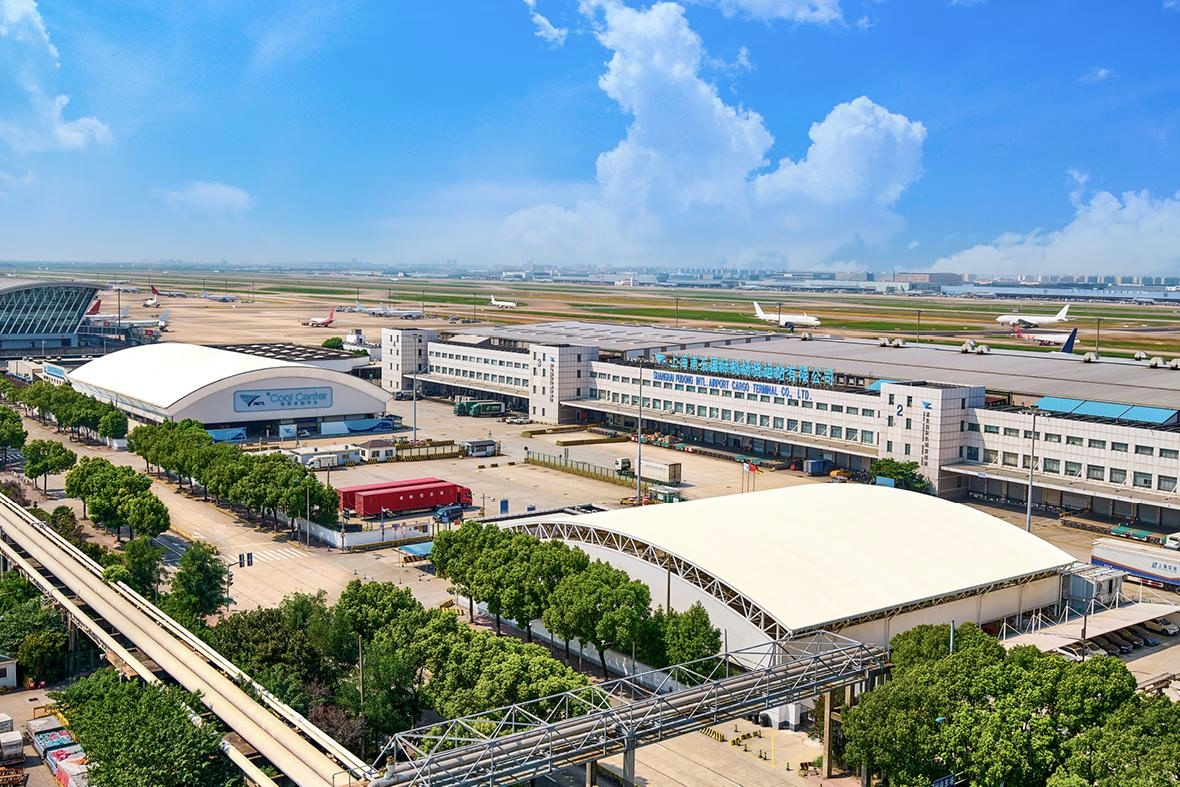
China West Airport Group Advances Aviation Hub with Artificial Intelligence
China West Airport Group (CWAG) is accelerating its evolution into a world-class aviation hub through the integration of artificial intelligence (AI) and digital technologies across its operations. Central to this transformation is the third phase of expansion at Xi’an Xianyang International Airport, which embodies CWAG’s strategic focus on digital and intelligent innovation. The group aims to establish new industry standards while driving regional economic growth.
Founded in 2008, CWAG has grown to become China’s second-largest airport management group, overseeing a network of 18 airports spanning Shaanxi, Ningxia, and Qinghai provinces. This network forms a robust cluster with Xi’an Xianyang International Airport as its core, supported by Yinchuan Hedong and Xining Caojiapu International Airports, alongside 12 regional and three general airports. Collectively, these facilities manage over 70% of Northwest China’s air traffic, highlighting CWAG’s critical role in enhancing regional connectivity and economic development.
Strategic Vision and Intelligent Transformation
CWAG’s ambition is to emerge as a globally influential airport management group and a leader within China’s aviation sector. To realize this vision, the group is committed to delivering connected, high-quality, and distinctive air transport services. The ongoing expansion at Xi’an Xianyang International Airport, particularly the development of the technologically advanced Terminal 5, exemplifies this commitment. Terminal 5 incorporates cutting-edge AI and digital twin technologies, positioning the airport as a catalyst for regional growth and technological innovation in Xi’an, a city celebrated for its rich cultural heritage.
In collaboration with Huawei, CWAG has adopted the “4A” framework—encompassing business architecture, data architecture, application architecture, and technical architecture—to steer its intelligent transformation. A dedicated committee oversees architecture and standards, ensuring regulatory compliance and consistency across projects. This structured approach addresses challenges such as integrating emerging technologies, navigating complex regulatory landscapes, and maintaining operational stability.
Building a Digital and Intelligent Foundation
CWAG has established an industry-leading digital foundation anchored by a cloud platform designed for reliability, security, and intelligence. It is the first in the sector to implement an active-active cloud architecture, ensuring uninterrupted service delivery. The group has achieved a seamless integration of cloud, network, and security systems, while deploying high-performance computing and efficient AI platforms to support its intelligent service transformation.
During the third phase of development, over 60 core systems at Xi’an Xianyang International Airport were migrated to the cloud, streamlining operations and enhancing system reliability. The infrastructure now supports more than 100 petaflops of computing power, enabling over 35 AI algorithms and applications that underpin the airport’s comprehensive digital transformation. These technological advancements are being extended to other member airports, including Yinchuan Hedong International Airport, reinforcing CWAG’s commitment to network-wide innovation.
Market Impact and Future Outlook
CWAG’s integration of AI into airport management is attracting heightened investor interest in AI-driven infrastructure projects. As the group advances its digital capabilities, competitors are expected to bolster their own AI initiatives to maintain market relevance. This trend is likely to stimulate increased investment in AI and robotics across the broader aviation and infrastructure sectors, leveraging China’s strong manufacturing base and supportive regulatory environment.
While CWAG’s digital transformation presents significant opportunities for growth and innovation, it also entails challenges related to regulatory compliance, technological integration, and competitive dynamics. Nonetheless, the group’s strategic and methodical approach positions it at the forefront of China’s rapidly evolving aviation industry.
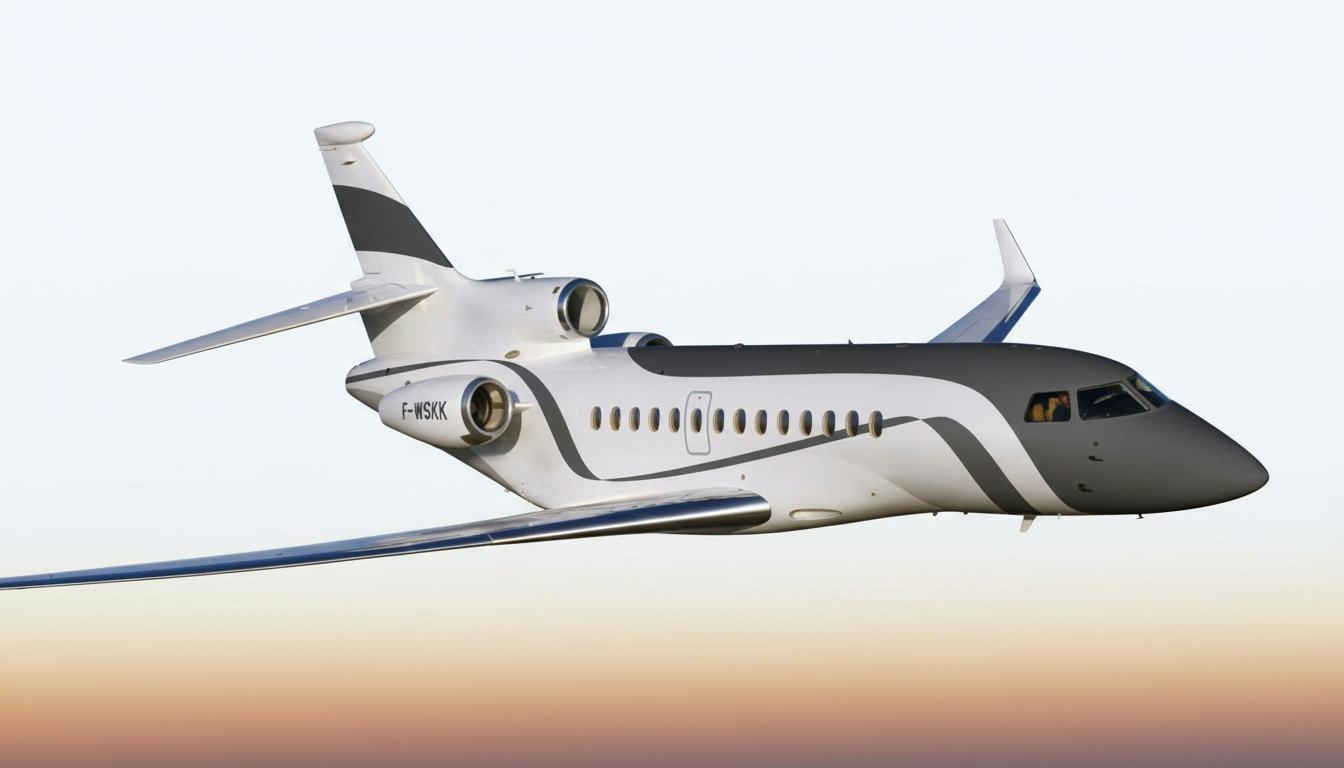
Bluebox Enhances ROI for Connected Jets
Tracep L410 Missing Near Kitshanga/Walikale After Engine Failure on July 24, 2026
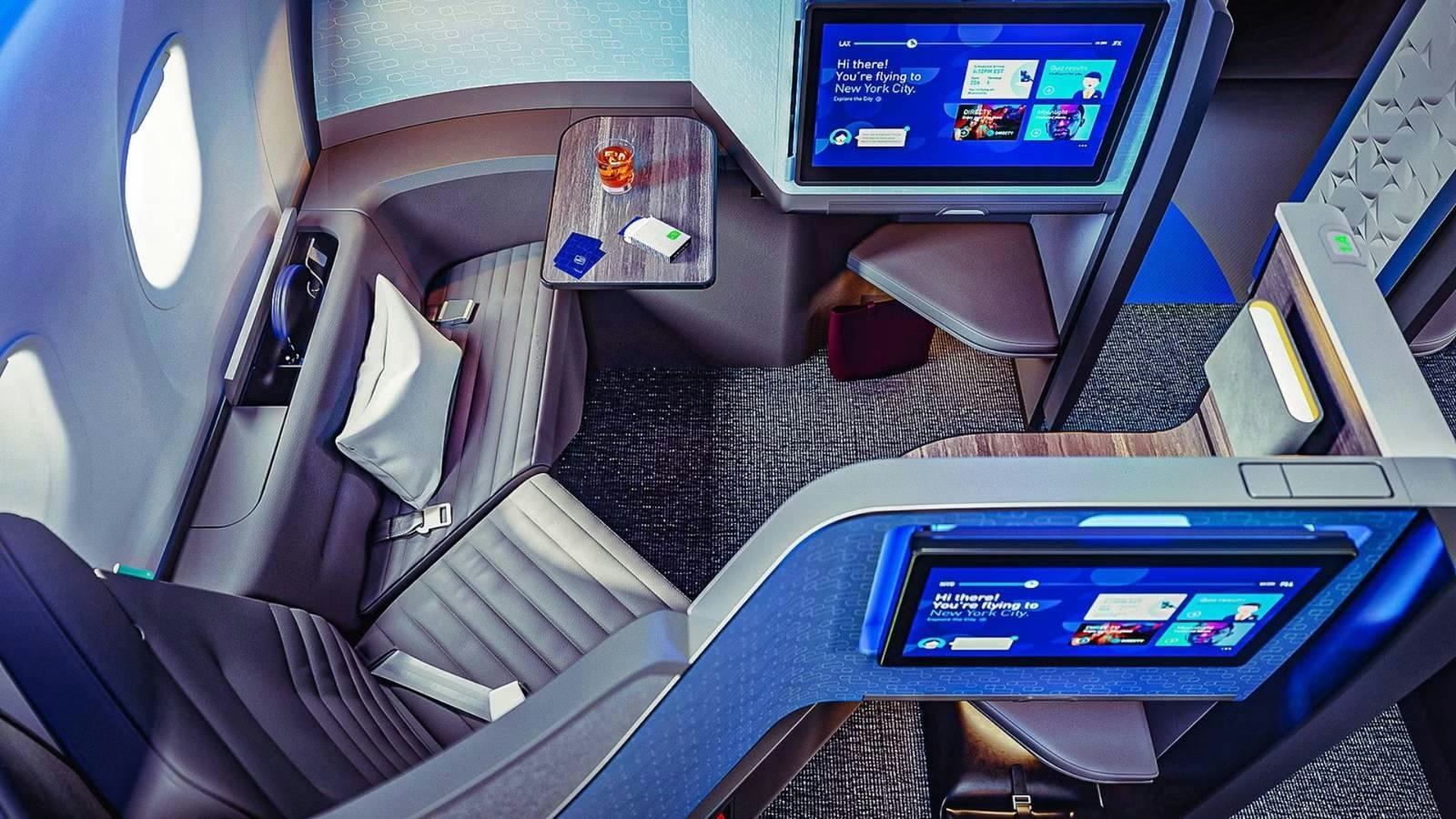
Airbus Projects Premium Travelers Will Shape US Domestic Aviation Through 2045

Week in brief: 10 key developments shaping Kazakhstan this week

SJC Unveils New Retail Concept Integrating Technology and Automation

JetBlue Becomes First U.S. Airline to Operate Transatlantic Flights Using Single-Aisle Jets
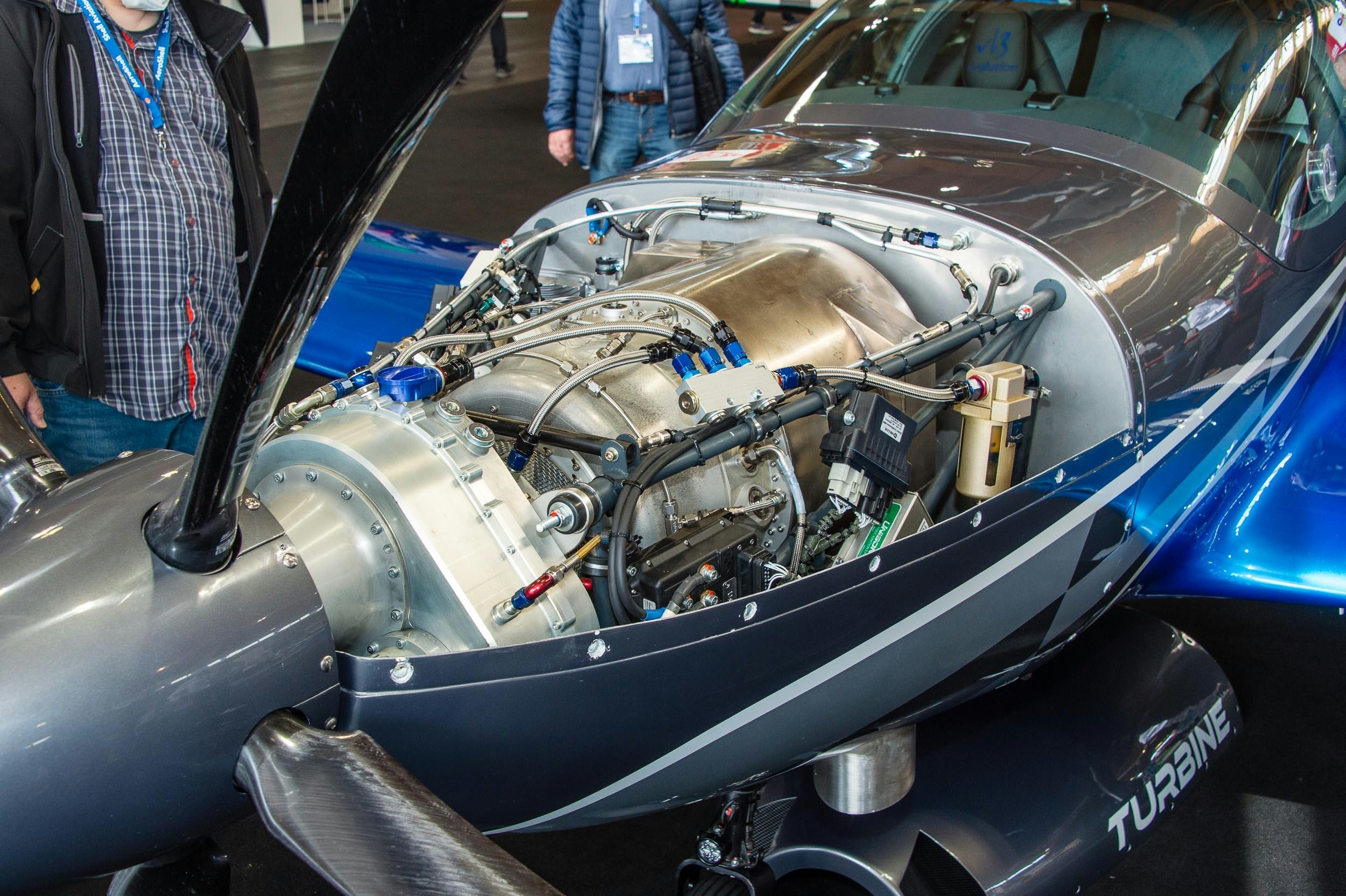
Turbotech turbine gains ground in light aircraft
Jet2 Confirms Leap-1A Engines for Remaining A321neo Fleet

InsideFlyer - Today's briefing on miles, points, and premium travel
Kazakhstan targets first air taxi service in Central Asia
