
Trasforma le intuizioni dell’IA in azioni concrete

Tendenze
Categories
Comparing the Size of the Airbus A350-900 and A330-900neo
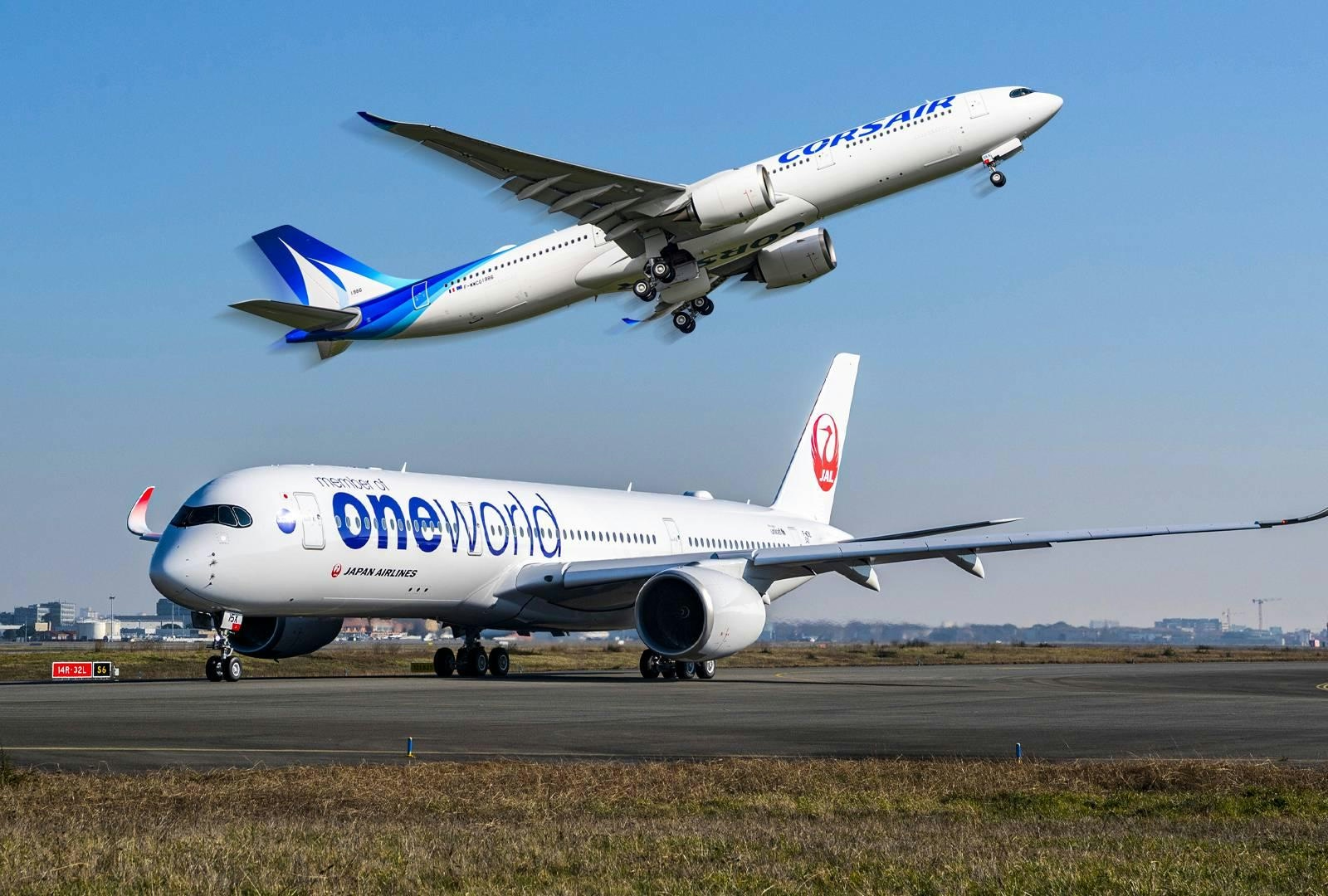
Comparing the Airbus A350-900 and A330-900neo: Size and Design
At first glance, the Airbus A350-900 and A330-900neo share a similar aesthetic, both featuring the distinctive raccoon mask cockpit windows and gracefully curved winglets. However, these two widebody aircraft represent fundamentally different approaches to long-haul aviation. The A330-900neo is a modernized iteration of a well-established model, while the A350-900 is a clean-sheet design that incorporates advanced composite materials to enhance range and fuel efficiency.
This distinction is significant for airlines evaluating their fleet strategies. The A330-900neo offers operational efficiency and a strong market presence, making it well-suited for high-capacity medium- to long-haul routes. Conversely, the A350-900’s extended range and larger capacity position it as the preferred option for ultra-long-haul flights. Airlines such as Delta Air Lines and Virgin Atlantic operate both aircraft types, deploying each strategically to optimize route profitability and operational flexibility.
Physical Dimensions: The A350-900’s Size Advantage
In terms of physical dimensions, the A350-900 surpasses the A330-900neo across nearly all key measurements. The A350-900 stretches 66.8 meters (219 feet 2 inches) in length, exceeding the A330-900neo’s 63.69 meters by over three meters. This additional length accommodates more seating rows and increased under-floor cargo space, enhancing revenue potential on busy routes.
The wingspan of the A350-900 measures 64.75 meters and features a high-aspect-ratio, carbon-fiber-reinforced wing capable of morphing in flight to reduce drag. In comparison, the A330-900neo’s wing, while updated with new sharklets and extended to 64 meters, retains a metallic structure and lacks the aerodynamic sophistication of the A350’s design.
Fuselage width further distinguishes the two aircraft. The A350-900’s external diameter is 5.96 meters, compared to 5.64 meters for the A330-900neo. This 32-centimeter difference elevates the A350 into the “extra-wide body” category, enabling a more spacious cabin layout that directly impacts passenger comfort.
Cabin Experience: Enhanced Comfort Through Space
The wider fuselage of the A350-900 translates into a noticeably different cabin environment. The A330-900neo offers a cabin width of approximately 5.26 meters, typically arranged in a 2-4-2 economy seating configuration. This layout is popular among travelers due to fewer middle seats but inherently limits overall passenger density.
In contrast, the A350-900’s cabin width of 5.61 meters supports a 3-3-3 economy configuration. Despite accommodating an additional seat per row, the A350 maintains 18-inch seat widths, ensuring passenger comfort even at higher seating densities. This design addresses common concerns about cramped seating in older aircraft and provides the A350 with a clear advantage in passenger experience.
Market Dynamics and Competitive Positioning
The decision between the A350-900 and A330-900neo extends beyond size and design. Airlines must weigh the A350’s superior range and capacity against the A330neo’s operational efficiency and established market reputation. Both aircraft have garnered strong market interest: Delta Air Lines has placed orders for 16 A330-900neos and 15 A350-900s, while Air Europa recently secured an order for up to 40 A350-900s. Meanwhile, competitors such as United Airlines continue to expand their fleets with Boeing 787s, highlighting the intense competition within the widebody segment.
While both the A350-900 and A330-900neo represent advanced and capable aircraft, the A350-900’s larger dimensions and innovative design provide a distinct advantage for airlines prioritizing maximum range, capacity, and passenger comfort.

Etihad Airways Suspends Airbus A380 Flights on Key Route

Aditya Birla Group Seeks Approval for Aircraft Leasing in GIFT City

Qatar Airways Highlights Innovation and Connectivity at Arabian Travel Market 2026

Hong Kong's Five-Year Plan Includes Andrew Fan's Aircraft Parts Processing Hub Proposal

ACIA Aero Leasing Delivers ATR72-600 to Air Nostrum

RTX Appoints Jill Albertelli as Head of Pratt & Whitney

TAT Technologies Joins Beyond Aero Hydrogen Aircraft Program

AURAK Study Highlights Barriers to Air Taxi Adoption in Emerging Economies

Xiamen Air Selects Altitude for 787 Maintenance at Heathrow

Etihad and Swissport Extend Global Partnership
